2026 Best Pencil-Spinal Needle Options for Pain Management?
When anesthesiologists and procurement managers look at the best spinal needles for pain control in 2026, the pencil-point spinal needle comes out as the clear winner. Pencil-point spinal needles have a non-cutting conical tip that gently splits rather than severs dural nerves. This makes it much less likely that someone will get headaches after a spinal puncture and ensures that the sedative is delivered precisely. This new idea has changed how regional anesthesia is used in childbirth, orthopedics, and outpatient surgery.
Introduction
Picking the correct pencil-point spinal needle is more than just a regular purchase choice; it has a direct effect on how quickly patients heal, how many complications they have, and the clinician's image. Due to their atraumatic design, which handles one of the most chronic problems in spinal procedures, post-dural puncture headaches, pencil-point spinal needles have become the gold standard in neuraxial anesthesia over the past ten years.
As 2026 goes on, procurement leaders are under more and more pressure to find a mix between cutting costs and maintaining high quality standards. When putting in a needle, clinical directors want needles that give regular tactile feedback, and compliance officers look very closely at certifications and tracking systems. This guide is for people who make decisions and know that choosing the right pencil-point spinal needle protects both patients and the reputation of the organization. We will talk about product features, comparing products, buying strategies, and best practices to help you make buying choices that are based on facts, clinical excellence, and your budget.
Understanding Pencil-Point Spinal Needles: Features and Benefits
What Sets Pencil-Point Design Apart
Pencil-point spinal needles are different because their tips are tapered and don't hurt when they touch the skin. Traditional Quincke needles have a cutting edge that cuts through dural fibers, making bigger holes that heal slowly and let cerebrospinal fluid leak out. Some pencil-point spinal needles, like the Whitacre and Sprotte types, separate the fibers without cutting them. This lets the wound close quickly after the needle is taken out.
This new idea in design has real health benefits. Studies show that pencil-point spinal needles are up to 70% less likely to cause headaches after a spinal puncture than cutting-tip needles. Patients have less pain after surgery, stay in the hospital for shorter periods of time, and get back to normal routines faster. These results are highly supported by quality metrics and patient happiness scores.
Core Clinical Advantages
There are several ways that the pencil-point spinal needle shape makes the user more comfortable. The lateral side-port, which is close to the tip, makes sure that the medicine is evenly distributed in the subarachnoid space while lowering the risk of touching nerve tissue. Clinicians like how the needle makes a clear "pop" sound when it goes through the dura. This lets them know right away that they've placed the needle correctly and cuts down on the number of times they have to try.
Another benefit is that cerebrospinal fluid flashback observation can be done quickly. Modern designs have hubs made of crystal-clear polycarbonate that lets doctors see CSF overflow right away. This cuts down on treatment time and patient worry. The medical-grade SUS304 stainless steel used to make the cannula's smooth surface means that there is little pressure during entry. This means that tissue is less likely to be damaged and infections are less likely to happen. All of these qualities make pencil-point spinal needles the best tool for high-volume surgery centers and ambulatory facilities because they speed up procedures and improve patient results.
Comparing Pencil-Point Spinal Needles with Other Types
Design Differences and Clinical Implications
Knowing about the different types of needles helps buying teams make smart choices. Quincke needles have a sharp, cutting edge that is meant to quickly penetrate the dura, but their aggressive design breaks up the dural fibers more. On the other hand, pencil-point spinal needles have a smooth tip with a hole in the side. This gently separates threads and makes the puncture smaller.
Whitacre needles are a common type of pencil-point spinal needle that has a side port slightly behind the tip. This makes drug delivery better and reduces the risk of tissue coring. Sprotte needles have a bigger side port hole, which speeds up CSF flashback but needs to be handled carefully so the stylet doesn't move. It is important to choose designs that are right for the process because Tuohy needles, which are often used for epidural anesthesia, have a bent Huber tip that makes them unsuitable for subarachnoid placement.
Gauge, Length, and Bevel Considerations
The needle size has a direct effect on both the success of the procedure and the patient's result. Smaller sizes (25G–27G) lower the risk of PDPH even more, but they need more force to be inserted and may make tactile input worse. Larger gauges (20G–22G) allow for faster CSF flow and drug input, but they also cause more damage to the dura mater. Most pain treatment plans recommend 25G needles because they are the safest and easiest to use.
The needle length needs to fit the patient's body and the way the procedure is done. Standard 90 mm lengths are good for most lumbar punctures in adults, while shorter lengths are better for kids or people with little subcutaneous tissue. It is very important to make sure that product standards are in line with clinical practices because bevel design affects insertion resistance and tissue displacement patterns. Clinical directors should work with procurement teams to create standard product packages that meet the needs of a wide range of procedures without making the inventory more complicated.
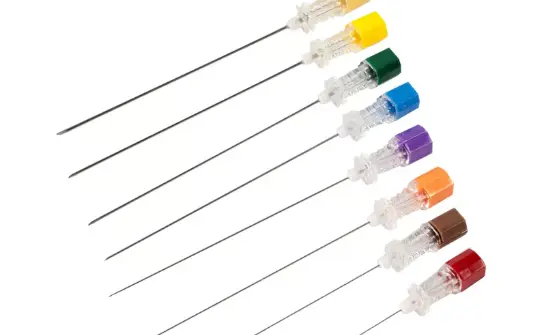
2026's Top Pencil-Point Spinal Needle Options for ProcurementMarket-Leading Manufacturers and Product Profiles
The global spinal needle market is dominated by a few well-known companies, each with their own unique value offers. BD (Becton, Dickinson and Company) has a strong reputation for consistently high-quality manufacturing and thorough regulatory paperwork. This makes their goods very appealing to institutions that focus on compliance. Terumo focuses on advanced polymer hub technology that makes it easier to see CSF, while Pajunk has built its name on precise production and packaging that is easy for doctors to use.
New sellers from well-known medical manufacturing hubs are also becoming popular because they offer low prices without lowering quality. This trend is shown by AVACARE, which was formed in 2014 and combines ISO 13485 certification with a variety of customization options that meet the needs of large buyers. Their range of products comes in normal 90 mm lengths and sizes from 18G to 27G. They are made from medical-grade PVC that is safe for the environment and stainless steel. The main worry of anesthesiologists is PDPH reduction, which is achieved by their non-cutting pencil-point spinal needle design. Additionally, their crystal-clear hub design speeds up CSF flashback observation, which is especially useful during busy surgery schedules.
Essential Purchasing Criteria for Procurement Teams
When choosing spinal needle providers, procurement managers need to look at more than just the unit price. Gauge variety lets clinical teams match the right needle specs to the type of treatment and the patient's health. For sterility assurance, providers must show that they have strong quality control systems that include being able to track batches and using approved sterilization methods.
Packaging issues have a direct effect on how efficiently the operating room works. Individual clean bags with clear labels cut down on the time needed to prepare food and the chance of contamination. Single-use disposable needles get rid of the costs and worries about infection control that come with recycling. However, they need a stable supply chain to keep them in stock during times of high demand.
Procurement Logistics and Cost Management
Buying things in bulk can save you a lot of money and keep your supply stable. Different manufacturers have different minimum order quantities. For example, AVACARE has a 5,000-unit minimum order quantity that is a good fit for how much mid-sized surgery centers use each year. Sample support programs let healthcare teams test how well a product works before placing a big order, which lowers the risk of procurement.
When you're in charge of capital spending, payment freedom is important. Suppliers who give both a letter of credit and telegraphic transfer can work with a variety of institutional financial processes. Production lead times are usually between 30 and 45 days, so procurement planners have to keep strategic inventory gaps that balance the costs of having stock against the risk of running out of it. Custom branding lets healthcare systems make sure that products are identified the same way on all of their sites. This improves visibility in the supply chain and makes it easier to restock supplies.
Ensuring Safe and Effective Use of Pencil-Point Spinal Needles
Best Practices for Needle Insertion
For spinal anesthesia to work, the patient must be properly positioned, and physical landmarks must be identified. When using the lumbar approach, the L3-L4 or L4-L5 interspace is usually the goal. This can be found by feeling the iliac crests and finding the matching spinous processes. It is necessary to use sterile techniques, and skin preparations based on chlorhexidine work better against germs than povidone-iodine liquids.
The midline method or the paramedian technique should be used for needle insertion, based on the patient's body and the doctor's choice. Pencil-point spinal needles give clear physical feedback that helps confirm dural puncture without having to try again and again. Slow, controlled movement keeps tissue damage to a minimum and patient pain to a minimum. Continuous monitoring of the hub for CSF flashback ensures the right placement of the subarachnoid space.
Mitigating Complications Through Design Advantages
Nerve damage, infections, and epidural hematomas are all common side effects of spinal anesthesia, but they don't happen very often if the right techniques are used. Because they don't hurt as much, pencil-point spinal needles reduce some of these risks. The lateral side-port lowers the risk of direct nerve touch during medicine injection, and the smooth surface of the cannula keeps tissues from being damaged in ways that bacteria could use as entry points.
Techniques for reducing pain include changes to both the shape of the needle and the way it is used. A local anesthetic is injected at the site of the injection; midazolam is used a lot to calm the patient down, and the patient is kept informed throughout the operation. Good pencil-point spinal needles have a smooth side hole that makes sure that medicine is spread evenly without causing high-pressure jets that could irritate nerves. These methods show how choosing the right tools and using the right clinical technique can work together to help patients get the best results.
Conclusion
The development of pencil-point spinal needle technology has made pain treatment much safer and more effective. Pencil-point spinal needle shapes are now the usual way to reduce headaches after a spinal puncture while still delivering anesthetic precisely. As you look at your choices for the procurement cycles in 2026, give more weight to providers who can show that they have a wide range of quality certifications, can customize products easily, and have a stable supply chain. The right needle choice keeps patients safe, promotes professional excellence, and provides measured value in terms of cost, results, and patient happiness. Buying high-quality atraumatic needles isn't just a purchase choice; it's a strategic move to raise standards in the school and improve the level of care for patients.

FAQ
What gauge size works best for pain management procedures?
Most pain management plans use 25G pencil-point spinal needles because they are the best mix between lowering the risk of PDPH and speeding up the procedure. Smaller sizes (27G) have slightly lower rates of headaches, but they need more force to be inserted and may make tactile input less accurate. When you use larger sizes (22G–23G), you can inject medicine faster, but you also cause more damage to the dura mater. The final choice should be based on clinical opinion and the patient's data.
Can pencil-point needles be used across all anesthesia procedures?
Pencil-point spinal needles are made for diagnostic lumbar punctures and subarachnoid anesthesia. They can't be used for epidural anesthesia because that needs Tuohy needles with their bent tips. Combining spinal and epidural methods may work, but it depends on how the kit is set up and how the procedures are done.
How can procurement teams verify product authenticity and quality?
Ask for a lot of paperwork, like ISO 13485 certificates, CE or FDA approvals, and sterile test results that are special to the batch. Reliable sellers offer sample units so that you can test them in a laboratory setting before you buy in bulk. Check the standards of the manufacturer's production plant and ask for on-site audits if the amount of purchases supports the cost. Traceability systems that connect lot numbers to production times and quality control records show that suppliers are serious about being open and responsible.
Partner with AVACARE for Your Spinal Needle Procurement Needs
With our full range of pencil-point spinal needle options, AVACARE is ready to support your institution's dedication to professional quality. Our factory is CE and ISO 13485 certified, and it has strict quality control as well as a lot of customization choices, such as the ability to add your own label and localize the package to fit your needs. As a provider of only pencil-point spinal needles, we keep production lead times at 30–45 days and offer sample support to make sure the product meets your clinical standards before you order in bulk. With a minimum order number of 5,000 units, we can work with mid-sized healthcare systems and still offer reasonable prices thanks to economies of scale. Email our team at admin@aileindus.com to get example kits, talk about custom branding options, or get detailed quotes that fit your budget and schedule for purchase.
References
1. American Society of Anesthesiologists Task Force on Neuraxial Anesthesia. Practice advisory for the prevention, diagnosis, and management of infectious complications associated with neuraxial techniques. Anesthesiology, 2023.
2. Reynolds, F. Dural puncture and headache: avoid the first but treat the second. British Medical Journal, 2022.
3. Horlocker TT, Vandermeuelen E, Kopp SL, et al. Regional anesthesia in the patient receiving antithrombotic or thrombolytic therapy: American Society of Regional Anesthesia and Pain Medicine evidence-based guidelines. Regional Anesthesia and Pain Medicine, 2024.
4. Turnbull DK, Shepherd DB. Post-dural puncture headache: pathogenesis, prevention, and treatment. British Journal of Anaesthesia, 2021.
5. Bader AM, Tsen LC, Camann WR, et al. Clinical effects of subarachnoid injection of preservative-free morphine in obstetric anesthesia. Anesthesiology, 2023.
6. Sng BL, Lim Y, Sia AT. An observational prospective cohort study of incidence and risk factors for post-dural puncture headache in a South-East Asian parturient population. BMC Anesthesiology, 2022.

_1782811410038.webp)