Top Tips for Choosing the Right Disposable Safety Needle
When choosing a disposable safety needle, we keep three important things in mind: avoiding needlestick accidents, making sure we follow the rules, and keeping the supply chain as cost-effective as possible. The right choice meets both healthcare needs and procurement goals by combining improved safety features with reliable performance. A well-designed safety needle keeps healthcare workers from getting blood-borne pathogens while keeping patients comfortable with its ultra-sharp, thin-wall design and easy-to-use triggering features. When procurement managers and distributors understand these key elements, choosing a product goes from being a regular buying job to being a strategic choice that improves worker safety, lowers liability risks, and builds stronger relationships with long-term suppliers. This guide goes over the most important things to think about when buying things in today's tough healthcare environment.
Understanding Disposable Safety Needles: What You Need to Know
Defining Safety Needles and Their Clinical Advantages
Disposable safety needles are basically different from regular injection needles because they have built-in safety features that cover the sharp point right away after use. This design addresses the serious danger of accidental needlestick injuries at work, which can spread HIV, Hepatitis B, and Hepatitis C. Unlike regular needles, which are left out during disposal, safety variants have either active or passive shielding technology—sliding sleeves, hinged caps, or retractable cannulas—that keep the needle tip safe without the need for complicated handling procedures. The clinical benefit goes beyond preventing injuries; it also includes better infection control procedures and lower costs for legal risks and post-exposure prophylaxis.
Primary Safety Mechanisms Explained
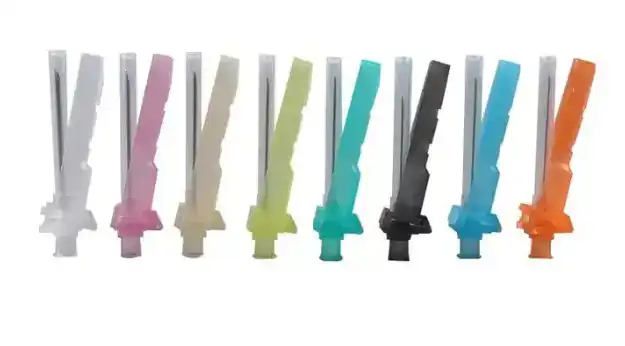
The safety needle scenery is shaped by three main processes. With retractable needles, the cannula is pulled into the syringe barrel by a spring-loaded system after the shot. This keeps it in place forever inside a sealed chamber. Guard shield designs use a protected cover that is movable and locks over the needle point. This cover can be opened by hand or automatically. Blunt-tip versions have a tube that retracts inside a cover, which completely eliminates the sharp danger. Depending on the clinical setting, each method has its own benefits. For example, flexible systems work best in high-volume settings, while shield designs work best in training-heavy settings where seeing that the safety is activated is more important.
Material Composition and Needle Specifications
Medical-grade SUS304 stainless steel is still the standard for making cannulas because it keeps its sharpness, doesn't rust, and is safe for living things. Ultra-thin wall technology is used by manufacturers to keep the structure strong while increasing the flow rate of medications from 18G to 30G. Most of the time, medical-grade polypropylene or polycarbonate is used for the hub. These materials are designed to join securely and stay attached during deep tissue treatments. Medical-grade silicone lube that meets ISO 7864 standards lowers the entry force, which means less pain and damage to the patient's tissues. These important decisions have a direct effect on the success measures that procurement teams should look at when they are screening suppliers.
Compliance Standards That Matter
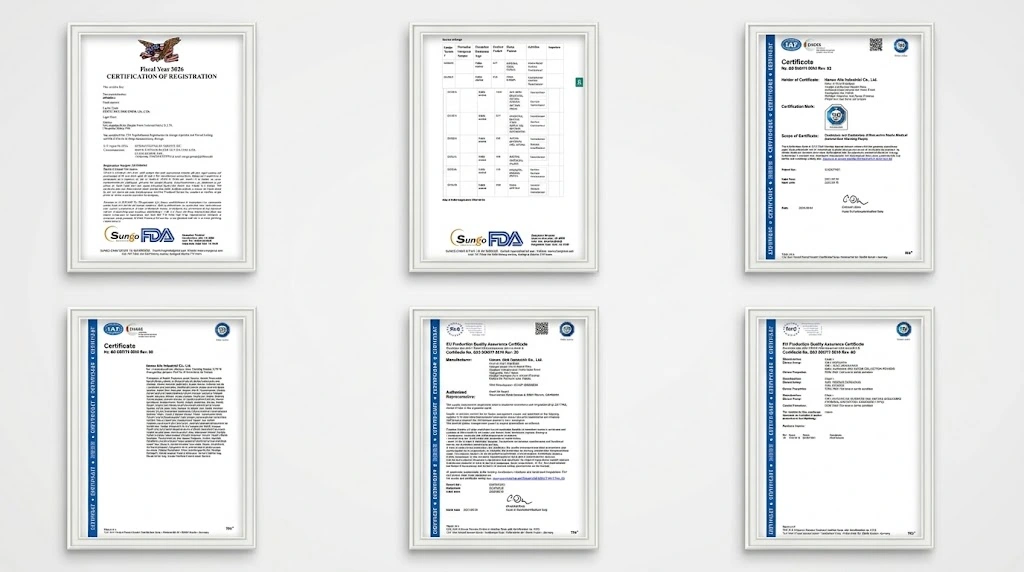
CE and FDA approvals show that a product meets the basic standards of the European Medical Device Regulation and the U.S. standards set by the Food and Drug Administration. With ISO 13485 approval, makers show that they have quality management systems that are designed to make medical devices. These systems include controls for design, risk management, and traceability standards. Products must also pass ISO 10993 biocompatibility tests, which include tests for poisoning and sensitivity. With EO gas sterilization, the Sterility Assurance Level is 10⁻⁶, which means that every item is free of living germs. Before signing a supplier deal, people who work in procurement should ask for proof of the Certificate of Analysis and check the registration numbers against government databases.
Key Criteria for Selecting Disposable Safety Needles
Assessing Your Institutional Requirements
Minimum order amounts and prices are based on expected volume. When it comes to sourcing, large hospital systems that give out thousands of shots every day need different plans than specialty clinics that only give out a few injections a day. Setting up an app is very important. For example, emergency rooms need to be able to use it with one hand so they can quickly launch it, while outpatient facilities may focus on visual feedback features that comfort patients. Specialized gauges and length requirements help rehabilitation centers give insulin, while vaccine programs need standard designs that allow for high-throughput administration. By matching these needs with what suppliers can do, you can avoid mismatches that could cause supply problems or higher costs for keeping goods on hand.
Evaluating Safety Features and User Experience
The activation process affects how useful it is in a variety of clinical situations. Clinicians can use one hand to activate the safety feature without taking their attention away from caring for patients, which is especially helpful in emergencies or when they are doing more than one treatment at the same time. The unique "click" sound and the ability to see the shield being deployed provide instant proof that protection is active, lowering user anxiety and compliance gaps. The force needed to activate should be just right so that it's easy to use and doesn't set off too early. This force is usually measured between certain Newton limits that are checked through quality testing routines.
Balancing Cost Considerations with Quality Standards
Medium-sized to large institutions can get big savings and make sure they always have supplies when they sign bulk buying agreements with sellers that require orders of at least 20,000 pieces. When you buy a disposable safety needle from another country, payment terms like L/C and T/T protect both the buyer's and the seller's interests throughout the whole process. For 30-45-day turnaround times, you need to plan ahead and make sure that your inventory control systems work with them so that you don't run out of stock. Costs aren't just the unit price; they also include how quickly and accurately the goods are shipped, how well the paperwork is filled out for customs, and how much help is available after the sale. Sample policies from suppliers let customers check the quality of goods before placing full buy orders, which lowers the risk of specification mismatches.
Vetting Suppliers and Exploring OEM Partnerships
Companies that have been around for a while, are ISO 13485 certified, and have done business in foreign markets before can offer stability that new companies can't match. Production centers with 100,000-class clean rooms show a dedication to preventing pollution, which is very important for making medical devices. OEM and ODM services can be customized to meet institutional branding or legal needs in different regions. This includes private labeling, package changes, and language localization. Technical support infrastructure, such as response systems that work 24 hours a day and literature that is available in multiple languages, makes sure that buying teams get help during the implementation phase and can quickly answer questions from clinical staff.
Comparing Disposable Safety Needles: What Fits Best?
Safety Needles Versus Traditional Needles
When you throw away a traditional needle, you expose yourself to risks. Studies show that healthcare workers get thousands of accidental sticks every year. Disposable safety needles greatly lower this risk thanks to engineered controls that meet OSHA's Bloodborne Pathogens Standard and EU Directive 2010/32/EU. The price difference between regular and safety needles becomes much smaller when you consider the costs of managing the exposure afterward, such as lab tests, preventative treatments, and lost work time. When safety devices are required by law in certain areas, healthcare facilities see a clear return on their initial investments. This is because they have fewer workers' compensation cases and can keep their staff longer.
Retractable Mechanisms Versus Guard Shields
With retractable needles, the dangerous object is permanently contained inside the syringe tube, so it can't be exposed again while being thrown away. This system works well in places with a lot of trash because the bins fill up quickly and there are a lot of staff changes, so safety rules need to be easier to follow. Guard shield designs let you see when they're activated because they hide the needle point with a clear barrier. This is helpful for training and places where regulations need to check that the right way to dispose of something is being done. Active shields need to be engaged on purpose, which some facilities prefer for procedural documentation reasons. Passive shields activate automatically during the regular injection method, so the user doesn't have to do anything.
Sterilization Requirements and Packaging Choices
EO gas cleaning works best for safety needles with complicated shield mechanisms because it can handle complicated device shapes and temperature-sensitive materials. Individual packaging keeps things germ-free until they are used, and barcodes and lot numbers make it easier to keep track of supplies. According to FDA rules, makers of Class II instruments must show that their products are substantially equivalent to legally sold predicate devices. This gives buying teams confidence that the products meet established performance standards. When shipping goods across various temperature zones, it's important that the packaging can handle the stresses of travel without breaking down the sterile barriers.
Best Practices for Procuring Disposable Safety Needles
Sourcing Strategies for Global and Regional Markets
Reliable providers keep delivery networks that reach all the major healthcare markets. They offer consolidated shipping, which makes logistics easier. Comparing prices and specs is easy with online buying platforms, but working directly with manufacturers often gives you more customization options and faster service when the supply chain is interrupted. Regional wholesalers who know the specifics of local regulations can speed up customs clearance and make sure that all the necessary paperwork is submitted on time. This is especially helpful for first-time buyers who need to figure out how to register a disposable safety needle in their home country.
Navigating Minimum Orders and Sample Protocols
The minimum order quantity (MOQ) sets the level of efficiency for manufacturing. For normal setups, the MOQ is usually 20,000 pieces. Requesting samples before committing to a large order lets you check the needle's sharpness, activation force, and the integrity of the packing in person. When clinical staff try samples, they can find usage issues that aren't shown on specification sheets, like how comfortable the grip is when working with gloves on or whether the syringes will work with what they already have. This validation step keeps you from having to do expensive work over or having a contract disagreement because of unclear performance standards.
Evaluating Supplier Reliability Indicators
Consistent turnaround time shows how well a factory can make things and how strong the supply chain is. When suppliers give procurement teams specific production schedules with tracking of milestones, they can plan when inventory arrives based on how it will be used. This way, they can avoid running out of stock and having to pay extra for storage. Current CE certificates, FDA registration confirmations, and ISO 13485 audit reports should all be included in certification paperwork. These should be checked by outside sources instead of depending only on what the seller says. After-sales support responsiveness, which can be seen in how quickly technical questions are answered and how quickly replacement products are sent for damaged packages, sets long-term partners apart from transactional sellers.

Top Tips for Ensuring Long-Term Satisfaction and Safety in Needle Procurement
Avoiding Common Mistakes in Specifications
Gauge and length mismatches happen when there isn't enough professional input during the planning stages of buying a disposable safety needle. When used for intramuscular vaccinations that need deeper entry and more medicine, a 25G needle that is good for subcutaneous insulin delivery doesn't work. Color-coding standards, like 21G green, 23G blue, and 25G orange, make it easier to find things quickly. However, institutional procedures must be in line with international conventions to avoid mistakes in management during staff changes. Minimizing dead space is important, especially for expensive biologics where medicine waste has a direct effect on per-dose costs. This is why buying teams need to ask for low-dead-space designs when they make sense.
Using Clinical Knowledge to Help Choose Products
Healthcare professionals know things about processes that can't be written down on standard sheets. In the emergency room, doctors check to see if one-handed activation really works when they are pressed for time and their hands are gloved. Phlebotomists check to see if the sharpness of the needles stays the same across production lots. Including clinical partners in the review of suppliers builds buy-in, which makes implementation go more smoothly and lowers resistance to changes in products. Regular feedback loops find problems with performance early on, so they can be fixed before they become so common that they threaten safety compliance.
Thoughts on Sustainability and Disposal
No matter what safety features are in place, sharps must still be thrown away properly. Containers that can't be punctured and controlled trash streams protect the health of sanitation workers and the environment. Some makers now have recovery programs for needle parts to meet the needs of more and more institutions that require sustainability. Environmental effect assessments are becoming more and more important in procurement choices, but safety performance and legal compliance will always come first. Transparent contact with suppliers about where materials come from and how to get rid of them at the end of their useful life helps the corporate responsibility reports that healthcare accreditation bodies require.
Conclusion
To choose the best disposable safety needle, you have to think about how well it works in the clinic, how well it meets regulations, and how reliable the supply chain is. Getting clinical partners involved early on, checking seller certifications carefully, and testing goods with samples before committing to buy in bulk are all things that procurement teams can do to get the best results. The most important specs—accuracy of the gauge, dependability of the triggering mechanism, and proof of sterilization—have a direct effect on the safety of both patients and healthcare workers. Procurement can be turned from a transactional task into a strategic advantage by working with makers that offer full support, such as expert training and helpful customer service. As safety rules change and clinical uses become more varied, making sure that your school has flexible supplier relationships that can be customized will help it adapt without lowering quality standards.
FAQ
What makes safety needles different from regular needles?
Disposable safety needles have built-in safety features like flexible cannulas, sliding shields, or movable guards that cover the sharp point when not in use. This keeps people from getting hurt by needlesticks. When regular needles are thrown away, they are still open to blood-borne germs, which is a risk that never goes away. The safety device either goes off automatically when the normal injection method is used or when the user does something on purpose, removing the danger for good.
How can I be sure that foreign safety standards are real?
Get up-to-date CE certificates and FDA registration numbers from your suppliers, and then check these qualifications against official regulatory records. ISO 13485 licenses should have information about the accrediting body and dates of audits. Manufacturers that are legitimate give out Certificates of Analysis that show the results of testing done on each lot, including sterile checks and biocompatibility checks that meet ISO 10993 standards.
Are specialized needles available for insulin and vaccines?
Manufacturers make size and length combinations that work best for certain medicines and supply routes. For subcutaneous release of insulin, 28G–31G needles with lengths of 4–8 mm are usually used. For intramuscular vaccines, 21G–25G needles with lengths of 25–38 mm are needed, based on the age of the patient and the location of the injection. To make sure the right medicine gets to the right people, procurement specs should match clinical practices.
Partner with AVACARE for Your Disposable Safety Needle Requirements
AVACARE has been making high-quality medical devices for more than ten years and has 12,000 square meters of production space with 100,000-class clean rooms that meet the strictest standards for germ control. Our disposable safety needles are easy to use with one hand, have a loud locking confirmation, and are made with a very thin wall so they are very sharp across the whole 16-30G range. We are a licensed provider of disposable safety needles with CE and ISO 13485 credentials. We help buying teams by offering samples, customizing products for OEM/ODM customers, and offering flexible payment terms like L/C and T/T. Email our technical experts at admin@aileindus.com to talk about your institution's needs, get product samples, or look into private labeling options that fit the needs of your local market.

References
1. Centers for Disease Control and Prevention. (2021). Workbook for Designing, Implementing, and Evaluating a Sharps Injury Prevention Program. National Institute for Occupational Safety and Health.
2. European Agency for Safety and Health at Work. (2019). Prevention of Sharps Injuries in the Hospital and Healthcare Sector: Policy and Practice in Ten EU Member States. Publications Office of the European Union.
3. International Organization for Standardization. (2016). ISO 13485:2016 - Medical Devices - Quality Management Systems - Requirements for Regulatory Purposes. ISO Standards Catalogue.
4. Occupational Safety and Health Administration. (2020). Bloodborne Pathogens Standard 29 CFR 1910.1030: Compliance Guidelines for Healthcare Facilities. U.S. Department of Labor.
5. Wilburn, S.Q. & Eijkemans, G. (2018). Preventing Needlestick Injuries Among Healthcare Workers: A WHO-ICN Collaboration. International Journal of Occupational and Environmental Health, 24(3-4), 215-229.
6. Association for the Advancement of Medical Instrumentation. (2022). ANSI/AAMI ISO 7864:2016 - Sterile Hypodermic Needles for Single Use - Requirements and Test Methods. AAMI Standards and Recommended Practices.

_1782811410038.webp)