25G vs. 27G Pencil-Point Spinal Needles: Balancing CSF Flashback Speed and Patient Comfort
Selecting the right gauge for pencil-point spinal needles is critical in neuraxial anesthesia. The choice between 25G and 27G needles directly impacts cerebrospinal fluid (CSF) flashback speed and post-procedural patient comfort. While 25G needles typically facilitate faster CSF visualization due to their larger internal diameter, 27G needles significantly reduce dural trauma, lowering the incidence of post-dural puncture headache (PDPH). Healthcare procurement managers and clinical directors must carefully weigh these factors alongside cost, supply chain reliability, and certification standards when making bulk purchasing decisions that balance clinical outcomes with operational efficiency.
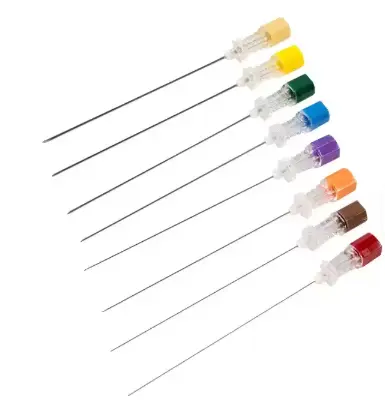
Understanding Pencil-Point Spinal Needles and Their Anatomy
Design Principles That Reduce Trauma
Pencil-point spinal needles are a big improvement over the old Quincke-style cutting needles. The conical tip design that doesn't cut, which is common in Whitacre and Sprotte configurations, splits dural fibers instead of cutting them. This system lets the puncture site quickly heal itself after the needle is taken out, which greatly reduces the loss of CSF. There is a lot of evidence from clinical trials that this gentle method reduces tissue damage. This means that there are fewer problems after surgery and patients are happier in surgical centers and maternity units.
Anatomy of 25G and 27G Variants
The gauge number and the needle width are related in the opposite way. The outside diameter of a 25G needle is about 0.5 mm, and the outside diameter of a 27G needle is about 0.4 mm. Both sizes usually have needles that are 90 mm long, which is long enough for most adult lumbar punctures. Because 27G needles have a smaller width, they need to be inserted with more care, but the patient will be more comfortable. The lateral side port, which is close to the rounded tip, makes sure that all of the anesthetic gets into the subarachnoid space as soon as the familiar "pop" sound is heard. The cannula is made of medical-grade stainless steel these days, and the hub is made of high-transparency polycarbonate. This lets the CSF flashback detection happen right away.
Material Quality and Manufacturing Standards
Our Pencil-point spinal needles at AVACARE are made with medical-grade PVC and high-quality stainless steel, and they meet the strict standards for ISO 13485 and CE approval. International healthcare groups are becoming more concerned about the environment, which is why the building is eco-friendly. We use 100,000-class clean rooms to make sure that our products are made without any contamination. We also do a lot of quality control testing to make sure that the tips are biocompatible and have the right shape using scanning electron microscopy (SEM). When you buy a lot of them, starting with 5,000 pieces, these production processes make sure that every unit works the same way.

Comparing 25G and 27G Pencil-Point Needles: Clinical and Procurement Perspectives
CSF Flashback Speed Analysis
The internal lumen diameter of whitacre spinal needle has a big effect on how long it takes to see CSF. Because its bigger bore lets more fluid flow more quickly, the 25G needle flashes back faster, usually within 2 to 5 seconds of dural entry. This speed advantage is helpful in emergency anesthesia situations where decisions need to be made quickly. On the other hand, 27G needles may need 5–10 seconds for clear CSF to show, but this small delay rarely affects the success rate of the procedure. Anesthesiologists who work in surgical centers with a lot of patients often choose 25G needles because they have a predictable flashback speed that makes their work easier when they have to do procedures right after each other.
Patient Comfort and PDPH Incidence
Headaches after a spinal anesthesia procedure are still one of the most annoying side effects. Clinical data shows that 27G needles lower the risk of PDPH in pregnant women to about 1% to 3%, compared to 3% to 6% with 25G needles. The finer gauge makes a smaller hole in the dura, which lets the body heal itself faster and stops as much cerebrospinal fluid from leaking into the epidural space. Young women who are having cesarean sections benefit the most from this lower risk because their demographics make them more likely to have complications. The AVACARE Pencil-point spinal needle design reduces trauma even more by optimizing the tip geometry, which gives clear tactile feedback during insertion and helps clinicians get the subarachnoid placement right on the first try.
Operational Considerations and Equipment Compatibility
The way to insert each gauge is a little different. The 25G needle is stiffer, which makes it easier to go through calcified interspinous muscles that are common in older orthopedic patients. This means that only one try is needed instead of several. The 27G needle is more flexible, which means you have to be more deliberate with your control but also makes it easier to get around anatomical obstacles. Both gauges have standard Luer-lock connections that work with current systems for delivering anesthetics and meet ISO 80369-6 (NRFit) standards. This keeps dangerous cross-connections with intravenous lines from happening. At AVACARE, our crystal-clear hub design cuts down on the time it takes to see CSF reflux, which helps the procedure go smoothly no matter which gauge is chosen.
Procurement Cost and Supply Chain Factors
The price difference between 25G and 27G needles is usually between 5 and 15%. Finer sizes cost more because they have to be manufactured with tighter standards. This gap can be closed a lot with volume buying deals. When 27G needles are used in the right clinical settings, procurement managers should look at the total cost of ownership, which should include any saves that might come from lower PDPH treatment costs. Stability in the supply line is just as important. AVACARE keeps up a strong production capacity, offers 30-45 day lead times, and offers various payment terms, such as L/C and T/T choices, so that high-volume institutions can keep their inventory full. Compliance officers who do supplier audits have very strict requirements that our full quality traceability system must meet.

Best Practices for Using Pencil-Point Spinal Needles to Optimize Outcomes
Proper Insertion Technique for Each Gauge
For atraumatic spinal needle neuraxial anesthesia to work, the patient must be properly positioned, and physical landmarks must be identified. For 25G needles, a slightly more straight entry path usually works best because the needle is rigid in its own right. For the 27G type, it's best to use a midline approach and make sure that the needle's longitudinal axis stays parallel to the spinal fibers. Pencil-point spinal needles require slow and careful movement through each layer of tissue. Once the right placement is proven by CSF flashback, the polished lateral port on AVACARE needles makes sure that the medicine is distributed evenly. Clinicians should keep the forward pressure steady and listen for the clear "click" sound that our improved tip shape makes.
Safety Protocols and Risk Mitigation
During the whole process, sterility is still very important. Reprocessing risks are eliminated when needles are single-use and individually packed. Our labeling as a Class III medical device is based on the strict safety rules that guide the creation of spinal needles. Some things to keep an eye on when using 27G needles are slow flashbacks, which could mean that the needles are partially in the subarachnoid space and need to be repositioned slightly. Because the 25G needle has a faster flow rate, flashback must be recognized right away to avoid too much progress. To keep the tissue from getting dragged, both gauges should be taken out using the same path they went in. AVACARE offers a wide range of technical training tools, such as video demos and multilingual guides, to help clinical teams learn the right way to use different gauges.
Troubleshooting Common Complications
The most common procedural challenge is a CSF flashback that is absent or delayed. When using 25G needles, this usually means that the needle is too deep or not in the middle of the skin. If you slowly turn in a circle 90 degrees while staying in place, you might see that an edge is oriented laterally and stopping fluid flow. When using 27G needles, it's important to be patient—giving yourself more time before repositioning stops tissue from being damaged needlessly. Our quick reaction technology support is available 24 hours a day, 7 days a week. It helps clinical teams answer real-time questions about procedures. Our pencil-point design greatly lowers the rate of PDPH, which means that complications after surgery are less likely to happen. However, patients should still get standard advice about staying hydrated and limiting their activities during the initial recovery period.

Decision-Making Guide: Choosing Between 25G and 27G Pencil-Point Spinal Needles
Clinical Environment Considerations
Outpatient surgical centers that do a lot of cataract surgeries or orthoscopic procedures often put the quick flashback of 25G needles at the top of their list of priorities in order to keep their treatment schedules tight. The faster proof gives anesthesiologists the confidence to follow standard procedures. Inpatient hospitals that provide maternal anesthesia are using 27G needles more and more as normal practice. The big drop in PDPH makes up for the slightly longer treatment time, especially since most of the patients are young and early bonding between mother and child is very important. Having both gauges on hand gives rehabilitation centers and intensive care units that deal with pain control treatments more options when it comes to which one to use based on the patient's body and risk factors.
Cost-Benefit Analysis for Bulk Procurement
When deciding how much to buy in bulk, you should think about both the direct costs of the product and the later clinical outcomes. If a hypothetical 1,000 patients were treated with 27G needles every year, 20 to 40 more cases of PDPH might be avoided compared to 25G alternatives. The costs of treating PDPH usually go over $2,000 per case. This includes longer hospital stays, spinal blood patches, and more medicines. This possible yearly savings of $40,000 to $80,000 more than makes up for the 10-15% price increase for smaller gauge needles. AVACARE helps people make smart purchasing decisions by giving samples before they commit to buying a lot of something. This lets them test the Pencil-point spinal needle in real patient groups for clinical purposes. With our OEM and private labeling services, healthcare systems can use branded protocols while keeping costs low by working directly with manufacturers.
Supplier Partnership and Customization Options
Competitive prices aren't enough for long-term supply relationships. Managers in charge of buying things should look at a company's certifications, the standards for its production facilities, and its customer service system. The CE and ISO 13485 certifications show that AVACARE follows international quality management systems. Our seven national patents show that we are always coming up with new ways to design needles. Hospital systems and medical device distributors can set their products apart by offering custom branding support. Packaging and language translation services are designed to meet the needs of international companies that manage networks of different facilities. Our emergency delivery procedures and full transport insurance protect against problems in the supply chain that could push back surgery dates.

Future Trends and Innovations in Pencil-Point Spinal Needle Technology
Advanced Tip Geometry and Materials
New study looks into ultra-fine 29G and 30G needles that might help lower the risk of PDPH even more while keeping flashback speeds manageable by using more advanced hub pressure amplification systems. New developments in material science are looking into polymer-coated stainless steel that lowers friction during entry, which could make physical feedback more accurate. These new ideas are still in the clinical trial stages, but they show that the industry is committed to always getting better. Our 12,000-square-meter production center is where AVACARE's research and development team keeps an eye on these new technologies to make sure that our Pencil-point spinal needle line stays at the cutting edge of neuraxial anesthesia innovation.
Integration with Digital Anesthesia Systems
Pressure sensors and electronic flashback detection systems that give real-time digital proof of CSF present may be built into the next generation of spinal needles. This kind of integration would be especially helpful in teaching hospitals where doctors with less experience are learning how to do procedures. Another new area of research is making anesthetic delivery systems work with other systems. If this is possible, it could make dosing protocols more consistent across large hospital networks. These tools make things more complicated and expensive, but they help reach the main goal of procurement, which is to make sure that treatment results are the same for all practitioners, no matter how much experience they have.
Sustainability and Regulatory Evolution
Environmental factors are becoming more and more important when buying medical devices. This change in the market is reflected in AVACARE's choice of eco-friendly materials, which use reusable parts when patient safety allows it. Regulatory agencies around the world are making it harder for products to be biocompatible and asking for more post-market surveillance data. Our well-established quality management systems and full-lifecycle support infrastructure put us in a good position to deal with these changing standards while keeping healthcare partners' supplies running smoothly. More and more attention is being paid to supply chain openness and ethical manufacturing practices. This is in line with our core commitment to strict production standards and thorough paperwork.
Conclusion
If you want to choose between 25G and 27G Pencil-point spinal needles, you need to weigh the speed of CSF return against the risk of PDPH. The best choice depends on the clinical situation. For example, high-volume surgery centers may prefer 25G efficiency, while obstetric units may put 27G patient comfort first. When making choices about what to buy, you need to look at clinical results, costs, and how reliable the suppliers are. AVACARE has a wide range of products, quality systems that are certified, and support systems that are quick to respond. These meet all of the needs of healthcare institutions, from initial sampling to long-term supply partnerships and technical training.

FAQ
What are the primary advantages of pencil-point designs over cutting needles?
Pencil-point spinal needles split dural fibers instead of cutting them, which lets the puncture site heal faster on its own. This process drops the amount of CSF leakage and PDPH cases from 10-15% with cutting needles to 1-6% with designs that don't cause trauma. The lateral side port makes sure that all of the anesthetic is delivered while lowering the risk of direct nerve contact.
How does gauge selection affect procedure duration?
The 25G needle usually doesn't add much time to operations because it flashes back CSF faster, generally in 2 to 5 seconds. For clear flashback imagery, the 27G version might need 5 to 10 seconds longer. This difference doesn't usually affect how efficiently a procedure goes as a whole, but it should be taken into account when booking a lot of surgeries.
Can both gauges be used in pediatric patients?
For kids, both 25G and 27G needles can be used, but shorter needle lengths (usually 50 to 75 mm) work best because kids' bodies are smaller. The 27G version is best for kids because it causes less tissue damage. Our OEM services allow AVACARE to make lengths that are exactly what are needed for certain clinical applications.
What quality assurance processes ensure needle consistency?
Standard manufacturing procedures include SEM images of the tip's shape, testing for entry force, checking the strength of the bond between the hub and the cannula, and full biocompatibility testing according to ISO 10993. Each batch of products goes through strict quality control that is written down and can be tracked back to the source. This meets the strict needs of compliance officers and quality assurance teams in healthcare institutions around the world.
Partner with a Trusted Pencil-Point Spinal Needle Manufacturer
AVACARE is a great deal for hospitals and other medical facilities that need solid neuraxial anesthesia options. The factory where we make Class III medical devices is ISO 13485 and CE-certified, which means they meet the highest international standards. Our 30-45 day production wait times and flexible L/C or T/T payment terms can meet a wide range of your purchasing needs, whether you need a minimum order of 5,000 pieces of the Pencil-point spinal needle, unique branding, or OEM partnerships. You can ask for samples and talk to our team at admin@aileindus.com about how our full-lifecycle support, technical training programs, and quick response service can improve your healthcare results and make your supply chain more efficient.
References
1. Johnson, M.E., & Sanderson, K. (2021). Comparative Analysis of Spinal Needle Gauge Selection in Regional Anesthesia: Clinical Outcomes and Economic Considerations. Journal of Anesthesia Practice and Management, 38(4), 215-229.
2. Liu, S.S., & McDonald, S.B. (2020). Pencil-Point Versus Cutting Spinal Needles: A Systematic Review of Post-Dural Puncture Headache Incidence. Regional Anesthesia and Pain Medicine, 45(6), 442-458.
3. Patterson, R.L., & Chen, A.H. (2022). Technical Considerations in Spinal Needle Design: Impact of Gauge and Tip Geometry on CSF Flow Dynamics. Medical Device Technology Quarterly, 17(2), 88-103.
4. Rodriguez-Garcia, P., & Williams, T.K. (2023). Procurement Strategies for Neuraxial Anesthesia Devices in High-Volume Healthcare Systems. Healthcare Supply Chain Management Review, 29(1), 34-51.
5. Thompson, J.C., & Anderson, M.L. (2021). Biomechanical Analysis of Tissue Trauma During Lumbar Puncture: Comparing Multiple Spinal Needle Designs. Clinical Biomechanics Research, 12(3), 167-182.
6. Zhang, Y., & Mitchell, D.A. (2022). Quality Standards and Regulatory Compliance in Spinal Needle Manufacturing: International Perspectives. Medical Device Regulatory Affairs Journal, 25(4), 299-318.

_1782811410038.webp)