What Makes a Premium Hypodermic Needle? A Buyer’s Guide to Safety, Materials, and Compliance
A premium hypodermic needle represents far more than a simple medical device—it embodies precision engineering, patient safety, and regulatory excellence. When procurement managers evaluate needle suppliers, they assess critical factors including material composition, manufacturing consistency, sterilization protocols, and certification compliance. Premium needles distinguish themselves through superior stainless steel grades, advanced bevel geometries that minimize tissue trauma, thin-wall technology for enhanced flow rates, and adherence to ISO 13485 and CE standards. Understanding these differentiators enables healthcare institutions and medical device distributors to make informed purchasing decisions that protect both patients and clinical staff.
Understanding Hypodermic Needles: Safety and Functional Essentials
Anatomy and Operational Principles
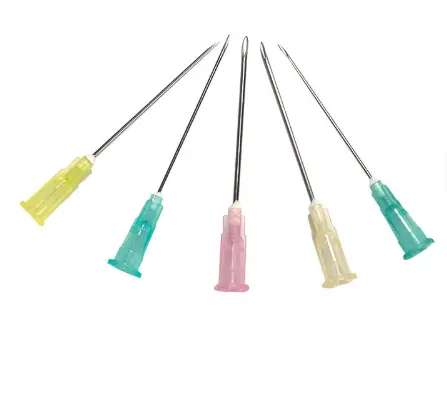
There are three main parts to a medical needle: the cannula (the hollow tube), the hub (the base connection), and the safety cap. A very good stainless steel, usually AISI 304 or 316L, is used to make the cannula. This steel has great tensile strength and resistance to corrosion. The hub is made of medical-grade polypropylene (PP), and it safely links to syringes using either the Luer Slip or Luer Lock mechanisms. This keeps the medicine from leaking when it is injected subcutaneously, intramuscularly, or intravenously.
Types and Clinical Applications
The choice of needle depends on what the doctor needs. Subcutaneous needles are usually 25G to 31G and have shorter lengths (13 to 16 mm) that work well for giving insulin and shots. Intramuscular needles (18G–23G) have longer shafts (25–38mm) that can reach deeper layers of tissue. Intravenous needles make sure that the gauge size is right for the patient's veins. AVACARE makes needles with sizes from 15G to 31G and lengths between 13mm and 18mm so they can be used in a wide range of clinical situations, from replacing fluids in an emergency to doing delicate skin treatments.
Safety Features and Sterilization Standards
The Centers for Disease Control say that about 385,000 healthcare workers get needlestick injuries every year. To stop these injuries, modern needles have improved safety features. Ethylene Oxide (EO) gas sterilization achieves a Sterility Assurance Level (SAL) of 10-6, which means that it completely gets rid of microbes. The tri-beveled tip design lowers tissue coring, which is when tissue plugs are accidentally removed during insertion. The silicone coating lowers friction coefficients, which means the puncture force is up to 30% lower than with uncoated alternatives.
Regulatory Compliance Evolution
To deal with problems in infection control, global legal systems have changed over time. ISO 7864 sets performance standards for sterile needles, and ISO 6009 sets color-coding standards for quickly identifying gauges. Part 820 of the FDA's 21 CFR requires all production facilities to have complete quality control systems. These rules make sure that products work the same way in all international markets, which protects healthcare workers and patients.
Materials and Construction: The Backbone of Premium Quality
Stainless Steel Grades and Their Impact
The choice of stainless steel has a direct effect on how well the needle works. Standard uses of grade 304 stainless steel show that it is biocompatible and resistant to rust. Because it has molybdenum added to it, Grade 316L is better at resisting chloride-induced corrosion in physiological environments. This makes it perfect for long-term contact with bodily fluids. Spectroscopic analysis is used by high-end manufacturers to check the composition of materials and make sure that all production batches are the same.
Hub Materials and Bonding Strength
Medical-grade polyethylene hubs have to be able to handle a lot of mechanical stress when a shot is given. Pull-test confirmation shows that the bonds between the hub and the cannula are stronger than 3.5 kg of force, which keeps them from coming apart during high-pressure drug delivery. The clear PP hubs from AVACARE make it possible to see air bubbles and drug flow, which addresses a major safety issue raised by clinical directors.
Thin-Wall Technology Advantages
Thin-wall needles have bigger inner sizes compared to their outer gauge, which lets more liquid medicines like biologics and contrast agents flow through subcutaneous needle. This technology cuts the time it takes to give a shot by about 40%, which makes long treatments less painful for the patient. The technical accuracy needed to keep the wall thickness uniformity below 0.02 mm tolerances shows the level of production skill that sets premium needles apart from standard-grade needles.
Advanced Production Technologies
Laser cutting makes bevel angles that are very exact, and the sharpness of the edges can be measured at the microscopic level. Computer Numerical Control (CNC) grinding makes bevel shapes that are always the same, which lowers the difference in entry force between needles. Automated CCD camera inspection systems look at all of the finished goods to find surface flaws, burrs, or hooks that could damage tissue. These quality control measures make sure that millions of units are the same size, which meets the expectations of institutional buyers who want zero defects.

Compliance and Industry Standards: Ensuring Premium Procurement Quality
ISO 13485 Quality Management Systems
Getting ISO 13485 approval shows that a company cares about managing the quality of medical devices. For design control, process validation, risk management, and post-market tracking, this standard calls for written rules. When purchasing officers look at suppliers, ISO 13485 certification lowers the risk in the supply chain by showing that manufacturers have consistent quality systems that can be tracked from the raw materials to the final delivery.
CE Marking and FDA Clearance
The CE mark shows that a product meets the key safety and performance standards set by the European Union Medical Device Regulation (MDR) 2017/745. FDA 510(k) clearance makes sure that devices are mostly the same as legally sold predicate devices. AVACARE keeps its CE and ISO 13485 certifications up to date, which lets it sell its products in North America, Europe, and the Asia-Pacific area without having to make any extra regulatory applications.
Batch Traceability and Documentation
Premium suppliers use full traceability systems that keep track of production lots from the time they buy the steel coil to the time they make sure they are sterilised using EO. Each batch is given a unique code that can be used to access Certificate of Analysis (CoA) documents that contain the results of sterility tests, measurements, and biocompatibility information. This paperwork is very important for regulatory checks and quick responses to quality problems, which helps healthcare institutions meet their risk-averse procurement goals.
Emerging Regulatory Trends
Recent changes to ISO standards put more emphasis on sustainable issues, such as using reusable packing and sterilization methods that have less of an effect on the environment. The FDA's Unique Device Identification (UDI) system requires machine-readable codes to be on each needle package. This makes the supply chain more visible and allows for better surveillance after the product has been sold. It's better for procurement managers to work with makers that are open about adapting to changes in regulations. This way, they can keep the supply going without having to stop for compliance reasons.
Comparing Premium Hypodermic Needles: Features That Matter in Procurement
Gauge and Length Variations
Needle gauge is the opposite of needle diameter; bigger numbers mean the needles are smaller. An 18G needle, which is 1.27 mm in diameter, can be used to quickly give fluids, while a 30G needle, which is 0.31 mm in diameter, is best for intradermal shots that don't need to disturb the skin too much. The length chosen varies on the patient's body and the depth of the injection that is needed. The 15G to 31G range of AVACARE can be used for a wide range of tasks, from immunizations for kids to intramuscular injections for obese people.
Disposable Versus Reusable Considerations
Cross-contamination is avoided with single-use throwaway subcutaneous needles, which are also in line with infection control guidelines set by the Joint Commission and the WHO. Even though disposables cost more per unit than reusable options, they save money on sterilization equipment, eliminate the need for reprocessing labor, and protect against liability from inadequate sterilization. When infection control and following the rules are taken into account, the total cost of ownership for healthcare institutions is lower for disposables.
Brand Positioning and Value Propositions
Well-known names like BD and Terumo charge high prices because they have decades of clinical evidence and thorough training programs. But certified makers like AVACARE offer similar technical specs at competitive prices, which makes them especially appealing to wholesalers who handle large contracts. OEM/ODM skills allow for private labeling and customized packing, which helps regional distributors build brand value in local markets while still having access to manufacturing that is internationally certified.

How to Choose and Procure Premium Hypodermic Needles for Your Business?
Aligning Product Selection with Clinical Needs
Clinical application research is the first step in the procurement strategy. Diabetes care programs need to use the same 30G to 31G needles that are short so that patients aren't too uncomfortable. Surgical centers need a variety of gauges for giving anaesthesia, getting an IV, and collecting specimens. Rehabilitation centers focus on hub designs that are practical and make it easy for patients with limited movement to use them with just one hand. By writing down these needs, you can evaluate suppliers based on their entire product line instead of just a few specific features.
Volume Requirements and Supply Chain Stability
More and more, healthcare organizations are combining their suppliers to get better deals and make the buying process easier. AVACARE's minimum order number of 3,000 pieces per standard works for buyers who don't need to buy a lot of items but still want to get a good deal. Processing times of 30 to 45 business days need to be planned ahead of time, but established inventory deals can help with last-minute shipping needs. Letter of Credit (L/C) or Telegraphic Transfer (T/T) payments are flexible enough to fit the needs of international procurement workflows and risk management preferences.
Supplier Evaluation Criteria
Quality assurance includes more than just product specifications. It also includes audits of manufacturing facilities, documentation of quality management systems, and ways to handle complaints. Suppliers should help clinical staff learn by giving them technical training materials, product manuals in multiple languages, and demonstration videos. Premium sellers are different from transactional vendors because they offer responsive customer service, especially technical help 24 hours a day for pressing questions. These parts of the service are especially helpful when there are changes to the product or the specifications that mean the clinical process needs to be adjusted.
When procurement managers look at possible partners, they should ask for samples to be tested in clinical settings, look at Certificate of Analysis papers that prove the quality standards for each lot, and see how customisable the packaging, labels, and language localisation options are. AVACARE helps with these evaluations by providing detailed technical documentation, full sample programs, and advisory services that meet the needs of each institution. The company's ISO-collared hubs make it easy to recognize gauges right away, which cuts down on drug mistakes in high-stress hospital settings.
Conclusion
To choose the best hypodermic needles, you have to weigh the quality of the materials, the consistency of the manufacturing process, the need to follow regulations, and the service capabilities of the supplier. Procurement workers keep their companies safe by giving more weight to qualified makers who follow ISO 13485, keep full traceability systems, and provide quick technical support. Buying high-quality needles pays off in a number of ways, including fewer complications, happier patients, and more reliable supply chains. As regulations keep changing, partnerships with manufacturers who are committed to both innovation and compliance are the best way to make sure long-term procurement success.
FAQ
What distinguishes premium hypodermic needles from standard alternatives?
Premium needles are made of higher-quality stainless steel (316L vs. 304), have advanced thin-wall technology that boosts flow rates, precise bevel shapes that lower the force needed to cut, and come with a full set of certificates (CE, ISO 13485, FDA) that prove they follow quality management systems. These qualities lead to more comfortable care for patients, fewer complications, and assurance of regulatory compliance.
How does thin-wall technology benefit clinical applications?
Thin-wall needles keep their outer diameters small while increasing the space inside the lumen. This lets finer-gauge needles deliver medications with higher viscosities. This keeps the shot working well while minimizing damage to the tissue. This is especially helpful for biologics, contrast agents, and painkillers that need to be given quickly.
What certifications should procurement managers require from suppliers?
Some important certificates are ISO 13485 for quality control systems, CE marking for the European market, and the right FDA licenses for selling in the United States. As extra proof, you should include ISO 7864 conformity reports, EO sterilization validation reports, and biocompatibility testing according to ISO 10993 standards. This will make sure that all the regulations are met.
Partner with AVACARE for Certified Hypodermic Needle Supply Excellence
AVACARE makes hypodermic needles that meet the strict needs of healthcare facilities and medical device distributors by combining precise manufacturing with quick service. Our ISO 13485 and CE-certified factory follows strict quality control rules and makes needles from 15G to 31G with medical-grade stainless steel cannulas and PP hubs. We know that there are problems with buying, like unstable supplies, complicated rules, and the need for customization. We solve these problems by offering OEM/ODM services, samples, and flexible order amounts starting at 3,000 pieces. Contact our team at admin@aileindus.com to get technical specs, set up product samples, or talk about the unique needle needs of your institution with experienced hypodermic needle makers who are dedicated to making your procurement go smoothly.
References
1. Centers for Disease Control and Prevention. (2020). Sharps Safety for Healthcare Settings. National Institute for Occupational Safety and Health Publication.
2. International Organization for Standardization. (2016). ISO 7864:2016 - Sterile Hypodermic Needles for Single Use. Geneva: ISO Standards Catalogue.
3. U.S. Food and Drug Administration. (2019). Medical Device Quality Systems Manual: A Small Entity Compliance Guide. Center for Devices and Radiological Health.
4. World Health Organization. (2018). WHO Guidelines on Hand Hygiene and Injection Safety. Department of Service Delivery and Safety.
5. American Society for Testing and Materials. (2017). ASTM F2063 - Standard Specification for Wrought Nickel-Titanium Shape Memory Alloys for Medical Devices and Surgical Implants. West Conshohocken: ASTM International.
6. European Commission. (2021). Regulation (EU) 2017/745 on Medical Devices: Implementation Guidance for Manufacturers. Official Journal of the European Union.

_1782811410038.webp)