Blunt Cannula Hyaluronic Acid Injection: Benefits, Uses, and Safety Guide
When we talk about advancing safety standards in aesthetic medicine, the blunt cannula has fundamentally changed how dermal filler procedures are performed. Unlike traditional sharp needles that cut through tissue and vessels, a blunt-tipped cannula gently pushes aside sensitive structures, dramatically reducing the risk of vascular complications, bruising, and patient discomfort. This innovative approach addresses one of the most critical concerns in hyaluronic acid injection procedures—intravascular injection—which can lead to serious adverse events. Our guide explores how this specialized medical device is transforming aesthetic procedures while offering procurement professionals a comprehensive understanding of its clinical and business value.
Understanding Blunt Cannulas in Hyaluronic Acid Injection
What Makes a Blunt Cannula Different from Traditional Needles?
The main difference is in the shape of the tip. There is a round, non-cutting tip on a blunt cannula that is designed to go through flesh without damaging blood vessels or nerves. Sharp needles used in traditional medicine pierce tissue without discrimination, creating multiple trauma points and raising the risk of vascular injury. Because the rounder tip doesn't cause any damage, doctors can use it to inject hyaluronic acid fillers with a lot more accuracy and control, especially in areas with lots of blood vessels, like the periorbital area and the nasolabial folds.
Material Construction and Biocompatibility Standards
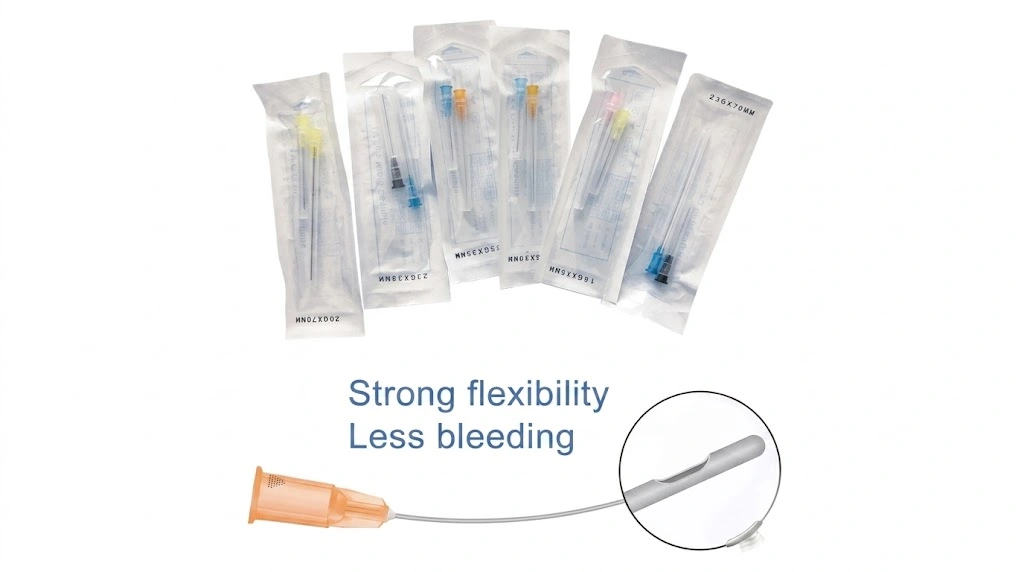
Surgical-grade stainless steel, usually SUS304 or 316L alloys, is used to make high-quality blunt cannulas because it is biocompatible and has good mechanical qualities. These materials don't rust, keep their shape while they're being used, and meet strict international standards for medical devices. Our cannulas are made by AVACARE in a state-of-the-art 12,000 m² building with Class 100,000 cleanrooms. This makes sure that every device meets strict quality standards. The very thin walls make the inside width bigger, which makes it easier for high-viscosity hyaluronic acid mixtures to flow smoothly while still allowing the device to bend and move around in the face's complicated anatomy.
Available Sizes and Clinical Selection Criteria
Which cannula to use varies on the treatment area, the thickness of the filler, and the depth of placement that you want. Sizes of gauges range from 18G for deeper fat transfer procedures to 30G for delicate work on the skin around the eyes. Lengths range from 25 mm for targeted treatments to 70 mm for full-face shaping. A 25G cannula that is 50 mm long is a flexible choice for adding volume to the middle of the face because it has the right amount of internal width and tissue movement ability. The color-coded universal Luer-Lock hub system makes it easy to find things during procedures, which cuts down on setup time and errors during busy clinical sessions.
Benefits and Applications of Blunt Cannulas in Hyaluronic Acid Injections
Enhanced Patient Safety and Reduced Complication Rates
The main benefit is that it makes things safer. Because blunt cannulas move blood vessels instead of cutting through them, they greatly reduce the risk of venous injection, which is the main reason for major filler problems. There is clinical proof that using blunt-tipped devices during procedures reduces the risk of vascular occlusion, which can cause tissue necrosis or vision loss, and increases the number of hematomas and swelling that happen after the operation. The single entry point method cuts down on the number of skin punctures needed for multiple shots to just one or two per treatment zone. This makes the treatment much less painful for the patient.
Key Clinical Applications and Procedural Advantages
Full-Face Volumization and Cheek Enhancement
Cannula-based transport works really well for the malar and zygomatic areas. With just one entry point on the side of the treatment area, the cannula can be spread out across large areas of tissue, spreading hyaluronic acid evenly for natural-looking volume repair. With this method, the patchiness that can happen with multiple needle entry places is gone, and the treatment time is cut down by a huge amount. This method works especially well for treating age-related volume loss in big parts of the face, where smooth transitions between treated and untreated areas are most important.
Periorbital Rejuvenation with Minimal Risk
Because the angular vein and infraorbital artery are so close to the tear trough, this is one of the most dangerous places to put fillers. In this sensitive area, using traditional needle techniques comes with a lot of risk. A blunt-tipped tool makes it possible to carefully place low-viscosity plugs deep into the orbicularis oculi muscle without damaging important blood vessels. The end result is rejuvenation under the eyes that looks natural and has little to no bruising and swelling. This directly leads to happier patients and fewer problems that need to be fixed after the procedure.
Jawline Contouring and Mandibular Definition
Longer cannulas, between 50mm and 70mm, work best for making smooth, well-defined outlines in the mandible. The flexible design keeps the same depth even when going through dense fibrous tissue along the jawline. A sharp, aesthetically pleasing mandibular angle can be made in a single pass, which cuts down on process time by a large amount and gives better results than multiple-point needle shots. This level of efficiency is very important in clinical settings with a lot of patients, where saving time has a direct effect on profits without lowering quality.
These examples show how the right medical device can change the way doctors do their jobs and help with safety, efficiency, and getting the same results every time.
Safety Guidelines and Best Practices for Using Blunt Cannulas
Pre-Procedure Preparation and Sterility Protocols
Every procedure starts with choosing the right device and making sure it works. Make sure the purity of the package is still there and that the device has been sterilized with EO gas. Each of our cannulas is individually wrapped in either hard or soft blisters, which keep them sterile until they are used. Do not use these one-time devices more than once. Doing so damages the silicone layer that makes tissue glide smoothly, raises the risk of infection, and goes against basic medical device safety rules. To properly prepare the skin, it needs to be washed with an antiseptic solution and vascular danger zones need to be marked using anatomical landmarks and, if possible, ultrasound direction.
Entry Point Creation and Injection Technique
The blunt tip can't cut skin that is still unbroken, so a pilot needle has to be put in to make the first access point. Make a small hole in the skin that is perpendicular to the surface with a sharp needle that is one gauge size larger than the blunt cannula you have chosen. Once the entry point is set up, move the tube forward slowly while applying light pressure. Instead of pushing it through, feel for tissue resistance. When working in the deep supraperiosteal plane, the lateral side port should face the direction of where the filler is going to be put. This is usually toward the bone. Aspirate before the shot to make sure you're not inside a blood vessel, though this risk is greatly reduced by the hard design.
Common Errors and Risk Mitigation Strategies
Technique is important even with gadgets that are naturally safer. If you use too much pressure when injecting, the rough tip can force the filler into veins that are already squished. Keep an eye on set structural danger zones where arteries don't move as much. These include the glabellar area, the tip of the nose, and the side wall of the nose. Inject slowly using small amounts, so the tissue has time to get used to the filler. Watch out for blanching, severe pain right away, or changes in your vision. These are all signs of vascular damage that need instant attention. With the right training and following the rules, device benefits can be turned into measurable safety improvements.
Choosing the Right Blunt Cannula for Your Procurement Needs
Matching Device Specifications to Clinical Requirements
Your institution's mix of procedures and clinician preferences should guide your decisions about what to buy. For facilities that do work on the tear trough and the orbital area, smaller gauges (27G to 30G) and shorter lengths (25mm to 38mm) are needed. Stocking 21G-25G choices in 50mm to 70mm lengths is helpful for practices that focus on full-face volumization and body shaping. The choice of gauge affects both how easy it is to move tissue and how much force is needed to push out high-viscosity fillers. When working with cohesive gels, ultra-thin wall construction is very important because it increases the internal diameter without increasing the external gauge size.
Evaluating Manufacturer Credentials and Certification Standards
Verification by the maker is the first step in quality assurance. Look for providers that are certified with ISO 13485. This shows that they are dedicated to medical device quality management systems. If a product has a CE mark or an FDA license, it means that it meets foreign safety standards. AVACARE keeps these certifications and seven national patents, which shows that they are strict about following the rules and can also come up with new ideas. The Class 100,000 sterile setting at our factory makes sure that the quality of each batch of products is the same. When looking at possible suppliers, make sure you ask for proof of quality control, sterilization, and traceability systems that let you act quickly if problems arise.
Strategic Procurement Considerations and Supplier Partnership
Buying in bulk is the most cost-effective way to get medical supplies. Our low minimum order number of 100,000 pieces meets the needs of institutions and lets us offer competitive price. Different financial processes can be accommodated by the payment choices of L/C and T/T. Because it takes 30 to 45 days to turn around an order, you need to plan ahead to keep enough inventory on hand without keeping too much capital in stock. Samples are available so that clinical testing can be done before large orders are placed. Use this to make sure that the blunt cannula works according to your specific procedure needs. Larger healthcare networks that want private labels or custom packaging that makes internal processes easier and boosts institutional branding need OEM/ODM capabilities.

Future Trends and Innovations in Blunt Cannula Technology
Material Science Advances and Next-Generation Designs
Advanced research into biocompatible plastics could lead to blunt cannulas that are even more flexible while still having the strength needed for precise tissue guidance. Combining metal and plastic parts in hybrid designs might find the best mix between being able to push and not kinking. Surface coating technologies keep getting better, with treatments that reduce friction that make patients more comfortable and make it easier to move through dense fibrous tissue. These new ideas directly respond to what clinicians have said about how the devices are handled, turning science progress into better procedures.
Growing Market Demand and Supply Chain Implications
As the world moves toward less invasive cosmetic treatments, the need for needle devices with better safety keeps growing. Regulatory bodies are putting more and more emphasis on reducing complications. This means that blunt-tipped delivery methods are not only better, but they might even be required in some high-risk situations. As a result of this regulatory trend, healthcare institutions that want to be ahead of the curve make sure they only do business with certified suppliers who can meet changing compliance standards. Supply chain resilience is now very important. Our strong logistics and emergency delivery support make sure that treatment plans don't get messed up even when supplies are stopped.
Impact on Training Programs and Clinical Protocols
As techniques based on cannulas become standard, training needs change. Teams in charge of buying things should work with sellers that offer full technical support, such as training classes, multilingual manuals of procedures, and example films. These learning materials shorten the time it takes for healthcare staff to learn new skills and lower the risk of problems linked to technique. Investing in the right training pays off in the form of better results, happier patients, and lower liability risks, all of which more than support the initial costs of acquisition.

Conclusion
Blunt cannulas are a huge step forward in making hyaluronic acid injections safer and more effective. Their non-traumatic design handles important therapeutic pain points and makes it possible to do things that were either not possible or too dangerous to do with regular sharp needles. The device has measurable benefits, such as fewer bruises, better patient comfort, and much lower rates of complications in a wide range of aesthetic procedures. Products that meet strict international standards and help institutions meet their quality and safety goals are valuable to procurement pros.
FAQ
Why should practitioners prefer a blunt cannula over sharp needles for dermal filler injection?
The main reason is to keep patients safe. It's easy for sharp needles to poke holes in blood vessels, which can cause intravascular injections that can kill tissue or make you blind. A blunt cannula device moves blood vessels away instead of cutting them. This greatly reduces vascular damage, pain, and the time it takes for the patient to heal.
What gauge size works best for mid-face hyaluronic acid injection?
For most mid-face applications, a 25G cannula is the best choice for balance. It is stiff enough to allow controlled tissue movement and has a wide enough interior lumen to lower the power needed to extrude high-viscosity fillers. This gauge works well with solid gels and can still be moved around in the malar area.
Can blunt cannulas completely eliminate vascular complication risk?
Even though they greatly lower the risk by moving the vessels instead of cutting them, problems are still possible. When a high-pressure shot is given near a set arterial point, the doctor still needs to be very careful. Correct technique, knowledge of anatomy, and slow injection with frequent aspiration are still very important for safety.
What is the purpose of the pilot needle included with cannula kits?
The pilot needle makes the first hole in the skin that is still intact. The blunt tip can't go through the dermis, so a sharp needle one gauge bigger can be used to make a small opening. In this two-step process, sharp needles are used to pierce the skin, and soft tips are used to safely move through tissue.
Contact AVACARE for Premium Blunt Cannula Solutions
AVACARE offers a wide range of options for healthcare facilities and medical device distributors looking for a reliable blunt cannula provider. Our factory is ISO 13485 and CE-certified, and the quality is always the same. It is backed by seven national patents and strict batch tracking. We have low prices for large orders starting at 100,000 pieces, and we can do OEM/ODM for private marking and custom packing. Before committing, you can check out our superior surgical-grade stainless steel construction and ultra-thin wall design by evaluating samples. Our procurement gurus can be reached at admin@aileindus.com to talk about how our 30- to 45-day turnaround times, technical support in multiple languages, and emergency shipping services can help your supply chain. You can look at our full line of medical supplies and surgical tools intended for institutional greatness at ailemedicals.com.

References
1. Almeida, A.T. & Kadooka, A. (2019). "Safety and Efficacy of Microcannulas for Hyaluronic Acid Filler Injection: A Comparative Study," Journal of Cosmetic Dermatology, 18(4): 982-989.
2. Bertossi, D., Giampaoli, G., Lucchese, A., et al. (2020). "Blunt-tip Cannula vs. Sharp Needle for Facial Filler Injections: Clinical Outcomes and Complication Analysis," Aesthetic Surgery Journal, 40(3): 245-254.
3. Goodman, G.J. & Roberts, S. (2021). "Advanced Injection Techniques Using Blunt Cannulas for Hyaluronic Acid Fillers," Dermatologic Surgery, 47(6): 812-819.
4. Kim, J.H., Park, Y.J., & Lee, S.K. (2022). "Material Science and Engineering Design of Medical Cannulas: A Technical Review," Medical Device Technology, 33(2): 22-28.
5. Pavicic, T. & Frank, K. (2020). "Optimizing Safety in Dermal Filler Procedures: The Role of Blunt Cannulas," Clinical, Cosmetic and Investigational Dermatology, 13: 767-776.
6. Zhang, M., Wang, L., & Chen, X. (2023). "Comparative Analysis of Injection Techniques in Aesthetic Medicine: Sharp Needle versus Blunt Cannula Approaches," Plastic and Reconstructive Surgery Global Open, 11(1): e4782.

_1782811410038.webp)