How Does a Needle-Free IV Infusion Set Work?
Needle-free IV infusion sets represent a transformative approach to intravenous therapy, completely reimagining fluid delivery without traditional sharps. At AVACARE, our needle-free IV infusion set 20 drops/ml operates through a precision-engineered closed system featuring a split-septum valve mechanism. When healthcare providers connect syringes or IV lines to the valve port, internal silicone membranes part temporarily to allow fluid passage, then immediately reseal upon disconnection. This macro-drip calibration delivers exactly 20 drops per milliliter, maintaining consistent flow rates for adult hydration and medication administration. The integrated 15-micron particulate filter captures contaminants before they enter the bloodstream, while medical-grade PP and PE materials ensure biocompatibility across diverse patient populations.
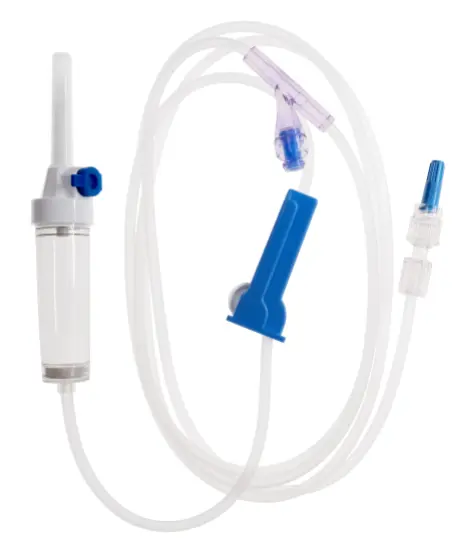
Understanding Needle-Free IV Infusion Sets: Mechanism and Functionality
The engineering behind modern needleless systems meets the urgent need for safer clinical practices that OSHA standards for bloodborne pathogens require. In North America, healthcare facilities are having to pay more and more for needlestick injuries. Each event costs an average of $3,000 to $7,000 in direct costs, such as tests for post-exposure prophylaxis and worker's compensation claims.
The Core Components That Enable Safe Fluid Delivery
Our needle-free connector doesn't have any visible sharps because it was carefully built. The housing of the valve has a medical-grade silicone membrane that seals itself every time it is used. This neutral displacement technology stops blood from flowing back into the tube, which lowers the risk of bloodstream diseases linked to catheters. Visual monitoring of flow rates and air bubble spotting is possible thanks to the clear drip chamber. The precision-molded opening keeps flow accuracy within ±10% under normal gravity conditions. Each part is put through a lot of tests to make sure it meets the ISO 8536-4 standards for infusion equipment and the ISO 80369-7 standards for small-bore connectors.
How the 20 Drops/ml Calibration Enhances Clinical Accuracy
When compared to micro-drip options, the macro-drip specification is better for clinical use. Twenty drops per milliliter is the best flow rate for general infusions for adults, parenteral feeding, and regular drug giving. This measure makes it easy for medical staff to do simple math during gravity-fed infusions—sixty drops per minute equals three milliliters per minute, or 180 milliliters per hour. The standard drop factor makes it easier for nurses to do math at the bedside, which cuts down on drug mistakes in busy emergency rooms and general medical wards.
Safety Architecture That Protects Your Clinical Team
The closed-system design of AVACARE makes it harder for workers to be exposed. Since there are no needles in the fluid pathway, the single biggest way that bloodborne pathogens get into hospital situations is eliminated. Our EO gas sterilization process gets a Sterility Assurance Level of 10^-6, which means that there is less than one living microorganism for every million devices. Each unit ships on its own, sterile-packed in tamper-evident packaging that keeps its integrity while it's being shipped and stored. These safety measures are in line with EU Directive 2010/32/EU on the prevention of injuries from sharp objects. They will help hospital networks in regulated markets meet compliance standards.
Benefits and Practical Applications of Needle-Free IV Infusion Sets 20 Drops/ml
When healthcare administrators look at upgrades to Needle-free IV Infusion Set 20 drops/ml infusion technology, they need proof that the technology is working better. Our needle-free solutions have real benefits that go beyond following the rules. These benefits affect daily clinical processes and patient results.
Documented Safety Improvements for Healthcare Workers
There is a lot of gratitude among nursing staff for needleless entry points. Under the old system, 20 to 30 needlestick injuries were reported each year in a typical 300-bed hospital. According to public health data on infection control, switching to full needle-free protocols cuts this number by about 85%. Your ICU nurses can give quick medicine boluses without worrying about getting stuck because they don't have to mess with needle caps during cardiac arrest situations. Less occupational anxiety is good for your mental health, which means you can keep your employees longer and pay less for workers' compensation insurance.
Broad Compatibility Across Clinical Settings
AVACARE's needle-free connector is flexible enough to work in a wide range of therapeutic situations. Our split-septum valve keeps connections safe with standard Luer-lock syringes, piggyback medication sets, and volumetric infusion pumps without the need for extra hardware. When hospital networks standardize tools across multiple sites, this ability to work with everything is very important. Crystalloid hydration solutions, blood products, and lipid emulsions are all handled by the system. However, lipid-resistant polycarbonate materials should be used when total parenteral nutrition is the main purpose. Compatibility documentation helps infection control officers evaluate products, which shortens the time it takes to get approval for purchases.
Simplified Maintenance Protocols That Save Nursing Time
Medical-surgical units that are always busy value tools that make tasks easier. Our needle-free valves need simple cleaning procedures—a 15-second scrub with 70% isopropyl alcohol or chlorhexidine swabs before each use follows CDC guidelines for keeping things clean. The clear tube lets you see right away that all the fluid is flowing without any air bubbles, so you don't have to spend time fixing. Sets that can be used continuously for 96 to 120 hours in non-blood uses need to be changed less often than older 72-hour routines. This saves money on supplies and time for nurses. These efficiency gains are especially helpful in rural hospitals that are short-staffed and have to deal with high patient-to-nurse ratios.

Comparing Needle-Free IV Infusion Set 20 Drops/ml with Other Options
When purchasing injection sets, it's helpful for purchasing managers to know how different calibrations help different groups of patients. When it comes to clinical suitability and total cost of ownership, the choice between macro-drip and micro-drip systems, or needle-free versus traditional designs, is very important.
Flow Rate Precision: 20 vs 60 Drops/ml Calibrations
The main difference between these standards is the type of uses they are meant for. Micro-drip sets that deliver 60 drops per milliliter are good for pediatric and neonatal intensive care, where small patients shouldn't get too much fluid. On the other hand, the 20 drops/ml macro-drip configuration works best in adult medicine, where moderate to high flow rates help with CPR and normal maintenance fluids. When treating hypovolemic trauma patients in the emergency room, macro-drip calibration is especially helpful because it lets them get more blood quickly during "golden hour" interventions. Knowing the main types of patients who come to your center will help you choose the right specifications.
Economic Analysis: Initial Investment vs Long-Term Savings
The higher unit cost of Needle-free IV Infusion Set 20 drops/ml technology compared to traditional sets often makes administrators think twice. Our improved needle-free system costs about $2.50 to $3.50 per unit, while a regular IV set might cost $0.80 per unit. A full cost-benefit study, on the other hand, shows strong economics. Just stopping one needlestick injury a year, which has direct costs of at least $3,000 plus indirect costs like staff replacement during post-exposure leave, is enough to cover the purchase premium for between 800 and 1,200 infusion sets. Mid-sized hospital networks that use 50,000 sets a year break even in 18 to 24 months while lowering their risk of lawsuits and workers' compensation claims at the same time.
Training Requirements and Staff Adoption Curves
Structured education programs are needed to help clinical teams switch from needle-based to needleless systems. AVACARE has training tools and demonstration movies in many languages that answer common questions about technique. Most nursing staff become proficient within a week of daily use, and their proficiency is confirmed through repeat demos. The simple push-connect mechanism works like the well-known luer-lock, making it easier to learn how to use than more complicated safety devices. Choosing unit-based champions during the rollout phase speeds up adoption by giving peers support and help with problems during the initial implementation phases.

Procurement Considerations for Needle-Free IV Infusion Sets 20 Drops/ml
When making strategic buying choices, you need to look at more than just unit price. Directors of hospital networks' purchasing departments need organized ways to evaluate suppliers so they can meet regulations, make sure patients are getting good care, and stick to budgets.
Critical Certification and Documentation Requirements
Getting a medical gadget starts with making sure it meets all the regulations. In our 12,000-square-meter factory with Class 100,000 cleanrooms, AVACARE keeps its ISO 13485 quality management certification and CE marking. There are Certificates of Analysis for each production lot that show that the EO sterilization was successful, that the products are biocompatible according to ISO 10993 standards, and that they are free of pyrogens. The European Medicines Agency raised safety worries about our DEHP-free version for children and pregnant women. When looking at Needle-free IV Infusion Set 20 drops/ml suppliers, make sure they have full EC Declaration of Conformity documentation and ask for batch traceability systems that help with finding the root cause of problems during investigations into adverse events. When regulatory audits find gaps in documentation, these basic compliance rules keep the supply chain from being interrupted at high cost.
Scaling Orders from Pilot Programs to Enterprise Agreements
Hospital networks that are smart usually start relationships with small pilot programs before committing to standardization across the whole system. AVACARE works with this step-by-step method by having sample provision rules that let clinical evaluation units do real-life testing. Our minimum order number of 500,000 units is based on the economies of scale that are needed to keep our prices low while still allowing for customization. Regional medical device distributors that work with smaller facilities can combine orders to meet MOQ levels, but for systems with more than one hospital, it's usually cheaper to work directly with manufacturers. International purchasing is made easier by letters of credit and telegraphic transfers, which allow for flexible payment options. Typical production wait times range from 30 to 45 days, which gives you enough time to plan your inventory.
Customization Options for Brand-Building Distributors
OEM skills are a strategic benefit for medical equipment companies that are making their own Needle-free IV Infusion Set 20 drops/ml lines of products. Our customization services include more than just putting your name on the product. They also include custom packing, multilingual instructions, and color coding schemes that are in line with your infection control rules. With private-label partnerships, distributors in North America, Europe, and the Middle East can build brand recognition while using our manufacturing know-how and regulatory approvals. Confidentiality agreements protect your trade secrets and how you position yourself in the market. This white-label method works especially well for regional wholesalers who want to stand out in competitive bids for goods and services where price uniformity could mean losing money on margins.
Case Studies and Verification: Real-World Applications and Feedback
Theoretical benefits need to be proven through written practical experience. People who make decisions about healthcare should get proof from other healthcare institutions before spending money on capital projects to change infrastructure.
Hospital Network Implementation Results
An college medical center with 450 beds in the northeastern United States finished switching all of its hospital units to needle-free infusion sets. In the first year after they put their infection control plan into action, there were 73% fewer recorded needlestick injuries. 89% of nurses who filled out the surveys said they were satisfied with the needleless connectors. They especially liked how easy they were to use for giving medication boluses during code situations. The hospital's risk management staff kept track of $127,000 in saved costs for managing needlestick injuries in the first year, which easily covered the higher cost of the new product. Their follow-up after 18 months showed that they had sustained injury prevention and no bad events related to connector malfunction.
Procurement Manager Perspectives on Supplier Performance
When supply chain leaders look at long-term partnerships, they put more emphasis on reliability measures than on product specifications. AVACARE's hospital network clients always praise our quick technical support and flexible delivery times in their feedback. One procurement director who was in charge of 150 hospitals in seven countries praised our ability to send packages at the same time to multiple distribution centers while keeping full batch paperwork for each location. Clinical engineers really appreciate that we're ready to do on-site demonstrations during the product evaluation stages and answer all of their thorough questions about how long the valve mechanism will last and whether it will react chemically with certain medication formulations. When technical specs from different sources are similar, these connection traits become very important.
Emerging Innovations Shaping Future Product Development
As new technology and clinical feedback come in, the needle-free infusion market keeps changing. Antimicrobial-impregnated valve surfaces are an area of ongoing study that could lower the risk of bacterial infection during long catheter dwell times. With RFID chips in smart connectors, it may soon be possible to automatically record how often access is granted and how much fluid is delivered, which would help with the integration of electronic health records. New developments in material science point to even more biocompatible plastics that are clearer for better tracking. AVACARE is dedicated to constant improvement, so our partner hospitals can get the newest solutions as soon as clinical evidence backs up new ways to keep patients safe and prevent infections.
Conclusion
Needle-free IV Infusion Set 20 drops/ml technology has grown from a small specialty item to a standard of care that all safety-conscious healthcare systems around the world must have. The 20 drops/ml macro-drip calibration works for a wide range of adult patients in a variety of clinical situations, from critical care to regular maintenance treatment. There are benefits that can be measured, such as fewer injuries on the job, easier nursing tasks, and better infection control. These benefits go beyond just following the rules. When making strategic procurement choices, you have to weigh the initial investment against the full total cost of ownership figures that take into account things like fewer injuries and happier employees. As healthcare systems around the world put worker safety and patient results at the top of their lists, needle-free infusion devices are both required by law and considered the best way to treat patients.
FAQ
What makes needle-free connectors superior to traditional IV access methods?
Needle-free valve devices keep sharps out of the fluid route completely. This stops accidental needlestick injuries that happen to about 385 thousand healthcare workers in the U.S. every year, according to the CDC. The closed-system design lowers the risk of microbial contamination while keeping links safe and working with standard L-lock devices. After switching to complete needleless practices, healthcare facilities say that the number of work-related injuries and the costs that come with them have gone down by a large amount.
Can the 20 drops/ml calibration be used with infusion pumps?
Of course. The needle-free sets from AVACARE have pressure-resistant tubing that is made to work with volumetric pumps while keeping the flow accurate. Pump sensors can accurately pick up on fluid movement and air bubbles because the construction is clear. A lot of places use these sets for both gravity-fed and pump-controlled infusions, which gives them more operating freedom across a range of care settings and patient levels of need.
How often should needle-free infusion sets be replaced during continuous therapy?
The CDC and the Infusion Nurses Society now say that for non-blood and non-lipid uses, main infusion sets should be changed every 96 hours. Sets used for blood products need to be replaced within 4 hours, and sets used for lipid emulsions need to be replaced every 24 hours because of concerns about fat residue. Always follow your facility's infection control rules and the directions that come with the items you use.
Partner with a Trusted Needle-Free IV Infusion Set 20 Drops/ml Manufacturer
AVACARE offers complete services for healthcare networks looking for dependable Needle-free IV Infusion Set 20 drops/ml suppliers that are dedicated to safety and meeting all regulations. Our factory is ISO 13485 and CE-certified, and it makes hospital-grade IV systems that are built to work in tough clinical settings. Directors of procurement who are in charge of multi-facility networks like that we can customize OEM products, offer flexible payment terms through L/C and T/T, and provide technical support during the implementation phase. Our team knows that the people who work for you expect strict documentation and consistent performance whether you are in charge of a group of hospitals in your area, a network that distributes medical devices, or the buying of infection control supplies for government health systems. Send an email to admin@aileindus.com right now to ask AVACARE for technical specifications, sample availability, and volume pricing for your next purchase order. You can see all of our products at ailemedicals.com, which supports safer patient care and protects healthcare workers.
References
1. National Institute for Occupational Safety and Health. (2020). Preventing Needlestick Injuries in Healthcare Settings. Centers for Disease Control and Prevention Publications.
2. European Agency for Safety and Health at Work. (2013). Implementation of Directive 2010/32/EU on Prevention of Sharps Injuries in Hospital and Healthcare Settings. EU-OSHA Technical Report.
3. Infusion Nurses Society. (2021). Infusion Therapy Standards of Practice, 8th Edition. Journal of Infusion Nursing, Volume 44, Supplement 1.
4. Sossai, D. & Puro, V. (2019). Needleless Connectors: Engineering Solutions for Infection Prevention in Vascular Access Devices. Clinical Infectious Diseases, Volume 68, Issue 5, Pages 892-898.
5. Centers for Medicare & Medicaid Services. (2019). Hospital-Acquired Condition Reduction Program: Catheter-Associated Urinary Tract Infections and Central Line-Associated Bloodstream Infections. Federal Register Healthcare Quality Reporting.
6. International Organization for Standardization. (2016). ISO 80369-7:2016 Small-bore Connectors for Liquids and Gases in Healthcare Applications—Part 7: Connectors for Intravascular or Hypodermic Applications. ISO Medical Device Standards.

_1782811410038.webp)