Blunt Cannula Hyaluronic Acid Injection vs. Needle Injection: Key Differences Explained
When healthcare institutions and procurement managers evaluate tools for hyaluronic acid delivery, understanding the distinction between blunt cannula systems and traditional needle methods becomes fundamental to operational success. The blunt cannula features a rounded, flexible tip designed to navigate beneath the skin by gently displacing vessels and nerves rather than puncturing them. This essential design difference directly impacts patient safety, procedural efficiency, and clinical outcomes. As aesthetic medicine advances and safety standards tighten globally, selecting the appropriate injection technology influences not only immediate treatment results but also long-term patient satisfaction and institutional reputation.
Understanding Blunt Cannula and Needle Injection Technologies
Core Design Characteristics of Blunt Cannulas
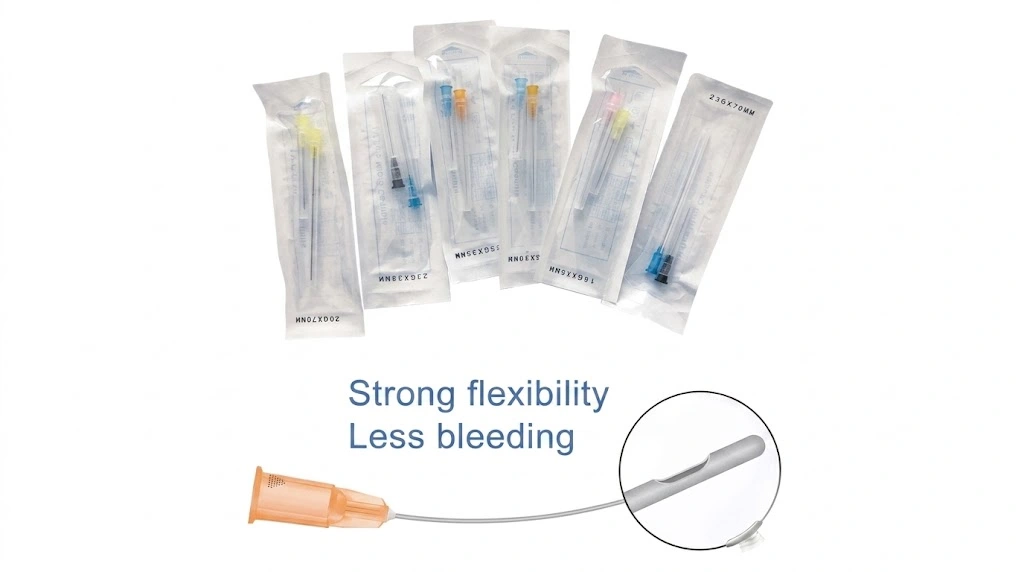
The blunt-tipped cannula is a special kind of medical device made from high-quality surgical-grade stainless steel, usually types SUS304 or 316L. Instead of cutting through tissue like sharp needles do, the rounded tip shape lets practitioners move internal structures out of the way. This non-traumatic method greatly lowers the chance of accidentally entering blood vessels, which is still the main worry during dermal filler treatments.
Gage sizes range from 18G to 30G, and lengths range from 25mm to 70mm. This gives you options for different parts of the face and different injection depths. The ultra-thin wall design increases the inside width while keeping the structure strong, which allows high-viscosity hyaluronic acid mixtures to move smoothly. Each cannula connects to a universal Luer-Lock hub that is color-coded to meet ISO standards and make it easy to find during clinical workflows.
Traditional Needle Injection Systems
For many years, sharp needles have been the standard way to put hyaluronic acid in place. These tools precisely go through the skin and subcutaneous layers, giving doctors direct control over how deep an injection goes and where the filler goes. You can change the gages based on the viscosity of the product and the density of the tissue you want to treat.
The main benefit is that doctors are already familiar with them, and they're cost-effective for offices with a lot of patients. Sharp needles make it easy to learn how to use them and allow for quick, repeated shots across treatment areas. But because they cut, they naturally face a higher risk of damaging blood vessels, nerves, and tissue compared to blunt options.
Material Quality and Manufacturing Standards
AVACARE makes its blunt cannula systems in a 12,000 m² building with Class 100,000 cleanrooms that keep the work areas free of contamination. Each device is sterilized with EO gas and comes in clean hard or soft blister packaging. It can be used for five years. Following the rules set by CE, ISO 13485, and FDA makes sure that goods are safe and work properly as required by international laws.

Clinical and Operational Differences Between Blunt Cannula and Needle Injection
Patient Comfort and Safety Profiles
When patients are treated with blunt cannula methods, they usually say they feel less pain during and after treatments. Because it glides through tissue planes instead of puncturing them multiple times, the rounded tip causes less mechanical damage. Compared to traditional needle methods, clinical observations consistently show less bleeding, less swelling, and shorter recovery times.
The safety benefit is especially clear in areas of the body that are prone to injury. The angular vein and infraorbital artery are located in the periorbital area. Injecting these veins or arteries by chance with a sharp needle can cause serious problems like tissue death or loss of vision. Because the blunt tip can move away from vessels instead of pierce them, it adds an important safety cushion that institutions that don't like taking risks value.
Procedural Efficiency and Workflow Integration
Blunt cannula techniques let you treat large areas with just one entry point. A doctor can make one entry point and then spread the needle out over the malar or zygomatic areas. This way, the hyaluronic acid is spread evenly without having to make any more skin punctures. This method cuts down on the time needed for the process while keeping the accuracy of the depth and placement.
Traditional needle injections need more than one puncture point to cover the same area, which could make treatment take longer and increase the risk of vascular damage. The trade-off is that there is a modest learning curve for cannula methods because doctors have to get good at moving the flexible device through different types of tissue without being able to see where the tip is.
Clinical Outcomes and Filler Distribution
Quality blunt cannulas have a lateral side-port design that makes the discharge angle of hyaluronic acid gel optimal. This helps the gel spread evenly in the target tissue planes. The rounded tip keeps the same depth even in high-density fibrous areas like the chin. This lets you make smooth, continuous outlines with just one pass.
Injections with sharp needles deliver the drug in separate boluses, which must then be massaged or shaped into smooth transitions by skilled professionals. This method works well for spot treatments, but it might make the material uneven when trying to add volume to bigger areas. When procurement managers know about these spread trends, they can choose devices that are best for their institution's procedures and patients.
Procurement Considerations for B2B Buyers: Choosing Between Blunt Cannula and Needle
Certification and Quality Verification
Institutions that care about quality give preference to providers with strong certification profiles. ISO 13485 compliance means that medical devices follow quality management systems, and CE and FDA certifications show that they are approved by regulators for specific markets. Along with seven national patents, these authorized approvals show that AVACARE has been investing in innovation and compliance for a long time.
When evaluating a seller, asking for certificates of analysis, records of sterilization confirmation, and batch tracking paperwork makes sure that the whole supply chain is clear. When suppliers offer samples for clinical evaluation, buyers can try them out before committing to bulk orders, which lowers the risk of the procurement process.
Pricing Structure and Volume Requirements
Blunt cannula systems usually cost more than regular needles because they are made using special techniques and advanced materials engineering. Different suppliers have different minimum order amounts. For example, AVACARE needs 100,000 pieces for normal procurement deals. This number barrier works for big hospital networks, clinic chains, and distributors that work with more than one facility.
Bulk purchasing strategies let you get savings for buying in bulk and make sure that high-throughput practices can keep getting what they need. Even though the per-unit costs are higher, the overall cost of ownership, which includes lower rates of complications, less patient downtime, and higher happiness scores, is often positive.
Supply Chain Reliability and Lead Times
For hospitals that have to keep tight surgery timetables and steady flows of patients, consistent product supply is still a must. From order approval to delivery, AVACARE keeps a 30- to 45-day turnaround time. They accept both L/C and T/T as payment methods, which are compatible with foreign purchasing rules.
Logistics skills like emergency delivery support, multiple shipping options, and transport insurance show that the provider is committed to keeping the relationship stable. Setting up dual-source strategies or keeping strategic inventory buffers lowers the risk of disruptions caused by delays in production or problems with customs.
OEM and Customization Opportunities
Suppliers that offer OEM/ODM services are helpful for medical device sellers and private-label makers. AVACARE allows partners to make changes to the style of the packaging, the language of the labels, and other aspects of the brand. This lets partners offer unique products in the market while using AVACARE's already-established production infrastructure.
Custom gage specs, length changes, or hub configurations can be made to fit specific clinical needs or local tastes. Time-to-market for customized solutions is sped up by working with providers who have shown they can do research and development and provide quick expert support.

Advantages and Limitations: When to Use Blunt Cannula vs. Needle Injection?
Optimal Scenarios for Blunt Cannula Application
When safety, patient comfort, and single-entry techniques are in line with clinical goals, blunt cannula systems work better. Full-face volumization procedures benefit greatly from the fan-shaped distribution that can be achieved by strategically placing the cannula. This allows for smooth transitions between the malar and zygomatic regions without any visible puncture marks.
The technology is very useful for periorbital renewal because the tear trough area needs to be very precise and blood vessels need to be avoided. Longer cannulas (50mm to 70mm) are best for shaping the chin and adding volume to the submandibular area. They can keep their depth through thick fibrous tissue to make clean, sharp lines on the mandible in just one pass.
Ideal use cases also include large-volume transfers and treatments involving patients who are sensitive, like those who have bleeding disorders, large venous networks, or fear of needles. Adopting blunt cannulas can be very valuable for institutions that want to provide high-quality services while also keeping costs low by avoiding complications.
When Traditional Needles Remain Preferable
When pinpoint accuracy is needed for small-volume corrections, sharp needle injections are still the best way to go. Needles make it easier to precisely define lip borders, improve the color of lips, or fill in small acne scars. This is because they allow for controlled, localized product placement.
When regular treatments are done on low-risk body parts, practices that want to stick to a budget may find that standard needles are effective enough while keeping per-procedure costs low. Practitioners already know how to use needle techniques, which cuts down on the cost of training and speeds up the process of getting new staff up to speed.
Based on their rheological properties, some high-viscosity mixtures or specific filler products may flow more reliably through needle systems. The best extrusion characteristics and placement control are achieved by matching the device pick to the product specs.
Safety and Best Practice Guidelines for Using Blunt Cannula and Needles
Blunt Cannula Technique Protocols
In order to properly enter a cannula, an entry portal must first be made by puncturing the dermis with a pilot needle that is usually one gage bigger than the cannula's diameter. This is because the blunt tip of the cannula cannot go through unbroken skin. Keeping the insertion angle low compared to the skin's surface stops accidental deep penetration and eases pain.
To move slowly through tissue, you need to apply gentle, steady pressure while keeping an eye out for changes in resistance that could mean a blood vessel is close by. Aspiration before the injection confirms that the needle is outside of the blood vessels. However, the soft design greatly lowers the risk of intravascular damage compared to sharp options. Even though the cannula is designed to protect, doctors should not give high-pressure injections near set artery spots.
No matter what kind of device it is, strict steps must be taken to avoid infections. These include preparing a sterile field, using only one device at a time, and following the right antiseptic protocols. Following institutional biohazard protocols, both cannulas and needles should be thrown away in sharps containers.
Sharp Needle Safety Considerations
Even when standard needles are used, pain control methods like topical anesthetics, ice, or vibration analgesia make patients more comfortable. Vascular complications are less likely to happen if insertion angles are kept shallow and aspiration is done before product delivery.
Slow, controlled injection rates keep pressure damage to a minimum and let you see how the tissue is responding in real time. Practitioners should keep their eyes open for physical danger zones like the angular artery, supratrochlear vessels, and temporal arteries, and change their method as needed.
Patients can help keep an eye on their own healing by following the post-surgery care directions that include how to treat hematomas, limit their activities, and recognize the signs of complications. Setting up clear lines of communication for urgent issues will allow for quick action if problems arise.
Conclusion
To choose between blunt cannula and traditional needle systems for delivering hyaluronic acid, it is important to carefully look at clinical priorities, patient populations, and the institution's resources. Blunt cannulas are safer, more comfortable for the patient, and faster during procedures, especially in high-risk areas of the body and large-area volumization treatments. Traditional needles are still useful for precise work, situations where cost is an issue, and for people who prefer to use methods they are already familiar with. When choosing injection devices, procurement managers have to weigh the initial cost against the long-term benefits, such as lowering complications, improving patient satisfaction, and streamlining operations. By understanding these subtle differences, healthcare institutions can make smart buying choices that raise professional standards and support long-term relationships in the supply chain.
FAQ
Can blunt cannula systems completely replace traditional needles in dermal filler practices?
For many uses, blunt cannulas are much safer than other options, but it's still not possible to change them all. Sharp needle control is helpful for treatments that need perfect accuracy for small-volume fixes, like defining the lip line or filling in specific scars. The best way to do things is to keep both types of devices in hospital stores and use each one based on the patient's anatomy, the goals of the procedure, and other factors that are unique to that patient.
How do I verify supplier authenticity and product quality when procuring blunt cannulas internationally?
Ask for a lot of proof, like ISO 13485 certificates, CE/FDA registration numbers, and records of cleaning validation. Real sellers, like AVACARE, give samples so that you can try them out before you buy a lot of them. If you can, have a third party audit the factory's credentials or visit the site yourself. Check batch tracking systems to make sure that each device is linked to production records. This will allow for quick action if quality issues arise.
What typical lead times and minimum order volumes should I expect for bulk cannula procurement?
Lead times in the industry are usually between 30 and 45 days from when an order is confirmed to when it is delivered. This includes planning production, making sure the quality is good, and dealing with foreign shipping. Different suppliers have different minimum order quantities, but for competitive pricing, most well-known brands need commitments of 100,000 pieces. Supply interruptions that affect treatment plans can be avoided by planning buying cycles with enough lead time and keeping strategic inventory buffers.
Partner with AVACARE for Premium Blunt Cannula Solutions
To improve your institution's hyaluronic acid injection skills, you need to work with a blunt cannula provider that is dedicated to quality, safety, and service excellence all the time. AVACARE uses cutting-edge manufacturing in 12,000 m² buildings with ISO-certified cleanrooms to make gadgets that meet CE, FDA, and ISO 13485 standards. For your unique needs, our expert team offers full training, quick response times, and OEM/ODM solutions that can be changed to fit your needs. Samples are offered for clinical testing, which lets a full review happen before committing to a large order. Visit ailemedicals.com or email our procurement specialists at admin@aileindus.com to talk about how our certified products and reliable supply chain can help your patients get better care while also making your business more efficient.

References
1. Goodman GJ, Roberts S, Callan P. "Experience and recommendations for safer injection techniques in facial aesthetic procedures." Aesthetic Surgery Journal, vol. 36, no. 2, 2016, pp. S1-S20.
2. Beleznay K, Carruthers JD, Humphrey S, Jones D. "Avoiding and treating blindness from fillers: A review of the world literature." Dermatologic Surgery, vol. 41, no. 10, 2015, pp. 1097-1117.
3. Pavicic T, Frank K, Wollenweber U. "Optimizing efficiency and safety: Blunt cannulas versus sharp needles in dermal filler application." Journal of Drugs in Dermatology, vol. 16, no. 7, 2017, pp. 699-705.
4. Sahan A, Tamer F. "A comparison of blunt-tipped cannulas versus sharp needles for soft tissue augmentation: Clinical study." Journal of Cosmetic Dermatology, vol. 19, no. 4, 2020, pp. 767-772.
5. Hexsel D, Soirefmann M, Porto MD, Siega C. "Blunt-tipped cannula versus sharp-tipped needle for placement of soft tissue fillers: A clinical comparative study." Dermatologic Surgery, vol. 38, no. 2, 2012, pp. 207-213.
6. Heydenrych I, Kapoor KM, De Boulle K. "Cannula versus sharp needle for dermal filler injections: An international review and recommendations for best practice." Clinical, Cosmetic and Investigational Dermatology, vol. 11, 2018, pp. 223-232.

_1782811410038.webp)