Discover the Benefits of a Pencil-Point Spinal Needle for Your Needs?
Pencil-point spinal needles are a huge step forward in neuraxial anesthesia. They are better than regular cutting needles and should be used instead of them in hospitals. Post-dural puncture headache (PDPH) is one of the most common problems that can happen after spinal anesthesia. The unique non-cutting, conical tip design parts dural nerves gently instead of breaking them. By stopping CSF leaks and speeding up the closure of puncture sites, these non-traumatic tools help patients get better faster and save the hospital money that would have been spent on longer stays and managing complications.
What Is a Pencil-Point Spinal Needle? Understanding the Basics
Defining the Non-Cutting Design
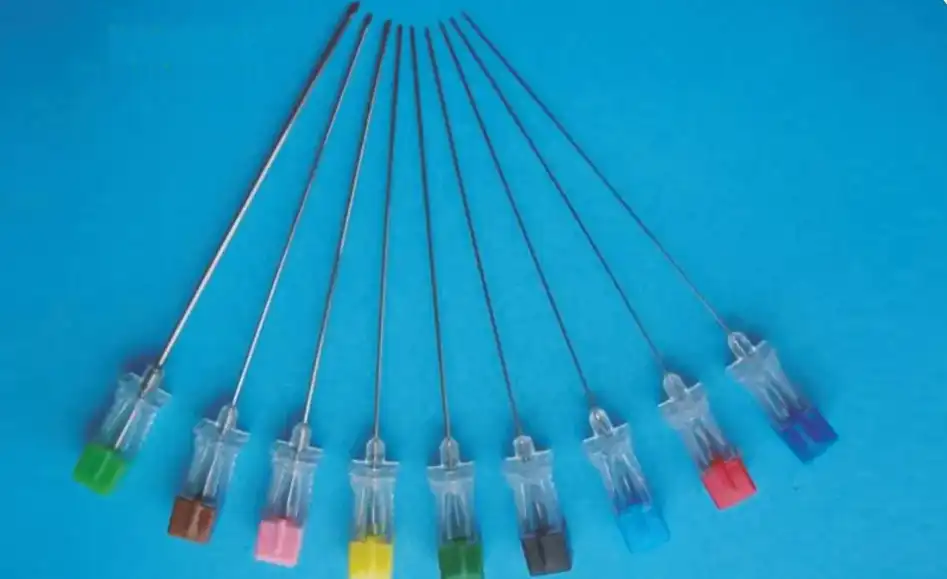
A pencil-point spinal needle is a carefully made medical tool that is intended to give regional anesthesia into the subarachnoid space. In contrast to regular Quincke needles, which have sharp, cutting edges, this one has a rounded, bullet-shaped tip with a side hole just next to it. The AVACARE pencil-point spinal needle tip is made of medical-grade SUS304 stainless steel, and the hub assembly is made of medical-grade PVC. This keeps the structure strong even when navigating difficult body parts.
The non-cutting geometry splits dural fibers during injection instead of cutting them, making a puncture route that heals itself. Compared to standard needle designs, this basic design concept greatly lowers the amount of tissue damage and cerebrospinal fluid leakage.
Anatomical Features and Tip Geometry
There are several important parts to the pencil-point spinal needle anatomy that make it work well in the medical setting. The clear polycarbonate hub lets you see the CSF flashback right away, which cuts down on the time needed for proof during process setting. The side port, which is about 2 to 4 mm from the tip, spreads the anesthetic solution out evenly without coming into direct touch with the nerves.
AVACARE makes these needles in a wide range of gauges, from 18G to 27G, and with a normal length of 90 mm. This means that they can be used with a wide range of patients, from children to obese people. The finer gauges (25G–27G) are best for obstetric anesthesia because they lower the risk of PDPH. The bigger gauges are better for orthopedic treatments that need to give medication quickly.
Whitacre and Sprotte Variations
In the pencil-point spinal needle group, there are two main tip designs: the Whitacre and the Sprotte. The Whitacre version has a shorter, rounder tip with a lateral hole closer to the tip's top. This gives better tactile feedback during dural penetration. Sprotte needles have a slightly longer, tapered tip with a bigger lateral port. This makes it easier for CSF to move during diagnostic lumbar punctures. Both designs still have the major benefit of separating fibers, but doctors often choose one over the other based on how it feels and the needs of the procedure.
Comparing Pencil-Point Spinal Needles with Other Needle Types
Clinical Outcome Differences
Several randomized controlled studies have shown that pencil-point spinal needles that don't cause trauma lower the risk of PDPH by 60–80% compared to cutting needles of the same size. A large study that looked at more than 15,000 patients found that the risk of PDPH was about 1% to 3% with pencil-point designs and 10% to 15% with Quincke needles in obstetric groups. These changes in outcomes directly lead to lower rates of hospital readmission, lower drug costs for managing PDPH, and higher patient happiness scores.
The patient's happiness goes beyond keeping headaches away. The gentle splitting of tissues leads to less inflammation along the needle path, which lowers back pain after the procedure. Even though neurological complications are already very rare when done correctly, they get a little better with pencil-point spinal needles because there is less chance that the side drug delivery port will touch a nerve root.
Supplier Landscape and Product Quality
There are a lot of manufacturers on the global market, from large, well-known international companies to small, specialized regional sellers. Premium names usually put a lot of emphasis on strict quality control procedures, a lot of clinical confirmation data, and a lot of technical support infrastructure. AVACARE stands out by having CE and ISO 13485 licenses, which make sure that every batch meets strict international quality standards. At the same time, the company keeps its prices low enough that large institutions can buy in bulk.
Aside from unit cost, procurement managers should look closely at a number of other important factors when reviewing providers. Levels of sterility guarantee are directly affected by production facility standards, such as cleanroom grades (AVACARE has 100,000-grade cleanrooms). When there are problems on a world scale, supply chain resilience is very important. Manufacturers with well-established transportation networks and inventory management systems are great partners for healthcare institutions that need to keep getting supplies.
Advantages of Pencil-Point Spinal Needles for Clinical and Procurement Needs
Clinical Safety and Efficacy Benefits
The main benefit that is causing broad adoption is a huge drop in PDPH. AVACARE's pencil-point spinal needles reduce dural trauma through complex tip geometry, which lowers the risk of PDPH while keeping the procedure efficient. The improved tip gives a unique physical feedback—a clear "pop" sound—that helps anesthesiologists confirm correct subarachnoid placement. This is especially helpful when working with calcified ligaments in older patients or difficult anatomy in fat people.
The crystal-clear hub design makes it possible to see flashbacks quickly, which cuts down on the time needed to find CSF reflux. This trait is especially important for treatments that need to be done quickly or for treating patients whose CSF dynamics aren't usual. The polished lateral port makes sure that the medicine is evenly distributed throughout the subarachnoid space and avoids touching nerve tissue by mistake, which improves both safety and the regularity of the anesthetic.
These clinical benefits lead to gains in business speed that procurement teams really value. Lower rates of complications mean less work for nurses, less money spent on drugs to treat symptoms, and shorter hospital stays. By switching from cutting to pencil-point spinal needles, a normal maternity unit that does 200 cesarean sections a year can avoid 20 to 30 cases of PDPH, which will save the unit a lot of money and more than cover the cost of buying the new device.
Procurement and Logistics Considerations
Institutions that buy a lot of things can save a lot of money by using bulk buying methods. AVACARE accepts orders as low as 5,000 pieces, which lets hospital systems and delivery networks get better prices while keeping supplies going. The 30-45 day production lead time lets you plan your goods strategically, and the flexible payment terms, such as L/C and T/T, can be used in different foreign markets to meet the needs of different financial managers.
There are more ways to customize than just private labels. AVACARE offers full OEM/ODM services, such as localizing the language on the packaging, customizing the gauge selection, and integrating brand recognition to help distributors place themselves in the market. Sample support makes it easier to do clinical testing before making a big purchase, which lowers the risk of the purchase and makes sure that the product meets the clinical needs.
How to Choose and Purchase Pencil-Point Spinal Needles: A B2B GuideDefining Clinical and Volume Requirements
A thorough needs survey is the first step to successful buying. The clinical leaders should work with the anesthesiology teams to figure out how many gauges are needed for each procedure. A tertiary care center that does a lot of obstetrics needs a higher number of 25G-27G pencil-point spinal needles. On the other hand, orthopedic-focused hospitals should have a balanced inventory that includes 22G-24G options for quick drug delivery in hip and knee arthroplasty cases.
Buying plans are greatly affected by annual volume projections. If an institution does fewer than 500 neuraxial procedures a year, they may want to choose flexible providers with lower minimum orders. On the other hand, centers that do a lot of procedures benefit from bulk contracts with fixed prices and sure supply sharing during shortages.
Supplier Evaluation Framework
Credentials for quality assurance are the basis for judging a seller. Getting ISO 13485 certification means that you have put in place thorough quality control systems that are meant to make medical devices. CE marking proves that a product meets European safety standards, and FDA registration (if needed) proves that it meets strict American standards. AVACARE has both CE and ISO 13485 certifications, which show that their manufacturing methods always make gadgets that meet international safety and performance standards.
Assessing a company's ability to make things goes beyond just giving licenses. Site audit data, production capacity metrics, and supply chain reliability measures show how resilient a seller is when demand goes up or there are problems in the supply chain. The 12000-square-meter production center that AVACARE has, complete with cleanroom infrastructure, shows that the company can produce goods in a way that can be expanded to meet the needs of big healthcare networks with multiple sites.
Infrastructure for after-sales help is what sets exceptional providers apart from average ones. Comprehensive technical training programs make sure that healthcare staff get the most out of the pencil-point spinal needles while reducing problems that users may have with them. AVACARE offers instructional materials in multiple languages, demonstration videos, and quick-response technical support 24 hours a day, 7 days a week. This helps with the usual application problems that come up when switching products.
Negotiation and Compliance Strategies
When negotiating prices, you should find a mix between lowering costs and making sure the quality is good. Standard bargaining tools include volume-based tier pricing, longer payment terms, and allocating freight costs. However, procurement managers should not lower quality standards to save a little money. Instead of just looking at the cost of buying a unit, the total cost of ownership should take into account the value of supply consistency, the cost of complicated management, and the cost of training.
Verification of regulatory compliance shields institutions from being sued. Ask for proof of batch tracking that shows quality control testing was done on each lot. Independent lab certificates should be used to back up claims about the level of sterility guarantee. AVACARE's dedication to full batch tracking and the integrity of sterile packing means that procurement teams can safely show that they did their homework during regulatory checks or investigations into adverse events.

Best Practices for Using Pencil-Point Spinal Needles in Clinical Settings
Optimizing Insertion Technique
To get the most out of a pencil-point spinal needle, you need to change how you do things compared to cutting-needle processes. The non-cutting tip needs a little more force to go through the skin at first, but the rounded shape gives better physical feedback when going through ligaments. Instead of strong thrusting motions, clinicians should use steady, controlled advances. This will let the tip shape naturally separate tissues while keeping the unique "pop" sound that confirms dural penetration.
Needle position has a big effect on how well the procedure works. To get the best drug flow in the subarachnoid area, the lateral port should face either cephalad or caudad instead of laterally. When giving hyperbaric or hypobaric anesthetic solutions, where gravity changes the spread patterns of the dermatome, this orientation issue becomes even more important.
Following the Sterile Protocol
Even though the pencil-point spinal needle design is safer, a strict aseptic method must still be used. Thoroughly cleaning the skin with chlorhexidine-alcohol treatments, covering the whole area with a shield, and following strict hand hygiene rules stop infectious problems that could compromise the device's safety. Checking the quality of single-use, sterile packaging before opening it makes sure that contamination doesn't happen anywhere in the supply chain, from production to clinical use.
Troubleshooting Common Challenges
Systematic problem-solving methods are needed for difficult needle placement situations, such as when the body is hard to understand or when the first try fails. If there is no CSF return even though the needle is inserted at the right depth, turning the pencil-point spinal needle 90 to 180 degrees may line up the lateral port with the CSF flow. If paresthesia happens during placement, the needle must be taken out and repositioned right away, because the lateral port design already lowers the risk of direct nerve contact in most cases.
Observations of blood-tinged CSF need to be carefully interpreted. Passive CSF flow often clears up minimal initial blood exposure, which suggests vessel damage during needle passage rather than arterial placement. If there is persistent blood return or changes in hemodynamics, the treatment should be aborted and an alternative method should be thought about. This protects patients from possible hematoma complications.
Conclusion
Pencil-point spinal needles have clear clinical and economic benefits that are in line with today's healthcare objectives, which focus on patient safety, procedure speed, and low costs. The non-cutting design greatly lowers the risk of PDPH while keeping the success rate of the procedure. This directly improves patient happiness and lowers the costs of managing complications in the hospital. Procurement teams benefit from having a wide range of provider choices that offer reasonable prices, the ability to make changes, and full support services that make adoption easier. When you choose qualified makers like AVACARE that have proven quality management systems, scalable production capacity, and quick technical support, you can be sure that the relationship will be valuable for a long time after you buy the device.
FAQ
What gauge sizes are recommended for adult spinal anesthesia procedures?
Adult patients usually get anesthesia through 22G to 25G pencil-point spinal needles, which balances the speed with which the medicine is delivered with the chance of PDPH. For obstetric patients, 25G or 27G choices are best because they lower the chance of headaches in this high-risk group. For hip or knee surgery, 22G or 24G needles are often used for quick local anesthetic injections. Selection is affected by the patient's body type; for example, obese patients may need bigger sizes that are hard enough to allow them to move through deep tissues.
How do pencil-point needles reduce post-dural puncture headache compared to cutting needles?
The non-cutting tip splits dural fibers instead of cutting them during insertion. This makes the effective puncture width smaller and speeds up the healing process after the needle is taken out. Cutting needles leave cross-shaped holes in the dura mater with cut fiber ends that heal more slowly. This lets cerebrospinal fluid (CSF) leak for a longer time, which lowers the pressure inside the brain and causes a headache. The positioning of the lateral port also helps because it eliminates the need to rotate the bevel during drug delivery. This reduces the amount of extra tissue damage that happens during the process.
Are pencil-point spinal needles available for bulk procurement internationally?
Quality makers support bulk buying around the world, and the minimum order quantity is usually between 5,000 and 10,000 pieces. AVACARE meets the needs of institutions and distributors by requiring orders of at least 5,000 pieces, providing samples for clinical testing, and offering customization services such as private labels. International shipping operations, help with legal paperwork, and flexible payment terms, such as letters of credit, make it easier for healthcare systems and distribution networks in multiple countries to do business across borders.
Partner with AVACARE for Premium Pencil-Point Spinal Needle Supply
AVACARE provides pencil-point spinal needles that have been clinically tested and are ISO 13485 and CE-certified. These needles are made in our 12,000-square-meter building, which has specialized 100,000-grade cleanrooms. Our partnership with a pencil-point spinal needle supplier gives institutional buyers a wide range of gauge choices (18G–27G), eco-friendly medical-grade materials, and batch tracking that meets the strictest quality control standards. Procurement managers like that we have 30-45 day production wait times, a minimum order size of 5,000 pieces, and flexible L/C or T/T payment terms that can be used for a range of operating needs. Get detailed product catalogs, cheap bulk price quotes, or clinical samples by emailing our team at admin@aileindus.com. Find out how AVACARE's technical know-how and quick support system can make your supply chain stronger and patient results better.
References
1. Turnbull DK, Shepherd DB. Post-dural puncture headache: pathogenesis, prevention, and treatment. British Journal of Anaesthesia. 2003;91(5):718-729.
2. Lambert DH, Hurley RJ, Hertwig L, Datta S. Role of needle gauge and tip configuration in the production of lumbar puncture headache. Regional Anesthesia. 1997;22(1):66-72.
3. Vallejo MC, Mandell GL, Sabo DP, Ramanathan S. Postdural puncture headache: a randomized comparison of five spinal needles in obstetric patients. Anesthesia & Analgesia. 2000;91(4):916-920.
4. Halpern S, Preston R. Postdural puncture headache and spinal needle design: meta-analyses. Anesthesiology. 1994;81(6):1376-1383.
5. Sprotte G, Schedel R, Pajunk H. An "atraumatic" universal needle for single-shot regional anesthesia: clinical results and a 6-year trial in over 30,000 regional anesthesias. Regional Anesthesia. 1987;12(4):175-177.
6. Bezov D, Lipton RB, Ashina S. Post-dural puncture headache: part I, diagnosis, epidemiology, etiology, and pathophysiology. Headache: The Journal of Head and Face Pain. 2010;50(7):1144-1152.

_1782811410038.webp)