What is an epidural anesthesia kit used for?
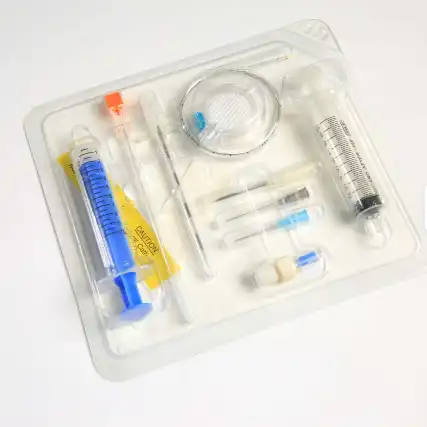
An epidural anesthesia kit is a very important medical tool for putting regional anesthesia right into the space around the spinal cord called the epidural space. This clean set usually comes with a Tuohy needle, an epidural tube with connections, a Loss of Resistance (LOR) syringe, a bacterial filter, and other tools for precisely managing pain. Healthcare centers all over the world use this one-step procedure for pain relief during labor, big surgeries, and long-term pain management. The kit's combined design gets rid of problems with parts not working together and cuts down on preparation time during crucial moments, keeping patients comfortable and doctors safe during long treatments.
Introduction
Regional anesthesia has changed the way we treat pain today by giving patients better alternatives to general anesthesia that let them stay awake during treatments. In this context, epidural anesthesia stands out as a key method for managing pain during labor, big abdominal surgeries, lung surgeries, and treatments for chronic pain. The quality and dependability of the tools used, especially the epidural anesthesia kit, are very important for how well and safely these treatments work.
In hospitals and surgical centers, choosing the right kit has a direct effect on clinical results, patient happiness, and the efficiency of procedures. It can be hard for procurement managers, clinical directors, and quality compliance officers to balance tight budgets with the need to look at technical specs, regulatory certifications, and supplier dependability. This guide was made to help purchasing managers, original equipment manufacturers (OEMs), distributors, and procurement experts find their way around the complicated world of medical device buying. We want to take the mystery out of how epidural anesthesia kits are used, what parts they have, and how to buy them. This will give you more confidence in your ability to make decisions that improve patient care and operating efficiency.

Understanding the Epidural Anesthesia Kit and Its Uses
Core Purpose and Clinical Applications
A complete, germ-free medical procedure set designed for giving regional anesthesia and pain relief through the epidural space is called an "epidural anesthesia kit." This part of the body is just outside the dura mater, which is the protective covering that surrounds the spinal cord and cerebrospinal fluid. By putting anesthetics into this space, doctors can stop nerve signals from certain parts of the body while still letting patients be awake and responsive.
The practical uses cover a wide range of dangerous medical situations. During obstetric labor analgesia, which is also known as "painless delivery," the kit allows constant injection through a catheter. This lets pregnant women feel a lot less pain while still being able to move around and be aware of what's going on around them. In medical settings, especially for major abdominal, thoracic, or orthopedic procedures, the kit makes it easier to give anesthesia during surgery and control pain for a longer time afterward. This makes opioid drugs and their side effects much less common. Pain management professionals also use these kits to treat chronic pain by giving patients with long-term spine problems corticosteroids or performing nerve blocks guided by ultrasound.
Mechanism and Component Functions
Localized nerve blocking is what the epidural method is based on. When numbing drugs get into the epidural space, they spread out across the nerve roots that come out of the spinal cord. This stops the brain from receiving pain signals for a short time. This focused method effectively relieves pain without having the systemic effects of general anesthesia.
Every part of an anesthetic kit is used for a different thing. The Tuohy needle usually comes in sizes 15G, 16G, 17G, and 18G. It has a bent tip that makes fitting the catheter easier while lowering the risk of accidentally puncturing the dura mater. The tube is usually made of medical-grade polyurethane or PEBAX, which is both flexible and resistant to kinks. This makes sure that medicine is delivered reliably for long periods of time. Radio-opaque lines on the tube make it easy to see with an X-ray, which ensures accurate placement.
The LOR syringe is very important when inserting the needle. As the Tuohy needle moves through the layers of tissue, doctors keep an eye out for a rapid loss of resistance. This means the needle has reached the epidural space. The bacterial filter, which has pores that stay at a size of 0.22 μm, gets rid of microbes and other particles during constant infusion, keeping people safe from getting infections. The system is finished off with plugs, tools for prepping the skin, and fixation devices, which make it an all-in-one solution that makes the whole process easier.
Clinical Benefits and Value
When it comes to buying, knowing about these clinical benefits helps make spending choices more logical. Better patient comfort leads to higher approval numbers and a better image for the center. The safety benefits, such as less drug exposure throughout the body, staying awake, and fewer breathing problems compared to general anesthesia, have a direct effect on how well the patient does and how much risk is involved. In places with a lot of work, procedure savings are very important. The kit saves time by putting all the needed tools on a single clean tray. It also lowers the risk of cross-contamination and makes sure that all clinical teams follow the same steps. These practical changes have an effect on healthcare institutions' output, staff productivity, and, in the end, their bottom line.
Step-by-Step Guide: Proper Use and Procedures with Epidural Anesthesia Kits
Preparation and Safety Protocols
A successful epidural treatment starts a long time before the needle is put in. To stop infections, you need to use strict aseptic techniques. Clinical teams must make sure that the kits are sterile by checking the purity of the packing, making sure that the expiration dates are correct, and looking for any signs of compromise. The process room should have the right air controls, and everyone who works there must follow strict rules for washing their hands and wearing PPE.
Before setting up the tools, the patient is evaluated. When doctors look at a patient's medical background, they look for things that might make the procedure unsafe, like coagulopathy, a local infection, or certain structural problems. Talks about informed consent include pros, cons, and other choices. Setting up an IV and keeping an eye on vital signs makes a safety net for dealing with possible problems.
Procedural Steps and Catheter Placement
How the patient is positioned directly affects how well the procedure goes. Proper positioning opens up areas between the vertebrae, making it easier to insert a needle, whether the person is sitting up straight or lying on their side. To find anatomical landmarks, you have to feel the spinous processes and choose the right interspace based on the amount of anesthesia you want.
After putting on clean drapes and injecting local anesthetic, the doctor slowly moves the Tuohy needle forward while checking for loss of resistance over and over again. Once it is determined that the needle has reached the epidural space, the tube is threaded through it and moved about three to five centimeters into the space. The needle is then carefully pulled out while the tube stays in place. Using fixing devices to hold the tube in place stops it from moving when the patient moves.
Before the full tranquilizer is given, a test dose is given to make sure the needle is in the right place and won't spread into the bloodstream or the spinal cord. During the whole process, the patient is being watched for signs of adequate blockade and any possible problems.

Safety Considerations and Risk Management
While epidural anesthesia is generally very safe, problems can happen. If you accidentally puncture the dura mater, cerebral fluid can leak out, and you might get a headache afterward. This risk is reduced by using needles of the right size and using the right method. Problems with catheters include kinking, moving, or breaking. These things happen less often when you use good tools that are more flexible and have higher tensile strength.
To avoid getting an infection, you must always use clean techniques when preparing, inserting, and taking care of a catheter. Even though neurological problems are rare, they need to be found and treated right away. Comprehensive training makes sure that clinical teams know the warning signs and how to respond to them. This protects both patients and facilities from bad results that affect choices about buying that are based on quality and compliance.
How to Choose the Right Epidural Anesthesia Kit for Your Facility
Essential Selection Criteria
When purchasing managers look at epidural anesthesia kits, they have to think about a lot of things. Regulatory approvals are the basis for any purchase choice. Getting FDA permission and a CE marking shows that you follow strict safety and performance standards. When a company gets ISO 13485 certification, it means they have strong quality control methods in place throughout the whole production process. These licenses are more than just paperwork; they show that a company is serious about customer safety and the quality of its products.
Compatibility with the hospital's current system is very important. Kits must work perfectly with the infusion pumps, tracking gear, and catheter control systems in your hospital. As we move toward ISO 80369-6 (NRFit) guidelines, we want to stop dangerous neuraxial misconnections. This makes future-proof compatibility a very important thing to think about. Specifications for parts should be carefully read. The needle gauge choices should fit the tastes of your healthcare team and the types of patients they treat. The AVACARE brand comes in a range of sizes, from 15G to 18G. All of them are made from 304 stainless steel, which is known for being strong and biocompatible. The tube material affects both how comfortable the patient is and how well the procedure goes. Polyurethane and PEBAX fabrics are flexible and don't kink easily, which is very important during long injections.
Material safety is more than just about how well it works. All of the parts must not contain DEHP or rubber and must pass the ISO 10993 biocompatibility testing requirements. These requirements protect patients with reactions and show that the maker is dedicated to full safety profiles.
Comparative Analysis and Cost-Efficiency
Global names like BD, Smiths Medical, and Teleflex have built strong reputations over many years of professional use and constant improvement. New makers, especially those that follow international certification standards, are coming up with more and more affordable options that balance value and quality. Choosing between throwaway and reused parts affects both the costs you pay up front and the costs you pay over time. Using disposable kits cuts down on the cost of cleaning, lowers the risk of infection, and guarantees uniform performance. Even though the cost of a single unit may seem higher, when you add up the costs of sterilization, equipment upkeep, and quality control tests, the total cost of ownership often works out better for disposable options.
This value offer is shown by AVACARE Epidural Anesthesia Kits. These Class II medical devices come in hard box packs that are 10 cm x 10 cm x 5 cm and are individually packed. They are ready to use right away. The built-in compatibility makes sure that all the parts work perfectly with each other, so there are no risks of incorrect connections during important processes. Catheters with soft, non-harmful tips and clear, radio-opaque marks for accurate placement proof under an X-ray are safety features that make them better. Putting all the tools that are needed on a single clean tray cuts down on preparation time and the chance of cross-contamination, which leads to better professional efficiency.
Concerns about cost shouldn't get in the way of safety measures and clinical success. It is easier to see the value of something when you calculate the cost per process instead of the cost per unit. When you commit to buying a lot, you can often get better prices. AVACARE's minimum order number of 5,000 pieces is good for institutional purchases, and the company's strong supply capacity of 100,000 pieces per week makes sure that big hospital networks or distributor inventories are always stocked. Sample support lets you try out the product before placing a large order, which lowers the risk of buying and boosts trust in the product's performance.

Market Overview and Procurement Insights for Global B2B Clients
Current Market Trends and Innovations
The global market for epidural anesthesia kits and epidural anesthesia keeps growing because more surgeries are being done, painless birth methods are being used more, and opioid-sparing pain management techniques are getting more attention. The most popular places to use them are surgical and maternity hospitals, but orthopedic and chronic pain treatments are also growing quickly.
New developments in materials science have made catheters work better. These days' ingredients make materials more flexible without weakening their structure, which means that they don't kink as easily after long-term use. Radio-opaque marker methods have improved, making it easier to see with fluoroscopy. Concerns about safety caused by accidental misconnections are addressed by better connector design, especially the move toward NRFit standards. New packaging ideas make things last longer on the shelf while keeping the clean walls in place. Protocols for checking ethylene oxide residues make sure that neurotoxicity risks stay below critical levels, which are usually less than 10 ppm.
Identifying Trustworthy Suppliers
In addition to product specifications, operating dependability and service skills are also looked at when evaluating suppliers. International approvals are a neutral way to check that production standards are met. Facilities that have ISO 13485 quality management systems show organized ways of controlling designs, making sure processes work, and always getting better. Standards for the production setting are very important. Classifications of clean rooms, especially 100,000-grade facilities with enough space, show that they have the right level of cleanliness for making medical devices. AVACARE has a production base that is 12,000 square meters and has 100,000-grade cleanrooms. This allows for both high-quality output and scalable capacity.
Research and development skills show that a provider is dedicated to new ideas and clinical applications. Material science and clinical application integration are the main areas of focus for research and development teams in the pharmaceutical business. These teams make sure that goods solve real-world problems rather than just meeting minimum requirements. Patent collections show that you are a leader in invention. Suppliers with multiple national patents have consistently invested in their own technologies that make their products stand out.
Stable supply chains are very important to think about, especially after recent world problems. When things go wrong quickly, suppliers who offer 24-hour fast response systems, emergency delivery help, and a variety of logistics choices can give you peace of mind. High-value shipments across foreign lines are kept safe by transport insurance and full tracking systems.
Bulk Ordering Strategies and Negotiation
When you buy in bulk, you need to carefully plan your wait times, price, and contractual terms. Knowing how long it takes to make something helps you set reasonable shipping standards. Suppliers whose weekly production capacity is more than 100,000 pieces can handle large orders without lowering quality or greatly lengthening lead times. Volume promises help with pricing talks, but buyers should find a balance between trying to get discounts and thinking about how much it costs to store inventory and how long a product will last. Standard shelf lives of three to five years allow for acceptable stockpiling in high-use buildings, but predicting demand is still necessary.
Distributors and healthcare groups that want private naming or unique configurations can get more out of OEM and ODM capabilities. AVACARE offers both OEM and ODM partnerships, which help brands stand out in areas with a lot of competition. Packaging and language localization services take into account the needs of different regions. This is especially important for international companies that have to deal with different regulatory settings. The terms of the contract should include things like consistent quality, batch tracking, access to expert help, and planning for what to do if there are problems with the supply chain. Setting up clear lines of communication and processes for escalating problems stops confusion and makes sure that problems are quickly solved when they happen.
Conclusion
Epidural anesthesia kits are important medical tools that are used in millions of procedures every year in settings like obstetrics, surgery, and chronic pain management. Purchasing choices have big effects on the safety of patients, the efficiency of professional work, and the financial health of an organization. Purchasing managers and other decision-makers can make better choices for their facilities if they know about the technical specs, clinical uses, regulatory environment, and provider capabilities.
Procurement methods that work are based on quality standards, component materials, built-in design features, and suppliers that can be trusted. To find the best balance between short-term costs and long-term benefits, you need to look at more than just unit prices. You need to look at things like total cost of ownership, supply chain security, and service support. The market is always changing with new materials and better safety features. To make sure healthcare organizations stay successful, they need to stay on top of new trends and build relationships with reliable providers.
FAQ
What distinguishes epidural kits from spinal anesthesia kits?
Epidural and spinal anesthesia kits are used for different procedures and parts of the body. Epidural kits use bigger Tuohy needles and flexible tubes for constant infusion to get medicine into the epidural area, which is outside the dura mater. Spinal kits have smaller, pencil-point needles that can go through the dura to deliver medicine straight into the cerebrospinal fluid. Spinal techniques have a fixed length and a fast start, while epidural treatments allow titrated dosing and a longer duration.
How can procurement teams ensure quality consistency when sourcing internationally?
To keep quality consistent, you need to check that your suppliers have the right certifications, such as ISO 13485, CE marking, and FDA approval. To make sure of ongoing compliance, you should ask for batch traceability documents, proof of analysis reports, and regular checks. Setting clear quality standards in buying contracts, such as accepted quality levels and testing procedures, gives people a way to get back at companies that don't meet their standards. Varying risks between shipments can be cut down by checking samples before placing large orders and keeping business relationships with approved providers.
Are eco-friendly epidural kits available, and do they compromise performance?
As makers respond to worries about the environment, more and more medical devices are becoming environmentally friendly. Some sellers offer kits with less plastic packaging, materials that can be recycled, and more efficient production to help reduce carbon footprints. Sustainability goals can be met with products that are nontoxic, DEHP-free, and latex-free and that meet strict safety standards. Performance doesn't have to be sacrificed. When looking for providers that are committed to corporate social responsibility without losing clinical excellence, procurement teams should ask about specific environmental initiatives, lifetime studies, and disposal advice.
Partner with AVACARE for Reliable Epidural Anesthesia Kit Solutions
Quality, reliability, and comprehensive support define the AVACARE commitment to healthcare institutions worldwide. As an established epidural anesthesia kit manufacturer since 2014, we understand the critical importance of consistent performance, regulatory compliance, and responsive service throughout your supply chain. Our 12,000-square-meter production facility, equipped with 100,000-grade clean rooms and backed by ISO 13485 certification, produces Class II medical devices meeting international safety standards.
Our Epidural Anesthesia Kits feature precision-engineered components crafted from 304 stainless steel in multiple gauge options, an integrated compatibility design, enhanced safety catheters with radio-opaque markings, and optimized packaging for immediate clinical use. With production capacity exceeding 100,000 pieces weekly and minimum order quantities starting at 5,000 pieces, we serve hospital networks, distributors, and medical device procurement specialists efficiently. OEM and ODM customization services support private labeling and regional packaging requirements.
Our full-lifecycle support includes professional technical training, 24-hour rapid response mechanisms, comprehensive supply chain assurance, and multilingual customer service. Sample availability enables hands-on evaluation before bulk commitments, reducing procurement risk. Whether you're establishing new supply partnerships or evaluating alternative suppliers for existing contracts, our team stands ready to discuss your specific requirements and demonstrate how AVACARE quality and service excellence can benefit your organization. Contact our procurement specialists today at admin@aileindus.com to request detailed product catalogs, pricing information, or customized quotations tailored to your institutional needs.
References
1. Hawkins, J.L., and Bucklin, B.A. (2018). Obstetric Anesthesia: Principles and Practice. Philadelphia: Elsevier Health Sciences.
2. Hadzic, A. (2017). Hadzic's Textbook of Regional Anesthesia and Acute Pain Management, 2nd Edition. New York: McGraw-Hill Education.
3. Cousins, M.J., Carr, D.B., Horlocker, T.T., and Bridenbaugh, P.O. (2020). Cousins and Bridenbaugh's Neural Blockade in Clinical Anesthesia and Pain Medicine, 5th Edition. Philadelphia: Lippincott Williams & Wilkins.
4. International Organization for Standardization (2016). ISO 13485:2016 Medical Devices—Quality Management Systems—Requirements for Regulatory Purposes. Geneva: ISO.
5. Rathmell, J.P., and Neal, J.M. (2019). Complications in Regional Anesthesia and Pain Medicine, 3rd Edition. Philadelphia: Elsevier Saunders.
6. American Society of Anesthesiologists Task Force on Obstetric Anesthesia (2016). Practice Guidelines for Obstetric Anesthesia: An Updated Report. Anesthesiology, 124(2), 270-300.

_1782811410038.webp)