How to Choose the Right Blunt Cannula for Hyaluronic Acid Injection Procedures
Choosing the right blunt cannula for hyaluronic acid injection procedures means prioritizing patient safety while ensuring clinical precision. Unlike traditional sharp needles, a blunt cannula features a rounded tip designed to push aside blood vessels and nerves rather than piercing them. This fundamental design difference significantly reduces the risk of intravascular injection, bruising, and vascular complications. When selecting the appropriate device, procurement managers and clinical directors must evaluate gauge size, cannula length, material quality, and regulatory certifications. The optimal choice depends on your specific treatment areas, filler viscosity, and institutional quality standards. Understanding these factors ensures you deliver safer aesthetic outcomes while maintaining supply chain reliability and compliance with international medical device standards.
Understanding Blunt Cannulas and Their Medical Applications
What Makes Blunt Cannulas Different from Traditional Needles?
One thing that makes a blunt cannula unique is its smooth, non-traumatic tip. Sharp needles cut through tissue layers, leaving puncture marks and raising the risk of vascular damage. The soft tip, on the other hand, moves body parts around gently. This new design solves one of the biggest safety problems in cosmetic medicine: injecting skin fillers into the bloodstream by accident. When hyaluronic acid gets into a blood vessel, it can kill tissue or, in the worst cases, make it impossible to see. By going around vessels instead of going through them, the flat shape greatly reduces this risk.
Common Medical Applications Beyond Aesthetic Procedures
These specialized gadgets are used for more than just adding volume to the face. They are used in fat grafting treatments that need to be precise and cause little stress. The technology can also be used in reconstructive surgery, especially in the face where keeping the integrity of the blood vessels is very important. They are now the usual way to treat hollows around the eyes, lines around the mouth and nose, and uneven jawlines in cosmetic medicine. For each use, the gage needs to be a certain size and length to fit the tissue mass and treatment depth needs.
Material Composition and Construction Standards
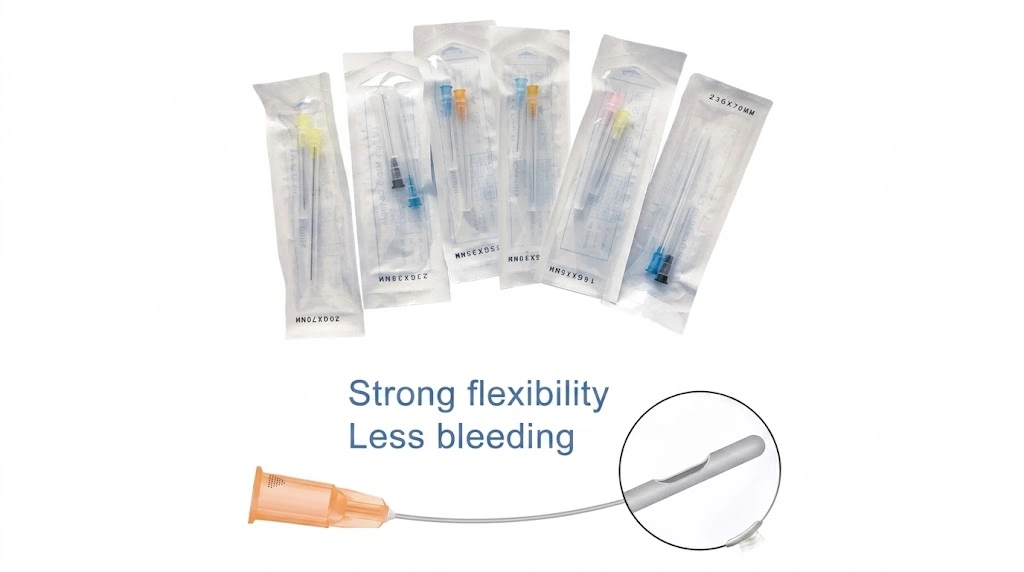
Quality control during production has a direct effect on clinical success. Most of the time, SUS304 or 316L surgical-grade stainless steel is the best choice because it is both flexible and strong. The very thin walls make the inside diameter as big as possible, which lets high-viscosity fillers flow smoothly without putting too much pressure on the extrusion process. At AVACARE, our factory is 12,000 square meters and has Class 100,000 cleanrooms to make sure that every device meets strict standards for keeping germs out. Our cannulas are sterilized with EO gas and can be used for five years if they are stored properly.
Core Criteria for Choosing the Right Blunt Cannula for HA Injection
Gauge Size Selection Based on Treatment Areas
Choosing the gage is the most important technical choice you will make. Blunt cannulas with a larger diameter have smaller gage numbers. High-viscosity fillers work best in deep tissue planes with an 18G cannula. For placement on the skin's surface, 25G to 27G options work better. The 25G size is the best compromise between being stiff enough to navigate tissues and being soft enough to avoid too much damage. Your pick should match the thickness of the filler, the depth of the treatment, and the area of the body you want to work on. For malar augmentation, 23G to 25G sizes are usually enough, while 27G or 30G sizes are better for delicate work around the eyes.
Length Considerations for Different Facial Regions
From a single entry point, your working range is limited by the length of the cannula. Usually, you can choose from 25mm to 70mm. Shorter lengths (25mm to 38mm) are better for localized procedures like lip enlargement or specific wrinkle reduction. Mid-lengths (50 mm) can be used on larger areas, like the cheeks, to add volume. Longer cannulas (70mm) let doctors work on large areas, like shaping the chin, with fewer entry points, which makes the procedure less painful for the patient and faster. Being able to clean bigger areas with fewer holes makes the process faster and better-looking.
Regulatory Compliance and Certification Requirements
Regulatory approval must come first in procurement choices. If a medical device has a CE mark, it means it meets the rules for medical devices in Europe. If it has an FDA clearance, it means it is safe for the US market. ISO 13485 certification shows that there are complete quality control methods in place throughout the producing process. These qualifications give you confidence in tracking, which is very important when quality problems happen. AVACARE has seven national copyrights and CE and ISO 13485 certifications, which show that we are committed to both following the rules and coming up with new ideas. Our batch traceability system lets you keep track of a product throughout its whole life, so you can meet the strict quality standards your institution requires.
Evaluating Supplier Reliability and Support Services
Check the supplier's skills as well as the product specs. Reliable partners keep inventory levels steady, so there aren't any supply problems that affect clinical operations. Check your usage trends against the minimum order amounts. For example, AVACARE's 100,000-piece minimum works well for hospital chains and distributors who want to keep a lot of stock on hand. When restocking important supplies, turnaround times are important. Our 30- to 45-day production cycle helps with strategic planning for purchasing. Your clinical team can check the success of samples before agreeing to large sales. Different organizations have different rules about how to buy things, so being able to pay by L/C or T/T is flexible.
Comparison of Blunt Cannula vs Sharp Needle and Other Alternatives
Clinical Safety Advantages Over Traditional Needles
There is a big difference in safety between these two systems. Sharp needles pierce through tissue without discrimination, leaving multiple puncture wounds and raising the risk of infection. Each puncture spot is a possible way for bacteria to get in. The direct method using a blunt cannula usually only needs one or two entry places per treatment area, which greatly lowers the risk of contamination. Vascular injuries happen much less often when practitioners move from needles to cannulas. Studies show that bruises are less severe and last less time. Patients recover faster, which raises their satisfaction numbers and cuts down on help calls after the surgery.
Patient Comfort and Recovery Differences
Patients always say that cannula-based injections are less painful than other types of injections. The pain is significantly lessened just by reducing the number of skin punctures. In addition, the gentle movement of tissue causes less swelling than the cutting action of needles. Swelling goes away faster, usually in 24 to 48 hours instead of several days. When it does happen, bruises are usually not as bad and go away faster. These benefits mean that your patients will be happier, that you'll get more good reviews, and that more people will tell their friends about your business or school.
Cost-Efficiency Analysis for High-Volume Facilities
Cannulas may cost more per unit than regular needles, but the total cost of the process usually goes down. Less complications mean fewer follow-up visits and treatments to fix problems. More procedures can be done each day if patients are switched out more quickly. Being able to treat bigger areas through fewer entry points cuts down on process time, which makes operations run more smoothly. For buying managers, these reasons make the difference in cost per unit make sense. Disposable options get rid of the need to sterilize and the risk of cross-contamination that come with reusable instruments, making it easier to follow infection control rules.
Market Overview: Leading Brands and Supplier Selection Tips
Evaluating Manufacturer Credentials and Production Capabilities
Reputable manufacturers run certified factories with quality systems that can be tracked. When looking at possible providers, make sure you check their cleanroom classifications and output ability. The 12,000-square-meter building that AVACARE uses meets Class 100,000 cleanliness standards, which means that the work areas are free of contamination. Our research and development team, which is made up of seasoned professionals in the field, works on combining material science with clinical applications to make sure that new ideas meet real-world medical needs. This infrastructure makes sure that the quality of the products stays the same from batch to batch, even when there are a lot of orders.
Understanding OEM and ODM Customization Options
When institutions buy something, they often need it to be customized for branding or certain treatment practices. With OEM services, you can sell goods under your own brand name while using manufacturing know-how that is already in place. ODM agreements let people work together to make products that meet specific health needs. AVACARE can work with both types of plans and can customize packages, translate them into local languages, and change specifications. This flexibility is helpful for distributors that serve more than one regional market or for hospital groups that want to use the same protocols in all of their facilities.
Logistics and International Shipping Considerations
For global buying to work, you need transportation partners you can trust for blunt cannula. Check to see how familiar the supplier is with international shipping rules, the paperwork that is needed, and the different types of transport insurance that are available. Most markets have strict rules about importing medical products. Your provider should be able to handle these problems without any problems. AVACARE helps with all the paperwork needed for exporting and has established logistics partners that offer a range of transport options. Our team knows how to meet cross-border compliance standards, which cuts down on wait times at customs checkpoints. This knowledge makes sure that your important supplies arrive on time, so that clinical operations can continue as usual.

Best Practices and Safety Tips When Using Blunt Cannulas for HA Injection
Proper Technique for Entry Point Creation
Preparing the entry spot correctly is the first step to success. To make the first entry point in the skin, use a sharp needle that is one gage larger than your cannula. This pilot needle makes a path through the top layer of skin and the epidermis, which makes it easy for the blunt cannula to enter. Place entry points in a way that gets the most area from a single input. Use the right cleaning products to clean the area well. Give local anesthesia enough time to work, which will make the patient more comfortable during the process.
Avoiding Common Procedural Errors
When they run into resistance, people who are new to cannula techniques sometimes use too much force. Cannulas, unlike needles, need soft, steady pressure and a little rotation to move through tissue. Forcing a cannula can bend it or make a fake opening, which can hurt the treatment. Carefully watch the injection pressure—sudden changes mean the tip has moved and may be getting close to a vessel. Before you shoot, aspirate to make sure you're not in a blood vessel. Keep your face structure in mind, especially high-risk areas where major arteries run close to the skin.
Training Requirements for Clinical Staff
With the right training, problems are much less likely to happen. Clinical teams should know how the facial vascular anatomy works, how to spot early signs of vascular compromise, and how to handle emergencies. Before you can do things on your own, you need to get hands-on training with guided processes. As methods change, skills need to be kept up to date through regular refresher lessons. At AVACARE, we help our partners by giving them professional technical training programs, demonstration videos, and teaching materials in more than one language. These tools help your team get the most out of the gadget while still meeting patient safety standards.
Conclusion
Choosing the right blunt cannula for hyaluronic acid injection procedures means balancing what the patient needs with what is available. Treatment safety and effectiveness are directly affected by gage size, length, and material quality. Regulatory approvals are important for making sure of quality, and a reliable source is important for making sure that the supply chain works consistently. Because they are safer than regular needles and cause less damage to blood vessels, less swelling, and better healing, they should be used in all areas of esthetic medicine. Your organization will have better clinical outcomes if you work with certified manufacturers that offer full support services, customization options, and documented quality systems. Our ISO 13485-certified factory, wide range of products, and dedication to full-lifecycle support make AVACARE the perfect partner for organizations that put safety and operating efficiency first.
FAQ
What gauge size works best for cheek volumization with hyaluronic acid fillers?
23G to 25G cannulas are the best mix for malar and midface enlargement. These sizes are stiff enough to move through fibrous tissue while still being flexible around the face's contours. The 25G choice works best with moderate to high-viscosity filling because it lets them be extruded smoothly without too much pressure. Think about the G-prime number of your filler. For example, 23G may be needed for higher viscosity goods to be injected comfortably.
Can blunt cannulas completely eliminate the risk of vascular complications?
Even though they lower the risk of vascular injury a lot compared to sharp needles, no technique completely eliminates it. Even though the blunt tip moves most of the blood vessels out of the way, there are still risks when high pressure is applied to set artery spots. It is still important to know about danger zones, get proper training in facial anatomy, and carefully aspirate before injecting. The technology greatly raises the safety margins, but it can't take the place of careful clinical observation and correct technique.
Are these devices suitable for single-use only, or can they be sterilized and reused?
Each and every AVACARE blunt cannula is only used once. Reusing breaks down the silicone layer that helps tissues move smoothly, which raises the risk of injury and illness. After the first use, the tip's structure breaks down, making it less resistant to damage. Trying to sterilize and reuse medical devices is against the rules and puts patients at unnecessary risk. Proper dumping after each process keeps safety standards high and makes sure that rules are followed.
Partner with AVACARE: Your Trusted Blunt Cannula Supplier
AVACARE blends high-quality production with full business-to-business support for healthcare organizations around the world. Our line of blunt cannulas is made from high-quality surgical-grade stainless steel and comes in gages ranging from 18G to 30G and lengths ranging from 25mm to 70mm. Our quality control systems are backed by CE and ISO 13485 standards, and our 12,000-square-meter building with Class 100,000 cleanrooms makes sure that production is free of contamination. We know how hard it can be to buy things. Our minimum order number of 100,000 pieces works for distributors and hospital groups, and samples are available for clinical review. OEM and ODM services help you meet your branding needs, and our 30- to 45-day turnaround time makes sure that your supply chain is reliable. Email our team at admin@aileindus.com to talk about your particular needs, get technical specs, or set up a sample review. Visit ailemedicals.com to see all of our products and learn why top hospitals choose AVACARE as their blunt cannula manufacturer of choice.

References
1. Goodman GJ, Roberts S, Callan P. "Experience and Frequency of Complications in Clinical Practice with Injectable Poly-L-Lactic Acid: A Prospective, Multinational, Survey Study." Dermatologic Surgery, 2019.
2. Pavicic T, Frank K, Grablowitz D. "Precision in Dermal Filling: A Comparison of Blunt Microcannulas and Sharp Needles for Hyaluronic Acid Injection." Journal of Drugs in Dermatology, 2018.
3. Hexsel D, Soirefmann M, Porto MD. "Superficial Dermal Filler Complications: Prevention and Treatment." Journal of Clinical and Aesthetic Dermatology, 2020.
4. Beleznay K, Carruthers JDA, Humphrey S. "Avoiding and Treating Blindness from Fillers: A Review of the World Literature." Dermatologic Surgery, 2015.
5. Khan TT, Colon-Acevedo B, Mettu P. "An Anatomical Analysis of the Supratrochlear Artery: Considerations in Facial Filler Injections and Preventing Vision Loss." Aesthetic Surgery Journal, 2017.
6. DeLorenzi C. "Transarterial Degradation of Hyaluronic Acid Filler by Hyaluronidase: Clinical Applications in Avoiding and Managing Vascular Complications." Plastic and Reconstructive Surgery, 2018.

_1782811410038.webp)