How to Prevent Dental Needle Breakage: Best Practices for Safe Local Anesthesia Injections
Preventing needle breakage during local anesthesia procedures demands meticulous attention to product quality, clinical technique, and supplier selection. High-quality dental needles manufactured under stringent standards significantly reduce the risk of intraoperative fracture, protecting both patient safety and institutional reputation. When procurement teams prioritize suppliers offering certified, rigorously tested needles with superior material integrity—combined with comprehensive staff training on proper injection methods—clinics experience fewer complications, lower liability exposure, and enhanced patient trust. Strategic sourcing from manufacturers like AVACARE, which adhere to ISO 13485 and CE certifications, ensures consistent performance across diverse clinical scenarios while supporting long-term operational efficiency.
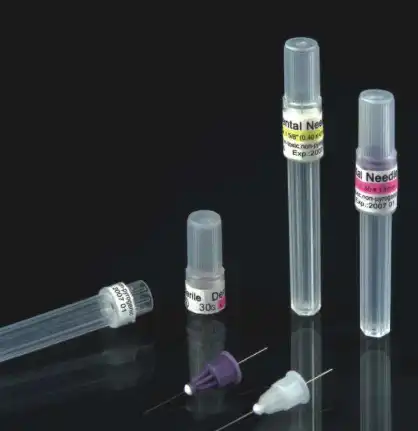
Understanding a Dental Needle Breakage: Causes and Risks
What Constitutes Needle Breakage in Dental Practice?
Needle breakage happens when the metal shaft comes apart, bends too far, or breaks while the anesthetic is being applied. This technical failure makes it harder to care for patients, requires emergency retrieval methods, and leaves centers open to claims of malpractice. Broken needles have more negative effects than just the immediate health effects. They also hurt patients' trust and put a strain on operational budgets by requiring more inventory turnover and lawsuit settlements.
Common Mechanical and Procedural Causes
During routine injections, needle failure can be caused by a number of things. When too much force is used to cut through thick flesh or bone, stress concentrations that are higher than the material's limits are created. Bending the structure over and over while rerouting the needle weakens it, especially at the hub joint, where most cracks start. Using needles that are bigger than their gauge limit for thick anesthetic solutions makes them wear out faster. Also, production flaws in low-quality goods, like wrong heat treatment or tiny surface flaws, make needles more likely to break early under usual clinical loads.
Financial and Clinical Consequences
There are effects that go far beyond the operatory. Emergency surgery to remove lodged needle pieces needs specialized help, which greatly raises the cost of treatment. Long treatments that cause pain to patients lead to bad reviews and fewer referrals. When unreliable products break down more often than expected, procurement teams have to deal with unpredictable replacement needs. While risk management departments negotiate settlements worth an average of thousands of dollars per incident, quality officers who are in charge of incident reports spend a lot of time and money looking into what went wrong.
Best Practices for Preventing Dental Nodules Breakage in Clinical Settings
Selecting Appropriate Needle Specifications
Breakage prevention starts with matching the needle's properties to the needs of the procedure. The AVACARE anesthetic needle range has both 27G and 30G options in lengths ranging from 11 mm to 41 mm. This lets you make an exact choice based on the injection depth and anaesthetic volume needs. When using posterior block methods that need to go deeper into denser tissue, 27G needles that are thicker provide better structural support. On the other hand, 30G ultra-fine options make anterior infiltration more comfortable for the patient while reducing mechanical demands. Premium products are made of high-tensile stainless steel, which can withstand bending forces that weaken lower-quality alloys. AVACARE needles have a triple-bevel design that makes them easier to place. This means that doctors don't have to use as much force, which is better for the needle shaft.
When procurement managers are choosing gauges, they should know that 27G needles are the best compromise between flow rate efficiency and enough strength for block anesthesia methods. The 30G variant works great for infiltration situations where patient comfort is more important than speedy solution delivery. Clear ISO- and color-coded hubs keep gauges from getting mixed up during high-volume procedures, which directly addresses a common cause of failures related to technique.
Mastering Injection Technique Fundamentals
How long a needle lasts during treatment is greatly affected by how well it is used. Clinicians should move needles along the planned path without bending them to the side, because even small deflections put stress on weak spots. Accidental torque can be avoided by keeping your hand in the same place during the injection. When you run into resistance, it's better to pull back a little and change the angle than to try to force through, which can cause a fracture right away or tiny cracks that spread during future use.
AVACARE products use a safe threaded connection method that doesn't worry about hub detachment. This lets practitioners focus on smooth, controlled progress without having to worry about fixing loose connections. This engineering feature lowers the unconscious grip pressure that doctors use when they use poor slip-on designs. This lowers the overall mechanical stress on the needle assembly.
Implementing Rigorous Single-Use Protocols
One of the easiest ways to keep dental anesthesia needles from breaking is to not use them more than once. Each entry cycle wears down the bevel edge and creates structural flaws that can't be seen with the naked eye. The silicone covering that was put on during production wears off with the first use, making it much more difficult to enter later. AVACARE needles come in separately sealed packages that are sterilized with ethylene oxide gas and are only meant to be used by one patient.
This standard must be made clear in procurement rules. Because of the need to cut costs, some administrators try to make products last longer, but this is a false economy because it costs a lot more to fix broken items than it saves in the long run. Quality officers should do regular checks to make sure that opened packages are thrown away right away after treatments. This will reinforce the mindset of putting patient safety ahead of short-term cost savings.

Procurement Strategies to Ensure High-Quality Dental Needles and Reduce Breakage Incidents
Evaluating Supplier Credentials and Certifications
Verified manufacturer qualifications are the first step in building a reliable supply chain. Suppliers that use ISO 13485 quality control systems show that their companies are dedicated to maintaining consistent output standards. The CE mark shows that it meets European safety standards, and FDA approval shows that it is safe for the strict U.S. healthcare market. AVACARE keeps both licenses up to date, along with its Class I medical device classification. This gives purchasing managers proof that goods meet international safety standards.
Aside from certificates, looking at the work settings of suppliers shows how mature the business is operationally. Facilities with 100,000-level clean rooms keep particulate contamination to a minimum during production, which has a direct effect on the purity and sterility of the product and materials. Companies that put money into infrastructure like AVACARE's 12,000-square-meter production base do so to be stable in the long term, not to take advantage of market opportunities. When forming relationships that will last through more than one buying cycle, this difference becomes very important.
Structuring Bulk Orders for Cost Efficiency and Supply Security
Strategic bulk buying agreements are very helpful for dentistry offices that do a lot of work. The 20,000-piece minimum order quantity for AVACARE is in line with how mid-sized clinic chains typically use their products every three months. It also gives these chains access to better prices that they can't get with smaller orders. When purchasing managers have to balance the need to keep costs low with the cost of keeping inventory, they find that 30 to 45-day production timelines make restocking plans more reliable when orders match predicted consumption.
Payment terms like T/T and L/C make it possible for different institutional financial processes to work, and they get rid of transactional friction that slows down important supply refilling. Samples that can be requested let quality officers check how well a product works before placing a full order. This lowers the risk that comes with switching suppliers. When replacing current vendors after breakage incidents show quality problems, this pre-purchase evaluation feature comes in very handy.
Leveraging Customization for Operational Optimization
OEM and ODM can do more than just brand things. Institutions that do business in more than one foreign market benefit from localizing the packaging so that it has translated directions and legal markings that are special to each area. Private labeling helps dental service companies that run multiple office locations strengthen their brand character. The fact that AVACARE is willing to make changes to customers' requests, like changing the colour of the hub or the way the packaging is set up, shows that they are a flexible manufacturer that rigid catalogue suppliers can't match.
When procurement teams arrange preferred vendor deals for a wide range of products, these skills become valuable strategic assets. When adding new clinical staff or entering new markets, it's easier to transfer knowledge when suppliers offer full technical support for the odontological needle, which includes training materials and demonstration videos in multiple languages.

Case Studies: Real-Life Examples of Dental Needle Breakage and Prevention Success
Midwest Dental Group: Reducing Incidents Through Supplier Upgrade
A regional clinic network that sees 45,000 patients a year had 12 needle breaks over the course of six months while using cheap goods that were bought mainly based on price per unit. A study into the incident showed that 8 failures happened during normal inferior alveolar nerve blocks. The fractures always started at the hub junction. The clinical directors did two things: they retrained everyone on how to do the procedure again, focusing on controlled advancement without lateral force; and they switched suppliers to approved makers that met ISO 13485 standards.
The purchasing team looked at three qualified vendors and chose one that offered both 27G and 30G options, as well as documented tensile strength testing and batch tracking. After the implementation, monitoring over the next 12 months showed that there were no breakages in 18,000 anesthetic administrations. When it came to questions about comfort, patient happiness scores went up by 7%, but buying costs only went up by 3%, even though the premium product was upgraded. When incident response costs were taken out of the equation, the risk management department came up with a net savings of more than $40,000.
International Humanitarian Mission: Field Reliability Under Austere Conditions
A global health care group that provides dental care in remote areas needed needles that could work well in a range of temperatures and during rough shipping. At first, procurement focused on the cheapest options to get the most supplies for the money. Field doctors reported breakage rates of about 4% during maxillary infiltrations. This was because the material was weak from not being stored properly and being made to poor standards.
Field breakage dropped to 0.2% after switching to sources with strong quality systems and silicone-coated needles that work the same way in all kinds of environments. The better resistance to breaking of high-tensile stainless steel was very important during emergency procedures where it wasn't possible to autoclave extra supplies. Overall mission effectiveness went up even though costs per unit went up because clinicians spent fewer hours fixing broken tools and could treat more patients per deployment cycle.

Summary and Key Takeaways for Clinics and Procurement Managers
To keep needles from breaking, you need to pay attention to the product you choose, the way you use it, and your ties with suppliers all at the same time. Procurement teams should give more weight to certified manufacturers who can show consistent quality by following ISO 13485 and making batch tracking clear. Clinical directors should require full training programs that stress the right way to inject medicine, how to move the needle slowly, and how to follow single-use protocols to the letter. When cheap goods break, the costs go up so much that the small saves from cheaper choices are no longer worth it, this is called "false economy."
Strategic relationships with suppliers that offer technical support, the ability to customize products, and reliable delivery plans turn buying from a transactional task into one that improves patient safety and practical efficiency. Regular performance reviews that look at things like breakage rates, patient feedback, and the total cost of ownership help suppliers be more accountable and keep things getting better. When these practices become part of an organization's normal workflow, it leads to better clinical outcomes and better financial performance.
Conclusion
Dental needle breakage is a risk that can be avoided and hurts patient safety, business efficiency, and the image of the organization. To solve this problem, we need methods that cover choosing a seller, describing the product, and using the right clinical techniques. When purchasing managers look at a vendor's certifications, manufacturing standards, and full range of services, they build supply chains that are less likely to fail due to poor quality. When clinicians learn the right way to give injections and use the right dental needles, they greatly reduce the mechanical stress that leads to fractures. All of these parts work together to make a strong defense against breakage, which protects patients and makes the best use of the institution's resources. Investing in high-quality goods and thorough training always pays off in the form of fewer problems, higher customer satisfaction, and a stronger place in the market.
FAQ
How do I choose between 27G and 30G needles?
The gauge you choose will depend on the procedure you need to do and the patient's features. The 27G version has more structural strength and delivers the solution faster, which makes it perfect for block anesthesia methods that need to go deeper through thicker posterior tissue. The ultra-fine diameter of the 30G variant makes patients much more comfortable during infiltration procedures. This is especially helpful for children or patients who tend to get anxious. AVACARE makes both gauges in a range of lengths so that they can be perfectly matched to different body types and medical needs. To support different procedure standards, procurement teams that work with a variety of practice types should keep stock in both specs.
Can dental needles be reused?
Without a doubt, not. It is legal for dental anaesthetic needles to be used only once and to be sterilised for that one patient. Trying to reuse something breaks the sterility, which greatly increases the risk of spreading an illness. More importantly for preventing breakage, each tissue penetration damages the needle structure microscopically and removes protective coatings. This makes it exponentially more likely that the next insertion will cause a fracture. When you look at the big legal risk and patient harm possibility, the small cost savings from reuse don't matter anymore. Quality protocols must require that everything be thrown away right away after every procedure.
What certifications should I verify when selecting suppliers?
Suppliers you can trust keep their ISO 13485 certification, which shows they follow medical device quality management systems. CE marking proves that the product meets European safety standards, and FDA approval proves that it is safe for U.S. markets. AVACARE has both certificates and is classified as a Class I medical gadget. In addition to certificates, you should check to see if providers offer batch tracking, clean rooms for production, and technical documents to back up their quality claims. Before signing a vendor agreement, procurement teams should ask for copies of certificates and audits of the production facility. This is especially important when switching from established suppliers.
Partner with AVACARE for Superior Dental Needle Supply
AVACARE has been making medical devices for ten years, so procurement managers and clinical directors looking for a reliable dental-needle provider can count on them. The threaded anesthetic needles we sell are made of high-tensile stainless steel and have a silicone coating. These engineering features directly prevent breakage while improving patient comfort. We can help with both short-term purchases and long-term strategic partnerships because we have CE and ISO 13485 certifications, a minimum order size of 20,000 pieces to meet the needs of institutions, and flexible OEM/ODM customisation. Email our team at admin@aileindus.com to get samples, talk about bulk prices for dental needles, or find out how our 30 to 45-day production times and T/T or L/C payment terms can work with your supply chain.
References
1. Malamed, Stanley F. Handbook of Local Anesthesia, 7th Edition. Elsevier Health Sciences, 2019.
2. Pogrel, M. Anthony. "Broken Local Anesthetic Needles: A Case Series of 16 Patients, with Recommendations." Journal of the American Dental Association, vol. 140, no. 12, 2009, pp. 1517-1522.
3. Fitzpatrick, Brendan. "Needle Breakage During Inferior Alveolar Nerve Block: Clinical Considerations and Prevention Strategies." British Dental Journal, vol. 228, no. 8, 2020, pp. 585-590.
4. International Organization for Standardization. ISO 7885-1:2018 Sterile Hypodermic Needles for Single Use.
5. American Dental Association Council on Scientific Affairs. "Best Practices in Infection Control for Dental Healthcare Settings." ADA Professional Product Review, vol. 15, no. 3, 2020.
6. Reed, Kenneth L., and Malamed, Stanley F. "Needle Preference and Breakage Incidence in Dental Local Anesthesia: A Multicenter Study." Anesthesia Progress, vol. 68, no. 1, 2021, pp. 12-19.

_1782811410038.webp)