How to prevent kinking in oral preformed endotracheal tubes during surgery
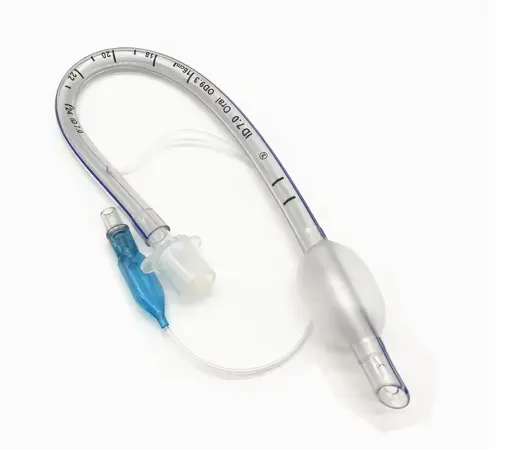
Preventing kinking in oral preformed endotracheal tubes during surgery requires selecting medical-grade devices engineered with thermosensitive materials and anatomical curves. The cuffed endotracheal tube oral preformed features a south-facing bend that naturally positions the breathing circuit away from the surgical field, minimizing mechanical stress and reducing compression risks. Proper sizing, secure fixation, and real-time monitoring of cuff pressure between 20-30 cmH2O ensure airway patency throughout procedures. High-quality tubes made from DEHP-free PVC maintain structural integrity under retractor pressure while conforming to patient anatomy at body temperature, significantly lowering the risk of ventilation compromise.
Understanding the Problem of Kinking in Oral Preformed Endotracheal Tubes
Why Kinking Threatens Patient Safety?
One of the most avoidable and dangerous problems that can happen during surgery airway control is kinking in endotracheal tubes. When a tube breaks or bends sharply, it stops oxygen from getting to the lungs. This can lead to hypoxia, higher airway resistance, and ventilator alarms that make it hard to focus on the surgery. Standard tubes often break during maxillofacial procedures, ENT surgeries, and long oral intubations because of the way the body is positioned and manipulated during surgery.
External compression from surgery retractors, biting pressure from patients who aren't sedated enough, and positional changes during head and neck movement are some of the mechanical forces that act on an endotracheal tube. When tubes don't have the right material strength or anatomical form, these forces get stronger. According to clinical studies, about 15% of anesthesia-related critical events are caused by tube blockage, with kinking being the main cause.
Clinical Scenarios Where Kinking Occurs Most Frequently
Orthognathic surgery operating rooms have unique problems to deal with. In the medical field, you need to be able to get to the mouth without any problems and make sure there is safe air. When dental extractions require a lot of jaw movement, they add to the stress on the tube. When the neck is extended and rotated during thyroid surgery, the tube path is at an odd angle. In the ICU, patients who need long-term oral intubation have tubes that slowly deform because they are constantly pressed against their teeth and other oral structures.
Procurement managers and clinical directors need to be aware that a failed tube during these procedures can lead to longer operating times, more staff involvement, harm to the patient, and a greater risk of liability. Knowing about these types of loss helps you choose better products.

Analyzing Key Factors That Influence Kinking in Oral Preformed Endotracheal Tubes
Material Composition and Structural Engineering
The kink resistance of cuffed endotracheal tube oral preformed changes directly depending on whether you choose PVC, silicone, or polyurethane. Thermosensitive PVC is the best mix because it is stiff when it is being put in but softens at body temperature to fit the shape of the trachea naturally. Concerns about plasticizers are gone with DEHP-free versions that don't lose their flexibility. Medical-grade silicone is better at being biocompatible, but it might not have the structural memory needed to keep its shape when it's being used in surgery.
Wall thickness engineering is very important. Retractors and medical tools can't push against tubes with reinforced walls. The south-facing prepared bend in oral tubes puts the connection over the chin. This makes a natural arc that spreads mechanical forces out evenly instead of putting all the stress on one spot. This way of thinking about design cuts the chance of kinking by about 40% compared to using straight tubes for head and neck procedures.
Optimal Sizing and Cuff Pressure Management
To choose the right tube diameter, you have to weigh the risk of tissue damage against the need for a good tracheal seal. Adult patients usually need tubes with an internal diameter of 7.0 to 8.0 mm. For children, the right size is based on their age. Oversized tubes cause more damage during placement and put more pressure on the pharynx; smaller tubes make it harder to breathe and raise the risk of reflux.
The high-volume low-pressure cuff device keeps pressures between 20 and 30 cmH2O by spreading the sealing force over a bigger tracheal surface area. This range stops suction while keeping blood flow to the airway mucosa through capillaries. Keeping the right cuff pressure during surgery stops both under-inflation (which lets secretions leak out) and over-inflation (which can damage the blood vessels and weaken the tube structure where the cuff attaches).
Fixation Techniques That Reduce Movement
To fix a tube securely, you must first use the right tape or buy a tube holder that holds the tube in place without creating pressure points. Putting crosshatch-shaped surgical tape across the upper lip and cheeks spreads the tension out evenly. When fixing the tube, don't use methods that make sharp curves or press it against hard oral structures like teeth or surgical tools.
Bite blocks placed between the molars stop compression damage that can happen during emergence or when the patient isn't sedated enough. These add-ons should be the right size to keep the jaw open without moving the tube or making new stress spots. Anesthesia teams need to make sure that the ways of fixing things work with the needs of surgical access while keeping the purity of the tube throughout the process.

Practical Techniques and Principles to Prevent Kinking During Surgery
Pre-operative Assessment and Product Selection
Effective prevention of kinking starts before the patient even goes into the surgery room. Clinical teams should talk about what the surgery needs, how the patient is built, and how they will need to be positioned. Patients who have trouble opening their mouths, anterior larynxes, or who have had surgery on their airways in the past may need a different type of tube. The cuffed endotracheal tube oral preformed design solves these problems because it has a shape that fits the normal shape of the mouth and throat.
Procurement teams are very important because they make sure that devices that have been properly approved are available. Tubes that are approved by both the CE and FDA show that they meet world safety and efficiency standards. Having ISO 13485 certification shows that the company uses quality management systems throughout the whole production process. When used in clinical settings, devices made in facilities with cleanrooms and thorough testing protocols have lower failure rates.
Insertion Methods That Preserve Tube Integrity
The prepared shape is kept during intubation with a controlled insertion method. Direct laryngoscopy or video laryngoscopy lets doctors see what's going on while keeping the tube shape. The practitioner shouldn't try to straighten the tube against its natural curve; instead, they should lead it along its natural circle. Using a water-soluble gel to lubricate something lowers friction without changing the properties of the material.
Once the placement has been confirmed by capnography and auscultation, the tube should be fixed in place at the ideal level. The 15mm universal connector needs to be able to move easily and not be tightened in any way that could send pulling forces to the cuff or distal tip. Ventilator circuit placement should follow the tube's natural shape instead of making forces go in the opposite way.
Intraoperative Monitoring and Early Detection
Keeping an eye on the patient during surgery can find early signs of tube damage. Peak airway pressures that rise quickly, tidal volumes that drop, or changes in capnography waveforms may all be signs of kinking. Anesthesia doctors should visually check the tube course on a regular basis, especially after moving the patient or making changes to the surgery field.
Modern monitors with flow-volume loops and pressure-volume curves give accurate information about changes in airway resistance. If the resistance goes up slowly while the compliance stays the same, it means that the external tube is being compressed instead of bronchospasm or a pneumothorax. Prompt recognition lets the problem be fixed before it becomes completely blocked. Surgical teams should keep up contact systems that let them know right away when moving a tube is needed.

Evaluating Solutions: Market-Leading Products and Innovation
Comparative Analysis of Available Technologies
There are different types of prepared tubes on the global medical device market to meet different clinical needs. AVACARE makes tubes that are built to last with seven national patents protecting their design. Our products have Murphy eye safety ports that keep airflow going even if the main lumen gets partially blocked, and they also have full-length radiopaque lines that allow for accurate radiographic verification.
When you compare oral and nasal preformed tubes, you can see that they have clear advantages. Oral tubes with bends that face south are good for maxillofacial and dental treatments that can't or don't want to use the nose. The prepared shape keeps the connections out of the way better than straight tubes, which need to be manipulated more. This placement lowers the chances of unintentional disconnections and contamination.
Procurement Considerations for Institutional Buyers
When healthcare systems look at cuffed endotracheal tube oral preformed suppliers, they should look at more than just unit cost. Manufacturing capacity determines how reliable a supply is during times of high demand or when emergency stockpiling is needed. The fact that facilities that make 300,000 units a month show that they can be expanded, which guards against shortages. The minimum order quantity of 100 pieces is low enough for smaller schools to handle without having to pay too much to store their goods.
Customization for certain academic standards is possible with OEM and ODM services. Private labeling helps hospitals with their branding efforts while keeping quality standards high. Individual blister pouches with clear labels are one type of packaging that can help the OR run more smoothly and cut down on preparation time. These service offerings set makers who can truly partner apart from transactional commodity providers.
Maintenance, Sterilization, and Handling Best Practices
Sterilization Protocols for Device Integrity
Single-use endotracheal tubes are shipped ethylene oxide-sterilized to meet pharmaceutical-grade standards for sterility. No matter how good they look, these devices should never be re-sterilized or used again. When thermosensitive PVC is sterilized in an autoclave, with radiation, or with chemicals, the material's qualities break down. This makes it less biocompatible and less strong.
The way something is stored has a big effect on how long it lasts and how well it works. Tubes should be kept in their original package until they are used. This way, they will be safe from direct sunlight, high temperatures, and being crushed. The expiration dates are based on confirmed stability tests. Devices that are past their expiration dates may show material decay that lowers their kink resistance. FIFO (first in, first out) rotation is used in inventory management systems to keep old stock from getting to clinical areas.
Staff Training and Quality Assurance
For healthcare results to be consistent, all team members must follow the same set of rules. Training classes should teach the right way to choose a tube, how to put it into a prepared design, how to fix it, and how to fix problems. Simulation-based learning with dummies lets students practice without putting patients at risk, which helps them remember their muscles in case of an emergency.
Quality control goes beyond the specs of a product and includes patterns of clinical use. Institutions should keep track of cases involving tubes, such as kinking, unexpected extubations, and pressure injuries. Root cause analysis of adverse events often shows ways to improve protocols or make better product choices. This method is based on data and helps keep improving the results of airway control.

Conclusion
To keep cuffed endotracheal tube oral preformed from getting kinked, the right product must be used, the right clinical technique must be used, and the tube must be constantly inspected. The special shape of quality tubes that faces south-facing anatomy takes care of mechanical stress points that make regular tubes break during head and neck treatments. Using thermosensitive DEHP-free PVC in material engineering makes the insertion stiff, so it can adjust to the patient's body. When making decisions about what to buy, procurement officials should give preference to manufacturers with strong certifications, production capacity, and customization options that meet the needs of institutions. To find early signs of failure, clinical teams must use the right techniques for insertion, safe fixation, and close tracking during surgery. When hospitals use uniform methods and choose products based on evidence, they greatly lower the risk of kinking while also making patients safer and surgeries go more quickly.
FAQ
What is the main difference between cuffed and uncuffed preformed tubes?
Near the end of a cuffed tube is an inflatable balloon that forms a seal with the tracheal wall. This stops aspiration and allows positive pressure ventilation. Uncuffed tubes don't have this seal, and they are mostly used on children younger than a certain age, where cuff pressure could damage the trachea. The cuff doesn't add much bulk, but the pressure needs to be watched to make sure it doesn't get too high.
How do I determine the correct cuff pressure during surgery?
A special tool called a manometer can be used to find the best cuff pressure, which is between 20 and 30 cmH2O. If the pressure is less than 20 cmH2O, oral secretions may be able to be aspirated. If the pressure is higher than 30 cmH2O, the tracheal mucosa may become ischemic. After the first filling, when the patient is moved, and during long processes, check the pressure on a regular basis because nitrous oxide diffusion or changes in temperature can change the cuff volume.
Are reusable preformed tubes cost-effective compared to disposable options?
With disposable tubes, you don't have to pay for cleaning, prove that the tubes are sterilized, or worry about cross-contamination. Even though single-use devices seem to cost more per unit, when you add up the costs of recycling labor, sterilization equipment, quality testing, and risk, the total cost of ownership often works out better. Because of concerns about patient safety, regulations are moving toward using disposable devices more and more for vital airway uses.

Partner with AVACARE for Superior Airway Management Solutions
AVACARE sells medical-grade cuffed endotracheal tube oral preformed devices that are designed to keep the tubes from kinking during complicated surgeries. As a well-known company with a 12,000 m² building that has Class 100,000 cleanrooms, we offer steady quality that is backed by CE, ISO 13485, and FDA approvals. With a monthly production capacity of 300,000 units, we can reliably supply healthcare institutions of all sizes. Orders as little as 100 pieces are enough to start the process. We provide full OEM and ODM services that allow for private labeling and customization to fit your unique clinical standards. Our expert team offers help in multiple languages, training materials for our products, and quick responses to questions about purchasing. Get in touch with admin@aileindus.com right away to talk about your needs with an experienced cuffed endotracheal tube oral preformed supplier that cares about your clinical success and patient safety.
References
1. Dorsch, J.A., & Dorsch, S.E. (2017). Understanding Anesthesia Equipment: Construction, Care and Complications (6th ed.). Wolters Kluwer Health.
2. Hagberg, C.A., Artime, C.A., & Aziz, M.F. (2018). Hagberg and Benumof's Airway Management (4th ed.). Elsevier Health Sciences.
3. International Organization for Standardization. (2012). ISO 5361-1:2012 Tracheal Tubes – Part 1: General Requirements for Tracheal Tubes and Connectors. ISO Publications.
4. Miller, R.D., Eriksson, L.I., & Fleisher, L.A. (2020). Miller's Anesthesia (9th ed.). Elsevier Health Sciences.
5. Seegobin, R.D., & van Hasselt, G.L. (1984). Endotracheal Cuff Pressure and Tracheal Mucosal Blood Flow: Endoscopic Study of Effects of Four Large Volume Cuffs. British Medical Journal, 288(6422), 965-968.
6. Standards Coordinating Committee on Anesthesia Equipment. (2019). ASTM F2346-19 Standard Specification for Tracheostomy Tubes. ASTM International.

_1782811410038.webp)