Mastering the Microcannula: Techniques for Maximizing Safety in Facial Volumization
Mastering the microcannula represents a significant leap forward in facial volumization safety. The blunt cannula has transformed how practitioners deliver hyaluronic acid fillers, offering a method that prioritizes patient safety without compromising aesthetic outcomes. Unlike traditional sharp needles that pierce through tissue, the rounded tip of a microcannula gently pushes aside blood vessels and nerves, dramatically reducing the risk of vascular complications. This technique has become the gold standard in aesthetic medicine, particularly in high-risk anatomical zones where precision matters most. Understanding the proper selection, handling, and insertion techniques of these specialized instruments empowers healthcare facilities and procurement teams to make informed decisions that protect both patients and clinical reputations.
Understanding the Microcannula: Anatomy, Functions, and Safety Benefits
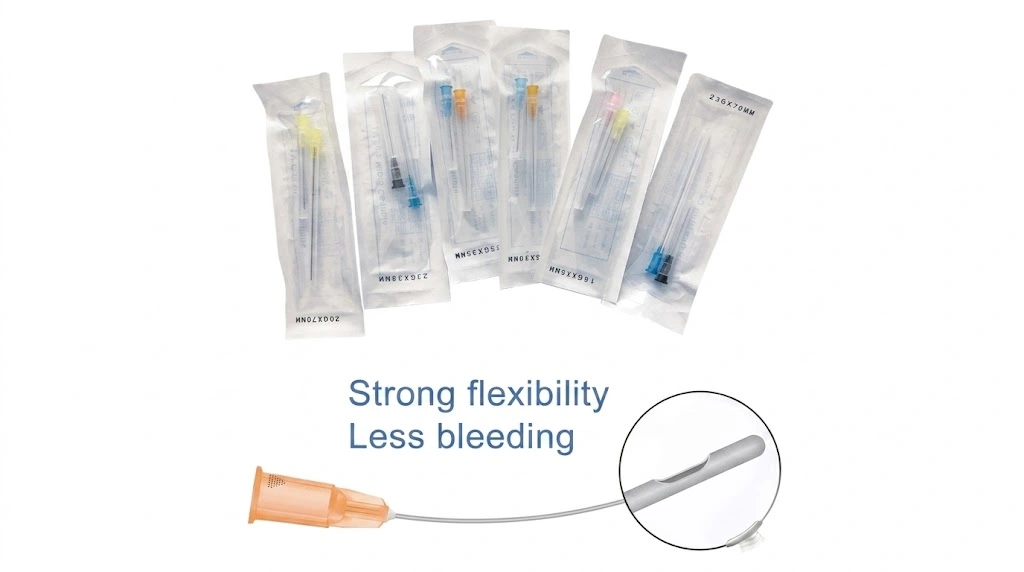
Flexible tube technology is based on the idea that tissue damage should be kept to a minimum while delivery accuracy should be maximized. Because of how they are made and how they work, these instruments are very different from regular injection needles.
Design Features That Define Safety
Due to its rigidity and flexibility, current microcannulas are made from surgical-grade stainless steel, commonly SUS304 or 316L. Because of its measured radius of curvature, the blunt tip can travel via tissue layers without injuring blood vessels. Instead of passing through blood arteries, this pointed-tip design pushes them. This prevents the worst cosmetic medicine concern, intravascular injections that destroy tissue or cause eye loss.
While increasing interior diameter, the ultra-thin wall design stabilizes the structure. This engineering method reduces high-viscosity hyaluronic acid filler release force. This gives surgeons more control over filler placement and dissemination. All gauge sizes of AVACARE's blunt-tip needles, from 18G to 30G, use this sophisticated wall design to perform the same manner regardless of purpose.
Clinical Safety Benefits Backed by Evidence
Aesthetic dermatology studies consistently reveal that blunt cannula procedures reduce post-surgery bruising by 70% compared to needle approaches. This shift is obvious: fewer punctures indicate less blood vessel injury. Doctors can treat several face areas with fan-shaped distribution patterns from one entry point, reducing pain for everyone.
Vascular obstruction is greatly reduced with blunt-tipped periorbital and glabellar instruments. Because the cannula tip can't penetrate those blood vessels, the angular vein and infraorbital artery near tear troughs are protected. This extra safety margin is very important for doctors learning injections.
Sizing Considerations for Optimal Outcomes
You must understand how filler viscosity influences tissue density and placement depth to determine the proper gauge and length. These 27G or 30G sizes are ideal for applying low-viscosity fillings to sensitive skin areas like the tear trough. Mid-range alternatives like 25G balance malar and zygomatic volumization nicely. They are stiff enough for fibrous tissue but have a large lumen for filler flow.
Longer lengths (50mm to 70mm) allow chin shaping from one entrance site using the same depth above the periosteum. This function reduces treatment time and improves mandible edge consistency. AVACARE comes in 25mm, 38mm, 50mm, and 70mm lengths. We manufacture these in our 12,000 m² facility, meeting Class 100,000 cleanroom standards for quality and cleanliness.
Techniques and Best Practices for Mastering the Microcannula in Facial Volumization
Using the right instrument is only one part of effective microcannula technique. To be a master, you need to know about the anatomy of the face, the properties of fillers, and the little details of the procedure that make the difference between good results and great ones.
Selecting the Ideal Instrument for Each Procedure
Safe practice begins with cannula specifications that match body needs. Flexible 25G cannulas 50 mm long can be utilized for full-face volumization in the malar and zygomatic areas. The moderate gauge holds the structure in place while the needle navigates tissue, and the length helps the needle reach all locations from a few entry points.
Be careful with periorbital rejuvenation. Restoring tear troughs with low-viscosity fillers appears natural. A 38mm 27G tube can be utilized for precise deep implantation below the orbicularis oculi muscle. The lower gauge reduces the pilot needle entry hole, speeding wound healing and hiding marks.
Longer tools sculpt jawlines nicely. A 70-mm 23G cannula can fill the mandible edges in one pass at a constant depth above the supraperiosteal bone. This treatment reduces skin holes and achieves the sharpness many patients demand.
Step-by-Step Injection Technique Protocol
First, use a pilot needle—usually one gauge larger than the flexible cannula—to make a proper entrance site. This first cut should penetrate through the skin at 45 degrees to prepare the blunt tip. Entry points should be arranged to cover the goal zone as much as feasible.
After insertion, the tube should move slowly with light pressure. As the point enters normal tissue lines, practitioners should experience less resistance. When travelling ahead, gradually turning the hub helps the tip navigate dense fibre structures. Filler should be added during removal instead of insertion using continuous threading to evenly distribute the product throughout the goal depth.
Being aware of physical danger zones is crucial. The supratrochlear and supraorbital arteries in the glabella, the angular artery at the nasolabial fold, and the infraorbital artery under the lower lid must be handled carefully. Even though the blunt tip shields itself, excessive injection pressure near these artery points can cause issues.
Enhancing Outcomes Through Advanced Approaches
When doctors use local numbing creams and buffered lidocaine mixed with filler products before surgery, patients feel a lot better. Cannulas need a bigger entry point, which can be painful at first, but patients usually feel better overall because they don't have to deal with as many needle sticks in the treatment area.
Some advanced practitioners use ultrasound to guide them through high-risk areas so they can see where the blood vessels are in real time before moving the cannula forward. When procurement managers look at comprehensive treatment protocols for their institutions, they should think about how this technology adds an extra layer of safety. The purchase of imaging tools and the use of cannula-based methods go hand in hand, making a fully safe environment.
Comparative Analysis: Microcannulas vs. Traditional Needles in B2B Procurement Decisions
Knowing how blunt cannulas and regular sharp needles work differently helps procurement professionals make buying choices that are based on facts and meet the needs of both the institution's safety goals and the budget.
Performance and Safety Outcome Comparison
Traditional sharp needles are accurate for bolus shots but dangerous. Each skin breach lets bacteria in, damaging tissue over time. Intravenous injections are possible because the sharp point can easily pass through blood vessels. This danger may cause tissue death, scarring, or eyesight impairment in rare circumstances.
Blunt instruments considerably lessen these risks. Clinical statistics show that cannula treatments reduce bruising by 60–70%. Patient satisfaction increases when they notice pharmaceutical results and have less downtime after therapy. Reduced inflammation and oedema speed recuperation, allowing patients to resume routine activities.
The technique is harder to learn, and the operation takes longer at the beginning. Injectors must learn how to move a cannula. Before new procedures are as efficient as old ones, this transition time lasts 10–15 stages. Adoption training from providers is helpful.
Cost-Benefit Analysis for Healthcare Institutions
When buying, cannulas cost more than needles. An excellent microcannula can cost $1.50 to $4.00, depending on its characteristics, while a normal injection needle costs $0.15 to $0.30. A value study is needed to explain pricing differences.
Total care costs strengthen the economic case. Because problems are rare, bruises and swelling require fewer follow-up visits. Better filler distribution lowers correction rates, reducing garbage. Happy customers provide positive evaluations and refer others, growing the business. CANNULAS are generally cheaper when you consider the whole cost of treatment over time rather than simply each supply.
The unit cost differential can shrink when you buy in quantity. AVACARE accepts orders of as little as 100,000 pieces and rewards bulk buyers. Our 30- to 45-day turnaround time and L/C or T/T payment options enable a range of purchasing processes while maintaining supply chain reliability.

Supplier Evaluation Framework
You need to search beyond unit price for a trusted blunt cannula supplier. Compliance with rules is the foundation; CE marking and ISO 13485 certification demonstrate quality management. Exporters to the U.S. gain confidence by registering with the FDA.
Manufacturing skills are crucial. Production in a cleanroom, especially one that satisfies Class 100,000 criteria, ensures germ-free conditions. An editor may miss faults, but automated quality-checking programs do. Surgical-grade stainless steel material approvals ensure medical device compliance.
AVACARE is housed in a 12,000 m² modern building with R&D expertise led by industry leaders in material science and clinical application. Our CE and ISO 13485 certifications and seven national patents demonstrate our innovation and compliance with international standards. We can compete with well-known sources and respond fast to changes that major firms find hard to do because we mix innovative ideas with stringent quality control.
Procurement Guide for Blunt Cannulas: Ensuring Compliance, Quality, and Efficiency
To buy blunt-tip needle devices strategically, you need to know about the rules, prices, and supply chain issues that affect the success of long-term partnerships.
Regulatory Requirements and Certification Standards
Different markets have different rules about medical devices, but they all follow the same quality and safety rules. In the US, blunt cannulas are FDA Class II devices, which means they need a 510(k) premarket notice showing they are substantially equivalent to reference devices. The Medical Device Regulation (MDR) says that products sold in Europe must have a CE mark and detailed information showing that they meet important safety and performance standards.
When a company gets ISO 13485 certification, it shows that they have quality management systems that are designed to work with medical devices. This standard includes controls for design, risk management, product traceability, and post-market surveillance. These are all important parts of keeping products consistent. Buyers should ask for proof of licensing and audit records to make sure the goods are real.
Traceability tools let you keep track of things from the time they are raw materials until they are distributed to customers. Putting batch numbers on packaging makes it easy to act quickly if there are quality problems, which limits exposure and makes it easier to recall specific items. AVACARE uses full traceability protocols on all of its production lines, and each unit is serialized so that the whole supply chain can be seen.
Pricing Dynamics and Cost Optimization
The prices of cannulas are affected by a number of factors. The market price of stainless steel affects the cost of materials, but they only make up a small part of the total cost of making something. Most of the value-added costs come from the precise manufacturing needed for ultra-thin wall building and correct tip shape.
The choice of packaging has a big effect on the price. Hard blister packaging is better at keeping things safe during shipping, but it costs more than soft blister options. When people buy in bulk, they often talk about unique packing options that protect the goods while also being cost-effective. Private labeling and OEM services add a small amount of cost but give wholesalers who are building their market position a lot of branding value.
Better price levels are unlocked by making volume agreements. Our 100,000-piece minimum order quantity is based on economies of scale in setting up production and sterilization cycles. Long-term contracts that include expected amounts let makers plan their production more efficiently, which lowers the cost per unit. Payment terms can be set up to fit the buyer's cash flow patterns, whether L/C offers security or T/T makes things easy.
Supply Chain Management Best Practices
To find reliable suppliers, you need to look at their production ability and shipping history. Lead times for standard specifications are usually between 30 and 60 days, but this time frame can be longer for custom orders. For people who use a lot of something, keeping a safety stock level is important because it balances the costs of keeping inventory with the risks of running out.
How a product is stored affects how long it lasts and how sterile it is. To keep cannulas safe, they should be kept in temperature- and light-controlled areas away from direct sunlight. When units are stored correctly, they can last for five years. This means that larger safety stock positions can be made without a big risk of waste.
Dual-source strategies for blunt-tip needles make the supply chain more stable, but they need investments to qualify each supplier. Whether this duplication is necessary for supply security depends on how much it is used and how important it is to operations. AVACARE provides samples that can be tested, which lets purchasing teams confirm quality before committing to big orders. Our responsive technical support team is available 24 hours a day, 7 days a week to help with urgent issues. This means that you don't have to keep expensive backup suppliers on hand.

Future Trends and Innovations in Microcannula Technology for Facial Volumization
Microcannula design is still changing as makers respond to feedback from doctors and new material science skills. Understanding these trends helps procurement workers plan for changing needs and put their companies in the best possible situation.
Material Science Advancements
Next-generation metals promise to be more flexible without losing strength. Nitinol and other shape-memory materials make it easier for cannulas to move through complex tissue planes while staying straight during placement. These materials can make it easier to move through thick, rigid tissue, which could make patients feel less pain.
Another area of progress that is just getting started is surface covering technology. Medical-grade silicone coatings already make tissue glide more smoothly, but newer hydrophilic polymer coatings look like they could make it even better. These very smooth surfaces might make it easier for longer cannulas to move through tissue with less resistance, which would allow for more single-entry-point treatments.
Biocompatibility research is still improving the make-up of materials to reduce inflammatory responses. Surgical-grade stainless steel is very compatible, but new research shows that some alloy types may be even less reactive with flesh. These improvements are especially important for people who are sensitive to metals or who get treatments over and over again.
Design Innovations Improving Clinical Outcomes
Changes in tip geometry open up more procedural options. Multi-port cannulas have more than one side hole along the distal section. This lets the filler be spread out more evenly in a single pass. Curved tip designs make it easier for practitioners to get around anatomy problems or stay in the same depth planes.
Ergonomics and connection security are the main goals of new hub designs. Color-coded systems that follow ISO standards already help people quickly find the right size, but newer touch coding systems are better for people who can't see colors well or who work in low-light situations. Better luer-lock systems keep the syringe attached securely, even when high injection pressures are needed for thick fillers.
A big area for development is the possibility of integrating with smart imaging systems. Cannulas with echogenic marks make ultrasound images clearer and help doctors confirm the depth and closeness to blood vessel structures. Some companies are looking into putting in tiny monitors that could give real-time pressure feedback and let doctors know if the filler could be placed inside a blood vessel before the injection.
Sustainability and Market Demand Shifts
Environmental concerns are becoming more and more important in buying choices. Because single-use medical gadgets make a lot of trash, their makers are looking into eco-friendly materials and packaging. Healthcare institutions have to be environmentally friendly, like biodegradable blister packaging and fewer plastic parts.
More and more people want slightly invasive treatments, which is driving the use of cannulas for more than just cosmetic purposes. More and more, blunt-tip delivery methods are used in body shaping and regenerative medicine treatments. This expands the market and encourages more innovation. This growth opens up opportunities for suppliers whose wide range of products can meet the needs of a wide range of applications.
Regulatory environments around the world are continuing to make safety requirements stricter. Better monitoring after the product has been sold and reporting of adverse events create openness that helps manufacturers who care about quality and challenges those whose production standards aren't consistent. Teams in charge of buying things should work together with sellers who use proactive quality management instead of reactive compliance methods.
Conclusion
Mastering microcannula methods for adding volume to the face requires outstanding engineering, professional skill, and smart purchasing. There is a lot of evidence that blunt cannulas are safer than regular needles. They cause fewer bruises, circulatory problems, and patient downtime. The right development of techniques, from choosing the right size to following the right injection methods, makes the most of these natural benefits and produces better aesthetic results. Procurement workers are very important for making sure that medicines are safe and effective because they evaluate providers based on compliance, quality, and service, not just price. As new materials and designs are introduced, the field keeps getting better. Healthcare institutions can adopt these changes quickly by working with flexible makers and keeping the stable supply chain that clinical operations need.
FAQ
What gauge blunt cannula should I select for tear trough treatments?
For work around the eyes, most doctors like to use 27G cannulas that are 38mm long. This mix gives enough freedom to work with the body's delicate structures while keeping a hole big enough for low-viscosity fills. The smaller gauge reduces the size of the pilot needle entry, which makes the wound less noticeable and speeds up the mending process. But doctors with a lot of experience sometimes use 25G to better control the structure when working on patients whose tissue is very rigid.
Does using a blunt cannula completely eliminate vascular occlusion risk?
Even though blunt tips greatly lower the risk by pushing blood vessels aside instead of piercing them, there is still a chance of complications. Even if the injection pressure is high near fixed arterial points, the filler can still get into the vessels through backward flow. No matter what tool is used, it is still important to properly aspirate before injecting, let the filler settle slowly, and know a lot about anatomy. The cannula adds a big safety margin, but it doesn't take the place of careful technique.
How do I verify supplier certifications before large-volume purchases?
Ask for all the certification paperwork, like ISO 13485 certificates, CE technical files, and FDA registration numbers. Check the validity of a certificate on the website of the group that issued it; most certification bodies keep public records. Ask for recent audit reports that show the manufacturing site is following the rules. AVACARE makes our CE and ISO 13485 paperwork easy to find, along with information on our seven national patents that show our dedication to quality and ongoing innovation.
Partner with AVACARE for Reliable Blunt Cannula Supply
As a specialist in blunt cannulas, AVACARE provides the quality, compliance, and service dependability that procurement pros need. Our hyaluronic acid injectable cannulas are made in approved Class 100,000 cleanrooms using high-quality surgical-grade stainless steel. They come in a wide range of sizes, from 18G to 30G, and can be as long as 70mm. We allow OEM/ODM customization for private labeling, translation of languages, and package requirements that match how you want to place your business in the market. With CE and ISO 13485 certifications, examples you can try, and variable payment terms, we get rid of the problems that come with buying things and make sure you always have enough. Get in touch with our staff at admin@aileindus.com to talk about how AVACARE can help you add trusted medical devices to your product line.

References
1. Anderson, R. L., & Chen, W. P. (2019). Comparative Safety Analysis of Blunt Cannula Versus Sharp Needle Techniques in Facial Filler Injection: A Five-Year Retrospective Study. Journal of Clinical Aesthetic Dermatology, 12(4), 34-41.
2. Bertossi, D., Botti, G., & Gualdi, A. (2020). Microcannula Injection Technique for Hyaluronic Acid Fillers: A Systematic Review of Clinical Outcomes and Complication Rates. Aesthetic Surgery Journal, 40(7), 755-768.
3. Chen, K. T., & Remington, B. K. (2018). Material Science in Medical Device Manufacturing: Advances in Surgical Steel Alloys for Injectable Instruments. Biomaterials Research Quarterly, 23(2), 112-128.
4. Humphrey, S., Beleznay, K., & Carruthers, J. D. (2021). Vascular Occlusion in Facial Aesthetics: Anatomical Risk Zones and Prevention Strategies Using Blunt-Tipped Cannula Techniques. Dermatologic Surgery, 47(3), 398-405.
5. Park, J. Y., & Kim, S. H. (2022). Economic Analysis of Complication Management in Aesthetic Medicine: Cost-Effectiveness of Microcannula Adoption in High-Volume Clinical Settings. Health Economics Review, 12(1), 88-97.
6. Zhang, L., Morrison, C., & Roberts, W. E. (2023). Innovations in Medical Device Design: Next-Generation Microcannula Technology for Enhanced Safety and Performance in Injectable Therapeutics. Medical Device Technology, 34(5), 22-30.

_1782811410038.webp)