The Ultimate Buyer’s Guide to Choosing Endotracheal Tubes: PVC Cuff vs. Polyurethane (PU) Cuff
When selecting an endotracheal tube with cuff for your healthcare facility, understanding the differences between PVC and polyurethane cuff materials is crucial. Each material offers distinct advantages in terms of sealing efficiency, patient safety, and clinical outcomes. PVC cuffs have been the industry standard for decades, while ultrathin polyurethane cuffs represent advanced technology with micron-level thickness that creates superior tracheal seals. This guide walks procurement professionals through material properties, regulatory compliance, sizing considerations, and supplier selection criteria to make informed purchasing decisions that balance clinical performance with cost-effectiveness.
Understanding Endotracheal Tubes with Cuff: Basics and Functions
As a critical airway management device, an endotracheal tube with cuff makes a sealed passageway for artificial breathing in patients who are very sick. The inflatable cuff near the distal end makes a seal around the tracheal walls, keeping air from leaking during positive pressure ventilation and keeping stomach contents or oropharyngeal secretions from entering the lower respiratory system.
Core Components and Their Clinical Roles: Endotracheal tube with cuff
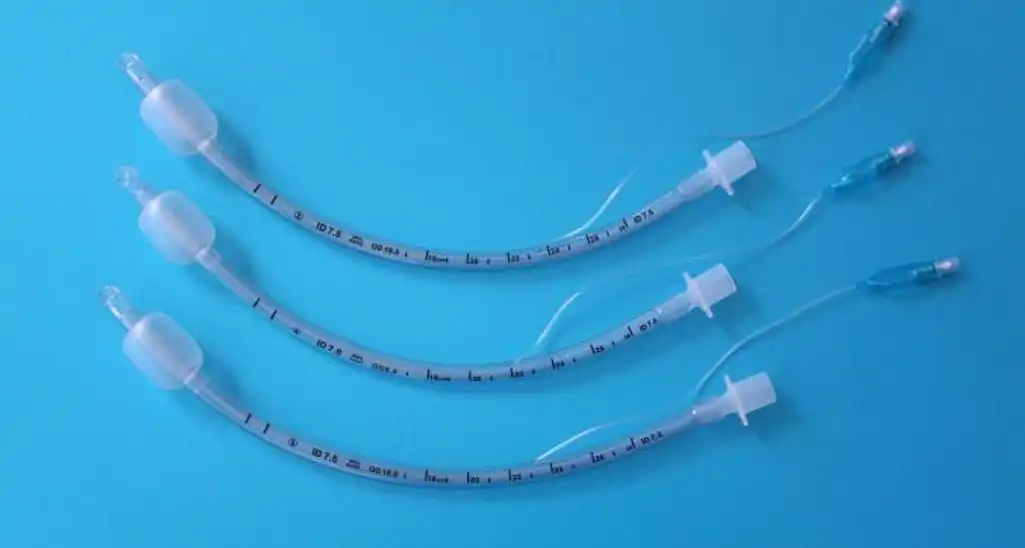
Modern cuffed tubes have a number of important traits that affect both the patient's safety and the quality of breathing. The radiopaque line that runs the whole length of the tube lets doctors check the tube's position accurately with X-rays. This is especially important in emergency intubation situations. The Murphy eye works as a backup way for air to flow, making sure that gas stays flowing even if the main opening gets partly blocked by mucus or touches the tracheal wall. The standard 15mm universal connection makes sure that all kinds of ventilation equipment can work together, so there are no delays when time is of the essence. These parts work together to provide reliable airway control in places like emergency rooms, intensive care units, and operating areas where safety and accuracy must not be compromised.
Clinical Indications and Applications
Cuffed endotracheal tubes are mostly used in three high-stakes situations in healthcare facilities. Intensive care units use them for patients who need artificial breathing for more than 48 hours. The closing ability of the cuff is important for keeping tidal amounts steady and avoiding ventilator-associated pneumonia. During general anesthesia, operating rooms need cuffed tubes. This is especially true for laparoscopic procedures, which need safe breathing protection because of the higher pressure inside the abdomen. During rapid sequence induction for trauma or cardiac arrest patients, emergency rooms and pre-hospital care teams depend on these devices. The tube must immediately guard against aspiration in unfastened people.
PVC Cuff vs. Polyurethane (PU) Cuff: Material Analysis and Core Differences
The material you choose for the tip of your endotracheal tube has a direct effect on how well it works, how much it costs, and how safe it is for patients. When procurement teams know the physical and chemical properties of each option, they can make decisions that are in line with specific clinical needs.
PVC Cuff Characteristics
Traditional PVC cuffs of endotracheal tube with cuff are usually 50 to 80 microns thick and need more air to be pumped into them to seal the trachea properly. The stronger wall structure makes bends that form micro-channels when the balloon expands, which could let secretions pass even though the seal seems to be intact. PVC is flexible at room temperature, but it gets stiffer when it comes in contact with body heat. This can make pressure points on the tracheal mucosa worse during long periods of intubation. These tubes are approved by the FDA as Class II medical devices and meet ISO 5361 standards. They are easy to find through established supply chains and cost between $2 and $5 per unit for bulk orders.
Polyurethane Cuff Advantages
The use of polyurethane technology has made a big improvement in how well airways are sealed. The ultrathin PU cuffs from AVACARE are only 7–15 microns thick, which is about one-fifth the thickness of regular PVC options. This thinner wall completely gets rid of the micro-folding issue, making a fluid-tight seal at lower mucosal pressures. Because the material is thermosensitive, it softens at body temperature to fit each person's tracheal structure perfectly, even if the shape isn't perfectly round. Clinical studies show that PU cuffs lower the risk of ventilator-associated pneumonia by limiting the number of micro-aspiration pathways. The better conformability makes high-volume, low-pressure design work better, spreading contact force evenly across the tracheal wall and lowering the risk of ischemia during long-term ventilation.
Regulatory Compliance and Safety Standards
Before they can be used in hospitals, both products must meet strict international quality standards. ISO 5361 tells us about tracheal tubes' basic safety standards, how they should fit together, and any size or shape differences that may exist. Biocompatibility testing, which makes sure that materials don't cause bad effects in tissues, is governed by ISO 10993. Today, buyers want DEHP- and latex-free products so that known allergens and hormone-disrupting substances don't come into contact with patients. The factory where AVACARE makes their products is ISO 13485 certified and has Class 100,000 cleanrooms. They also have seven national patents that cover ultrathin cuff technology and special ways to make things. This certification shows that quality control is carried out in a planned way throughout the whole production process, from checking the raw materials to making sure they are sterile by using ethylene oxide sterilization and keeping track of the results.
Choosing the Right Endotracheal Tube with Cuff: Size, Type, and Brand Considerations
To choose the right tube sizes and shapes, you need to carefully think about the types of patients, the medical standards, and the tastes of the institution. Procurement teams have to find a mix between how well the body fits and how well the material is managed.
Size Selection Guidelines
Endotracheal tubes are sized by their internal diameter in millimeters. The size is chosen based on the patient's age, gender, and body structure. Adult men usually need tubes that are 7.5 to 9.0 mm in diameter, while adult women usually need tubes that are 7.0 to 8.0 mm in diameter. For pediatric uses, smaller widths are needed. AVACARE has a range of sizes from 4.0mm to 6.0mm to meet the needs of a wide range of patients. The right size stops problems like not enough airflow from tubes that are too small or tracheal damage from tubes that are too big. The length of the tube must also fit the patient's body. For adults, the standard length is between 270 and 330 mm. Purchasing managers should keep a wide range of sizes in stock so that they are ready for emergencies without having to pay too much to store the goods.
Tube Type Variations
In addition to standard cuffed endotracheal tube with cuff, there are also specialized configurations that are used in certain clinical situations. In reinforced tubes, spiral wire is built into the wall to keep it from kinking when the patient is in a complicated surgical position. This is especially helpful for neurosurgery or prone procedures. The oral and nasal versions are shaped and lengthened differently to fit the intended insertion route. Some designs have subglottic suction holes that remove fluids that build up above the cuff. This lowers the risk of aspiration even more. The high-volume low-pressure cuff design has become the standard for most uses. It spreads touch pressure over a bigger surface area than older high-pressure low-volume designs.
Brand Evaluation and Supplier Reliability
Manufacturers that have been around for a long time can offer consistent quality and clinical validation. Teleflex sells the Rusch line, which comes in a lot of different sizes and has a lot of clinical success statistics. Smiths Medical makes new cuff pressure control tools for the Portex range. Medtronic's Shiley tubes are built stronger so they can be used in tough surgery situations. AVACARE uses advanced ultrathin polyurethane technology that is made in a facility that is ISO 13485-certified and can make 300,000 units per month. Smaller facilities and distributors can work with us because the minimum order quantity is only 100 pieces. Our OEM and ODM services allow for private labeling and customization to meet the needs of local markets. When purchasing teams look at different companies, they should check if they are currently certified, ask for proof of batch tracking, and see what kind of logistics support they offer, including help with emergency deliveries.
Proper Use and Safety: Insertion, Monitoring, and Complications
For the best results, even the best tubes need to be handled in the right way by a doctor. When making purchases, people should think about how the features of a product help keep clinical practices safe.
Insertion Best Practices
A successful intubation starts with properly preparing the patient and checking the tools. Clinicians should check the cuff for leaks by blowing it up before putting it on and making sure there are no bulges or tears in the expansion. Using a water-soluble gel to coat the tip of the tube protects the mucosa during passing. Direct laryngoscopy or video laryngoscopy lets the tube be guided between the vocal cords and into the airways. Once it is in place, the cuff should be inflated with just enough air to make a seal. Usually, 5–10 ml of air is enough, but this depends on the size of the tube and the patient's anatomy. The radiopaque line lets an X-ray show that the distal tip is about 3–5 cm above the carina. This keeps the main bronchus from being accidentally intubated or detubated.
Cuff Pressure Monitoring Protocols
Keeping the right cuff pressure during the intubation time is a very important safety measure that is directly linked to how well the material works. Professional standards say to keep the pressure between 20 and 30 cm H₂O to make sure there is a good seal against airway mucosal circulation. If the pressure is below this range, aspiration and ventilator air leaks could happen. If the pressure is too high, blood flow to the tracheal tissue could be cut off, which could lead to ischemic injury. At the lower end of this pressure range, the ultrathin polyurethane design seals well, giving you an extra safety cushion. Facilities should use calibrated manometers to check the pressure every 8 to 12 hours, and if numbers fall outside the goal range, they should be fixed right away. The pilot balloon gives tactile feedback, but it's not very accurate, so it's important to use objective measurement.
Complication Prevention and Management
When buying, teams know about possible problems; they can highlight product features of endotracheal tube with cuff that lower risk. Cuff leaks can happen because of mistakes in the manufacturing process, a broken starter balloon valve, or worn-out materials. This shows how important source quality systems are. The level of tracheal injury, from mild inflammation to severe stenosis, is related to the pressure and properties of the cuff. This means that PU's low-pressure, conformable design is clinically beneficial for long-term intubation. Because tubes can move around when a patient is being moved or transported, the Murphy eye is an important backup breathing system. Full-length radiopaque lines should be required for position verification in the procurement specifications, along with strong connector attachment to prevent accidental disconnection. AVACARE's ultrathin PU cuff has high tensile strength despite being very thin, so it won't tear when used for a long time in tough conditions.
Procurement Guide: Buying, Pricing, and Supplier Selection for Endotracheal Tubes with Cuff
To get value for the whole company, strategic procurement strikes a balance between clinical needs, legal compliance, cost management, and the dependability of the supply chain.
Sourcing Channels and Purchasing Strategies
Endotracheal tube with cuff units are usually bought by hospitals and other medical facilities through established medical device sellers, group buying organizations, or direct relationships with manufacturers. Distributors make it easier to order by combining orders, but they may charge 20–40% more than what the manufacturer charges. Group purchasing organizations use their buying power to get better deals from big suppliers. Compared to buying from a single facility, they can often get discounts of 10 to 25 percent. When you deal directly with a maker, you can get the best prices for large orders and make changes because of OEM and ODM agreements. AVACARE can produce 300,000 units per month, which is enough to handle big contracts with flexible delivery plans. On the other hand, our 100-piece minimum order size is perfect for smaller facilities and specialty distributors who are just starting out in the market.

Pricing Considerations and Budget Planning
Different types of materials, sizes, and order quantities affect the price of endotracheal tubes. When bought in bulk, standard PVC closed tubes usually cost between $2 and $5 per unit. Premium brands, which have a better image, charge more. The price of advanced polyurethane closed tubes ranges from $4 to $8 per unit, which is due to the complex ways they are made and their excellent clinical performance. Even though the unit cost seems higher, the lower number of complications and better results for patients often make up for it. This is because fewer days on the ventilator and lower care costs for tracheal injuries mean that the investment is worthwhile. Instead of just looking at the price of acquisition, procurement managers should figure out the total cost of ownership, which includes things like how well the product works, how to keep problems from happening, and how much it costs to keep inventory on hand.
Supplier Qualification and Certification Verification
Doing your research before choosing a supplier protects both the safety of patients and the institution's reputation. Procurement teams should ask for up-to-date ISO 13485 certificates that show the quality management system is compliant, as well as CE and FDA paperwork that shows the market is authorized. Batch tracking systems let suppliers act quickly if quality problems arise, which is why they are so important for responsible suppliers. Audits of manufacturing facilities let people see firsthand how things are made, how quality is controlled, and how clean the facilities are. AVACARE's 12,000-square-meter buildings have Class 100,000 cleanrooms, which shows how committed we are to preventing pollution throughout the manufacturing process. Our seven national patents, which cover ultrathin cuff technology and specialized processes, show that we are investing in innovation on top of just following the rules.
Conclusion
To choose between a PVC and polyurethane cuffed endotracheal tube with cuff, you have to weigh the costs, clinical performance, patient safety, and following the rules. Traditional PVC cuffs work well and are priced reasonably thanks to well-established supply lines. This makes them good for everyday use. Advanced polyurethane technology provides better sealing with lower complication risks. This is especially helpful for long periods of intubation, where avoiding ventilator-associated pneumonia is worth the extra cost. Buyers should judge providers based on their certifications, their ability to make products, the stability of their supply chains, and their customization services. The decision has a direct effect on the health of the patients and also has an effect on the budgets and efficiency of inventory management across your healthcare organization.
FAQ
What are the key differences between PVC and PU cuffs?
PVC cuffs are 50–80 microns thick and make tiny pathways when they inflate that may let secretions pass through. Polyurethane cuffs, on the other hand, are only 7–15 microns thick and don't fold, so they can make fluid-tight seals at lower pressures. Polyurethane softens at body temperature to perfectly fit the shape of the trachea. This makes it safer for extended breathing by lowering the risk of pressure points and ischemia compared to stiffer PVC options.
How do I determine the correct tube size for different patient populations?
Adult men usually need tubes with an internal diameter of 7.5 to 9.0 mm, while adult women usually need tubes with an internal diameter of 7.0 to 8.0 mm. For pediatric uses, diameters between 4.0 and 6.0 mm are needed, depending on the child's age and weight. AVACARE has a wide range of sizes, from 4.0mm to 6.0mm, to meet the needs of all of your patients' different body types.
Why is cuff pressure monitoring essential?
Keeping the pressure between 20 and 30 cm H₂O stops aspiration and air leaks and keeps blood flowing through the airway tissue. Too much pressure can cause ischemic harm that could lead to stenosis, and not enough pressure can cause ventilator-associated infections. Using calibrated manometers to check on the patient every 8 to 12 hours during the intubation period makes sure that they stay in the best possible balance.
Partner with AVACARE for Superior Airway Management Solutions
AVACARE provides medical-grade cuffed endotracheal tubes that are Class II. These tubes are made in our ISO 13485-certified 12,000 m² building that has Class 100,000 cleanrooms. Our ultrathin polyurethane cuff technology, which is only 7 to 15 microns thick, seals better than other options. It is backed by seven national patents and meets ISO 5361 and ISO 10993 standards. We offer OEM and ODM customization for private labeling and regional needs, and our minimum order size is only 100 pieces. Every month, we send out 300,000 units. For the safety of the patient, our tubes don't contain any DEHP or latex and have Murphy eyes and full-length radiopaque lines. Send an email to admin@aileindus.com to our procurement team asking for technical details, certification paperwork, and bulk price for this advanced endotracheal tube with cuff provider. Visit ailemedicals.com to see our full range of airway control products and to try out our quick response support system, which is available 24 hours a day, 7 days a week.

References
1. Dullenkopf A, Gerber A, Weiss M. Fluid leakage past tracheal tube cuffs: evaluation of the prevention efficacy of different pediatric cuffs. Intensive Care Medicine, 2003, 29(10): 1849-1853.
2. Bernhard WN, Yost L, Joynes D, Cothalis S, Turndorf H. Intracuff pressures in endotracheal and tracheostomy tubes: related cuff physical characteristics. Chest Journal, 1985, 87(6): 720-725.
3. Seegobin RD, van Hasselt GL. Endotracheal cuff pressure and tracheal mucosal blood flow: an endoscopic study of the effects of four large-volume cuffs. British Medical Journal, 1984, 288(6422): 965-968.
4. Lorente L, Lecuona M, Jiménez A, Mora ML, Sierra A. Influence of an endotracheal tube with polyurethane cuff and subglottic secretion drainage on pneumonia. American Journal of Respiratory and Critical Care Medicine, 2007, 176(11): 1079-1083.
5. Young PJ, Ridley SA, Downward G. Evaluation of a new design of tracheal tube cuff to prevent leakage of fluid to the lungs. British Journal of Anaesthesia, 1998, 80(6): 796-799.
6. Dave MH, Frotzler A, Spielmann N, Madjdpour C, Weiss M. Effect of tracheal tube cuff shape on fluid leakage across the cuff: an in vitro study. British Journal of Anaesthesia, 2010, 105(4): 538-543.

_1782811410038.webp)