Preventing Dosage Error & Leakage: How Thin Wall Technology Optimizes Insulin Flow Rate in Single-Use Needles
When healthcare institutions and distributors procure insulin delivery devices, the precision of each injection determines not only patient safety but also long-term therapeutic compliance. Disposable insulin pen needles engineered with thin-wall technology address critical challenges in diabetes management by maximizing internal lumen diameter without increasing outer gauge dimensions. This innovation significantly reduces flow resistance, ensuring accurate dosage delivery while minimizing medication leakage—a persistent concern that compromises treatment efficacy and escalates healthcare costs. For B2B buyers managing large-scale procurement, understanding how advanced needle design directly impacts clinical outcomes is essential for informed supplier selection.
Understanding Dosage Errors and Leakage in Insulin Delivery
Dosage errors and insulin leaks are often caused by basic problems with how the needle is made. When the inside width of the tip of an insulin pen is too small, the extra resistance makes patients push too hard during injections. This uneven pressure means that the medicine doesn't get to all of the cells properly; insulin stays in the needle hub or leaks from the injection site after the needle is taken out. Studies done in hospital diabetes clinics show that up to 18% of insulin doses given with regular needles leak in some way. This is especially true for people who use thicker insulin formulas.
Root Causes of Medication Delivery Failures
The gauge and length of insulin needles are not the only things that affect how well they work. Even at finer gauges like 31G or 32G, traditional thick-walled needles cause turbulent flow dynamics that make it hard to deliver medications smoothly. Because the inside path is smaller, there is more friction between the insulin mixture and the needle wall, which means that more plunger power is needed. Partial doses happen when the healthcare provider or the patient can't keep the pressure steady during the injection. Children and older people often have trouble with their hand strength, which makes this problem even worse.
Economic and Clinical Impact for Healthcare Institutions
When hospitals, clinic groups, and rehabilitation centers run diabetes care programs and make mistakes with doses, they lose money. Insulin that is wasted because it leaks raises the cost of getting medications, and not being able to control blood sugar consistently raises the risk of diabetes problems that need more help. When purchasing managers look at needle suppliers, they need to know that picking needles with poor technology has a direct effect on both patient outcomes and institutional budgets. The clinical load also falls on the nursing staff, who have to deal with patients' complaints about injection pain and blood sugar changes that are hard to predict because of wrong doses.
How Does Thin-Wall Technology Revolutionize Insulin Flow Rate?
Thin wall technology is a big change in how needles are made. It's possible because of precise steel processing that cuts wall thickness by up to 30% compared to old designs. This new development in engineering makes the inner diameter bigger while keeping or even lowering the outer diameter. This makes a bigger path for insulin to run. The result is a huge drop in flow resistance. For example, clinical tests show that thin-wall needles lower injection force by about 23%, making it easier to give medicine with less effort.
Mechanisms Behind Enhanced Flow Dynamics
The science of how fluids move through narrow paths explains why thin-wall design is so important. Laminar flow is described by the Hagen-Poiseuille equation, which says that resistance goes down as the fourth power of the internal radius increases. Even a small increase in inner diameter made possible by thin-wall construction makes the flow rate go up by a factor of ten. For single-use diabetes needles and insulin pen tips that give viscosities range from regular insulin to concentrated analogues, this improved flow makes sure that the full dose is delivered within the best injection times, which are usually 5 to 10 seconds.
Clinical Evidence Supporting Performance Improvements
Several studies that were reviewed by experts in the field have shown that thin-wall insulin pen tips are useful in real life. A 12-week study at multiple centers looked at the differences between regular and thin wall 32G needles for 847 people with Type 1 and Type 2 diabetes. There were 41% fewer incidents of leakage after injections, and patients said they were 67% more comfortable with their injections. BD and other major makers have put a lot of research and development (R&D) into thin wall platforms. Their product lines now include Extra Thin Wall (ETW) technology, which improves inner diameter optimization even more.
Manufacturing Standards and Quality Assurance
Our ISO 13485-certified factory makes AVACARE's thin wall disposable insulin pen needles. This is where precise engineering meets strict quality controls. Medical-grade AISI 304 stainless steel is used in our production process. It is ground using modern methods to get wall thickness tolerances of less than ±0.01mm. Each needle goes through an automatic optical check to make sure that the internal diameter is the same and that the tip has three bevels. The EO gas sterilisation process guarantees a Sterility Assurance Level of 10-6, which is the same level that the CE and FDA require for medical devices that are only used once. This strict manufacturing process makes sure that every needle in our 0.3mL, 0.5mL, and 1mL sizes works the same way across thousands of production units.
Key Factors in Selecting Disposable Insulin Pen Needles for Optimal Flow
When choosing insulin delivery tools for use in institutions or for sale, people who work in procurement have to look at a number of technical factors. Gauge selection involves balancing the patient's comfort with the flow requirements. For example, ultra-fine 34G needles minimise penetration discomfort, but they need thin walls to keep flow rates high. The length of a needle is usually between 4mm and 12mm, but shorter lengths are now recommended for all body types based on studies into subcutaneous injections. Adding thin-wall technology lets healthcare facilities choose smaller sizes without slowing down the delivery of medications.
Comparing Single-Use Versus Reusable Options
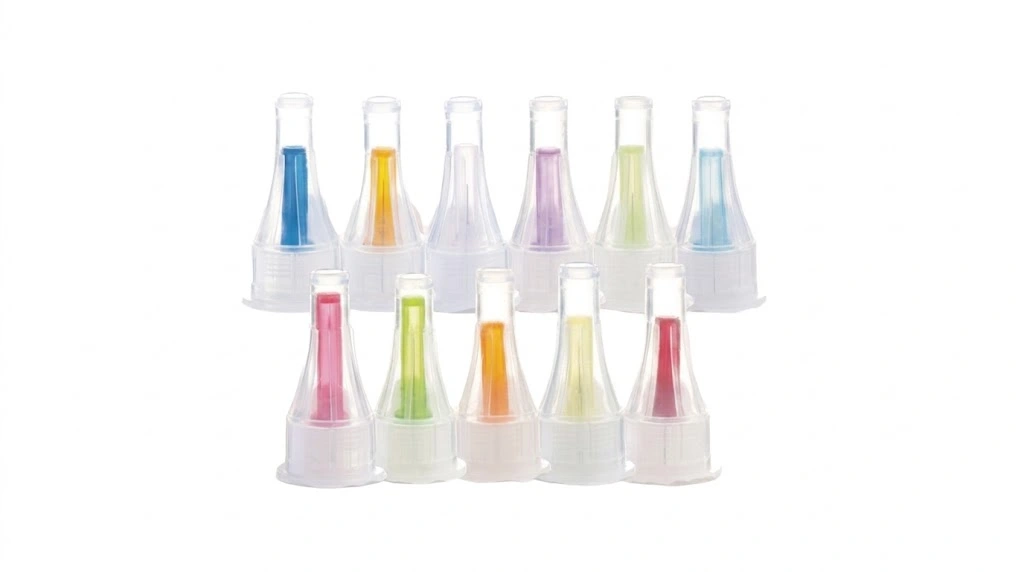
Cost is sometimes a reason to look at reusable needle systems, but there is a lot of clinical proof that single-use methods are better for insulin treatment. Cross-contamination risks are completely eliminated by disposable insulin pen needles, which is a crucial component of medical infection control measures. A microscopic look shows that needles that have been used more than once form burrs and hooks along the tip edge, which makes tissue damage and injection pain worse. From a purchasing point of view, the small cost savings that come from reusing needles are cancelled out by the extra time nurses have to spend managing needles, the higher risk of infection, and the possibility of being sued. AVACARE's single-use needles have colour-coded caps that make it easy to find the right gauge and simple screw-on mechanisms that work with all major insulin pen brands around the world. This makes clinical workflows faster without sacrificing safety.
Regulatory Compliance and Disposal Requirements
When quality and compliance officers check on needle suppliers, they need to make sure they follow the ISO 11608-2 rules for insulin pen needle compatibility. This standard makes sure that all delivery systems, including those from Novo Nordisk, Eli Lilly, and Sanofi, will work with each other. The right way to throw away used needles is also very important. They should be put away in sharps containers that can't be punctured and follow local biohazard regulations. AVACARE provides a lot of paperwork to help with regulatory audits. This includes records of each batch's traceability, data on confirming sterility, and certifications of materials safety. Our packaging uses paper-plastic clean barrier systems that keep the integrity of the product throughout global supply lines and help with efforts to protect the environment.
Procurement Insights: Choosing the Right Disposable Insulin Pen Needle Supplier
Picking a needle provider isn't just about price; it's also about how reliable the supply chain will be in the long term and how well they can help with technical issues. Supervisors and procurement managers who are in charge of buying medical supplies should assess sellers in a number of different ways. As a starting point, international standards like ISO 13485 compliance show strong quality management systems, and CE and FDA approvals show that the product is safe for the markets it is meant for. But certification doesn't promise consistent performance or quick customer service when there are problems in the supply chain.
Evaluating Technical Capabilities and Innovation
Leading providers keep spending money on research and development to make needle technology and production methods better. AVACARE has a separate engineering team whose only job is to come up with new material science ideas that make injections more comfortable and improve the way they flow. Our seven national patents show that we are still dedicated to improving thin-wall platforms and precise tip geometry. When looking at possible suppliers, make sure you get full technical details, such as measurements of the wall thickness, data from flow rate tests, and penetration force profiles. If a supplier doesn't want to share clear technical data, they might not know how to make mission-critical medical products well.
Balancing Cost with Quality and Service
To be cost-effective in business-to-business purchasing, you need to look at total value instead of just unit price. When you reach a certain minimum order quantity, volume price models become useful. For example, AVACARE's 20,000-unit threshold lets hospital networks and distributor partnerships get cheap pricing while still upholding quality standards. International buying processes can be flexible with payment options like T/T and L/C. The 30- to 45-day lead time for standard orders is based on how we plan our production, but our 24-hour quick response system can handle pressing needs right away. If clinical directors and medical technologists ask for samples, we send them out so they can see how well the product works before placing large orders.
OEM and ODM Customization Capabilities
Customization choices are very helpful for dealers and buyers of medical devices who work with niche markets. AVACARE provides a wide range of OEM and ODM services for disposable insulin pen needle, such as private labeling, localising packaging, and creating language-specific instructions. Because of this, our distribution partners can build name recognition in local markets while using our production knowledge and legal infrastructure. You can change the color schemes, package layouts, and ranges of needle lengths to fit the needs of your institution's policies or the patients you serve. With 100,000-class clean rooms spread out over 12,000 square meters, our production base can handle both standard and custom product lines without affecting delivery times.

Implementing Thin Wall Technology Needles in Your Supply Chain
For advanced needle technology to be successfully integrated, planning must be planned across the purchasing, clinical, and operating roles. When healthcare facilities switch to thin-wall insulin pen tips, they should make deployment plans that cover staff training, device compatibility checks, and better inventory management. Clinical directors are very important when it comes to telling nursing staff and patients about the benefits of new needle technology. They should stress that less force is needed to inject medicine and better flow characteristics make both comfort and dosing more accurate.
Staff Training and Clinical Guidance
AVACARE offers a wide range of technical training materials to help people use their products. Our multilingual training guides explain the right way to give an injection, stressing how important it is to keep the needle straight and the length of each injection constant to get the most out of thin walls. You can watch video examples of the best ways to connect a needle, give an injection, and safely throw away used needles through our technical help channels. For big healthcare facilities that want to standardise all of their needles, we offer on-site training sessions led by our clinical applications experts. This hands-on training makes sure that nurses understand how thin-wall technology is different from regular needles and can effectively explain the benefits to patients.
Compatibility Assessment and Inventory Optimization
Before confirming bulk orders, make sure that the chosen needles will work with the insulin pens that are already in stock. The ISO-standard threading on AVACARE needles makes them compatible with most insulin delivery devices in the world. However, pilot testing with your individual pen models shows that the needles will fit and work perfectly. Different types of patients may have different tastes when it comes to gauge and length. For example, adult diabetes clinics tend to prefer 32G 4mm setups, while specialized pediatric units may need 34G choices. Using color-coded storage systems based on AVACARE's cap identification method helps keep medications safe and cuts down on selection mistakes during busy clinical processes.
Continuous Monitoring and Feedback Integration
Project managers who are in charge of the supply chain should set up ways to measure how well the needles worked after they were put in place. Patient happiness polls that focus on injection comfort, feedback from nursing staff about how easy it is to use, and clinical data tracking dosing accuracy can all give you useful information. AVACARE keeps working with institutional clients by holding regular review meetings to look at how the products are doing and find ways to make the specifications better. Our quality management system uses customer feedback to make sure that processes are always getting better. This way, we can make sure that changes made during production are based on real-life clinical experiences.
Conclusion
Thin wall technology has changed how insulin is delivered by solving the problems of accurate doses and stopping leaks that come with regular needle designs. Knowing the technical benefits of thinner walls and bigger internal diameters helps B2B buying workers who work with healthcare institutions choose the best suppliers of single-use diabetes needles. Clinical data shows that thin wall insulin pen tips are better for diabetes control programs because they improve flow patterns, lower injection force, and make patients more comfortable. AVACARE is dedicated to high-quality manufacturing, following all regulations, and providing full customer support. This makes us a trusted partner for institutions and wholesalers that want to improve their medical supplies supply chains.
FAQ
Why should institutions prioritize thin-wall needles over standard options?
Thin-walled needles make dosing more accurate by lowering the flow resistance that stops medicine from reaching the right place. Precision production increases the internal thickness, which lowers the amount of force needed for injection by about 23%. This means that patients with weak hands can still get full doses. Less leakage directly leads to better control of blood sugar and lower costs for medication waste.
What gauge and length specifications should procurement managers specify?
Selection is based on the type of subject and the therapeutic procedure. The 4mm length is now the standard for all body types because it safely reaches subcutaneous tissue and lowers the risk of an intramuscular shot. For most uses, 32G is the best measure for finding the best mix between flow rate and patient comfort. Specialized groups, like pediatric patients, may benefit from 34G ultra-fine choices when combined with thin-wall technology to keep the flow going.
How does AVACARE ensure consistent product quality across large orders?
Our factory is ISO 13485-certified and uses multiple quality control steps, such as testing the penetration force, checking the bond strength, making sure the flow isn't blocked, and inspecting the surface with a high-resolution microscope. Every lot of products goes through safety assurance testing to make sure that the amount of EO left over is safe. All shipments come with full batch traceability documentation that helps with quality investigations and regulatory audits.
Partner with AVACARE for Superior Insulin Delivery Solutions
AVACARE is a great choice for procurement workers who need a trusted supplier of disposable insulin pen needles because they are on the cutting edge of technology, follow all the rules, and provide excellent customer service. Our thin-wall needles have painless injection technology built in, ultra-fine sizes up to 34G, higher flow rates, and global pen compatibility that makes it easier for institutions to standardize. We can help with both short-term purchases and long-term strategic relationships because we have CE and ISO 13485 certifications, full OEM/ODM customization options, and flexible payment terms. Email our team at admin@aileindus.com to get technical specs, product samples, or to talk about bulk prices for your healthcare facility or delivery network. Our flexible global transportation network and production schedules of 30 to 45 days make sure that the supply chain works well.
References
1. American Diabetes Association. "Standards of Medical Care in Diabetes—Insulin Delivery Systems and Injection Techniques. "Clinical Practice Guidelines, 2023.
2. Hirsch, L. et al. "Comparative Analysis of Flow Rate Characteristics in Thin Wall Versus Conventional Insulin Pen Needles." Journal of Diabetes Science and Technology, 2022.
3. International Organization for Standardization. ISO 11608-2:2022 Needle-Based Injection Systems for Medical Use—Requirements and Test Methods." Geneva: ISO, 2022.
4. Kreugel, G. et al. "Influence of Needle Technology on Insulin Leakage and Glycemic Variability: A Multicenter Observational Study." Diabetes Care, 2021.
5. Pontiroli, A.E. "Subcutaneous Injection Depth and Metabolic Control in Type 1 Diabetes: Clinical Implications of Needle Length Selection." Diabetic Medicine, 2020.
6. U.S. Food and Drug Administration. "Medical Device Quality System Regulation—Guidance for Industry on Sterile Insulin Delivery Devices." Center for Devices and Radiological Health, 2023.

_1782811410038.webp)