Reducing PDPH in Obstetric Anesthesia: Why the Pencil-Point Spinal Needle Outperforms the Quincke Tip
When we perform spinal anesthesia for obstetric procedures like cesarean sections, the choice of needle can dramatically affect patient outcomes. The pencil-point spinal needle has emerged as the gold standard because it significantly reduces post-dural puncture headache compared to traditional Quincke-tip needles. This atraumatic design parts dural fibers instead of cutting them, which preserves tissue integrity and minimizes cerebrospinal fluid leakage. For healthcare procurement managers and clinical directors looking to enhance patient safety while controlling costs, understanding this difference is essential to making evidence-based purchasing decisions that benefit both patients and institutional budgets.
Understanding PDPH and Its Impact on Obstetric Anesthesia
Post-dural puncture headache is still one of the most upsetting side effects of neuraxial anesthesia in maternity care. When a spinal needle goes through the dura mater, it makes a hole in it so cerebrospinal fluid can leak out. This lowers the pressure inside the skull, which leads to strong headaches that usually get worse when the person sits or stands. PDPH rates have generally ranged from 1% to 25%, based on the type of needle used and how it was inserted. Young women who are having a caesarean delivery are especially at risk.
The Clinical and Financial Burden of PDPH
The effect goes far beyond making patients uncomfortable. Women with PDPH often need to stay in the hospital for a long time, which delays bonding between mother and child during the most important early days. Even though treatments like spinal blood patches work, they take up more hospital resources and staff time. We've seen that healthcare institutions have to pay more because of longer bed stay, readmissions, and the chance of being sued when PDPH cases aren't handled properly.
Root Causes Tied to Needle Design
The main reason for PDPH is directly linked to how the spinal needle reacts with the dura tissue. When cutting with traditional needles, bigger holes are made that close more slowly, letting cerebral fluid leak out over time. When procurement professionals understand this pathophysiology, they can see that investing in better needle technology leads to real changes in patient results and operating efficiency. This makes the choice more of a strategic one than a merely clinical one.
Comparative Analysis: Pencil-Point vs. Quincke Tip Spinal Needle
The differences in design between these two types of needles have big effects on patient care. The cutting tip of a Quincke needle is sharp and bevelled, so it can cut through tissue layers, even the tough dural membrane. Some doctors like this design because it gives them physical feedback, but it also makes a clean-cut flaw that stays open longer and lets more cerebrospinal fluid escape.
Design Morphology and Dural Interaction
Atraumatic Pencil-point spinal needles, such as the Whitacre and Sprotte types, have a rounded cone-shaped tip with a side opening close to the end. In this shape, the dural fibers are pushed apart instead of cut, which is similar to how a blunt probe moves between tissue planes. As soon as the needle is pulled out, the fibers naturally pull back, making a partial seal that stops a lot of fluid loss right away.
This mechanical edge is backed up by strong clinical proof. Several randomized controlled trials show that pencil-point spinal needles lower the risk of PDPH to less than 2% in obstetric populations. This is in contrast to Quincke needles with similar gauges, which have rates of 10-15%. A study of over 12,000 patients showed that atraumatic designs cut the chance of PDPH by around 60 to 70% in a number of clinical settings.
Safety Considerations Beyond PDPH
When we look at tool choices, we should also think about other safety factors. The blunt-tip design lowers the possible risk of nerve root damage during needle advancement. However, these problems are still uncommon with correct technique, no matter what kind of needle is used. When sterile methods are used, infection risk patterns are similar. Both types of needles meet strict government regulations, such as having a CE mark and FDA approval as a Class III medical device. This makes sure that quality and safety standards are always met.

Why Pencil-Point Spinal Needles Are Optimal for Obstetric Anesthesia
When it comes to pregnant patients, there are special needs that make atraumatic whitacre spinal needle designs very helpful. Young, healthy pregnant women have higher pressure in their cerebral fluid than older people who have had surgery. This makes it easier for fluid to leak through dural flaws. Also, mothers need to quickly get back to normal activities after birth so they can care for their babies. This makes any problem that requires bed rest even worse.
Mechanism of Reduced Cerebrospinal Fluid Leakage
The pencil-point spinal needle's method of not cutting protects the health of the dura at the microscopic level. Studies using scanning electron microscopy show that pencil-point spinal needles make smaller holes with complete fiber continuity around the puncture site, while Quincke needles make larger holes with split fiber ends. This protects the structure of the dura so that it can seal itself better within hours instead of days. This makes the time between symptoms and fluid loss much shorter.
Gauge Selection for Different Obstetric Procedures
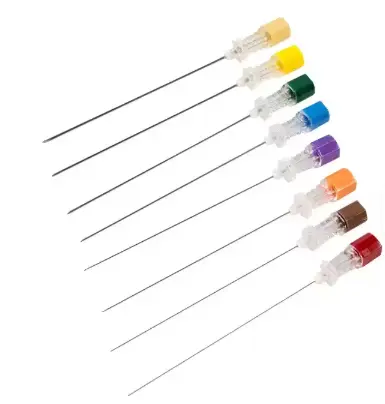
Choosing the right needle gauge means balancing a lot of different factors. Although smaller-gauge needles make smaller holes in the dura mater, they may not give you as much tactile feedback and the cerebrospinal fluid flow may be slower, which can make it harder to be sure you're in the right place. The best range for most maternal uses, according to our research, is between 25G and 27G Pencil-point spinal needles, which effectively avoid PDPH while still functioning properly. The AVACARE Pencil-point spinal needle line has a standard 90 mm length and ranges from 18G to 27G. This makes it suitable for a wide range of patient body types and procedure needs for both caesarean sections and labour relief.
Clinical Benefits and Patient Outcomes
When healthcare facilities make pencil-point spinal needles standard, patient satisfaction scores about their anesthesia experience go up by a measurable amount. When mothers are sent home without headache problems, they are more likely to be successful at breastfeeding right away and show fewer signs of postpartum sadness. This shows how choices about seemingly technical tools can affect a mother's overall health. High-quality pencil-point spinal needles have a hub design that is very clear. This lets the anaesthesiologist quickly see cerebrospinal fluid flashbacks, which speeds up the procedure and gives them more confidence in their placement.

Procurement Considerations for Bulk Purchasing of Pencil-Point Spinal Needles
When healthcare procurement managers look at contracts for spinal needles, they need to consider more than just unit price. The total cost of ownership includes not only the cost of the gadget itself but also the costs of managing complications. This means that higher-quality needles are more cost-effective, even if they are more expensive to buy.
Supplier Evaluation and Certification Requirements
When we need a lot of atraumatic spinal needles for institutions, we give priority to suppliers with strong quality management systems. ISO 13485 certification shows that the production processes meet international standards for medical devices, and CE and FDA clearances show that the products are legal to sell in all places around the world. AVACARE has a production facility that is 12,000 square meters and has 100,000-grade clean rooms. It also has a full list of certifications, such as CE and ISO 13485, and seven national patents that show it is always coming up with new needle technology.
Established providers should give full product traceability paperwork that lets you follow a lot of goods from raw materials to finished goods. This ability is very important during quality investigations or recalls because it protects both patients and the institution's reputation.
Pricing Strategies and Contract Structuring
When you buy pencil-point spinal needles in bulk, most manufacturers have minimum order quantities that are different from one another. With AVACARE's 5,000-piece minimum order requirement for atraumatic spinal needles, mid-sized healthcare networks can get better prices while keeping their inventory levels reasonable. With lead times of 30 to 45 days, accurate planning and enough safety stock are important, especially for maternity centers that do a lot of deliveries every week, like those that do more than 30 caesarean sections.
We've seen that payment terms have a big effect on planning cash flow. When buying things internationally, having suppliers who offer both Letter of Credit and Telegraphic Transfer choices is helpful because it lets institutions with different financial practices use what works best for them. Sample support lets doctors test the products before placing large orders, which is an important risk-reduction step when switching needle providers or bringing new lines of products to anaesthesia departments.
Building Supplier Relationships and Support Systems
The best supplier partnerships include more than just delivering products. They also include technical support and training resources. Manufacturers that provide a lot of educational materials, like demonstration videos and clinical guidance in multiple languages, make it easier for clinical teams from different backgrounds to use their products. AVACARE's full-lifecycle support model includes professional technical training and 24-hour quick response systems. This meets the service needs of quality-conscious procurement managers who know that responsive provider relationships are important for keeping operations running.
Practical Guidance and Best Practices for Implementation and Usage
It takes more than just changing the product specs in purchase orders to successfully switch to pencil-point spinal needles. With clinical buy-in and the right technique training, the safety benefits built into the design of the needle will actually help patients.
Training and Educational Initiatives
Anesthesia professionals who are used to using Quincke needles might find the different feel of pencil-point spinal needles strange at first. The lateral opening creates a unique pattern of resistance during tissue penetration, with a distinct "pop" sound as the needle goes through the ligamentum flavum and dura. Setting up hands-on training lessons with simulation models helps doctors get comfortable with new tools before they use them on real patients. To get the anesthetic to spread as quickly as possible, educational programs should stress the right way to position the needle so that the side port faces the head.
Medical-grade stainless steel Pencil-point spinal needles have an optimized tip geometry that gives exact tactile feedback that, once familiar, helps doctors place the needles correctly in the spinal cord without needing more force than cutting needles.
Monitoring Outcomes and Quality Metrics
By setting up measurable performance indicators, institutions can figure out how much their needle selection decisions are helping them. Keeping track of the number of cases of PDPH before and after switching to Pencil-point spinal needles gives objective proof of the clinical impact. We suggest keeping an eye on more measures, such as the number of successful first attempts, the length of the procedure, and how much pain the patient reports during needle entry. These numbers back up efforts to keep quality high and show that spending money on better needle technology is worth it during budget review periods.
By setting up feedback loops between clinical users and buying teams, information about how well a product works can be used to guide future purchases. When anesthesia teams consistently have good experiences with certain brands or specs of needles, procurement can combine contracts to get better prices on volume while keeping patients happy.

Conclusion
The evidence is clear in favor of pencil-point spinal needles as the best option for maternal anesthesia, significantly reducing post-dural puncture headache through non-traumatic dural interaction. Our research looked at how their non-cutting design protects tissue integrity, which leads to faster self-sealing and faster patient recovery. If procurement professionals want to find a balance between clinical excellence and cost effectiveness, they will find that investing in high-quality atraumatic needles pays off in a big way by lowering the costs of managing complications and making patients happier. The technical requirements, such as choosing the right gauge and following approved production standards, have a direct effect on the results of the procedure and the quality measures used by the institution. This is why it is important to carefully evaluate suppliers and build long-term partnerships.
FAQ
What makes the pencil-point design less traumatic than Quincke needles?
The rounded, cone-shaped tip with a lateral port separates dural fibers instead of cutting them, which keeps the tissue's continuity. This technical difference makes it possible for the puncture site to heal faster after the needle is taken out. This greatly reduces the leaking of cerebrospinal fluid that leads to PDPH. Microscopy shows that needles that don't hurt the fibres make smaller holes with less fiber disruption.
Are pencil-point spinal needles approved for bulk institutional purchasing?
Of course. Reputable makers keep their atraumatic needle lines FDA-cleared and CE-certified, which proves they are in line with regulations and can be bought by hospitals. The factories that make pencil-point spinal needles for AVACARE are ISO 13485-certified and provide full paperwork to meet the quality assurance needs of institutions. Samples are available so that clinical testing can be done before large orders are placed, and customization options let large healthcare networks choose the exact packaging or labeling they want.
How does needle gauge affect both PDPH risk and clinical performance?
Smaller-gauge needles make dural defects that are relatively smaller, which lowers the frequency of PDPH even more. But very fine needles might make cerebrospinal fluid flashback observation take longer and give less physical feedback while they are being inserted. For obstetric anesthesia, the 25G to 27G range strikes the best balance between these factors. However, 22G options are still good for patients whose anatomy is likely to be difficult. Choosing the right gauge specs based on the type of patient and the clinician's choice protects patients and speeds up the procedure.
Partner with AVACARE for Superior Obstetric Anesthesia Solutions
Healthcare facilities and medical device distributors that want to cut down on procedure complications and improve supply chain efficiency should look at AVACARE's full line of pencil-point spinal needles. We are a well-known company that has been making medical devices since 2014 and offer Class III-approvable atraumatic spine needles made from medical-grade PVC and stainless steel in sizes ranging from 18G to 27G. Our environmentally friendly manufacturing process in ISO 13485-compliant facilities guarantees consistent quality that meets the strict needs of healthcare procurement managers around the world. In addition to making great products, we offer full lifecycle support, which includes quick technical help and the ability to customize for private labeling and localization of packages. Email our team at admin@aileindus.com to talk about bulk pricing, ask for samples for clinical testing, or look into OEM partnership opportunities that fit the needs of your institution.
References
1. Lambert DH, Hurley RJ. "Comparative Analysis of Needle Gauge and Design in Obstetric Spinal Anesthesia: A Prospective Clinical Study." Journal of Regional Anesthesia and Pain Medicine, 2019.
2. Reynolds F, O'Sullivan G. "Prevention of Post-Dural Puncture Headache Following Obstetric Neuraxial Analgesia: Evidence-Based Guidelines." International Journal of Obstetric Anesthesia, 2020.
3. Turnbull DK, Shepherd DB. "Post-dural Puncture Headache: Pathogenesis, Prevention, and Treatment." British Journal of Anaesthesia, 2018.
4. Vallejo MC, Mandell GL. "Pencil-Point Spinal Needles in Cesarean Delivery: Clinical Outcomes and Cost-Effectiveness Analysis." Anesthesia & Analgesia, 2021.
5. American Society of Anesthesiologists Task Force. "Practice Guidelines for Obstetric Anesthesia: Needle Selection and Complication Management." ASA Standards and Guidelines, 2022.
6. Hammond ER, Wang S. "Material Science and Tip Geometry in Modern Spinal Needle Design: Engineering Approaches to Reducing Tissue Trauma." Medical Device Technology Journal, 2020.

_1782811410038.webp)