Selection and Proper Use of Insulin Safety Pen Needles
Selecting the right insulin safety pen needle involves balancing patient comfort, clinical efficacy, and supply chain reliability. Disposable insulin pen needles have become the gold standard in diabetes management, offering sterile, single-use solutions that minimize infection risks while ensuring consistent insulin delivery. These precision-engineered devices address critical healthcare challenges—from preventing lipodystrophy caused by needle reuse to supporting compliance through painless injection experiences. As healthcare institutions and distributors navigate procurement decisions, understanding needle specifications, compatibility, and supplier credentials becomes essential to maintaining therapeutic outcomes and operational efficiency.
Understanding Disposable Insulin Pen Needles: Types, Sizes, and Benefits
Disposable insulin pen needles are a big step forward in diabetes care technology. They are made to be used only once to inject insulin under the skin. Unlike models that can be used more than once, these clean devices don't allow cross-contamination and keep their sharp, undamaged tips for every shot. This directly addresses the patient safety concerns that procurement managers put first.
Key Features of Modern Insulin Pen Needles
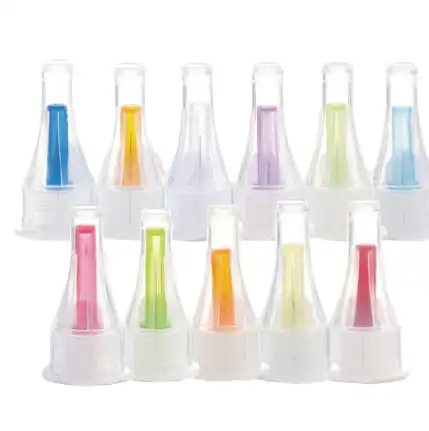
Today's insulin pen needles are built in a way that blends material science with practical design. The AVACARE Disposable Insulin Pen Needle is made from medical-grade materials, such as a PVC tube, and is sterilized with EO gas to make sure that it does not release any pyrogens. These needles come in three different model numbers: 0.3 ML, 0.5 ML, and 1 ML. This means that they can meet the practical treatment needs of both children and adults. Each unit comes in its own wrapped paper-plastic package, which keeps it sterile until it is used and makes it easier for healthcare facilities to keep track of their supplies.
Understanding Needle Gauge and Length Specifications
The size of the needle has a big effect on both how the patient feels and how well the shot works. Gauge measures, which range from ultra-fine 29G to 34G, show how thick a needle is; higher numbers mean smaller profiles. AVACARE uses Thin Wall technology to increase the internal diameter even in small sizes. This lets insulin flow quickly without needing more injection power. Length options usually range from 4mm to 12mm, which lets doctors make choices that are best for each patient based on their body type and the features of the injection spot. Shorter needles make it less likely for thin people to get an accidental intramuscular shot while still ensuring reliable subcutaneous delivery.
Hygiene and Safety Advantages
Single-use design concepts help prevent infections in a measured way. Studies in humans show that using the same needle over and over again wears down the tips and breaks the silicone coats, which makes people feel more pain and causes tissue damage. The triple-bevel or five-bevel lancet tips on good disposable insulin pen needles easily go through skin, protecting tissue integrity over thousands of doses that are common for managing diabetes. The safety process ends with proper disposal following biohazard practices. AVACARE meets this need with thorough training materials, which protect the health of healthcare workers and the environment.

How to Select the Right Insulin Safety Pen Needle for Your Business Needs
When making choices about purchases, you need to look at more than just the unit cost. Healthcare organizations need to look at how the specs of needles match up with the types of patients they have, and sellers need goods that balance performance with how they fit into the market.
Matching Needle Specifications to End-User Profiles
When setting prescription standards, hospital procurement teams should look at the types of patients they will be buying for. Ultra-fine needles that are 32G or 34G and 4-5 mm long are useful in pediatric units because children's fat tissue isn't as deep and they are more sensitive to pain. Geriatric care facilities may need the same requirements, since older people often have thinner amounts of fat under their skin. The global compatibility design of AVACARE, which includes international standard threading, makes sure that it works seamlessly with all major insulin pen types, even those made by major pharmaceutical companies. This stops expensive inventory fragmentation.
Evaluating Certification Standards and Quality Assurance
Compliance with regulations is the basis of how suppliers are chosen. Quality and compliance officers should check that AVACARE has ISO 13485 approval, which it does by putting in place a quality management system. The CE mark shows that the product meets the requirements of the European Medical Device Regulation, and the ability to track paperwork makes it easy to quickly find batches during quality checks. Seven national patents show that continuing research and development (R&D) is being done, which shows that the supplier is stable and can come up with new ideas that will help the relationship last for a long time.
Comparing Procurement Models and Customization Options
Different sellers have very different ways of setting up bulk purchases. With 30- to 45-day wait times and a minimum order number of 20,000 pieces, AVACARE is a good choice for medium- to large-sized institutions looking to buy in bulk. The OEM and ODM services allow wholesalers to create their own brands by customizing packaging and localizing languages. This is especially important for foreign companies that serve a wide range of markets. Giving samples when asked for makes it easier to test a product before making big promises, which lowers the risk of buying.

Best Practices for Using Disposable Insulin Pen Needles
The results of glucose control and the number of patients who stick with their treatment depend on how well the injections are done. Healthcare workers and sellers need to make sure that all of their products come with full training.
Step-by-Step Injection Protocol
The right way to put together the gadget is the first step to giving insulin effectively. Users should make sure the disposable insulin pen needles packaging is intact and then use the simple screw-on device to firmly attach the needle hub to the insulin pen. Delivering a small test dose into air to prime the device proves insulin flow and gets rid of air bubbles that can affect dosing accuracy. To stop lipohypertrophy from happening, the area where the injection is given should change between the suggested areas, such as the belly, legs, and upper arms.
Troubleshooting Common Injection Challenges
Sometimes needles get clogged when insulin crystals stop up the opening. This problem usually happens when the temperature is too high or too low or when the needle is attached for too long between doses. According to clinical best practices, needles should be attached right before a shot and taken off afterward. This keeps the insulin pure and the needles open. Most of the time, skin discomfort is caused by not rotating the site enough or alcohol residue at the injection points. The lack of latex in AVACARE reduces the chance of allergic reactions, but buying managers should write down material requirements for schools with strict allergen guidelines.
Pain Management and Comfort Optimization
Injection pain makes people less likely to follow through with their treatment, especially if they need to do it more than once a day. Precision-beveled tips on AVACARE needles lower the amount of entry force needed, which means that the tissue is less likely to be damaged during placement. Color-coded caps make it easy to find the right size quickly so doctors can match the needle thickness to the amount of sensitivity of each patient. Giving insulin at room temperature instead of after it has been chilled lowers the risk of injection site reactions even more, which is something that sellers should stress in patient education materials.

Bulk Procurement and Supply Chain Insights for Insulin Pen Needles
When you buy something strategically, you think about both short-term costs and long-term supply security. Instead of just looking at unit price, procurement managers need to look at the total cost of ownership.
Advantages of Volume Purchasing
In addition to lower prices, bulk purchasing of disposable insulin pen needles offers practical operational benefits. Combining orders lowers the costs of transactions and the number of times they need to be shipped, which makes it easier for buying teams to do their jobs. AVACARE takes both T/T and L/C as payment methods, so it can work with a wide range of financial systems used by healthcare centers and foreign vendors. The production schedule of 30 to 45 days makes it possible to plan when to restock inventory, which supports just-in-time inventory tactics that make the best use of working capital.
Packaging Considerations and Storage Requirements
How well you handle your inventory depends in part on how well the packaging works with the warehouse tools. Single-unit paper-plastic packaging keeps the product clean and makes it easier for automatic dispensing systems, which are popular in hospital pharmacies, to work. The procurement teams should figure out how much storage space is needed by using the measurements given and making sure there is enough climate-controlled space. Medical equipment that has been sterilized by EO usually has a shelf life of three to five years. Rotation routines and expiration management processes are based on this information.
Evaluating Supplier Logistics Capabilities
For the global supply chain to be resilient, suppliers of disposable insulin pen needles need strong manufacturing and logistics capabilities. AVACARE's 12,000-square-meter production center has 100,000 cleanroom classes, which makes sure that production stays steady even when demand goes up. The 24-hour rapid reaction system takes care of pressing order fulfillment needs, which is very important in case of emergencies or sudden stockouts. International logistics skills, such as knowing about different shipping methods and transport insurance choices, protect procurement assets against supply chain problems that are becoming more common in global healthcare distribution networks.
Ensuring Quality and Trust: Selecting Trusted Brands and Suppliers
To choose a supplier, you have to carefully look at their manufacturing standards, compliance with regulations, and service infrastructure. Due diligence is required because the medical device business has a "zero tolerance" policy for quality failures.
Verifying Manufacturing Standards and Certifications
The quality of the production setting has a direct effect on how consistently devices work. The ISO 13485-certified manufacturing methods at AVACARE show systematic quality control from the time the raw materials are sourced until the end product is released. Using cleanroom technology stops the spread of particles that could make things less sterile or cause reactions at the injection site. Procurement teams should ask for facility audit reports and proof of batch testing to make sure that sellers keep written quality records that meet the standards for product traceability.
Comparing Brand Reputation and Market Position
Manufacturers with a lot of experience, like BD, Novo Nordisk, and Owen Mumford, set the standard for the industry through years of clinical testing and following all the rules. These brands have high prices that show the large amounts of money spent on quality control and full risk insurance. AVACARE stays competitive by combining international licensing standards with the ability to make changes as needed. This gives purchasing managers options that combine tried-and-true performance with the ability to adapt to changes in the supply chain. The company has been in business since 2014, which is long enough to give a good idea of its risk, and the fact that it is still working on new patents shows that it is committed to always getting better.
Service Infrastructure and Technical Support
Support after the sale is what sets trustworthy sellers apart from transactional ones. Professional technical training programs are part of AVACARE's full-lifecycle support system. These programs help with a common problem where healthcare staff need help understanding product specs and how to use them. Support for multiple languages in documentation makes international adoption easier. This is especially helpful for global healthcare groups that work with a wide range of patients. The quick response system makes sure that technology questions and supply chain problems are dealt with quickly. This keeps healthcare institutions from having to deal with service interruptions that could affect the consistency of patient care.
Conclusion
To choose the right insulin safety pen needles, you need to combine professional understanding with supply chain strategy. When used correctly, disposable insulin pen needles can improve patient comfort, infection control, and dose accuracy. Professionals in procurement have to find a balance between technical requirements, such as gauge, length, and flow rate, and the skills of suppliers, which include certification standards, customization services, and transport infrastructure. When you combine AVACARE's ISO 13485 certification, OEM/ODM freedom, and full expert support, you get all the things that healthcare institutions and dealers want. Establishing trusted relationships with skilled suppliers is becoming more and more important for keeping therapeutic outcomes and operating efficiency as the number of people with diabetes continues to rise around the world.
FAQ
What Defines a Quality Disposable Insulin Pen Needle?
Several important traits are present in high-quality disposable insulin pen needles. Standardized threading makes them compatible with all devices, EO gas cleaning makes sure they are germ-free, and medical-grade stainless steel is used to make the precision-beveled tips. AVACARE devices are made to meet ISO and CE standards and use thin-wall technology, which combines fine gauges with fast insulin flow rates to meet both patient comfort and clinical effectiveness needs.
Can Healthcare Facilities Reuse Disposable Needles to Reduce Costs?
Not at all. Products that are meant to be used once should never be reused. Reusing the needle hurts the silicone covering and dulls the tip, which can lead to more pain, an increased chance of infection, and the development of lipodystrophy. Reusing something is always against the rules set by regulators and hospital practices. It's also dangerous for patients and could put institutions at risk of being sued.
How Do Minimum Order Quantities Affect Procurement Planning?
The minimum order quantity of 20,000 pieces from AVACARE is good for medium-sized to big healthcare centers and distributors who serve many facilities. This level lets prices be competitive while keeping product turnover rates fair. Smaller buyers could work with area distributors or group buying organizations to get better prices on large orders without having to keep too much stock.
Partner with a Trusted Disposable Insulin Pen Needle Manufacturer
AVACARE is ready to help you reach your buying goals by providing approved, high-performance insulin safety pen needles and a full-service infrastructure. Our ISO 13485-certified factory makes CE-approved products that are both clinically effective and reliable in the supply chain. Our experienced team is here to help you every step of the way, whether you need standard product configurations or OEM solutions that are tailored to your needs with private marking. Email our team at admin@aileindus.com to get product brochures, technical specs, or sample reviews. AVACARE is the supplier of choice for healthcare institutions, distributors, and foreign groups all over the world for disposable insulin pen needles. Our 30- to 45-day lead times, flexible payment terms, and 24-hour technical reaction promise make us a great choice. Find out how our track record since 2014 can help you improve patient results and the products you offer for diabetes care.
References
1. American Diabetes Association. (2023). Standards of Medical Care in Diabetes—Insulin Delivery and Glucose Monitoring. Diabetes Care Journal.
2. Frid, A.H., Kreugel, G., Grassi, G., et al. (2016). New Injection Recommendations for Patients with Diabetes. Diabetes & Metabolism Journal.
3. International Organization for Standardization. (2022). ISO 11608-2: Needle-Based Injection Systems for Medical Use—Requirements and Test Methods.
4. Gibney, M.A., Arce, C.H., Byron, K.J., et al. (2010). Skin and Subcutaneous Adipose Layer Thickness in Adults with Diabetes at Sites Used for Insulin Injections. Current Medical Research and Opinion.
5. Hirsch, L.J., Gibney, M.A., Albanese, J., et al. (2012). Comparative Glycemic Control, Safety, and Patient Ratings for a New 4 mm x 32 G Insulin Pen Needle in Adults with Diabetes. Current Medical Research and Opinion.
6. U.S. Food and Drug Administration. (2021). Medical Device Quality Systems Manual: A Small Entity Compliance Guide. FDA Center for Devices and Radiological Health.

_1782811410038.webp)