Stop Wasting Expensive Serum: Tips for Preventing Product Leakage with Manual Multi-Pin Needles
If you distribute or procure mesotherapy consumables, serum leakage is one of the most expensive problems you face. A single compromised needle head can waste a full dose of hyaluronic acid or dermal booster — and when you're managing thousands of treatments monthly, that adds up fast. After reviewing the AVACARE multi-needle aqua-shine injection device manual and working through real clinical feedback, I've compiled the most practical, evidence-based tips to help your team stop product waste at the source.
Understanding the Problem of Serum Leakage in Manual Multi-Pin Needle Devices
Leakage is rarely random. It follows predictable patterns tied to device design, operator technique, and solution properties.
Insufficient Needle-to-Syringe Connections
The place where the needle head meets the syringe tube is where most leaks happen. Even light needle pressure can push serum backward along a Luer-Lock joint that isn't fully seated or has thread wear. When the array is set up with 5 or 9 pins, this risk is spread out over all channels.
Faulty Injection Chamber Seals
Internal chamber seals wear down over time, especially when users clean their devices with alcohol-based cleaners that don't work with seal materials. When the seal is worn, serum can move into vacuum channels instead of going through the needle tips. This can lead to leaks and doses that aren't always accurate.
When the device releases more serum than the tissue can take in one pass, the extra serum pools and leaks out through the skin's surface. Devices that don't have precise dosage control—ideally between 0.01ml and 0.1ml per injection—are more likely to have this kind of surface leakage, which doctors often mistake for a broken needle.
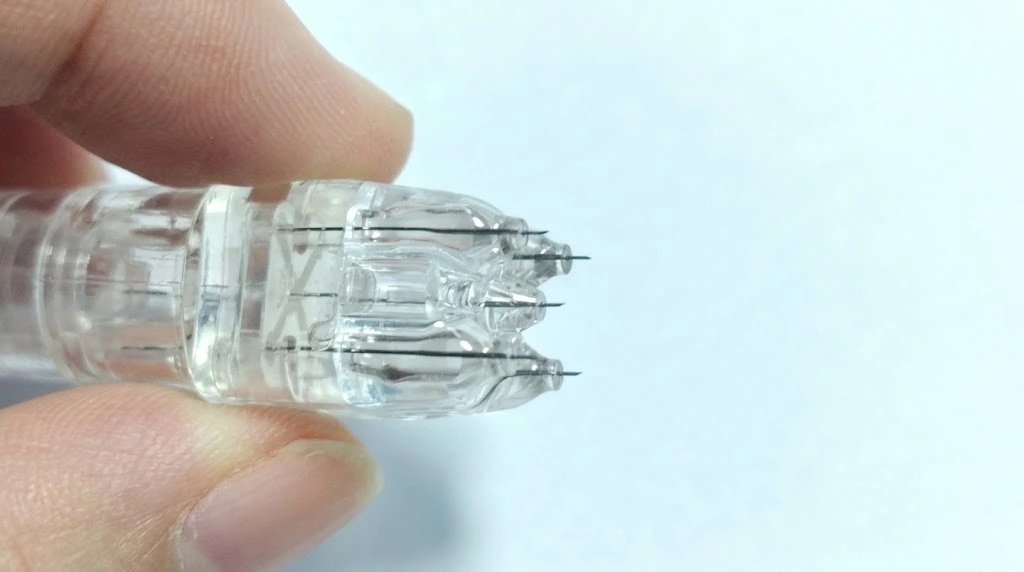
Step-by-Step Setup Guide to Minimize Leakage in Multi-Needle Aqua-Shine Devices
The best way to stop leaks is to make sure everything is set up correctly. Most of the avoidable product waste in hospital situations happens because people rush through this step.
Pre-Use Inspection Protocol
Before adding any serum, make sure the needle arrangement is well lit and checked according to the multi-needle aqua-shine injection device manual. Check to see if the pins are broken, the blister pack seal is intact, and the EO sterilization sign is still in place. For 32G and 34G ultra-thin wall needles in particular, even small changes in shape can change the regularity of flow and raise back-pressure, which causes leaks.
Proper Assembly and Serum Loading
Use a firm, full quarter-turn on the Luer-Lock connector to attach the needle head to the syringe. Load serum slowly so that you don't add air pockets that will grow under vacuum pressure and push liquid out of seal gaps. If the chamber is even 0.05 ml too full, the back-pressure will break the link during treatment.
Calibrating for Solution Viscosity
Skin boosters with hyaluronic acid need a needle with a wider inner diameter so that the solution can flow without putting too much pressure on the skin. This is directly addressed by the ultra-thin wall technology in AVACARE's 32G/34G needles. A bigger inner diameter compared to outer diameter makes it possible to smoothly deliver thicker formulations without the practitioner having to press too hard on the syringe. Make sure that the vacuum intensity setting (levels 1 through 5) is right for the solution that is being injected.
Maintenance Tips and Troubleshooting to Sustain Device Performance
If maintenance isn't done regularly, even a well-designed device will start to leak. A organized routine will keep the device and your clients' money safe.
Daily and Weekly Cleaning Routines
Clean the needle barrel and vacuum port with a lint-free cloth wet with a disinfectant that is safe for use and won't damage the equipment. Visually check the internal seals once a week and replace any part that is discolored or deformed. Do not immerse reuse parts in liquid for long amounts of time, as this speeds up the seal's breakdown.
Troubleshooting Air Bubble Entrapment and Clogging
A lot of the time, uneven dosing and leaks are caused by air bubbles getting stuck in the needle ducts. Hold the filled syringe upright and give a short prime dose into a clean pad before starting treatment. This will clear them. If a 34G needle gets stuck, don't raise the syringe pressure. Instead, change the needle head. When you force flow through a partially blocked pipe, you put stress on the Luer-Lock joint, which lets air leak at the link instead of the tip.
To keep the accuracy within ±0.005ml, dosage should be re-calibrated every 100 processes or every six months, according to the calibration standards listed in the device's instructions. Keeping a stock of replacement seals and using approved service channels to handle warranty claims without stopping operations is helpful for OEM partners and high-volume wholesalers in charge of large-scale deployments.
Comparing Multi-Needle Aqua-Shine Devices to Other Injection Solutions
Not all delivery ways work the same, and the differences matter when you're buying a lot of things.
Multi-Pin Arrays vs. Single-Needle Methods
To cover a treatment area with single-needle mesotherapy, the therapist has to make dozens of small holes according to the multi-needle aqua-shine injection device manual. This makes the process take longer, makes the user tired, and raises the overall risk of technique-related leaks. A 9-pin array covers the same area in a lot less passes, and because the needle depth is the same across the array, each channel deposits the same amount of drug. This makes it less likely that an overdose will cause surface leakage, which can happen with single needles.
Multi-Pin Devices vs. Mesotherapy Guns
Automated mesotherapy guns are faster, but you can't control them with your touch. Since practitioners can't feel changes in tissue resistance, the device may keep injecting into places where the skin has reached its full absorption capacity, which brings the serum back to the surface. When someone uses a manual multi-pin device, they get direct mechanical feedback that lets them change the pressure in real time. This is why a lot of medical spas like to use manual settings for areas that are sensitive, like the area around the eyes.
Evaluating Specifications for B2B Procurement
When looking at different models to buy in bulk, you should focus on models with approved dosage accuracy, needle gage choices, and depth control increments (0.2mm steps are the clinical standard). They come in 5-pin and 9-pin configurations, have 32G/34G ultra-thin wall needles, are certified by ISO 13485 and CE, and require a minimum order of 50,000 PCS. This makes them perfect for distributors and OEM partners who need both high technical performance and high volume reliability.
How to Choose and Procure the Right Multi-Needle Aqua-Shine Injection Device?
Buying things on a large scale is riskier than buying one item at a time. It saves money and keeps your delivery network safe to do the choosing process right.
Verifying Certifications and Compliance
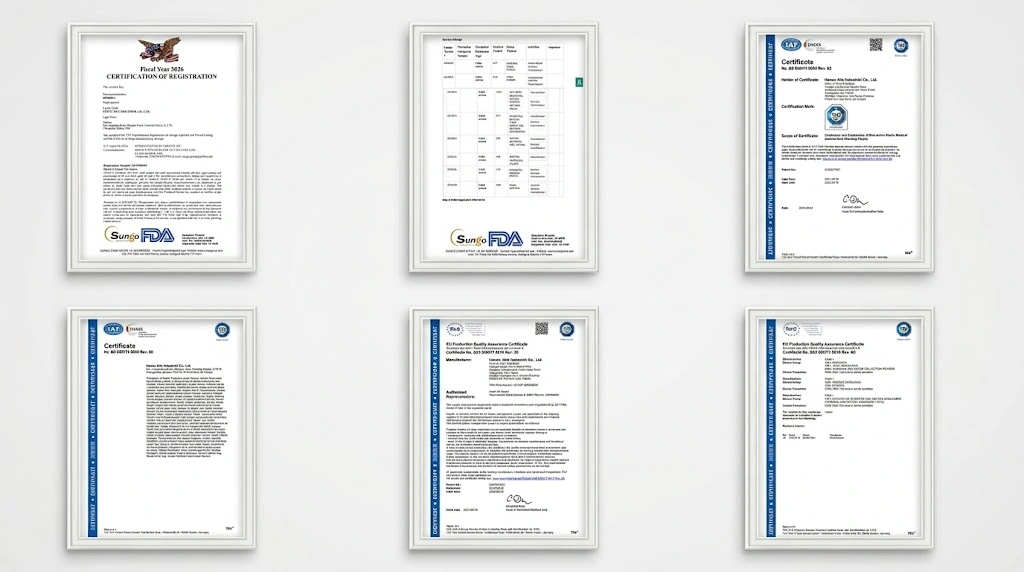
The basic quality control standard for making medical devices is ISO 13485 approval. If a medical device has a CE mark, it means it meets European safety standards. If it has an FDA mark, it can be sold in the US. Never ask the distributor for paperwork; always ask the manufacturer directly. It is known that fake certifications are a problem in the market for mesotherapy supplies.
When you work directly with manufacturers instead of going through multiple distributors, the cost per unit goes down and you have direct access to OEM customization options. As important as price is for distributors building private-label product lines, making sure that the source gives technical help and branding flexibility is just as important. When there are a lot of deals, payment terms like L/C or T/T cover both sides.
After-Sales Support and Warranty Conditions
The operational risk of putting in place a new needle system across a clinic network is lower if the seller offers technical help 24 hours a day, seven days a week. Before committing to a large order, make sure that the warranty covers problems with the manufacturing process and that replacement parts, especially needle heads and seals, can be sent out quickly.

Conclusion
The problem of serum leaking from hand multi-pin needle devices can be fixed according to the multi-needle aqua-shine injection device manual. Most problems can be fixed before they get to the treatment room by making sure the machine is set up correctly, calibrated to match the thickness, and maintained regularly. When OEM partners and distributors buy in bulk, they should choose devices with tested engineering, like the AVACARE 5-pin and 9-pin configurations with 32G/34G ultra-thin wall needles. This cuts down on both product waste and customer complaints. A good product choice can become a long-term business advantage with the right supplier relationship, backed by certifications that can be checked and quick customer service after the sale.
FAQ
How often should needle heads be replaced to prevent leakage?
Every single time you use a needle for treatment, the head should be changed. When needles are used more than once, even on the same patient, the tip deforms and the channel resistance goes up. Both of these things make back-pressure leaks more likely. Structural stability is very important for 32G and 34G ultra-thin wall needles to keep delivering doses consistently.
Does routine cleaning actually reduce leakage risk?
Yes, quite a bit. Building up of residue in vacuum channels and around seal surfaces is a direct cause of seal wear. The main things that cause leaks over time can be fixed by cleaning with approved disinfectants after every practice and checking the seals once a week.
What are the signs that serum leakage is affecting treatment quality?
The three most obvious signs are serum pooling on the skin's surface during injection, patients reporting different feelings about how the treatment felt at different sessions, and serum stock being used up unusually quickly. If the dose per pass seems higher than what was set, make sure the needle-to-syringe link and chamber seal are still good before the next run.
Can high-viscosity serums be used safely with 34G needles?
Yes, as long as the walls of the needle are very thin. The inner diameter of standard 34G needles is too small for high-viscosity solutions, which creates the back-pressure that leads to leakage. The patented ultra-thin wall design of AVACARE keeps the outer gage the same while keeping the inner diameter bigger. This means that it can be used with hyaluronic acid skin boosters and other similar products.
Request AVACARE Multi-Needle Aqua-Shine Injection Device Manual Samples Today
Since 2014, AVACARE has been making precise mesotherapy supplies in our 12,000 m² ISO 13485-certified factory. Our 5-pin and 9-pin aqua-shine injection devices are protected by 7 national patents and can be customized to fit your needs. You can buy them in bulk starting at 50,000 PCS and pay with either L/C or T/T. We offer technical training and support 24 hours a day as a reliable multi-needle aqua-shine injection device manual provider. To get samples and prices, email us at admin@aileindus.com or go to ailemedicals.com.
References
1. International Organization for Standardization. ISO 13485: Medical Devices — Quality Management Systems. ISO, 2016.
2. Goldberg, D.J. & Hussain, M. "Mesotherapy: A Review of Its Use in Aesthetic Dermatology." Journal of Cosmetic Dermatology, 2012.
3. Rohrich, R.J. & Nguyen, A.T. "Injection Techniques in Facial Aesthetics: Principles and Practice." Plastic and Reconstructive Surgery, 2020.
4. Atiyeh, B.S., Ibrahim, A.E., & Dibo, S.A. "Cosmetic Mesotherapy: Between Scientific Evidence, Regulations, and Clinical Practice." Aesthetic Plastic Surgery, 2008.
5. European Commission. Medical Device Regulation (EU) 2017/745: A Guide for Manufacturers. European Commission, 2021.
6. Verner, I. "Clinical Evaluation of Pain and Satisfaction in Patients Undergoing Mesotherapy for Facial Rejuvenation." Journal of Drugs in Dermatology, 2018.

_1782811410038.webp)