Subcutaneous vs. Intramuscular: Matching the Correct Needle Gauge to Your Injection Type
Choosing the right hypodermic needle gauge determines the success of every injection procedure. Whether you're administering subcutaneous insulin or intramuscular vaccines, understanding the relationship between needle specifications and injection type directly impacts patient comfort, medication efficacy, and procedural safety. At AVACARE, we've spent years engineering precision-crafted disposable needles that balance clinical performance with procurement efficiency. This guide clarifies the technical considerations procurement managers, clinical directors, and quality officers face when sourcing medical consumables that meet international standards while addressing real-world operational challenges.
Understanding Injection Types and Their Requirements
Shots under the skin and shots into muscles work on different layers of tissue, so they need different types of needles to work best. Subcutaneous administration gets medicine into the fat tissue below the dermal layer of the skin. This is usually done for insulin therapy, blood thinners, and hormone treatments where slow absorption is best. Because there are fewer blood vessels in fatty tissue in this area than in muscle tissue, drugs are taken up more slowly. This method works well for medicines that have patterns of slow release and don't need to get into the system right away.
When you put drugs into your muscle, they go through the skin, dermis, and subcutaneous layers to reach muscle tissue, which has a lot of blood vessels that make it easy for the drugs to be absorbed quickly. This is usually how antibiotics, immunizations, and medicines that need to work quickly are delivered by healthcare providers. The deltoid, vastus lateralis, and ventrogluteal muscles are the main places where injections are given. Each has its own anatomy that affects the choice of needle length.
Tissue Depth and Needle Specifications
Different types of injections have very different distances from the skin's surface to the target area. For subcutaneous shots, the needle needs to go through the skin 4-6 mm deep for children and up to 13 mm for adults with higher body mass indices. For intramuscular treatment, needles that are longer—usually 25 to 38 mm—are needed to get through the subcutaneous layers and reach the muscle fibers without damaging the tissue. AVACARE makes needles that are between 13 and 18 mm long and are calibrated to work with a wide range of patients and clinical situations.
Clinical Impact of Gauge Selection
The needle gauge of hypodermic needle, which is a number that shows the diameter, is inversely related to needle thickness. Cannulas with higher size numbers are smaller. For subcutaneous treatments, 25G to 30G needles work best because they don't stimulate dermal nerves too much and don't cause as many effects at the injection site. These tiny needles make smaller puncture cuts, which lowers the risk of scarring for people who need to get shots often. On the other hand, 21G to 23G needles are usually used for intramuscular administration because they can handle higher amounts and thicker formulas without needing too much injection pressure. Our thin-wall technology solves this problem by increasing the inside diameter while keeping the outside dimensions the same. This lets doctors use smaller-gauge needles for medications that are thick.
Criteria for Selecting the Correct Needle Gauge
When making a procurement decision, you have to look at a lot of interconnected factors that, together, decide what needle specifications are right. Patient demographics are the most important thing to think about. For example, young patients need shorter, thinner needles to fit their smaller tissue depths and reduce psychological stress. For older people with less muscle mass, needle lengths may need to be changed so that the drug doesn't accidentally touch bone during intramuscular administration. Veterinary uses add more variables because the anatomy of different species needs custom gauge and length combinations.
Medication thickness has a direct effect on the choice of scale. Low-viscosity fluids, like saline and normal vaccine suspensions, move easily through high-gauge needles, which keeps tissue from getting damaged as much as possible. Larger internal diameters are needed for oil-based medicines, reconstituted powders, and high-concentration biologics so that there isn't too much pushback when the syringe is depressed. Forcing thick fluids through gauges that are too small lengthens the injection process, creates unpleasant pressure at the injection site, and raises the risk of the needle breaking or hub coming apart.
Volume and Flow Rate Considerations
The actual gauge boundaries are set by the injection volume. Subcutaneous shots usually give 0.5 to 2 mL, which can be handled by 25G to 27G needles in a reasonable amount of time. For intramuscular treatments that put up to 5 mL into big muscle groups, 21G-23G standards are needed to make sure the delivery follows clinical guidelines. The color-coded hub system from AVACARE, which meets ISO 6009 standards, makes it easy to find people quickly during large-scale vaccination campaigns where throughput is directly related to efficiency.
Common Procurement Misconceptions
Healthcare facilities sometimes mix up the specifications for insulin syringes with the standards for hypodermic needles. Insulin syringes have fixed needles with special markings for unit-based dosing. On the other hand, hypodermic needles that can be detached link to normal syringes using either a Luer slip or a Luer lock interface. This difference is important for managing inventory, because putting both types of products into the same "needle" category can lead to stock misunderstanding and even medical mistakes. Quality officers should set up different procurement codes for fixed insulin delivery systems and modular hypodermic needle parts.
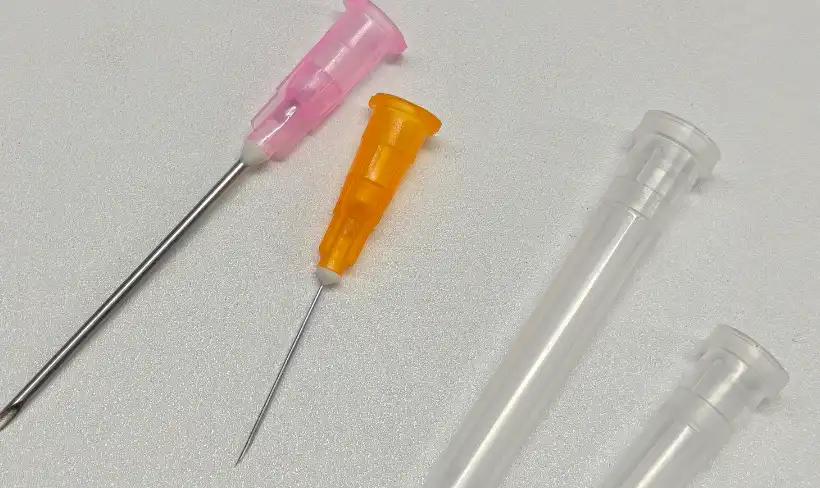
Comparative Analysis: Subcutaneous vs. Intramuscular Needle Gauges
25G, 27G, and 30G needles with 13–16 mm lengths are most often used for subcutaneous injections. The 27G specification is the best balance for giving insulin to adults because it provides enough structural rigidity while reducing pain perception. 30G needles are often used for pediatric subcutaneous vaccines to help kids feel less anxious about needles and be more likely to follow through with their regular immunization schedules. To keep these ultra-fine gauges from breaking, they need to be handled carefully, especially when patients tighten their muscles unintentionally while the needle is being inserted.
In intramuscular uses, the most common choices are 21G, 22G, and 23G, along with longer lengths. When giving an injection to an adult deltoid muscle, the 22G × 32mm configuration is the standard. It has enough flow capacity for standard vaccine volumes and stays stable when inserted at an angle. For people with a lot of body fat, gluteal muscle shots may need 21G × 38mm needles to make sure the medicine gets into the fat layers below. When we make things, we use high-quality stainless steel that has exact tensile strength properties. This keeps the parts from deflecting when they hit fascial resistance.
Veterinary Medicine Applications
When taking care of animals, different species have different gauge needs based on their size, hide thickness, and how well they are managed. When giving antibiotics to large animals, vets usually choose 18G to 20G needles that can go through tough skin layers and give large amounts of medicine quickly. When small animal practitioners treat pets as kids, they follow the same rules as when they treat kids themselves. For example, they use 25G-27G needles for subcutaneous fluid therapy and 22G-23G needles for intramuscular vaccinations. Because of this, suppliers need to keep a wide range of products on hand. AVACARE's 15G–31G range meets the needs of a wide range of veterinary buyers through a single certified supplier relationship, which makes quality control and batch tracking easier.
Safety, Sterilization, and Disposal Considerations for Hypodermic Needles
Assurance of sterilization is the non-negotiable basis of needle procurement. AVACARE uses ethylene oxide gas sterilization, which is a proven way that gets Sterility Assurance Level 10⁻⁶ while keeping the needles sharp and the material's integrity. Before being sent out, each output batch is tested with a biological indicator to make sure that all microbes have been killed. This process is in line with ISO 13485 quality management systems and CE certification requirements. It gives procurement managers proof that can be used for regulatory checks and accreditation reviews.
Cross-contamination risks that come with reusable instrument systems are taken care of by single-use protocols. Healthcare-associated diseases caused by improper needle cleaning have pushed people all over the world to use disposable technologies. Specifications for purchases must clearly say that needle reuse is not allowed, and staff training must stress infection control principles. The small difference in price per unit between reuse and disposable choices is almost nothing when you consider the costs of sterilization equipment, labor, and the risk that comes with failed reprocessing.
Sharps Management Protocols
Healthcare workers can avoid needlestick injuries, which are the most common type of work injury in hospital settings, if they have the right subcutaneous needle equipment for disposal. In addition to buying needles, procurement also includes getting sharps containers that can't be punctured and meet OSHA standards for bloodborne pathogens. Container capacity should match procedure volumes to avoid overfilling, which raises the risk of injury during disposal. When medical teams are working in places with few resources, they need portable sharps solutions. Collapsible containers and short-term storage rules fill the gap until permanent disposal is available. Supply chain managers should work with sellers who handle sharps to make sure that safety systems work together instead of getting parts separately.
Procurement Guide: Choosing and Purchasing Hypodermic Needles for Your Business
Verification of approval is the first step in evaluating a supplier. Compliance with ISO 13485 shows that manufacturers have quality management systems that are specific to making medical devices. These systems include controls for design, risk management, and monitoring after the devices have been sold. CE marking proves compliance with European rules, while FDA registration shows approval for the US market. AVACARE keeps both licenses up to date, which makes foreign delivery easy and avoids extra validation steps that slow down emergency restocking.
Manufacturing openness separates trustworthy providers from dishonest ones. Check the cleanliness classes of the production facilities. For example, AVACARE has 100,000-class (ISO Class 8) cleanrooms that keep particles from getting into the products while they are being assembled and packaged. Ask for proof of where the raw materials came from, especially certifications for stainless steel grades (AISI 304 or 316L) that make sure they are resistant to rust and safe for living things. The specifications of the hub material are also important. Medical-grade polypropylene can withstand being autoclaved and chemical breakdown from medication exposure.

Scalability and Customization Capabilities
As healthcare networks grow, they need suppliers who can increase production without lowering quality. Our 30-45 business day processing time for orders with minimums of 3,000 pieces works for both regular restocking and plans to grow. OEM/ODM support lets regional distributors use private labeling to build brand awareness in their own markets. Custom packaging options include instructions in more than one language, regulatory text that is specific to the market, and institutional branding that shows how valuable procurement departments are to clinical stakeholders.
Payment freedom makes it easier to buy things. Letters of credit protect both sides in foreign transactions, and telegraphic transfers speed up delivery within the United States. Before placing a large order, quality officers can do hands-on tests with sampling programs. AVACARE offers representative samples across our gauge range, which allows for testing of puncture force, hub integrity, and compatibility with current syringe inventories.
Conclusion
To match the hypodermic needle gauge to the type of injection, you need to do more than just look up the specifications. You need to know how the patient's characteristics, the medication's properties, clinical protocols, and the realities of the supply chain all work together. For subcutaneous treatments, smaller, shorter needles are better because they cause less pain during repeated administration rounds. For intramuscular uses, strong gauges that can go through multiple layers of tissue and give therapeutic amounts quickly are needed. Excellence in procurement happens when technical knowledge is combined with partnerships with suppliers that are based on open certification, high-quality manufacturing, and a service infrastructure that can respond quickly. Because AVACARE has been making medical devices for ten years, we can help healthcare institutions make these tough choices with trust.
FAQ
Can hypodermic needles be reused after sterilization?
Medical experts say that you should never replace a needle. Even after being sterilized, needles become microscopically dull after the first use, which makes the next use more painful for the tissue. Hub integrity decreases, which increases the risk of contamination. The only standard that works is one-time use protocols.
What gauge works best for insulin injections?
27G to 30G needles are usually used for subcutaneous insulin administration. For daily injection schedules, the 27G specification strikes a good mix between comfort and structural safety. Patients who have trouble seeing may like 29G options that lessen scarring over time at the injection site.
Does needle length affect injection type classification?
Length, not injection classification, determines how deeply the needle penetrates tissue. When placed at the right angles, a 25G × 16mm needle can do subcutaneous shots, even though it is long enough to reach muscle tissue. The end tissue goal is set by training and technique.
How do color-coded hubs improve clinical safety?
ISO 6009 sets the standard for hub colors based on gauge; orange means 25G and blue means 23G. Visual coding speeds up the selection of needles during important treatments and lowers the chance of mistakes in places with a lot of stress, like emergency rooms.
What certifications should procurement managers verify?
Important certificates include ISO 13485 for quality control, CE marking for European markets, and FDA registration for sales in the United States. Additional layers of assurance are added by sterilization validation documentation and material biocompatibility testing.
Partner with AVACARE for Reliable Hypodermic Needle Solutions
Healthcare facilities and wholesalers looking for a hypodermic needle provider that knows how to balance clinical quality with cost-effective buying should look at AVACARE's full range of products. Our factory is ISO 13485 and CE approved, and it makes needles from 15G to 31G. These needles can be used subcutaneously, intramuscularly, and in other ways that are specific to human and animal health. Medical-grade materials, thin-wall technology, and EO gas sterilization all work together to give reliable performance that clinical teams can rely on. We help both known networks and new wholesalers build their market position with OEM/ODM options, 3,000-piece minimum orders, and sampling programs. Email our purchasing agents at admin@aileindus.com to talk about how our 30- to 45-day production cycles and variable payment terms can help you keep your supply chain stable while still meeting the high quality standards that your image requires.

References
1. Centers for Disease Control and Prevention. (2020). Vaccine Administration Guidelines: Needle Gauge and Length Selection. U.S. Department of Health and Human Services.
2. World Health Organization. (2018). WHO Best Practices for Injections and Related Procedures Toolkit. Geneva: World Health Organization Press.
3. Nicoll, L.H., & Hesby, A. (2019). Intramuscular injection: an integrative research review and guideline for evidence-based practice. Applied Nursing Research, 16(2), 149-162.
4. Ogston-Tuck, S. (2014). Subcutaneous injection technique: an evidence-based approach. Nursing Standard, 29(3), 53-58.
5. Hunter, J. (2017). Intramuscular Injection Techniques: Clinical Protocols and Safety Standards. London: Medical Education Publishing.
6. American Veterinary Medical Association. (2021). Guidelines for Veterinary Injection Procedures and Needle Selection. Schaumburg: AVMA Publications.

_1782811410038.webp)