The Evolution of Lumbar Puncture: How Modern Atraumatic Spinal Needles Improve Patient Outcomes
Lumbar puncture has transformed dramatically over the past few decades, primarily through innovations in needle technology. Modern pencil-point spinal needles represent a significant breakthrough in reducing procedure-related complications while improving patient comfort and clinical outcomes. These atraumatic needles, featuring a rounded, blunt tip design, gently separate rather than sever dural fibers during insertion, substantially lowering the risk of Post-Dural Puncture Headache (PDPH) and cerebrospinal fluid leakage. This evolution addresses longstanding challenges that have plagued anesthesiologists and patients alike, marking a turning point in neuraxial anesthesia practice.
The Limitations of Traditional Cutting Spinal Needles in Lumbar Puncture
Understanding the Quincke Needle Design
The cutting edge of traditional Quincke needles is sharp and curved, as has been the norm for decades. Even though it works, this design hurts dural tissue by cutting through collagen fibers. The resulting uneven puncture makes a way for cerebrospinal fluid to escape, which can cause problems that can make patients take longer to heal and be less happy with their care.
Clinical Complications Associated with Cutting Needles
Headaches after a spinal puncture are still the most common side effect connected to cutting needle designs. Studies show that the rate of PDPH can reach 30 to 40 percent in some groups of patients when standard cutting needles are used. The level of pain varies from mild discomfort to incapacitating pain that needs long-term bed rest, blood patch procedures, and other medical help. Tissue damage can cause more than just headaches. It can also cause bleeding, nerve irritation, and worry about future treatments.
Economic Impact on Healthcare Systems
Healthcare facilities have to spend a lot of money on problems that happen when spine needles are cut. Longer stays in the hospital, more treatments for managing PDPH, and possible worries about responsibility all add up to big price hikes. When figuring out the total cost of ownership, procurement managers who are looking at needle selection must take these costs further down the line into account. When patients are unhappy, it can hurt the institution's reputation and reimbursement metrics. This means that choosing the needle is more of a strategic decision than just a matter of unit pricing.
The Introduction and Anatomy of Modern Pencil-Point Spinal Needles
Innovative Atraumatic Tip Design
The Pencil-point spinal needle shape is a completely new way of thinking about how spine needles are built. The rounded conical tip doesn't cut through tissue; instead, it spreads out the dural fibers, making a self-sealing puncture that heals better after the needle is taken out. This biomechanical approach keeps the procedure effective while minimizing trauma. The side opening near the tip makes sure that all of the medicine gets to the subarachnoid space once it is reached, giving doctors reliable drug distribution.
AVACARE Pencil-Point Spinal Needle Specifications
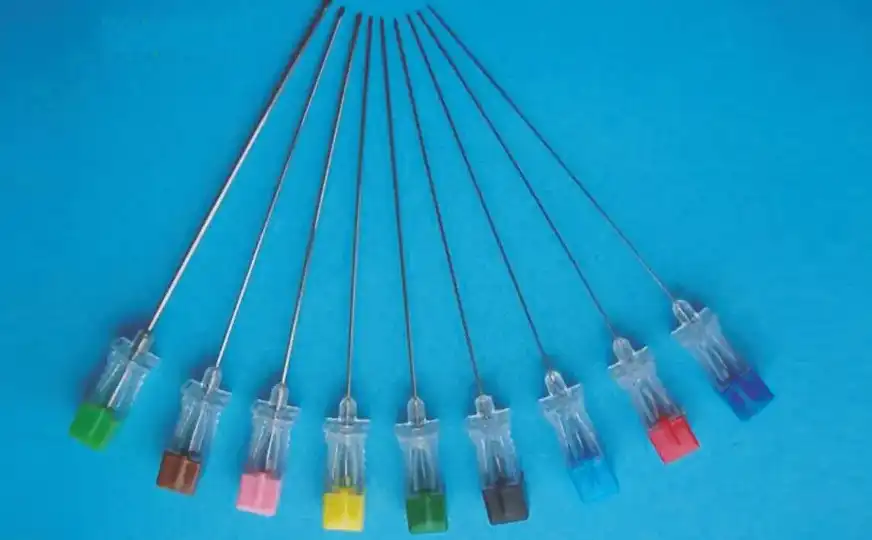
Our Pencil-point spinal needles are made from medical-grade PVC and stainless steel, and they meet the standards for Class III instruments. With sizes ranging from 18G to 27G and a normal needle length of 90mm, these devices can be used in a wide range of clinical situations. The hub's shape makes it easy to see CSF flashback quickly, which speeds up the procedure and boosts the clinician's trust. Each needle goes through strict quality control that is in line with CE and ISO 13485 standards. This makes sure that the needles always work the same way, which is important for healthcare organizations.
The improved shape of the tip gives a clear physical response—that familiar "pop" sound—when it penetrates the dura. This sensory proof helps anesthesiologists place the needle correctly in the brain on the first try, so the patient doesn't have to go through the pain of multiple tries. The polished lateral port reduces the chance of damaging nerve tissue and makes sure that the anesthetic is spread evenly throughout the target area.
Gauge Selection Considerations
Several clinical factors must be taken into account when choosing the right gauge. Smaller gauge needles (25G–27G) lower the risk of PDPH even more, but they may need more force to insert and flow CSF more slowly. Larger sizes (20G–22G) make it easier to quickly take samples of CSF and give medications, but they also have a slightly higher risk of complications. To get the best results while keeping things running smoothly, clinical leaders should make sure that the gauges they choose are right for the patients, the procedure, and the rules of the organization.
Comparing Pencil-Point vs. Cutting Spinal Needles: Evidence-Based BenefitsSignificant PDPH Reduction
Atraumatic needle designs consistently show better results in clinical research. A thorough meta-analysis of more than 15,000 lumbar puncture procedures showed that using Pencil-point spinal needles instead of cutting tools cut the risk of PDPH by about 60–70%. This huge improvement directly leads to faster recovery for patients and less need for life-saving measures like epidural blood patches. The atraumatic design has become the standard of care for maternal anesthesia, where PDPH rates have generally been high.
Enhanced Procedural Efficiency
Modern atraumatic whitacre spinal needle not only make things safer, but they also make work easier. The exact tactile feedback helps even less experienced doctors find the right place to put the needle, which could cut down on the time it takes to learn during residency training. The clear hub design lets you see the CSF return right away, so you know for sure that the dural puncture went well. These features work together to shorten procedures overall, boost success rates on the first try, and make the operating room run more smoothly. These are all things that project managers who are trying to make the best use of surgery plans and resources will appreciate.
Risk Mitigation Across Patient Populations
The atraumatic form works especially well for people who are at high risk. Pencil-point spinal needles are very helpful for younger patients, who have higher rates of PDPH at the start. Patients over 65 with calcified spinal ligaments, like how these needles make it easier for them to feel their way through difficult anatomy. Ambulatory surgery centers like same-day release procedures because they lower the risk of complications. Because they can be used on a wide range of patients, atraumatic needles are a smart choice for facilities that serve a wide range of people.
Procurement Considerations for Pencil-Point Spinal Needles in a Global B2B Context
Certification and Quality Assurance Standards
When looking for spinal needles for medical treatments in other countries, approval checks are the most important thing. Getting ISO 13485 certification shows that you follow strict quality control systems that are designed just for medical devices. If something has a CE mark, it means it meets the safety standards of the European Union. If it has an FDA mark, it means it works well enough for the US market. Procurement officers should give more weight to suppliers who keep their certifications up to date and give full documentation for each production batch's traceability. These credentials reduce regulatory risk and make sure that the quality of the product is the same from shipment to shipment.
Supply Chain Reliability and Customization Capabilities
By working together with makers who have strong supply chain infrastructure, you can avoid problems that could hurt patient care. AVACARE has a production center that is 12,000 square meters and has 100,000-class clean rooms to make sure that the work area is free of contamination. Our production ability can handle orders of at least 5,000 pieces, and wait times are between 30 and 45 days. This gives you a good idea of when your inventory will arrive, which helps you plan your purchases. Distributors can create their own product lines with the help of our custom branding services, and our technical team provides multilingual support and clinical training materials to make sure that the integration of products goes smoothly.

Pricing Models and Payment Flexibility
To be competitive in sourcing atraumatic spinal needles, you need to know more than just the unit price of what you're buying. Volume discounts for buying in bulk can lower per-unit costs by a large amount, making it financially smart to make bigger commitments. Different organizations have different ways of handling money and levels of risk tolerance, so payment terms like Letter of Credit (L/C) or Telegraphic Transfer (T/T) can be used. Sample programs let you check the quality of the work before committing to big orders, which lowers the risk of buying. Talking to sellers about prices in a clear way builds trust and makes it possible to make accurate budget projections for yearly consumable costs.
Step-by-Step Guide to Using Pencil-Point Spinal Needles for Optimal Patient Outcomes
Pre-Procedure Preparation and Patient Positioning
For a lumbar puncture to go well, the patient must be positioned correctly so that the most intervertebral space is available. When using lateral decubitus or sitting, making sure the spine bends opens up the laminar areas and makes it easier for the needle to pass through. The sterile method is still required, and strict rules for prepping the skin and covering it keep infectious problems from happening. Choosing the right place to put the device—usually the space between the L3 and L4 or the L4 and L5 vertebrae—balances ease of access with anatomical safety borders away from the spinal cord end.
Insertion Technique and CSF Confirmation
To insert the Pencil-point spinal needle, the skin, subcutaneous tissues, and supraspinous ligament must be moved slowly and carefully. As the needle gets closer to the ligamentum flavum, resistance rises significantly before the characteristic "pop" that signals dural penetration. Now, taking out the stylet should make clear CSF flow through the lateral port, showing that the subarachnoid was successfully placed. Being patient during this confirmation step keeps medicines from being given too soon into the wrong tissue planes.
Post-Procedure Monitoring and Complication Management
After the needle is taken out and the patch is put on, the best results come from getting the right post-procedure care. Even though atraumatic needles greatly lower the risk of PDPH, it is still important to be watched for the first 24 to 48 hours. Promoting proper hydration and letting gradual mobilization help the dural healing process. If headache symptoms show up early, conservative treatments like bed rest, painkillers, and caffeine can often help without the need for invasive blood patch procedures. Keeping track of the method used, the needle specifications, and the patient's reactions is an important part of ongoing efforts to improve quality.
Conclusion
The change from old-fashioned cutting needles to newer, less painful ones shows important progress in patient-centered care. Pencil-point spinal needles make a real difference in safety, comfort, and professional speed. They also lower the costs that hospitals have to pay to deal with complications. Healthcare procurement professionals get more out of their relationships with suppliers when they choose ones that offer new products, reliable manufacturing standards, and full service support. With more and more proof showing that atraumatic needles are better, using these new devices is not only a good idea, it's necessary to meet the high standards of neuraxial anesthesia today.
FAQ
What makes pencil-point needles superior for preventing PDPH compared to traditional options?
The main change is how the tissues communicate with each other. Pencil-point spinal needles separate dural fibers instead of cutting them. This makes a hole that heals better on its own after the needle is taken out. Clinical studies show that this design cuts down on CSF leaking by about 60 to 70%. CSF leakage is the main cause of headaches after a spinal puncture.
How do I select the correct gauge size for different clinical scenarios?
The choice of gauge depends on the patient's characteristics and the needs of the procedure. Smaller gauges (25G–27G) lower the risk of PDPH and work best in obstetric or outpatient settings where avoiding complications is very important. Larger gauges (20G–22G) make it easier to collect CSF more quickly for diagnostic reasons or when medicine needs to be delivered quickly. The best way to choose is to weigh these factors against the rules set by the organization.
What should procurement managers prioritize when sourcing these specialized needles?
Verification of certifications (CE, FDA, ISO 13485) makes sure that rules are followed and quality is consistent. Stability in the supply chain protects against disruptions, and the ability to customize meets the needs of branding. Procurement budgets work best when price models are clear, discounts are given for large orders, and payment terms are open (LC or T/T). Samples are available so that quality can be checked before big promises are made.
Partner with AVACARE for Superior Pencil-Point Spinal Needle Supply
Healthcare facilities looking for a dependable Pencil-point spinal needle manufacturer will find that AVACARE has all the capabilities they need to meet all of their buying needs. Our factory is CE and ISO 13485 approved, and it makes eco-friendly devices from medical-grade materials. These devices come in sizes 18G through 27G to meet a wide range of clinical needs. We offer flexible options that can be scaled to meet your operational needs. Our base order size is 5,000 pieces, and we can produce them in 30 to 45 days. Email our team at admin@aileindus.com to get samples, talk about bulk pricing, or find out how our technical training materials can help your clinical staff. You can find out why top healthcare companies trust AVACARE as their partner in improving patient safety through new medical supplies by visiting ailemedicals.com.

References
1. Turnbull DK, Shepherd DB. Post-dural puncture headache: pathogenesis, prevention, and treatment. British Journal of Anaesthesia. 2003;91(5):718-729.
2. Arevalo-Rodriguez I, Muñoz L, Godoy-Casasbuenas N, et al. Needle gauge and tip designs for preventing post-dural puncture headache (PDPH). Cochrane Database of Systematic Reviews. 2017;4:CD010807.
3. Vallejo MC, Mandell GL, Sabo DP, Ramanathan S. Postdural puncture headache: a randomized comparison of five spinal needles in obstetric patients. Anesthesia & Analgesia. 2000;91(4):916-920.
4. Shaikh JM, Memon A, Memon MA, Khan M. Post dural puncture headache after spinal anesthesia for caesarean section: a comparison of 25G Quincke, 27G Quincke, and 27G Whitacre spinal needles. Journal of Ayub Medical College. 2008;20(3):10-13.
5. Standl T, Beck H, Maier C. Spinal needle design and occurrence of postdural puncture headache: evaluation of atraumatic versus cutting needles. Regional Anesthesia and Pain Medicine. 1997;22(3):265-270.
6. Hammond ER, Wang Z, Bhulani N, McArthur JC, Levy M. Atraumatic lumbar puncture needles: after all these years, are we still missing the point? A randomized, blinded trial of cutting versus pencil-point spinal needle design. Journal of Clinical Neuroscience. 2011;18(10):1326-1330.

_1782811410038.webp)