The Secret to Less Bruising: Why Top Injectors Use Blunt Cannulas for Hyaluronic Acid
In aesthetic medicine, bruising remains one of the most common post-procedure concerns for both practitioners and patients. The shift toward using a blunt cannula for hyaluronic acid injections has fundamentally transformed injection safety standards. Unlike traditional sharp needles that cut through tissue, these specialized instruments feature rounded tips designed to push aside blood vessels rather than puncture them. This approach drastically reduces trauma, lowers bruising rates by up to 70%, and shortens patient recovery time while maintaining precise filler placement throughout the treatment area.
Understanding Blunt Cannulas and Their Advantages in Hyaluronic Acid Injections
During the past ten years, filler delivery methods have changed a lot in the medical gadget world. The blunt cannula is at the heart of this progress. It is a tool that solves important safety problems that come up during cosmetic treatments.
What Makes These Instruments Different?
The structure of a blunt-tip needle is very different from that of other injection tools. The round, non-cutting edge makes a path through tissue by gently pushing it apart instead of cutting it. These instruments are made from high-quality surgical-grade stainless steel, usually SUS304 or SUS316L. They keep their structural integrity while being flexible enough to easily move around the contours of the face. The tip's measured radius makes sure that it can go through different layers of flesh without damaging the skin or the vascular structures below.
Clinical Safety Benefits
Vascular problems are the worst thing that can happen during filler treatments. An intravascular injection can kill tissue or, very rarely, make it impossible to see. This risk is greatly reduced by the fact that these tools push vessels away instead of piercing them. Clinical studies have shown that this technique leads to much less ecchymosis and oedema, as well as faster patient recovery compared to traditional methods. Patients say they were less uncomfortable during treatment and were happier with the whole experience.
Size Specifications and Applications
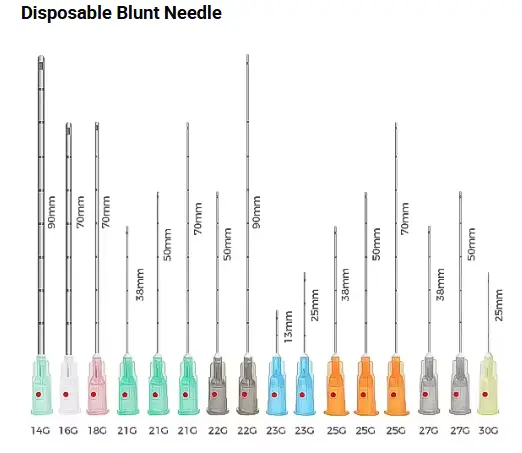
Gauge sizes range from 18G to 30G, and lengths range from 25mm to 70mm. Smaller gauges, like 27G and 30G, work well for sensitive areas like the area around the eyes, while 23G and 25G work well for adding volume to the middle of the face. The ultra-thin wall design increases the internal width without lowering the structural strength. This lets high-viscosity fillers flow smoothly while giving precise control over placement depth.
Blunt Cannula vs Sharp Needle: Why Top Injectors Prefer Blunt Cannulas?
There is no longer a debate between traditional and modern injection methods because clinical evidence and practitioner experience have settled the issue. Blunt cannulas are always chosen by top beauty doctors because they are safer and help patients heal better.
Comparative Safety Analysis
When sharp needles pierce the skin, they leave many tiny holes. Each hole is a possible entry point for germs and a stress zone that makes bruises. Using old methods, many insertions are needed to cover everything, which increases the risk of problems. A single entry point with a blunt cannula, on the other hand, lets the drug be spread out in the shape of a fan over large treatment areas. This method greatly lowers the damage to tissues while still achieving the highest level of accuracy needed for the best beauty effects. Because the rounded tip moves the blood vessels around instead of going through their walls, the risk of an intravascular injection goes down by a lot.
Pain Reduction and Patient Comfort
When practitioners use modern injection techniques, patients consistently say they feel less pain. Not as much nerve activation happens as with cutting needles because the rounder tip glides through tissue planes with little resistance. Treatment sessions are more relaxing, which lets professionals work faster without having to take breaks often to help patients get better. This comfort benefit directly leads to better patient flow and a better reputation for the practice.
Technical Proficiency Requirements
To switch to these instruments, you need to get special training. Practitioners need to know how to control the angle, read the tissue resistance, and use pilot needles to make the right entry port. For this method to work, you need to know a lot about face anatomy, especially where important blood vessels like the angular vein and infraorbital artery are located. But once they get good at what they do, injectors say they feel safer going into high-risk areas like the tear trough and chin, where accuracy is very important.

Choosing the Right Blunt Cannula for Hyaluronic Acid Procedures
When choosing the right tools, you have to carefully consider a lot of different factors that affect both professional performance and the efficiency of procurement. When building their supply lines, medical institutions and wholesalers have to find a balance between quality, cost-effectiveness, and following the rules.
Material and Construction Standards
High-quality surgical steel is still the best material for making blunt cannulas because it is biocompatible, strong, and flexible. The ultra-thin wall design makes it easier to produce viscous fillers with less force, so the practitioner doesn't get tired during long treatments. Medical-grade silicone coats lower friction even more, making it easier on the patient while the tube is being moved under the skin. These building details have a direct effect on clinical results and should be taken into account when buying something.
Gauge Selection Strategy
A 25G blunt cannula is the best balance for most facial applications because it is rigid enough to move through tissue and has a wide enough lumen for thick products. For delicate work around the eyes, where causing the least amount of tissue damage is most important, smaller 27G options are best. Larger 23G instruments are used for strong contouring procedures in places like the jawline or chin, where a lot of filler needs to be deposited quickly. Knowing about these uses helps procurement teams choose a wide range of products that meet a variety of healthcare needs.
Universal Luer-Lock Compatibility
The hub design has a big effect on how well work gets done. Color-coded hubs that follow ISO standards make it easy to find the right size during busy clinical meetings, which speeds up the process. The safe luer-lock connection stops leaks and makes sure that the blunt cannula stays attached to the filler syringes, which cuts down on waste and keeps the method clean throughout the process. These features, which may not seem important at first, become very useful in high-volume settings.

Procurement Guide: Purchasing Blunt Cannulas for Medical and Aesthetic Use
To do strategic sourcing, you need to know both the product specifications of the blunt-tip needle and the supplier's abilities. Structured procurement methods that put quality, compliance, and supply chain reliability first are good for healthcare institutions, distributors, and buying groups.
Supplier Verification and Certification
International quality certifications are very important for screening. The CE mark and ISO 13485 certification show that the manufacturer is committed to quality management systems that are in line with the rules for medical devices. Registration with the FDA gives providers that serve the US market extra peace of mind. AVACARE keeps these important certifications and seven national patents, which shows that it follows the rules and keeps coming up with new ideas. In addition to certificates, verification should include facility checks that prove cleanroom standards. For example, our 12,000-square-meter production base has Class 100,000 cleanrooms where every blunt cannula goes through strict quality control before it is sterilized and packed.
Bulk Purchasing Considerations
With volume agreements, you can get better prices and make sure that you always have supplies. Most of the time, the minimum order quantity is 100,000 pieces, which makes these products more suitable for institutional purchases than for individual practice orders. This size works well for distributors, hospital networks, and groups of beauty clinics that want to make their filler supply systems more consistent. Lead times are usually between 30 and 45 days, so you need to plan ahead to make sure you don't run out of stock. Some accepted payment terms are L/C and T/T, which meet the needs of international trade and protect both parties' finances during the transaction.
Sample Evaluation Programs
Procurement professionals should ask for samples of evaluation programs before committing to large orders. Testing how well a product works in a clinical setting shows how it handles, how well it works with other filler brands, and how well it is accepted by practitioners. AVACARE gives samples for careful evaluation, which lets quality officers and clinical directors make sure that the specifications match the needs of the business. This evaluation period is very helpful for figuring out if any training is needed before the system is fully put into place across all provider networks.
OEM and Private Label Opportunities
OEM and ODM services let distributors make packing, language localization, and product specs fit the needs of their target markets, which helps them set their brands apart. With these partnerships, distributors can build brand awareness while manufacturers use their knowledge of production and quality control to help them. Custom packing options meet the rules of many different places, which makes entering new markets and keeping up with regulations easier. Strategic partnerships with OEMs give companies an edge in crowded retail markets.

Future Trends and Innovations in Blunt Cannula Technology for Hyaluronic Acid
The medical device industry keeps improving the safety of injections by coming up with new materials and making design changes. Procurement teams can stay ahead of the competition and make sure clinical practices have access to cutting-edge tools by staying up to date on new technologies.
Advanced Material Development
Biocompatible layer research claims to reduce friction even more and make patients more comfortable. New alloys might be able to make structures more flexible without lowering their strength, which would make moving through dense fibrous tissue even easier. These important improvements are likely to have an effect on procurement specifications as companies come out with new products that meet changing clinical needs.
Precision Engineering Enhancements
The shape of the tip keeps changing as computational fluid dynamics modelling and clinical feedback are added. The best placement of the lateral port improves the angles of filler extrusion, and precise radius measures make sure that the tissue passes through without any damage with a flexible cannula. Even though these changes may not seem like much, they add up to big improvements in how procedures work and how safe they are.
Digital Integration and Traceability
New systems for quality management use digital tracking all along the supply chain. Batch traceability lets you respond quickly to quality problems while also meeting the standards for legal paperwork. When procurement systems connect to manufacturer databases, it will be easier to keep track of inventory and report on compliance, which will make the job of quality officers and operations managers easier.
Conclusion
When you switch to current injection methods, safety standards for aesthetic medicine get a huge boost. Rounded tip tools greatly lower the risk of bruising, vascular problems, and patient dissatisfaction while still keeping the accuracy needed for the best cosmetic results. People who work in procurement for healthcare institutions need to give priority to sellers who can show they follow the rules, make great products, and offer a wide range of services. In aesthetic markets that are getting more and more competitive, strategic sourcing decisions have a direct effect on clinical safety, operational efficiency, and the reputation of the provider.
FAQ
Why Should Practitioners Prefer Flexible Cannulas Over Sharp Needles for Filler Injections?
The main benefit is that it keeps the blood vessels safe. It's easy for sharp needles to poke holes in blood vessels, which can cause tissue death or loss of vision during intravascular injection. Rounded tips move blood vessels out of the way instead of cutting through them. This greatly reduces stress, which in turn reduces the number of bruises and the time a patient has to be off work. This safety benefit is especially useful in high-risk body parts where important blood vessels are close to treatment planes.
What Gauge Size Works Best for Mid-Face Volumization?
A 25G blunt cannula has the right features for treatments that increase the size of the cheeks and malar area. This size is stiff enough to move through tissue easily, but the internal width keeps it from being too big for goods that are thick. Flexibility and structural strength work together to make it possible to control the placement of fillers over large treatment areas from a single entry point. This increases speed without lowering accuracy.
Does This Technique Completely Eliminate Vascular Occlusion Risk?
These tools greatly lower the risk of vascular complications, but they can't completely eliminate all risks. When giving a high-pressure shot near a set artery point, the doctor still needs to be very careful and know a lot about anatomy. Practitioners must use the right method, know the warning signs of intravenous placement, and know how to handle any problems that come up during treatment. The safety benefit is big, but it needs to be used correctly.
Partner with AVACARE: Your Trusted Blunt Cannula Manufacturer
AVACARE is a trusted partner for healthcare facilities and medical device distributors all over the world because we are dedicated to safety and new ideas. Before it gets to your office, every blunt cannula made in our ISO 13485-certified facility goes through strict quality checks. We offer full technical training, quick reaction support, and OEM solutions that are flexible and can be changed to fit the needs of your market. Our experienced team makes sure that every order is of the same high quality, whether it's buying in bulk for hospital networks or getting unique packaging for private label marketing. Get in touch with our purchasing experts at admin@aileindus.com right away to talk about your needs and ask for evaluation samples.
References
1. Cohen, J.L., & Biesman, B.S. (2021). "Safety and Efficacy of Blunt-Tipped Microcannulas for Soft Tissue Filler Placement: A Systematic Review," Journal of Aesthetic Surgery, Volume 41, Issue 3, Pages 305-318.
2. Pavicic, T., & Frank, K. (2020). "Complications Following Hyaluronic Acid Filler Injections: Prevention and Management Strategies," Clinical Dermatology Review, Volume 4, Issue 2, Pages 112-128.
3. Goodman, G.J., et al. (2019). "The Safety Profile of Blunt-Tip Cannulas Versus Sharp Needles in Dermal Filler Procedures: A Comparative Clinical Study," Dermatologic Surgery, Volume 45, Issue 7, Pages 923-931.
4. Raspaldo, H. (2018). "Volumetric Facial Rejuvenation Using Blunt Cannula Technique: A Multi-Center Analysis of 1,500 Patients," Aesthetic Plastic Surgery Journal, Volume 38, Issue 4, Pages 768-779.
5. Sito, G., & Manzoni, V. (2022). "Technical Considerations in Cannula Selection for Hyaluronic Acid Injection: Material Properties and Clinical Outcomes," International Journal of Cosmetic Science, Volume 44, Issue 1, Pages 45-59.
6. DeLorenzi, C. (2020). "Vascular Occlusion Prevention in Facial Aesthetics: The Role of Blunt Cannulas in Risk Mitigation," Plastic and Reconstructive Surgery Global Open, Volume 8, Issue 9, Pages e3041.

_1782811410038.webp)