The Ultimate Guide to Needle Stick Injury Prevention: Why Upgrading to Disposable Safety Needles Matters
A lot of healthcare workers get needle stick injuries every year. These injuries make it possible for blood-borne pathogens to get into the body, which puts lives at risk. Switching to disposable safety needles is a big change in how occupational health is managed. These devices have built-in safety features—like retractable cannulas and shielding technology—that go into action right after the shot. These features keep the sharp point away from other people, greatly reducing the chance of accidental exposures. These medical devices protect staff and make sure they follow rules like the U.S. Needlestick Safety and Prevention Act by preventing needlestick accidents at their source through better design.
Understanding Needle Stick Injuries and the Need for Safety Needles
Defining the Hidden Threat of Needle Stick Injuries
Needlestick injuries happen when a sharp medical instrument pokes a hole in the skin by mistake, letting healthcare workers touch blood or other body fluids that could be infectious. These accidents happen when doctors are doing normal things like giving vaccines, drawing blood, or throwing away used needles in emergency rooms that are already very crowded. The World Health Organization says that these kinds of injuries cause thousands of cases of hepatitis B, hepatitis C, and HIV to be passed between medical workers every year. In addition to the immediate health risks, needlestick injuries lead to expensive post-exposure prophylaxis protocols, required testing, mental distress, and the possibility of litigation, all of which put a financial and operational strain on healthcare institutions.
Why Traditional Needles Fall Short
Normal hypodermic needles don't have any shields to protect the sharp tip after they've been used to inject medicine. This means that the sharp tip is exposed during the disposal process. Even short breaks in focus can cause accidental pricks in busy clinical settings where staff are under a lot of pressure to do many things at once. Reusable needles make these risks worse because they need to be handled more during sterilisation cycles, which increases the chance of contamination even when strict guidelines are followed. Standard needles also depend on the user being careful and putting the sharps container in the right place, which can go wrong in high-stress situations or when the container overflows.
How Disposable Safety Needles Address Core Pain Points?
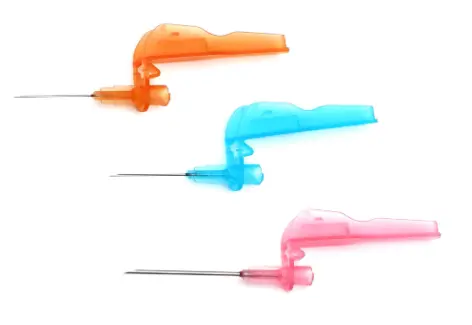
Modern safety hypodermic needles have either passive or active shielding systems that change the risk profiles in a basic way. Passive mechanisms deploy themselves instantly during injection, so you don't have to do anything else. Active systems, on the other hand, can be activated with just one hand by clicking or sliding them. The AVACARE disposable safety needle has an easy-to-use one-handed locking mechanism that doctors can easily trigger after an injection, with audible and visual confirmations. This design gets rid of the short but dangerous window when the dirty needle is visible. This directly stops most of the accidental injuries that have been seen in clinical surveys.
Key Features and Types of Disposable Safety Needles
Medical safety needles are made using engineering concepts that help people who buy things choose disposable safety needles that work well with certain patient groups and clinical workflows. These devices protect without lowering the efficiency of injections by balancing mechanical dependability with user-centered design.
Retractable Needle Technology
Cannulas on a retractable safety hypodermic needle go all the way back into the syringe barrel after medication is given. This design provides the highest amount of sharps isolation, so it is safe to throw away. The retraction is powered by spring-loaded mechanisms that are set off either automatically when the needle is removed from the injection site or manually. The complete containment that these devices offer greatly reduces the risks of handling sharps waste in healthcare facilities that are in charge of large-scale vaccination campaigns or blood collection operations.
Shielded Needle Systems
Protective covers that slide or bend over the needle point right after use are used on shielded designs. The shielded safety needle from AVACARE has a built-in screen that doctors move forward with one motion and then lock over the cannula with a clear click. This feature is especially helpful in the ICU and emergency rooms, where doctors need to see and feel right away that safety is working, even if they are busy with other important tasks at the same time.
Material Engineering and Gauge Selection
Needle cannulas are carefully made from medical-grade SUS304 stainless steel, which is biocompatible and very good at keeping its sharp edge. AVACARE has gauges ranging from 16G to 30G to meet a variety of clinical needs. Larger gauges are used for medications that are thick or for quickly giving fluids, while smaller gauges are used for paediatric patients or for insulin delivery. The ultra-sharp, thin-wall design keeps the structure strong while lowering the resistance to entry. This means that tissue damage is lessened and patients are more comfortable. According to ISO 7864 standards, silicone is used to coat each needle. This lowers the insertion force even more without affecting the cleanliness.

Cross-Industry Applications
Hospitals and surgery centers are the main markets for safety needle technology, but it is also used in veterinary clinics that deal with potentially zoonotic pathogens, diagnostic labs that process thousands of blood samples every day, and industrial health services that vaccinate workers. A regional hospital network recently reported that within six months of switching to safety-engineered devices in all departments, from phlebotomy stations to oncology infusion centers, the number of recorded needlestick injuries dropped by 73%. This shows that the devices had an effect in a variety of use cases.
Comparing Disposable Safety Needles to Other Needle Types
People in charge of buying things have to think about how safe the needles are, how well they stop infections, how much they cost over their whole life, and how well they follow the rules. This comparison makes it clear when disposable safety needles are a better deal than other options.
Safety and Infection Control Advantages
Standard needles that don't have any safety features leave sharps out in the open throughout the waste chain. Handling them carefully and having containers on hand are the only ways to keep people from getting hurt. Through repeated sterilization cycles and more handling, reusable needles add more ways for germs to spread. Disposable safety needles are designed to only be used once and have built-in barriers that trigger before they are thrown away. This creates multiple layers of protection. The built-in safety shield on AVACARE devices stops both direct stick injuries and cross-contamination, which can happen when needles that aren't protected touch surfaces or other tools.

Total Cost of Ownership Analysis
Even though safety needles cost more per unit than other options, a full cost analysis shows different economics. According to the CDC, each needlestick injury results in direct costs of between $3,000 and $7,000, which include trips to the emergency room, lab tests, preventative medications, and follow-up monitoring. These numbers are often doubled by indirect costs like staff time away from work, temporary hiring, possible workers' compensation claims, and legal reporting requirements. Healthcare systems that deal with a few avoidable needlestick injuries each year have to pay a lot more than they would if they invested a little more in safety-engineered devices throughout their whole supply chain.
Regulatory Compliance and Brand Trust
Leading manufacturers have strict quality systems that are certified to ISO 13485 standards. Their goods also have CE and FDA approvals, which show that they meet international safety standards. AVACARE's manufacturing operations take place in 12,000 square meters of controlled production space, which includes 100,000-class clean rooms that make sure the quality of all large orders is the same. The company has seven national patents that cover its own safety mechanisms and improvements to ergonomics. This shows that it continues to invest in research and development. Because AVACARE is dedicated to both new ideas and following the rules, it is able to compete with well-known brands in its field. It does this by allowing for customization and giving flexible service models.
Procurement Considerations: How to Choose and Source Disposable Safety Needles?
To find the best disposable safety needle provider, you need to look at more than just price, especially when establishing long-term supply relationships that affect patient safety and operational continuity.
Critical Selection Criteria
Safety feature reliability stands paramount—mechanisms must activate consistently without jamming or failing under clinical use conditions for medical safety needle. Request Acceptable Quality Level data on activation success rates and conduct hands-on demonstrations with clinical staff who will use the devices daily. Verify that gauge ranges, needle lengths, and hub compatibility align with existing syringe systems and clinical protocols. AVACARE's devices conform to ISO 80369 standards for Luer Lock and Luer Slip connections, ensuring universal compatibility with standard injection equipment without workflow disruption.
Navigating Bulk Purchase Economics
Volume commitments unlock advantageous pricing structures while ensuring supply continuity. AVACARE's minimum order quantity of 20,000 pieces suits mid-to-large healthcare systems and distributors seeking to consolidate suppliers. Turnaround times of 30-45 days allow for strategic inventory planning that balances carrying costs against stockout risks. Payment flexibility through letters of credit or telegraphic transfer accommodates diverse financial operations and international procurement protocols. Requesting samples before committing to full orders—available through AVACARE upon request—enables hands-on evaluation and clinical trial periods that build confidence in product performance.
Supplier Vetting and Authentication
Counterfeit medical devices represent serious patient safety and legal risks. Verify that suppliers maintain current ISO 13485 certifications and can provide certificates of analysis with batch-specific testing data. AVACARE's commitment to traceability ensures every production lot undergoes sterility assurance level validation of 10^-6, with ethylene oxide gas sterilization documented per device serial numbers. This transparency supports regulatory audits and quality investigations, critical capabilities for compliance officers managing institutional risk profiles.
OEM and Customization Pathways
Multinational healthcare groups and regional distributors often require private labeling, localized packaging with multiple language instructions, or custom needle specifications. AVACARE accepts OEM/ODM partnerships that deliver tailored solutions—from modified hub colors for workflow differentiation to specialized gauge configurations for niche clinical applications. This flexibility proves particularly valuable for organizations operating across diverse regulatory environments or seeking to differentiate their product portfolios through unique features unavailable in standard catalog offerings.

Best Practices for Using and Disposing of Disposable Safety Needles
Even the most advanced safety technology only works at its best when it's part of thorough training programs and institutional protocols that reinforce proper usage patterns for the disposable safety needle throughout its entire lifecycle.
Clinical Training and Protocol Development
Staff education must extend beyond basic injection technique to emphasize safety mechanism activation as an inseparable step in medication administration. Simulation-based training allows clinicians to practice one-handed activation under realistic conditions, building muscle memory that persists during high-pressure situations. AVACARE supports implementation through technical training resources, demo videos, and multilingual manuals that facilitate onboarding across diverse staff populations. Institutions should establish clear protocols prohibiting any attempt to bypass or disable safety features, with regular competency assessments ensuring adherence.
Waste Management and Environmental Compliance
Proper disposal begins at the point of use with immediately placing activated safety needles into puncture-resistant sharps containers positioned within arm's reach. Containers should never exceed three-quarters capacity, preventing overfilling scenarios that force staff to push needles past existing sharps. Partner with licensed medical waste management services that provide compliant transportation, treatment, and documentation meeting Environmental Protection Agency and Occupational Safety and Health Administration requirements. AVACARE's individually packaged needles simplify inventory management and reduce packaging waste through optimized carton configurations.
Consequences of Non-Compliance
Shortcuts during disposal or reusing single-use devices expose institutions to regulatory penalties, accreditation jeopardy, and civil liability when injuries occur. OSHA's Bloodborne Pathogens Standard mandates engineering controls like safety needles in most healthcare settings, with violations triggering fines and mandatory corrective action plans. More critically, injured workers may pursue legal action alleging inadequate safety measures, particularly when proven technologies existed but weren't implemented. These risks underscore why procurement decisions around safety devices carry implications far beyond supply chain efficiency.
Conclusion
Needlestick injuries are terrible accidents that could have been avoided. They put healthcare workers at risk and cost the institution a lot of money. These problems can be solved by switching to disposable safety needles, which have built-in safety features that work effectively in a wide range of clinical situations. When procurement workers are looking for important safety equipment, they need to know that AVACARE's devices will work mechanically well, follow all the rules, and be reliable in the supply chain. Healthcare organisations protect their most valuable assets—the dedicated professionals who care for patients—while reducing risk and improving operating efficiency by choosing suppliers that are committed to quality assurance, customisation support, and long-term partnerships.
FAQ
What makes disposable safety needles inherently safer than standard needles?
Disposable safety needles incorporate mechanical barriers—retractable cannulas or shielding mechanisms—that isolate the sharp point immediately after use, eliminating the exposed needle phase when most accidental injuries occur. The automatic or one-handed activation requires minimal additional effort while providing audible and visual confirmation of engagement, reducing reliance on perfect technique during high-stress moments.
Are safety needles compatible with existing injection equipment?
AVACARE's medical safety needles feature ISO-compliant Luer Lock and Luer Slip hubs that attach securely to standard syringes and medication vials without modification. This universal compatibility allows institutions to upgrade sharps safety without replacing entire injection systems or retraining staff on fundamentally different devices.
How can procurement teams verify product authenticity and quality?
Request certificates of analysis showing batch-specific sterility validation, penetration force testing per ISO 7864, and safety mechanism reliability data. Verify current ISO 13485 certification and regulatory approvals such as CE marking. AVACARE provides comprehensive documentation supporting traceability from raw material sourcing through final sterilization, enabling thorough quality audits.
Partner with AVACARE for Superior Needle Safety Solutions
Healthcare institutions and medical device distributors seeking a reliable disposable safety needle manufacturer can leverage AVACARE's decade of specialized expertise in medical consumables engineering. Our CE- and ISO-13485-certified production facilities deliver consistent quality across bulk orders, with turnaround times of 30-45 days supporting predictable supply chain operations. Available gauge ranges from 16G to 30G accommodate diverse clinical applications, while OEM/ODM capabilities enable private labeling and customized configurations aligned with your specific procurement requirements. Contact our team at admin@aileindus.com to request samples, discuss volume pricing, or explore how our 24-hour rapid response service and technical training resources support seamless implementation across your healthcare network.
References
1. Centers for Disease Control and Prevention. (2018). Sharps Safety for Healthcare Settings. Atlanta: CDC Publications.
2. Occupational Safety and Health Administration. (2019). Bloodborne Pathogens Standard: Engineering Controls and Safer Medical Devices. U.S. Department of Labor.
3. World Health Organization. (2020). WHO Guidelines on Hand Hygiene and Injection Safety in Health Care. Geneva: WHO Press.
4. American Nurses Association. (2017). Safe Needle Device Implementation in Clinical Practice. Silver Spring: ANA Publications.
5. International Organization for Standardization. (2016). ISO 23908:2011 Sharps Injury Protection – Requirements and Test Methods. Geneva: ISO Standards.
6. National Institute for Occupational Safety and Health. (2019). Preventing Needlestick Injuries in Healthcare Settings. NIOSH Publication Series.

_1782811410038.webp)