What is the difference between a BCG Syringe and a regular syringe?
When you're managing national immunization programs or overseeing large-scale vaccination campaigns, choosing the right medical device isn't just a matter of preference—it directly impacts patient safety and vaccine efficacy. A specialized intradermal Bcg Vaccine Syringe for tuberculosis vaccination differs fundamentally from standard injection devices used in everyday clinical settings. The core distinction lies in precision: while conventional syringes deliver varying volumes for multiple injection routes, a dedicated BCG device administers a fixed 0.05 ml dose directly into the dermal layer of newborn skin. This precision matters because improper dosing can lead to vaccination failure or adverse skin reactions. Understanding these differences helps procurement managers source devices that meet WHO Performance Quality Safety standards and protect vulnerable populations during mass immunization efforts.
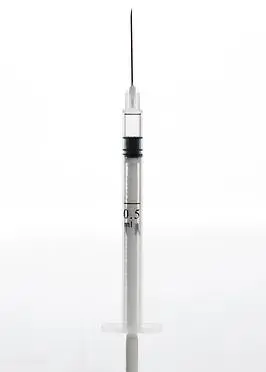
Understanding the Basics of BCG Syringes vs. Regular Syringes
Before we get into the technical details, let's talk about what makes these two types of devices different in clinical settings. The main difference starts with what they were meant to do and how they were designed.
What Defines a BCG-Specific Syringe?
BCG-specific needles are designed to inject the TB vaccination under the skin. ISO 13485-certified devices have a fixed needle on a 0.5 CC barrel with permanent graduation markers for 0.05 ml dosing. Medical experts may accurately puncture skin with the built-in 27G stainless steel needle's short bevel. This fixed-needle syringe delivers the whole vaccine dose without empty space, unlike multipurpose ones. AVACARE's BCG device, constructed in Class 100,000 cleanrooms on 12,000 square meters, is an example of this purpose-built approach. In mass immunization programs, its auto-disable mechanism locks the plunger after one use to prevent cross-contamination.
How Regular Syringes Serve Broader Medical Needs
Standard syringes are useful in many medical operations. These devices can carry 1 ml to 60 ml and be used for intramuscular, subcutaneous, and intravenous injections. Disposable needles of 18G for thick drugs and 25G for insulin are kept in hospitals. Doctors can use the barrel's grade markings to calculate and administer varying quantities dependent on the patient's weight or treatment plan. Emergency rooms and outpatient clinics benefit from this flexibility, but it introduces too many unknowns, making standardized vaccination campaigns difficult. The detachable needle wastes expensive vaccines, and the reusable plunger can be risky in locations with few resources or infection control.
The Clinical Rationale Behind Specialized Design
The World Health Organization realized years ago that preventing tuberculosis in newborns requires more than drugs. Intradermal injections require a shallow angle of 5–15 degrees. The scar is visible below the skin. This approach differs from the 90-degree angle utilized for muscle-injected DTP or measles immunizations. Normal angle needles and syringes go too deep, injecting the vaccine into subcutaneous tissue and reducing immunological response. In tuberculosis-endemic Africa, South Asia, and Latin America, national immunization programs need methods to ensure thousands of frontline health workers adopt the same technique. Fixed-dose syringes with short-bevel needles ensure consistent wheal formation regardless of injector experience. This rule immediately improves vaccine efficacy and reduces booster shots.
Key Differences Between BCG Syringes and Regular Syringes
After going over the basic definitions, we can now look at the specific technical and functional differences between these two types of devices. These differences affect everything, from the rules for buying things to the needs for training staff.
Volume Capacity and Dosage Precision
The barrel volume and precision dosage are the biggest changes. BCG vaccine instructions provide 0.05 ml for babies under 12 months and 0.1ml for older children or tuberculin skin testing. At 0.05 ml, the AVACARE intradermal syringe includes permanent graduation markers calibrated to +/-5% tolerance. The volume of each Bcg Vaccine Syringe batch is measured with calibrated instruments. The BCG vaccine's efficacy depends on correct dosing; too little dose doesn't protect the immune system, while too much dose worsens local response. Syringes with 0.1 ml graduations may hold 1 ml. This is ten times less exact than BCG administration. Even when healthcare staff use a 1 ml syringe to measure 0.05 ml, the meniscus reading is far off. Mass marketing and the pitch, where lighting changes quickly, are prime examples.
Needle Specifications and Injection Technique
Needle form matters too. The thin-walled 27G stainless steel needle (0.4 mm diameter) and short-bevel form help precisely penetrate the dermis layer without damaging newborn skin tissues. This differs from ordinary syringe needles, which have standard bevel designs to penetrate tissue and range from 21G to 25G. The small bevel (1.5 mm vs. 3 mm for standard needles) retains the injection aperture in the dermis throughout the stroke. The vaccine stays where it needs to be to elicit an immune response. Healthcare workers skilled in intradermal technique realize how vital this attribute is for generating the 6–8 mm wheal that indicates proper administration. Regular needles with longer bevels penetrate skin and subcutaneous tissue. When less experienced workers use them during major immunization campaigns, their fatigue makes it impossible to keep their procedure constant.
Auto-Disable Safety Mechanisms
Patient safety is another major distinction. AVACARE's intradermal syringe's one-time-use locking device stops the plunger after the full dose. This meets WHO immunization device pre-qualification. The healthcare worker doesn't have to do anything because this silent auto-disable system turns on. This is crucial when they must vaccinate hundreds of babies daily and have limited time. To ensure endurance in a variety of temperatures and handling circumstances, the mechanical lock is tested over 1,000 cycles during product development. Regular needles lack this safety function. They rely on administrative controls and tight healthcare worker guidelines to prevent reuse. This distinction can save lives in regions with low resources and poor cleaning gear. In areas with few drug safety initiatives, reusing needles can spread bloodborne infections, including hepatitis B and HIV.
Material Composition and Sterilization Standards
Due to their usage on infants, BCG-specific syringes must meet tighter biocompatibility standards than other devices. Both are sterilized with ethylene oxide. AVACARE units are made of latex-free, non-pyrogenic, ISO 10993 biocompatible medical-grade polyethylene. Research indicates that EO sterilization achieves a Sterility Assurance Level of 10^-6. After cleaning, ethylene oxide levels are tested to stay below 10 ppm, meeting ISO 10993-7. Clear material makes air bubbles in the barrel obvious. Some cheaper conventional needles manufactured of unclear polypropylene can't do this. Other than substance, packaging is different. BCG devices are blister-packed in medical-grade peelable pouches to preserve them germ-free for shipment in hot, humid, tropical climates. Regular syringes have simpler packaging that works well in climate-controlled hospitals but not for national immunization programs that deliver to outlying health stations.
These technical differences enable immunization program managers like Fatima, who gets BCG shots for national health offices, to solve problems. The gadgets must be germ-free, work for millions of doses, stop being used with foolproof procedures, and precisely administer the vaccine to maintain its integrity. Regular syringes, albeit valuable in other medical contexts, cannot match these needs.
Practical Considerations for BCG Syringe Procurement and Use
It's not just the technical details that matter; how well vaccination programs work depends on how well they are run. Purchasing managers have to look at how well devices work at every step of the supply chain, from the company that makes them to the health worker who gives a newborn vaccine.
Storage and Shelf Life Management
Stable storage and transport temperatures affect Bcg Vaccine Syringe device performance and program planning. Studies that followed ISO 11607 requirements found that AVACARE's intradermal syringes will work after three years if sealed and kept out of direct sunlight and moisture. This prolonged shelf life allows national immunization programs to accumulate strategic reserves, shielding them against supply issues that have interrupted BCG coverage in nations with customs or port issues. Medical-grade PP barrels don't alter form from 5°C to 40°C. This protects the barrel's graduation marks when delivered to extreme weather. Purchase managers should ensure suppliers provide lot-specific expiration dates and central vaccination stores employ first-expired-first-out inventory. Local distributors can order regular syringes, but BCG-specific equipment must be ordered abroad with 30-45 day wait times. This complicates inventory management.
Staff Training and Administration Protocols
The best-designed tool must be used properly. Health personnel need hands-on training on the 5–15 degree injection angle, wheal making, and vaccine leakage and needle bending when switching from normal syringes to intradermal devices. Short-bevel needles require more gentleness than deeper needles. The immunization will fail if you press too hard and the needle goes through the skin too deeply. As part of our entire service approach, AVACARE provides procurement managers with technical training. We know that device success depends on user knowledge. Training programs should practice using injection pads that simulate baby skin. Health staff can learn the injection angle and pressure muscle memory. When programs invest in training and instruments, wheal creation increases considerably. The population is less likely to have tuberculosis.
Quality Assurance and Batch Traceability
You need strong systems to link each dose to its production records to obey the rules. Every AVACARE syringe barrel has laser-etched lot numbers that may be read throughout its existence. This helps finding the batch in question easier when investigating an unfavorable incident. Beyond the device, our production process tracks every 100,000-unit lot's raw ingredients, sterilization cycle parameters, and quality control outcomes. National pharmacovigilance systems can swiftly check injection site reactions by manufacturing lots. If so, quality issues can trigger targeted recalls. Regular needles used off-label for BCG injection lack this quality paperwork, making it harder to determine the source of an adverse event. Procurement managers should request Certificates of Analysis from suppliers for each shipment, which should include sterility, dimensional, and auto-disable mechanism validation testing for the provided quantities.
Comparing Market Options: BCG Syringe Brands and Suppliers
Since WHO set pre-qualification standards, the global market for intradermal vaccination devices has changed a lot. Now, procurement managers have to deal with a wide range of manufacturers whose quality levels, pricing structures, and service commitments are all different.
Evaluating Supplier Certifications and Compliance
Suppliers are evaluated on quality. The ISO 13485 accreditation and CE marking indicate that a company implements medical equipment-specific quality control methods and meets EU safety regulations. AVACARE's facility holds both certifications and is inspected annually by notified bodies for everything from product release to raw material inspection. Since 2014, our company has made intradermal vaccination devices. Seven national patents cover innovative auto-disable mechanisms and needle design ideas. In addition to these fundamental certifications, buying managers should search for WHO pre-qualification programs, which rigorously screen manufacturers for manufacturing capacity, quality processes, and product performance. Due to the cost of WHO PQ audits, some decent suppliers don't apply, but UNICEF or GAVI-funded programs that need pre-qualified commodities benefit from this clearance.
Pricing Structure and Minimum Order Quantities
Commercial terms significantly impact program budgets. Intradermal Bcg Vaccine Syringes cost more per unit due to their smaller production and distinctive shape. However, cost analysis should include all program expenses, such as reducing vaccine waste through minimal dead space design and eliminating needlestick injuries to minimize occupational health expenditures. AVACARE's minimum order is 200,000 units, which matches how national immunization programs arrange their purchases annually. This MOQ illustrates the minimal number of units needed to achieve economies of scale and high quality. Smaller batches would cost more per unit without improving quality. To accommodate government purchases, we offer T/T bank transfers and L/C lines of credit. The L/C structure protects the seller and offers purchasers time to conclude their internal fund distribution procedures, making the second option ideal for procurement officials who deal with cumbersome government financial approval chains.
Production Capacity and Delivery Reliability
How well producers satisfy demand and logistics work affects supply chain resilience. Class 100,000 cleanrooms in AVACARE's 12,000-square-meter building can enhance production to meet rising vaccination demand. Standard lead times are 30–45 days from order confirmation to port loading. Raw materials, injection molding, controlled assembly, EO sterilization with aeration, and packing take time. This plan works with vaccine cold chain coordination to ensure shipments occur when syringes are accessible at central medical stores. Managers who buy products should verify if their sellers have excess stock in case an order needs to be met fast and if their transportation partners can reliably transfer goods to countries with sophisticated customs systems. We use reputable goods forwarders who understand medical device paperwork. This reduces clearance delays, which have disrupted vaccine supply chains in countries with complex import restrictions.
Making the Right Procurement Decision for Your Business
Finding the best supplier means finding a balance between technical needs, business concerns, and the possibility of a long-term partnership. When making strategic decisions about what to buy, people don't just look at the specs of the device; they also look at the whole relationship that helps immunization programs work.
Matching Technical Specifications to Program Needs
First, check the device's specs against your country's immunization laws. Check that the needle gauge meets national BCG administration standards. Some procedures require 26G needles; however, the world norm is 27G. Vaccinate the right persons with the right fixed dose volume. Most newborn vaccination regimens need 0.05ml devices, whereas older youngsters may need 0.1 ml. The type of auto-disable matters. Active systems require more training than passive ones, which turn on automatically. AVACARE's passive auto-disable feature activates after normal injections to prevent user error. Request clinical testing samples before making a significant purchase. Your vaccination program's training team tests for ergonomic or skill issues that could hinder field performance. Before placing a minimum purchase, you can risk-free test devices from AVACARE to ensure they match your health workers' needs.
Assessing Supplier Reliability and Support Services
Technical details are merely one decision-making factor. Long-term supplier reliability affects your immunization program's vaccination coverage. Examine the manufacturer's finances and production. Newer enterprises may provide lower prices, but they may struggle with regulatory changes or raw material shortages. AVACARE has been around since 2014, demonstrating its market adaptability. Consider the support services manufacturers offer in addition to their products. Are their technical training materials translated into the local language? Can they provide on-site training for new programs or staff departures? We answer technical inquiries 24/7 because immunization programs have tight timetables, and cold chain planning setbacks might happen at any time. OEM/ODM services are essential for programs that desire customized packages or labels to transfer items across national supply lines.
Building Long-Term Procurement Partnerships
Top immunization programs form strategic alliances with vendors rather than just conducting business. Sharing annual purchase projections helps organizations optimize production schedules, reducing lead times and improving delivery reliability. Sharing field data on vaccine coverage and performance helps enhance equipment that aids global immunization workers. AVACARE encourages these co-working connections and uses customer feedback to educate our R&D staff of industry veterans. Combining material science and clinical applications ensures that our discoveries answer real-world challenges, not just theoretical design concepts. Partnerships with flexible producers allow your program to employ the latest tuberculosis vaccinations without lengthy re-qualification.
Conclusion
There is a lot more than just technical differences between specialized intradermal Bcg Vaccine Syringes and regular injection tools. Neonatal tuberculosis vaccination has special needs that can't be met by regular syringes. To meet these needs, devices designed just for that purpose deliver fixed 0.05 ml doses through short-bevel needles. The auto-disable safety features, precise graduation marks, and limited dead space design all work together to protect susceptible groups and keep the immunization program running smoothly. When purchasing devices for national vaccination campaigns, procurement managers need to look at more than just unit prices. They need to think about the total value of the program, which includes preventing vaccine waste, lowering the risk of needlestick injuries, and making sure that the supply chain is reliable so that coverage doesn't stop. The technical requirements, such as ISO 13485 certification and SAL 10^-6 sterility assurance, show the strict approach that must be taken to keep newborns safe from getting infectious diseases. To make smart purchasing choices, you need to know about these differences and work with manufacturers who can show they are both technically capable and reliable over the long term.
FAQ
Can regular syringes be used for BCG vaccination in emergency situations?
Even if there aren't enough specialized intradermal devices on hand, regular syringes shouldn't be used instead. The basic differences in form cause too many clinical risks. Standard needles with longer bevels can go through the skin and place the vaccine in subcutaneous tissue, which has a much weaker immune response. Regular needles don't have exact 0.05 ml measurements because they have bigger graduation marks. Studies show that when healthcare workers try to measure such small amounts in 1 ml barrels, dosing errors can reach up to 40%. Most importantly, standard syringes don't have auto-disable mechanisms, which means that there is a chance of needlestick injuries and reuse, which isn't necessary when vaccinating newborns. When programs are really having trouble getting the supplies they need, they should focus on getting the right tools quickly instead of sacrificing the quality of vaccinations with makeshift solutions.
What needle gauge is recommended for intradermal BCG administration?
For the BCG vaccine, 26G or 27G needles with short bevels are the standard around the world. The 27G stainless steel needles (0.4mm diameter) used in AVACARE's device strike a good mix between a number of therapeutic factors. Thinner needles protect the skin of newborn babies from damage, which lowers the risk of pain and scarring at injection sites. But needles smaller than 27G become too floppy, which makes it hard to place them precisely under the skin and raises the risk of bending during injection. The short-bevel shape (about 1.5mm vs. 3mm for normal needles) keeps the injection hole in the dermal layer throughout the injection stroke. This stops the vaccine from leaking into deeper tissues, which would weaken the immune response.
How should used BCG syringes be disposed of safely?
Safe disposal follows standard procedures for managing sharps, but extra care is taken to make sure they can't be used again. Healthcare facilities should put sharps containers that can't be punctured within easy reach of vaccination stations. This way, the containers can be thrown away right away without being recapped, which is what most needlestick injuries happen. Good BCG syringes have an auto-disable feature that makes it clear that the devices can't be used again. However, they still need to be destroyed physically by burning or autoclaving them. National immunization programs should set up systems to separate medical waste from sharps waste. This will make sure that the right care is given by burning the devices at high temperatures, which destroys any biological material that is still on them. When there aren't enough resources to burn the trash, encapsulation in cement-filled containers is a good alternative for final disposal in engineered landfills.
Partner With AVACARE for Reliable Intradermal Vaccination Solutions
Medical distributors and people in charge of immunization programs looking for a reliable Bcg Vaccine Syringe supplier can rely on AVACARE's ten years of experience in making these products. Our factory is ISO 13485 and CE certified, and it makes intradermal vaccination devices that meet WHO PQS standards. These devices have precise 0.05 ml fixed-dose delivery, passive auto-disable safety mechanisms, and a design with little dead space that keeps the vaccine from going to waste. Supporting programs that protect millions of newborns from tuberculosis, we offer minimum order amounts of 200,000 units to accommodate yearly national buying cycles and production lead times of 30 to 45 days to ensure predictable supply chain planning. Our Class 100,000 cleanrooms keep a SAL 10^-6 level of sterility, and full batch tracking systems allow for quick pharmacovigilance reaction if there are any adverse events that need to be looked into. In addition to providing products, we also offer professional training materials and are available 24 hours a day to answer any questions you may have about purchasing throughout the span of your order. Email our team at admin@aileindus.com to talk about your specific program needs, get technical documentation, or set up a sample evaluation. Check out our full selection of products at ailemedicals.com to see all of the medical supplies we offer that help with vaccination efforts around the world. We're not just makers of BCG syringes; we're also dedicated partners in your goal to vaccinate everyone against tuberculosis by making reliable, high-quality medical devices.
References
1. World Health Organization. BCG Vaccines: WHO Position Paper." Weekly Epidemiological Record, 2018, 93(8):73-96.
2. International Organization for Standardization. "ISO 7886-3:2020 Sterile Hypodermic Syringes for Single Use - Part 3: Auto-Disable Syringes for Fixed-Dose Immunization." Geneva: ISO Standards, 2020.
3. Duclos, Philippe, et al. "Injection Safety and Vaccine Wastage Minimization: Findings from a WHO Consultation." Vaccine, vol. 35, no. 14, 2017, pp. 1717-1724.
4. Hutin, Yvan, et al. "Injection Safety: A Global Challenge." Bulletin of the World Health Organization, vol. 81, no. 7, 2003, pp. 491-500.
5. Lotte, Andre, et al. "BCG Complications: Estimates of the Risks Among Vaccinated Subjects and Statistical Analysis of Their Main Characteristics." Advances in Tuberculosis Research, vol. 21, 1984, pp. 107-193.
6. Miller, Mark A., and Pisani, Elizabeth. "The Cost of Unsafe Injections in Developing Countries." Social Science & Medicine, vol. 49, no. 4, 1999, pp. 459-469.

_1782811410038.webp)