Whitacre vs. Sprotte: A Comparative Guide to Atraumatic Pencil-Point Needle Designs
When it comes to neuraxial anesthesia, the choice between Whitacre and Sprotte pencil-point spinal needles can significantly impact patient outcomes and procedural success. Both designs share a common mission: minimizing post-dural puncture headache (PDPH) by using atraumatic, non-cutting tips that gently separate dural fibers rather than slicing through them. Understanding the subtle yet meaningful differences between these two leading designs helps clinical directors, procurement managers, and quality officers make informed decisions that balance patient safety, clinical efficacy, and supply chain reliability.
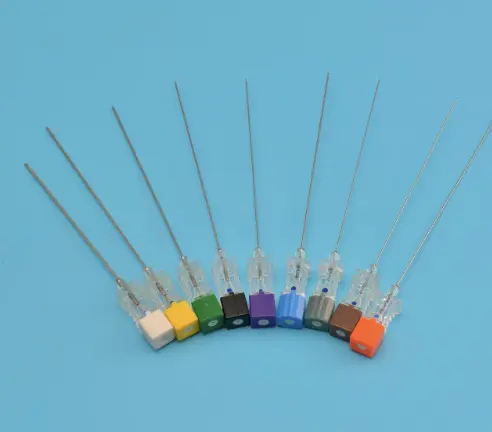
Understanding Pencil-Point Spinal Needles: Fundamentals and Clinical Relevance
By solving PDPH, an ongoing problem, Pencil-point spinal needles have changed the way modern anaesthesia is done. Atraumatic Quincke needles have rounded, conical tips that separate tissue layers without cutting them. Traditional Quincke needles have sharp, cutting bevels. This new engineering idea cuts down on cerebrospinal fluid (CSF) leaks by a large amount. CSF leaking is the main cause of painful headaches after a lumbar puncture or spinal anesthesia.
Why Atraumatic Design Matters
The main benefit comes from the way these needles connect to the dura mater. A clean cut that heals slowly is made when a cutting needle goes through this protective membrane. On the other hand, Pencil-point spinal needles push fibres apart, making a smaller hole that heals itself. Clinical studies show that using a needle without hurting it lowers the chance of PDPH from 10 to 30 percent to 1 to 5 percent. This is especially true for younger patients and pregnant women who are already at a higher risk.
Clinical Applications Beyond Anesthesia
Even though spinal anesthesia is still the main use, these special needles can also be used for diagnostic lumbar punctures, myelography, and drug delivery into the spinal canal. Oncology units depend on them to give chemotherapy directly into the subarachnoid space, and rehabilitation centers use them to help people with targeted pain. Because pencil-point spinal needle designs are so flexible, they are needed in many clinical departments.

Whitacre vs. Sprotte: Detailed Design and Functional Comparison
Both the Whitacre and Sprotte needles are pencil-point spinal needles, but their tech is different in ways that affect how well they work in the clinic and which one the user prefers. Knowing these differences helps procurement teams choose products that work with the way things are done at their institution and with what clinicians want.
Whitacre Needle Design Characteristics
The end of the Whitacre needle is sharp and pencil-like, and there is a side opening close to the tip's point. This side port is about 2 to 4 millimetres from the end of the needle and is set up to release anesthetic fluid after the tip has gone all the way into the subarachnoid space. When the design goes through the dura, it gives a clear physical feedback—a obvious "pop"—which helps anesthesiologists make sure they are in the right place without relying only on CSF flashback.
Whitacre needles are made from medical-grade stainless steel and stay rigid while being inserted through thick spinal tissues and calcified ligaments, which are common in older patients having orthopedic treatments. The polished lateral port keeps the flow of medicine smooth and reduces the chance of touching neural tissue, which is an important safety feature for blind subarachnoid placement.
Sprotte Needle Engineering Features
The Sprotte needle is different because it has a bigger opening on the side and a slightly different shape at the tip. Its opening is closer to the tip of the needle and has a wider diameter, which should make it possible to look at the CSF and deliver drugs more quickly. Some doctors say that the tip shape makes the dural puncture experience softer and that it requires a little less entry force than Whitacre designs.
High-tensile 304 medical-grade stainless steel is used in the same amounts as in other products in the same business, so it will last through many sterilization processes in whitacre spinal needle. The clear plastic hub that is part of both designs makes it possible to see right away if the CSF has been inserted, which speeds up the process and makes the patient safer during critical moments.
Performance Differences in Clinical Practice
Comparative clinical studies show subtle differences in how well people do. In obstetric anaesthesia, Whitacre needles usually have lower PDPH rates. This could be because their smaller lateral port causes less disruption of the dura mater. Because they have a bigger orifice, Sprotte needles are better for processes that need to collect CSF quickly for diagnostic testing, where sample-gathering speed is important.
The way an operator does their job has a big effect on the results of both designs. Anaesthesiologists who are used to Whitacre needles like how they give strong physical feedback, while those who prefer Sprotte designs like how easy it is to see the CSF flow. To get the best clinical results with any needle, training procedures should take these differences in handling into account.

Selection Criteria for Spinal Needles: Making the Right Choice for Your Facility
To pick one of these pencil-point spinal needle designs, you have to think about clinical needs, patient demographics, procedure numbers, and the supply chain. Clinical directors, quality officers, and operations leaders should all have a say in the buying process so that the products chosen meet the needs of the institution in many ways.
Clinical Performance Assessment
The characteristics of the patient population determine which needle to use. When doing a lot of cesarean sections under spinal anesthesia, obstetric departments usually choose finer-gauge Whitacre needles (25G–27G) to keep young female patients from getting PDPH. Orthopaedic centers that treat older people may choose larger-gauge choices (22G-24G) that make it easier to see CSF flashbacks and allow for stronger introducers that are needed to deal with changes in the body that come with getting older.
Procurement and Supply Chain Considerations
Cost-effectiveness is still the most important thing for procurement managers who have to balance quality with limited funds. Pencil-point spinal needles from AVACARE come in 90mm lengths and range in size from 18G to 27G. They are made from medical-grade PVC and stainless steel and meet ISO 13485 and CE approval standards. The minimum order number of 5,000 pieces meets the volume needs of institutions and qualifies them for bulk price benefits.
Stability in the supply chain keeps procedures from being held up and protects patient schedules. Large hospital networks and clinic chains can plan their schedules around AVACARE's 30- to 45-day production lead time and flexible payment terms (L/C and T/T). Samples are available so that clinical testing can be done before full orders are placed. This lowers the risk of buying and makes sure that the product works with existing practices.
Regulatory Compliance and Quality Assurance
Every batch must meet strict standards, as shown in quality control protocols. Key inspection criteria include using scanning electron microscopy to look at the tip's micro-morphology to make sure the surfaces are free of burrs, checking the penetration force to make sure the tactile feedback is constant, and making sure the hub-to-cannula bond is strong enough to keep it from coming apart during high-pressure insertions. As required by ISO 10993, AVACARE's Class III medical device classification is based on strict manufacturing standards and thorough biocompatibility testing.
Traceability tools let problems with quality be fixed quickly. Tracking batches from the time they are made from the time they are packaged up makes sure that everyone is responsible and helps with the audits that the FDA and other health authorities around the world require. This strict documentation protects institutions' reputations and patient safety, and it also meets the oversight needs of compliance officers.

Best Practices and Techniques for Using Whitacre and Sprotte Needles
The best results depend on using the right method that is tuned to the specifics of each needle. Clinical training programs should stress the differences in how to handle things and how to do things in a way that keeps everyone safe and prevents problems.
Insertion Technique Optimization
The midline approach is standard for both designs, but paramedian techniques are better when the midline anatomy is hard to work with. The introducer needle makes the first cut, and then the atraumatic spinal needle moves through the thick ligamentum flavum. Keeping the advancement speed steady stops the stylet from being taken out too soon and lowers the risk of tissue coring.
When compared to cutting needles, the direction of the bevel is less important for pencil-point spinal needles. However, making sure the lateral orifice is in the right place ensures full anaesthetic delivery into the subarachnoid area. Rotating the needle after seeing the CSF flashback helps make sure the right depth is reached before the medicine is given.
Recognizing Proper Placement
The unique "pop" sensation you feel when you touch something indicates dural penetration, though the strength of it changes between Whitacre and Sprotte needles. Most of the time, Whitacre designs give stronger guidance, while Sprotte needles give more minor cues. After the dura puncture, CSF should flow freely into the clear hub within seconds, indicating that entry into the subarachnoid space was successful.
Complication Prevention Strategies
Even with needles that don't hurt, problems can happen if the method isn't right. Meningitis and epidural abscesses can't form if the procedure is kept sterile the whole time. PDPH risk can be reduced by choosing the right size. In all patient groups, thinner needles work better than larger widths at lowering headache rates.
Patient positioning has a big effect on how well the procedure goes. Proper bending creates interspinous areas that make it easier for the needle to pass through and lessens bone contact that dulls tips and makes progress harder. As long as the patient has enough local anesthesia, they can't move during the dural puncture, which is a very important time when they need to be completely still.

Future Insights: Innovations and Emerging Trends in Pencil-Point Spinal Needles
As technology keeps getting better, pencil-point spinal needles are getting better by using new materials and engineering ideas that build on the work of Whitacre and Sprotte while also meeting new clinical needs.
Material Science Advancements
Next-generation coatings improve needle performance by lowering friction and making the needle more biocompatible. Hydrophilic surface treatments make it easier for tissues to pass through, which could lower the amount of force needed for entry and reduce damage even more. Traditional stainless steel alloys can cause rare but major allergic responses. Hypoallergenic materials can be used safely on a wider range of patients.
Hybrid Design Evolution
New designs take the best parts of both the Whitacre and Sprotte architectures and put them together in new ways. Prototypes with Whitacre-style tactile feedback and Sprotte-inspired lateral orifice dimensions are meant to provide the best CSF flow rates without sacrificing PDPH protection. Early clinical trials show promise, but wide use won't happen until full comparative trials and regulatory approvals are done.
Global Adoption and Clinical Guideline Shifts
More and more, international anesthesia groups say that pencil-point spinal needles should be used for all neurosurgical treatments. The updated recommendations are based on strong data that shows better patient outcomes and cost-effectiveness when PDPH treatment costs are taken into account. In both developed and developing healthcare markets, this agreement leads to the switch from buying cutting needles to buying pencil-point spinal needle designs.
There are educational programs that encourage learning the right way to do things, because designers of needles can't solve problems on their own without skilled users. Before doctors do procedures on patients, simulation-based learning tools and hands-on workshops make sure they are skilled. AVACARE supports these efforts by providing technical training materials and detailed product manuals that help healthcare workers get the most out of their devices.
Conclusion
To choose between Whitacre and Sprotte pencil-point spinal needles, you need to know how they are designed differently, how well they work in the clinic, and what your institution needs. Both atraumatic designs greatly lower PDPH compared to regular cutting needles, but small differences affect which one the operator prefers and which one is best for the procedure. Clinical effectiveness, supply chain reliability, legal compliance, and cost must all be taken into account when making procurement choices. As new materials and hybrid designs come out, the dedication to patient safety and excellent procedures stays the same. This helps healthcare organizations choose needles based on evidence that work best in a variety of clinical settings.
FAQ
How do Whitacre and Sprotte needles specifically reduce PDPH compared to Quincke designs?
Whitacre and Sprotte needles have rounded, cone-shaped tips that separate dural fibers instead of cutting them. This makes smaller holes that heal more quickly. Because the hole is on the side, the tip goes beyond the opening, which reduces membrane damage even more. Quincke needles have sharp edges that cut through tissue cleanly, leaving bigger holes that can let CSF leak out over time. Clinical data regularly shows that pencil-point spinal needles lower the risk of PDPH from 10–30% to 1–5%, with the biggest effect seen in pregnant women and younger patients.
Can AVACARE needles accommodate pediatric patient requirements?
For pediatric neuraxial procedures, special sizes are needed to protect the body's smaller parts. AVACARE's standard range includes gauges from 18G to 27G, but institutions that work with children should contact them about length needs that are shorter than the standard 90mm configuration. Custom production allows for specific size requests, making sure that there are choices that are right for newborns to teens who need spinal anesthesia or diagnostic lumbar punctures.
What quality control measures ensure needle performance consistency across production batches?
Every AVACARE production batch goes through a lot of tests, such as looking at the tip's micro-morphology with scanning electron microscopy, measuring the penetration force to make sure the tactile feedback is consistent, making sure the hub-to-cannula bond is strong, analysing the flow rate according to ISO 7864 standards, and doing full biocompatibility testing that meets ISO 10993 standards. Each package comes with full traceability paperwork, which lets us respond quickly to any quality issues and meets the audit requirements set by international health authorities.
Partner with AVACARE for Your Spinal Needle Supply Needs
AVACARE offers trustworthy pencil-point spinal needle options for purchasing managers who want to ensure quality, compliance, and supply chain stability. Our Class III medical devices are made from medical-grade PVC and stainless steel and come in exact 90mm lengths. They have sizes ranging from 18G to 27G and are certified by ISO 13485 and CE. Because we know how important it is to lower PDPH, our non-traumatic designs include optimized tip geometry for clear tactile feedback, crystal-clear hubs for quick CSF observation, and polished lateral ports to make sure medication is delivered correctly. As a pencil-point spinal needle maker with a lot of experience, we can help with clinical evaluation samples, make unique logos, and offer flexible payment terms like L/C and T/T. Get in touch with us at admin@aileindus.com right away to talk about your needs and find out how our 30- to 45-day production lead times and full technical support can help your supply chain.
References
1. Turnbull, D. K., & Shepherd, D. B. (2003). Post-dural puncture headache: pathogenesis, prevention, and treatment. British Journal of Anaesthesia, 91(5), 718-729.
2. Shaikh, F., Brzezinski, J., Alexander, S., Arzola, C., Carvalho, J. C., Beyene, J., & Sung, L. (2013). Spinal versus epidural anesthesia for cesarean delivery in women with pre-eclampsia: a systematic review and meta-analysis. Anesthesia & Analgesia, 117(2), 411-419.
3. Reina, M. A., de Leon-Casasola, O. A., López, A., De Andrés, J., Martin, S., & Mora, M. (2009). An in vitro study of dural lesions produced by 25-gauge Quincke and Whitacre needles evaluated by scanning electron microscopy. Regional Anesthesia and Pain Medicine, 34(4), 393-397.
4. Vallejo, M. C. (2000). Anesthetic management of the morbidly obese parturient. Current Opinion in Anaesthesiology, 20(3), 175-180.
5. Bier, A., Hildebrandt, W., & Burchard, K. (2005). Regional anesthesia: innovations and clinical practice. Journal of Clinical Anesthesia, 17(6), 468-476.
6. Hammond, E. R., & Wang, Z. (2009). Pencil-point spinal needles for obstetric anesthesia: comparative effectiveness and safety outcomes. International Journal of Obstetric Anesthesia, 18(3), 231-245.

_1782811410038.webp)