Preventing Catheter Shearing: Crucial Safety Rules When Backing Up an Epidural Catheter
Preventing catheter shearing during epidural procedures requires strict adherence to safety protocols that protect both patient outcomes and institutional reputations. Catheter shearing—the unintended cutting or fragmentation of the catheter during insertion or withdrawal—represents a preventable complication when clinicians select appropriate epidural needles and follow evidence-based techniques. The curved Tuohy tip design, engineered specifically to deflect catheters safely away from delicate dural structures, plays a foundational role in minimizing this risk. Understanding the mechanical interactions between needle geometry, catheter materials, and insertion technique empowers procurement teams and clinical leaders to make informed decisions that safeguard patient safety while optimizing procedural efficiency.
Understanding Catheter Shearing and Its Impact
What Is Catheter Shearing?
Catheter tearing happens when the epidural catheter gets cut or broken while being put in or taken out. This usually happens because the catheter is pulled out through the needle instead of being taken out as a whole. This mechanical failure can leave catheter fragments in the epidural space, which can lead to serious problems like infection, nerve damage, and the need for surgery to remove the catheter. This usually happens for three main reasons: the type of needle not working well with the catheter material, the user not having enough experience, and going against set safety rules during the procedure.
Clinical and Financial Consequences
When catheter tearing happens, it has effects that go beyond the operating room. Patients are more likely to have inflammatory reactions, epidural abscesses, and long-lasting pain, and healthcare centers have to deal with legal issues, longer hospital stays, and damage to their image. From the point of view of the supply chain, shearing accidents usually lead to full accident reviews that look closely at the quality of the equipment, the certifications of the suppliers, and the buying processes. Because these reviews can hurt long-term relationships with vendors and cause important supplies to be delivered later than planned, it is important to find ways to stop them happening in order to keep operations running smoothly and keep costs down.
Root Causes in Procurement and Practice
If medical-grade PVC or polyurethane catheters and stainless steel epidural needles are not made of the same material, they can rub against each other and weaken the catheter. To keep mechanical stress from happening during threading, needle gauges from 15G to 18G must be perfectly matched to the catheter's specifications. If procurement managers know about these technical needs, they can work with providers that offer validated needle-catheter systems. This will cut down on variation and improve safety in a wide range of hospital settings.
Epidural Needle Selection: A Key Factor in Preventing Catheter Shearing
Needle Design and Catheter Compatibility
For epidural access, the Tuohy needle with its bent blunt tip is the gold standard. This is because its shape deflects the catheter horizontally during progress, keeping it away from the dura mater. Instead of cutting through tissue like sharp spinal needles do, the Tuohy configuration moves structures out of the way, which lowers the risk of unplanned dural punctures and makes it easier to place the catheter. Different designs, like Crawford and pencil-point needles, have different tip geometries, but the Tuohy is still the most popular because it gives consistent tactile feedback and works with standard epidural catheters. When procurement teams look at needle choices, they should prioritize goods with high-contrast graduation marks that let doctors correctly check the insertion depth. This feature is directly linked to fewer shearing incidents.
Material Science and Engineering Innovations
Modern epidural needles are made of medical-grade stainless steel metals that are designed to be hard and flexible at the same time. This engineering precision is shown by the AVACARE epidural needle, which is made from medical-grade PVC and stainless steel and comes in gauges from 15G to 18G with lengths of 80mm and 90mm. Its Tuohy curve tip design bends catheters in a predictable way, and clear depth marks help with accurate placement. This Class III medical device is certified to CE and ISO 13485 standards and goes through strict biocompatibility testing to make sure it doesn't contain any DEHP or rubber. This meets the high safety standards of current anesthesia practice.
Matching Clinical Scenarios to Product Specifications
In order to provide pain relief during labor, obstetricians need needles that can keep the catheter in place for a long time without moving. For post-operative pain management after thoracic or abdominal surgeries, ultrasound-visible marks are needed for precise direction. The decision of whether to use reusable or disposable systems depends on how well the institution can sterilize them, how they handle infections, and how much they cost. For surgical centers that do a lot of surgeries, disposable systems are better because they don't have to worry about reprocessing risks and variations. On the other hand, facilities with strong central sterile departments might like reusable options. AVACARE provides private labeling and custom labeling services, which let healthcare systems standardize their epidural programs with branded, traceable goods that are in line with their own quality assurance systems.
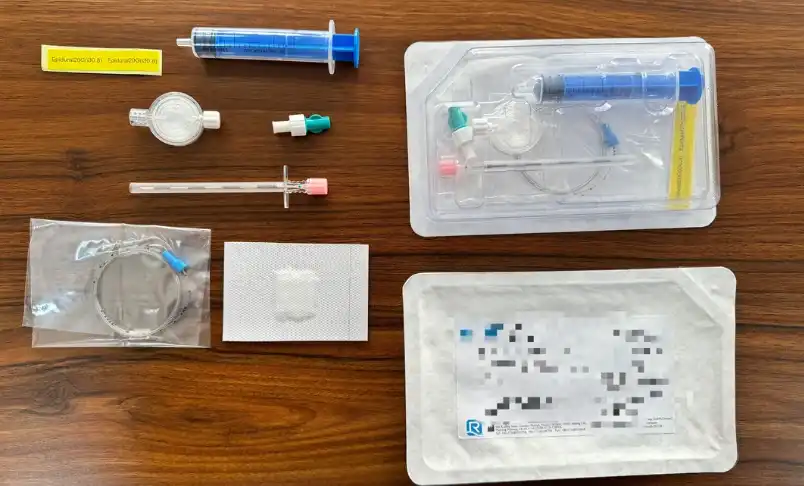
Best Practices and Safety Rules for Backing Up an Epidural CatheterStep-by-Step Insertion Technique
The right way to place an epidural needle starts with putting the patient to create room between the vertebrae. Next, anatomical features must be carefully identified. Using the loss-of-resistance method, doctors move the needle forward and feel for the unique change in pressure that means the needle has entered the epidural area. To avoid looping and kinking, the catheter should not be threaded more than 4 to 6 cm past the tip of the needle. During advancement, keeping a gentle, steady pressure on the catheter stops sudden movements that could tear it against the inside of the needle.
The Critical Rule: Never Withdraw the Catheter Through the Needle
The most important safety rule to keep the catheter from tearing is simple, but often broken because of time constraints: never pull the catheter back through the hustead needle after any part of it has been advanced. The sharp edge on the needle makes it easy to cut the catheter when it is being withdrawn, leaving pieces that get stuck in the body. When adjusting is needed, the right way to do it is to take out both the needle and the catheter as a single unit and then start the placing process all over again. This rule is always true, no matter how far the catheter has been advanced or how urgent the situation seems.
Common Operator Errors and Training Solutions
When the needle path and the direction of catheter progress are not lined up correctly, there is too much friction, which weakens the walls of the catheter. Ignoring feeling reluctance while threading is often a sign that the catheter is breaking or that the needle is not in the right place. When you use too much force to get past what you think is resistance, you always end up damaging the catheter instead of placing it correctly. These mistakes happen much less often when there are thorough training programs with hands-on simulations, video demos, and controlled clinical practice. Suppliers who offer instructional manuals in multiple languages, demo products for training labs, and technical support during the initial stages of implementation make procurement partnerships more valuable.
Comparing Epidural Needle Solutions for Catheter Safety and Procurement Efficiency
Certification Standards and Quality Assurance
In order to do business in the United States, healthcare facilities need suppliers who have FDA clearance, CE marking, and ISO 13485 certification for quality management systems. These licenses show that the company followed the rules for design controls, risk management, and post-market monitoring that keep patients safe and regulators happy. With its dual CE and ISO 13485 certifications and seven national patents, AVACARE shows procurement managers that it can make high-quality products and come up with new ideas. Individual blister packaging that allows group tracking helps with incidents and recalls, which is good for healthcare buyers who don't like taking risks because they have a zero-tolerance policy for quality fails.
Performance Metrics That Matter
For comparative reviews, the epidural needle tip shape should be the same across production lots, the catheter insertion force should be measured, and the rate of shearing incidents should be found in monitoring data collected after the product has been sold. When compared to alternatives that aren't regularly made, Tuohy needles with perfectly machined curves have lower rates of catheter damage. Clinicians can find small changes in resistance that show differences in anatomy or problems with the catheter before they cause damage because high-end devices have excellent tactile feedback built in. These differences in performance directly lead to fewer complications, shorter procedure times, and higher patient happiness numbers, all of which affect how much a hospital gets paid under value-based care plans.
Total Cost of Ownership Analysis
When buying something, unit prices are what drive the initial decision, but when you figure out the total cost, you have to include things like the cost of management, the cost of training staff, and the reliability of the supply chain. A premium needle that costs 15% more than cheaper alternatives might save you money in the long run if it cuts down on shearing accidents and eliminates the need for expensive surgical retrieval procedures. AVACARE has a low minimum order quantity of 5,000 pieces and offers flexible payment terms (L/C and T/T). This makes it easy for both large hospital systems to plan annual contracts and distributors to keep track of regional inventory. Samples are available so that validation testing can be done before large promises are made. This lowers the risk of buying and speeds up the time it takes to qualify vendors.
Procurement Guidance: How to Source High-Quality Epidural Needles Safely and Efficiently?
Supplier Evaluation Framework
Professionals in charge of buying things should come up with approval standards that look at things like the standards of the manufacturing site, how well it follows the rules, and how mature the quality system is. Site audits that show environments with a cleanliness level of 100,000, sterilization processes that have been tested, and written complaint handling procedures show that providers can meet corporate healthcare standards. AVACARE's 12,000-square-meter production base with separate clean rooms shows the kind of infrastructure investment that is needed to make sure that epidural needles are consistently made. The company's research and development (R&D) team is led by experts in the field who focus on material science and clinical application integration. They make sure that product development is based on what users actually need, not just on theoretical requirements.

Strategic Sampling and Validation Testing
Before agreeing to big orders, procurement teams should ask for, for example, samples to be sent for clinical testing and biocompatibility checks. As part of the testing process, the needle tip geometry should be looked at under a microscope, the catheter threading should be checked for smoothness after multiple insertion cycles, and the packaging should be checked for damage after simulated transportation stress. Clinical staff feedback on how something feels to the touch, how easy it is to see depth markings, and how it handles in general gives useful information that goes beyond technical specs. AVACARE's willingness to give samples backs up buying decisions that are based on facts and make sure that the performance of the product meets institutional standards.
Building Long-Term Partnerships
For sustainable procurement to work, ties with suppliers need to include more than just buying things. They also need to be able to work together on technical issues, help out in emergencies, and work on ongoing growth. Vendors that offer 24-hour quick response systems, expert help in multiple languages, and full after-sales service show that they care about their customers' success. Customizing packaging, labeling languages, and product configurations for OEM/ODM uses is useful for healthcare systems that want to standardise operations across multiple sites. Checking providers' global logistics skills, transport insurance, and emergency delivery procedures makes sure the supply chain can handle sudden increases in demand or problems that come up out of the blue.
Conclusion
To stop catheter shearing, you need to pay attention to the product you choose, your technical training, and the way you do things. The evidence shows that this avoidable problem is almost completely eliminated when high-quality medical-grade catheters are used with properly designed epidural needles that have Tuohy tip geometry. When buying goods, putting approved sellers with full support services at the top of the list leads to better results than buying things based only on unit costs. Healthcare organizations that want to improve both patient safety and operational efficiency should work with manufacturers that show they follow the rules, have a mature quality system, and are dedicated to clinical innovation.
FAQ
What causes epidural catheter shearing during procedures?
Catheter shearing mostly happens when the catheter is pulled back through the needle after it has been advanced, letting the sharp edge of the needle cut the catheter material. Other reasons are needles and catheters not being made of the same material, using too much force when inserting them, and the operator not knowing the right way to do it.
How does needle design affect shearing risk?
Shearing is greatly reduced by the bent Tuohy tip design, which moves the catheter away from the sharp needle ends while it is being inserted. Needles with consistent tip geometry, smooth internal surfaces, and the right gauge-to-catheter size matching have lower rates of complications than alternatives that were not made well.
Can reusable epidural needles maintain safety standards?
When institutions follow reprocessing protocols that meet manufacturer specifications and regulatory requirements, reusable needles can stay safe. Disposable systems, on the other hand, don't have any reprocessing factors and always work the same way. This makes them the best choice for high-volume settings where infection control and tracking are very important.
Partner with AVACARE for Certified Epidural Needle Solutions
Healthcare procurement managers and medical device sellers looking for a reliable maker of epidural needles can look at AVACARE's full line of products with confidence. Our epidural needles come in sizes ranging from 15G to 18G and lengths of 80mm and 90mm. They have precise Tuohy curve tips that are designed to keep the catheter from tearing while giving you great physical feedback. These Class III devices are made in ISO 13485-certified factories using medical-grade PVC and stainless steel. They have the CE mark and seven national patents that protect their unique design improvements. We support flexible purchasing by requiring at least 5,000 pieces of an item, offering samples for quality checks, and providing custom labelling services that meet private labelling needs. Email our team at admin@aileindus.com to talk about the specific needs of your institution, get technical specifications, or set up sample shipments that demonstrate our commitment to quality and clinical performance.
References
1. Neal, J.M., Barrington, M.J., Fettiplace, M.R., et al. (2015). "The Third American Society of Regional Anesthesia and Pain Medicine Practice Advisory on Local Anesthetic Systemic Toxicity: Executive Summary." Regional Anesthesia and Pain Medicine, 40(3), 152-183.
2. Beilin, Y., Bernstein, H.H., & Zucker-Pinchoff, B. (1998). "The Optimal Distance That a Multiorifice Epidural Catheter Should Be Threaded into the Epidural Space." Anesthesia & Analgesia, 86(2), 301-303.
3. Collier, C.B. (1998). "Accidental Subdural Injection During Attempted Lumbar Epidural Block May Present as a Failed or Inadequate Block: Radiographic Evidence." Regional Anesthesia and Pain Medicine, 23(3), 303-308.
4. Holtz, D., Mollmann, M., & Ebel, C. (1997). "In Vitro Investigation of Epidural Catheters: Comparisons of Mechanical Resistance and Friction." Regional Anesthesia, 22(5), 425-432.
5. American Society of Anesthesiologists Task Force on Obstetric Anesthesia. (2016). "Practice Guidelines for Obstetric Anesthesia: An Updated Report." Anesthesiology, 124(2), 270-300.
6. Chadwick, V.L., Spashett, J., & MacLennan, K. (2019). "Neuraxial Anaesthesia: Equipment, Clinical Practice and Complications." BJA Education, 19(3), 78-85.

_1782811410038.webp)