Why Are Preformed Endotracheal Tubes Used in Surgery?
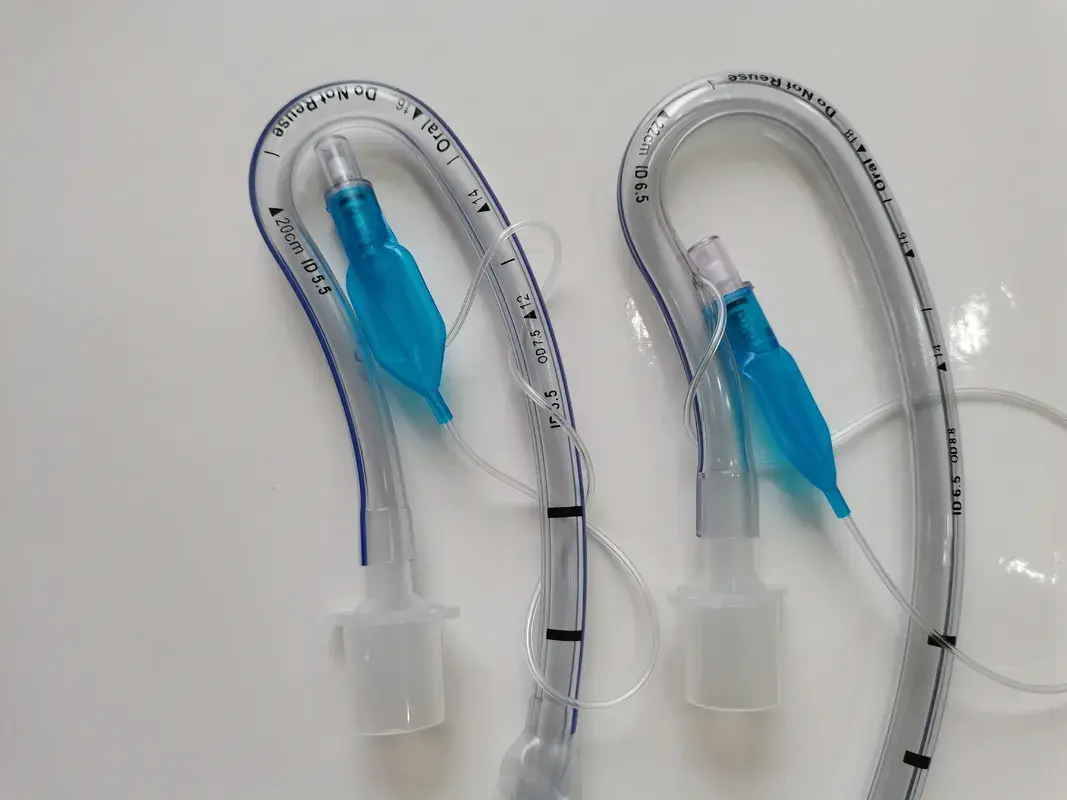
Preformed endotracheal tubes have become essential in modern surgical practice because they solve a fundamental problem: keeping the surgical field clear while maintaining a secure airway. The Cuffed Endotracheal Tube Oral Preformed features a specialized south-facing curve that directs the breathing circuit away from the surgical site, preventing interference during head, neck, and facial procedures. This anatomical design minimizes the risk of accidental extubation, reduces pressure on oral structures, and provides superior surgical access compared to standard straight tubes. The integrated high-volume low-pressure cuff creates an effective seal that protects against aspiration while distributing pressure evenly across tracheal tissue, making these devices indispensable for maxillofacial, ENT, and critical care applications.
Understanding Preformed Cuffed Endotracheal Tubes
What Makes Preformed Tubes Different from Standard Designs?
Preformed endotracheal tubes are a big step forward in the technology used to control airways. Their pre-shaped anatomical curve is what makes them unique; it means that you don't have to bend them by hand during procedures. Standard straight tubes need to be moved around a lot and can bend when surgical retractors or the patient moves, making it harder to breathe when you need it the most.
The preformed design stays in place during the procedure, which lowers the mechanical stress on both the device and the patient. The thermosensitive, DEHP-free PVC used to make these tubes stays stiff while being inserted but softens at body temperature to naturally fit the shape of the airway. This adaptive trait makes intubation much less painful and long processes more comfortable for the patient.
Cuff Technology and Its Clinical Significance
The cuff is the most important part because it seals the tube against the airway wall. High-volume low-pressure cuff technology spreads the binding force over a bigger surface area, so it can keep the valve closed at pressures between 20 and 30 cmH2O. This pressure range stops the aspiration of mouthwash and stomach contents and keeps capillary blood flow going in the tracheal mucosa, which greatly lowers the risk of ischemic injury.
Traditional high-pressure cuffs focus force on smaller areas, which makes it more likely that tissue damage will happen during long breathing periods. This problem is directly fixed by the HVLP design. Medical studies constantly show that managing cuff pressure correctly is linked to fewer problems after surgery, such as sore throats, hoarseness, and tracheal stenosis. AVACARE tests the integrity of every cuff during the production process to make sure that every unit works the same way in hospital settings.
Material Science and Safety Features
When breathing devices touch sensitive mucous tissue, biocompatibility is a must. According to ISO 10993 standards, the thermosensitive PVC used in high-quality premade tubes goes through a lot of tests, such as cytotoxicity, sensitization, and intracutaneous reaction checks. These thorough tests show that the materials won't cause any harmful biological reactions when they are used normally.
Safety features go beyond the materials themselves. There is a secondary opening near the distal tip called the Murphy eye that lets air in in case the primary opening gets blocked. A radiopaque line that runs the length of the tube lets exact location be confirmed by X-ray images, making sure the device is in the right place before surgery. The standard 15mm connector makes sure that anesthesia circuits all over the world are compatible, so you don't have to worry about compatibility issues in an emergency.
Why Are Preformed Endotracheal Tubes Preferred in Surgery?
Superior Surgical Field Access
Unobstructed vision and instrument access are important for the efficiency of the operating room. Maxillofacial doctors who do orthognathic procedures need to be able to fully reach the mouth without having to deal with ventilation tools. Oral preformed tubes have a curve that faces south. This curve takes the breathing circuit over the patient's chin and down toward the chest, clearing the whole face.
This position works well for removing difficult teeth, operating on the temporomandibular joint, and removing tumors inside the mouth. Surgeons can put in place retractors, suction devices, and tools without always being aware of where the tubes are. Because the placement is steady, there is less need to make changes in the middle of a process, which can slow things down and possibly damage sterile fields. Anesthesia professionals like that there is less chance of accidentally disconnecting the patient when surgery is done close to the airway.
Enhanced Patient Safety Profile
During the recovery time, patient safety is still a top priority. The preformed shape of the Cuffed Endotracheal Tube Oral Preformed lowers mechanical stress at the corners of the mouth, which makes it much less likely that pressure ulcers will form during long procedures. When standard straight tubes are held in place with adhesive tape, they create pressure points where they exit the mouth. Long-term pressure at these places can break down tissue, especially in patients whose circulation is poor or who need longer surgeries.
The prepared tubes' ability to adjust to the body also lowers the chance of accidentally removing the tube. When the patient's position changes or the tube is moved during surgery, the rotational forces and leverage effects are stronger on straight tubes. The preformed curve makes the connection between the tube position and the airway structure more stable, which keeps the placement secure during the process. This steadiness is especially important when moving patients from the operating room to the recovery room.
Comparison with Alternative Tube Types
There are different ways to handle an airway in different clinical situations. In the past, uncuffed tubes were used in pediatric patients because of worries about tracheal damage. However, new research supports using cuffed tubes even in children as long as the right cuff pressures are kept up. There are real benefits to the cuff. It stops anesthetic gas from leaking, cleans up the operating room, and allows for correct tidal volume delivery.
Nasal preformed tubes have a north-facing curve that is meant for nasal intubation methods. This curve directs the circuit toward the forehead. These work best for procedures inside the mouth that need full oral access without a tube in the mouth. Oral preformed tubes are still better for most general surgical uses because they come in larger diameters, are easier to insert, and have a lower risk of epistaxis compared to nasal approaches.
Using Cuffed Endotracheal Tube Oral Preformed in Clinical Practice
Proper Size Selection Criteria
Size choice has a direct effect on both the success of the procedure and the patient's result. Adult patients usually need tubes with an internal diameter between 7.0 mm and 9.0 mm. The size, gender, and surgical needs of the patient determine which tube to use. Women usually find that 7.0 to 8.0 mm tubes fit them well, while men usually use 8.0 to 9.0 mm sizes. Larger diameter tubes make it easier to do bronchoscopy if it's needed during the operation and lower the resistance in the airways.
Different rules are used for kids' sizes, which are based on their age and weight. The method (age/4) + 4 can be used as a starting point to find the internal diameter in millimeters, but because everyone's body is different, it's important to use clinical opinion. Having a variety of sizes on hand during intubation lets the size be changed quickly if the first size chosen doesn't work. The tube should go through the vocal cords easily and without too much force. It should also fit snugly enough that even a small amount of expansion of the cuff is enough to make a good seal.
Insertion Technique and Cuff Management
To insert something correctly, you need to know how the preformed shape fits into the airway. During laryngoscopy, the curve should face backward, following the normal direction of the pharynx. Once the distal tip goes through the vocal cords, it is slowly moved forward until the cuff sits just below the cords. Usually, the teeth's depth marking is three times the inner diameter in centimeters.
For cuff inflation, pay close attention to the pressure limits. A handheld manometer gives accurate readings, so you don't have to guess like you do with pilot balloon palpation. Gradually inflate while listening for air leaks over the trachea until there are none to be heard during positive pressure ventilation. Then, add just the right amount of extra air to seal the opening completely. Too much pressure on the cuff can lead to problems after surgery without adding any benefit.
Sterilization Standards and Single-Use Protocol
These devices come in individual blister packs that have been sterilized with ethylene oxide and are ready to be used right away in a clinical setting. Ethylene oxide sterilization kills all microorganisms, even bacterial spores, while keeping the thermosensitive PVC materials' physical properties. Before opening, the stability of the packaging must be checked. If it is found to be broken, the device must be thrown away to avoid contamination.
Single-use labeling is a must and can't be changed. Trying to clean and reuse Cuffed Endotracheal Tube Oral Preformed endotracheal tubes creates unacceptable risks of infection transfer and could damage the tubes' structure. The fairly low cost per unit does not justify the major risks to patient safety and legal violations that come with trying to reprocess. Healthcare facilities should keep enough devices in stock so that they are always available without putting too much pressure on people to break single-use rules.
Procurement Considerations for B2B Buyers
Evaluating Suppliers and Certifications
Teams in charge of buying things must make sure that potential suppliers have all the necessary regulatory approvals for the markets they want to sell to. If a product has a CE mark, it means it meets the requirements of the European Medical Device Regulation. If it has an FDA clearance or approval, it means it meets the requirements of the United States. If a company has ISO 13485 approval, it means that they have a quality management system that is meant to make medical devices. This system has written steps for controlling the design, making sure the process works, and dealing with complaints.
These strict rules are followed by AVACARE, which works in a 12,000 square meter building with Class 100,000 cleanrooms. Our seven national patents show that we are committed to ongoing innovation, and our monthly production capacity of 300,000 units makes sure that even large institutional buyers can always get what they need. These features fix common problems like supply gaps and inconsistent product quality that make it hard to run healthcare operations.

Customization and Private Labeling Options
A lot of the time, big healthcare systems and distributors need to customize products to fit their wants or their business plans. OEM and ODM services let you change the design of the package, translate it into a language that is common in other countries, and add your own label to help your institution's identity. Customized goods usually have a minimum order quantity of 100 pieces, which means that even medium-sized facilities or local distributors can use these choices.
Multiple languages can be used on package inserts to meet the needs of healthcare organizations that work with people from other countries. Color-coded size markings can be changed to fit existing institutional standards. This makes it easier to switch suppliers without having to train everyone again. Options for bulk packaging make central supply operations run more smoothly and cut down on wasteful packaging per unit. With these customization options, normal goods can be turned into solutions that work best for certain operational processes.
Pricing Structures and Logistics Support
Pricing based on volume is much more cost-effective for buyers who can commit to bigger orders. To figure out the total landed cost, you need to look at more than just the unit price. You also need to think about the costs of shipping, customs duties, and keeping inventory. Buyers can get the most out of these factors while keeping the right amount of safety stock on hand when suppliers offer consolidated shipping and flexible delivery schedules.
AVACARE has a well-established supply chain that includes partnerships with major foreign logistics providers. This gives them a number of shipping choices, such as air freight for urgent orders and ocean transport for regular restocking. Transport insurance protects buyers against damage or loss that might happen during international shipping. Our 24-hour fast response system makes sure that technical questions and questions about the state of orders are answered quickly, even if the people asking are in different time zones. This helps with the communication problems that often come up in cross-border purchasing relationships.

Potential Complications and How to Mitigate Them
Recognizing and Preventing Mucosal Injury
One of the most serious problems that can happen with Cuffed Endotracheal Tube Oral Preformed endotracheal intubation is damage to the tracheal mucosa. Ischemic injury risk is directly linked to excessive cuff pressure, since levels above capillary perfusion pressure cut off blood flow to damaged tissue. When ischemia lasts for a long time, it causes mucosal ulcers, which can get worse and lead to tracheal stenosis in the worst cases, which needs complicated repair surgery.
A key part of prevention is keeping a close eye on the cuff pressure during the intubation time. After filling, check the pressure right away, and then check it again at regular times during long processes. Diffusion of nitrous oxide into the cuff can raise the pressure over time, so the pressure needs to be released every so often. Moving the patient or operating on them may change the pressure relationship between the cuff and the airway wall, which means that the patient needs to be watched more closely after these events.
The quality of the material is also very important. Tubes made from bad materials might have cuffs that don't distribute pressure evenly or have weak spots that are easy to break. AVACARE's thorough quality control method includes mechanical testing that mimics long-term clinical use. This finds possible failure modes in goods before they reach clinical settings.
Managing Post-Operative Symptoms
People who have been extubated often have sore throats, hoarseness, and trouble swallowing, though the seriousness of these symptoms changes a lot from patient to patient. Although these symptoms usually go away in 48 to 72 hours, they cause a lot of pain for patients right after surgery. Choosing the right tube size, inserting it correctly, managing the cuff pressure, and the length of the intubation are all things that can affect the outcome.
Using tubes of the right size instead of the biggest diameter that will fit lowers the pressure that comes into contact with the larynx and trachea. Putting a water-soluble lubricant on the outside of the tube before inserting it reduces friction as it goes through the throat and pharynx. Avoiding extra cuff pressure by aiming for the lowest pressure needed for a good seal instead of maximum inflation lowers damage to the mucosa.
Teaching patients about the possible side effects of surgery can help them manage their expectations and feel less anxious. During recovery, throat lozenges, cold drinks, and humidified air can help with symptoms. If the symptoms last longer than 72 hours or get worse over time, you should see an otolaryngologist to rule out more serious injuries like vocal cord damage or arytenoid dislocation.
Quality Assurance and Staff Training Protocols
Regular skill tests should be part of institutional quality assurance programs for all staff members who do intubations. Simulation-based training with anatomical models lets professionals improve their skills in safe environments before using them in real life. Retraining once a year makes sure that new best practices are quickly adopted by clinicians.
Problems with airway devices must be reported through incident reporting systems. This allows for trend analysis that finds widespread problems that need process changes. Root cause analysis is a way to find out if problems were caused by mistakes in the method, broken devices, or issues at the system level after a serious event. This data-driven approach focuses efforts to make things better where they will have the biggest impact on safety.
Protocols for supply chain management should include checks to make sure that products received meet specifications and that the packaging stays intact. Lot number documentation makes it easy to quickly recall products if problems with the manufacturing process are found after they have been sent out. Ethylene oxide-sanitized PVC tubes should be kept out of direct sunlight and high temperatures that could damage the material's properties before they are used in a hospital setting.

Conclusion
Cuffed Endotracheal Tube Oral Preformed meet important clinical needs in managing the airway during surgery. They are well-designed to balance a number of performance requirements. The natural shape makes it easier to do surgery while keeping the airway safe, and the high-volume low-pressure cuff stops aspiration without affecting blood flow to the trachea. These tools are now commonplace in operating rooms all over the world because they consistently improve patient safety and the efficiency of the procedure. Not only should the unit cost be taken into account when making a procurement decision, but so should the supplier's dependability, compliance with regulations, and the ability to provide technical support that ensures long-term success.
FAQ
How do I determine the correct tube size for adult patients?
Adult males need tubes with an internal diameter of 8.0 to 9.0 mm, while adult females need tubes with an internal diameter of 7.0 to 8.0 mm. Because people are different in height, body shape, and anatomy, it's important to have a range of sizes available during intubation. The tube should be able to go through the glottis with little trouble. If there is too much force, the size should be lowered, and if there is a lot of air leakage even with the cuff fully inflated, it might be time to go up.
What distinguishes high-volume low-pressure cuffs from standard designs?
HVLP cuffs spread the sealing pressure over a larger tracheal surface area. This way, the closure works at 20 to 30 cmH2O, instead of higher pressures that stop blood flow to the mucosa. This approach lowers the risk of ischemic harm during long-term breathing. Standard high-pressure cuffs focus force on smaller areas, which raises the risk of complications without improving clinical outcomes in modern anesthetic practice.
Can preformed tubes be used in MRI environments?
Certain models made to work with MRIs are made of non-ferromagnetic materials all the way through, even in the pilot balloon spring. In strong magnetic fields, standard tubes may have ferromagnetic parts that could be dangerous. Always check the product label to see if an endotracheal tube is compatible with an MRI before using it in a magnetic resonance imaging (MRI) environment.
Partner with AVACARE for Reliable Airway Management Solutions
Healthcare facilities looking for a reliable provider of Cuffed Endotracheal Tube Oral Preformed will find that AVACARE's dedication to manufacturing excellence solves their most important purchasing problems. Our goods are allowed by ISO 13485, CE, and FDA, and they come from cleanrooms where they are made. Each batch can be tracked back to its source, and the quality is tested 100% of the time. As a manufacturer that has been around since 2014, we can offer flexible OEM/ODM customization starting at just 100 pieces. This means that we can work with both big hospital systems and local dealers. Our 24-hour response system, technical training materials, and multilingual paperwork make sure that your clinical teams get all the help they need to apply the system. You can email our buying experts at admin@aileindus.com or visit ailemedicals.com to talk about bulk prices, emergency shipping options, and unique solutions that meet the needs of your school.

References
1. American Society of Anesthesiologists Task Force on Management of the Difficult Airway. Practice Guidelines for Management of the Difficult Airway: An Updated Report. Anesthesiology, 2013, 118(2): 251-270.
2. Sole ML, Penoyer DA, Su X, Jimenez E, Kalita SJ, Poalillo E, Bennet M, Mehta S, Vines DL. Assessment of endotracheal cuff pressure by continuous monitoring: A pilot study. American Journal of Critical Care, 2009, 18(2): 133-143.
3. Sengupta P, Sessler DI, Maglinger P, Wells S, Vogt A, Durrani J, Wadhwa A. Endotracheal tube cuff pressure in three hospitals, and the volume required to produce an appropriate cuff pressure. BMC Anesthesiology, 2004, 4(8): 1-5.
4.Omotoyoshi T, Koyama Y, Oshita S, Takahashi Y, Kinoshita Y, Nakao S, Fujimoto Y. A comparison of the double-lumen endobronchial tube with the single-lumen tracheal tube plus bronchial blocker during one-lung ventilation. Journal of Clinical Anesthesia, 2006, 18(6): 447-450.
5. Nseir S, Zerimech F, Fournier C, Lubret R, Ramon P, Durocher A, Balduyck M. Continuous control of tracheal cuff pressure and microaspiration of gastric contents in critically ill patients. American Journal of Respiratory and Critical Care Medicine, 2011, 184(9): 1041-1047.
6. Rello J, Soñora R, Jubert P, Artigas A, Rué M, Vallés J. Pneumonia in intubated patients: role of respiratory airway care. American Journal of Respiratory and Critical Care Medicine, 1996, 154(1): 111-115.