Sterile Medical Grade PVC Urine Drainage Bag with 2000ml Capacity and Bottom Outlet T Valve
Order MOQ: 50000 pcs
Size : 500ML/ 1000ML/ 1500ML /2000ML
Private Label: OEM and ODM
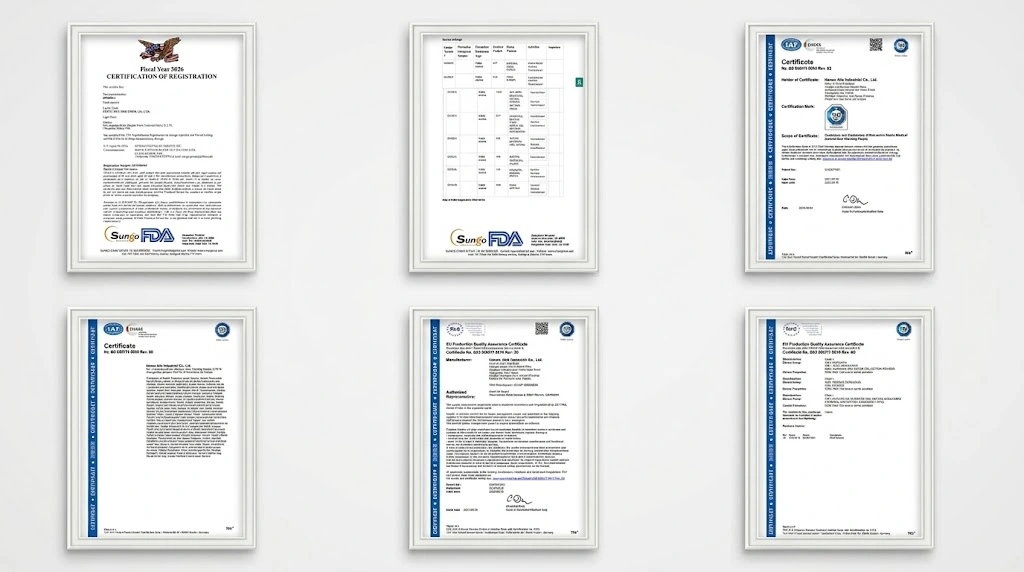
Quality Certifications: CE / ISO13485/ USA FDA
Delivery Time: 30–45 Days (approx.)
Payment Methods: T/T or L/C Accepted
Sterile Medical Grade PVC Urine Drainage Bag with 2000ml Capacity and Bottom Outlet T Valve
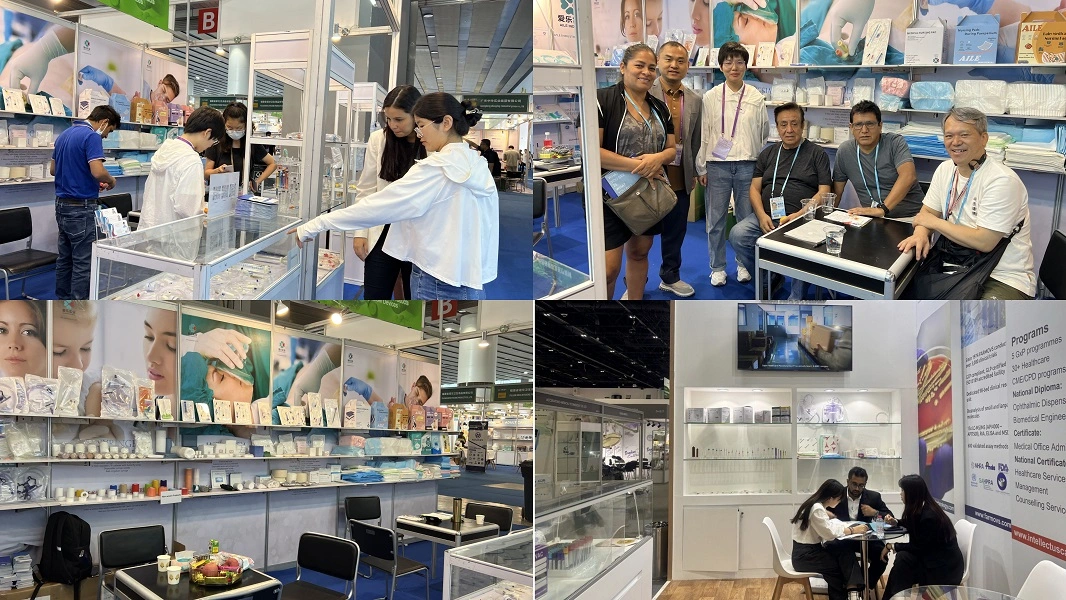
HENAN AILE INDUSTRIAL CO., LTD with over 12 years of medical experience.
We hold certifications, including CE, ISO 13485 & USA FDA.
1. Key Value Propositions
Key Advantages:
-
Single-Handed Splash-Proof Bottom T-Valve: The ergonomic push-slide T-valve mechanism glides smoothly between open and closed positions, eliminating accidental discharge and preventing aerosolized urine splashing.
-
Optical Transparency & High-Contrast Dual Graduation: Manufactured with crystal-clear PVC film and printed with bold, scratch-resistant graduated markings from 100 ml to 2000 ml, allowing immediate bedside assessment of hourly diuresis, turbidity, and sediment.
-
Kink-Resistant Flexible Inflow Tubing: Features reinforced, high-elasticity inflow tubing with a smooth inner bore, maintaining unobstructed gravity flow even if compressed or twisted during patient movement.
-
Needle-Free Sampling Port & Reinforced Suspension: Incorporates a leak-proof sampling port for needle-free syringe access, mitigating sharps injuries while gathering sterile urinalysis samples. Equipped with durable double plastic hanging hooks and auxiliary tie cords.
The Sterile Medical Grade PVC Urine Drainage Bag with 2000ml Capacity and Bottom Outlet T Valve is a professional-grade fluid collection system engineered for intensive care, postoperative drainage, and continuous inpatient urinary management.
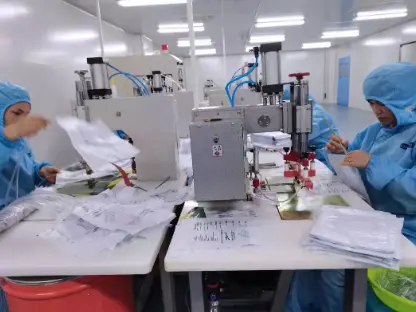
Constructed from heavy-duty, biocompatible medical-grade polyvinyl chloride (PVC) utilizing precision high-frequency heat-welding techniques, this drainage bag ensures high rupture resistance, tear strength, and leak-proof reliability. The high-capacity 2000 ml reservoir significantly minimizes emptying frequency—enabling uninterrupted nocturnal sleep for patients and streamlining clinician workflows. Engineered with an intuitive Bottom Outlet T-Valve, the device provides rapid, splash-free, single-handed fluid evacuation while preserving strict closed-system hygiene.
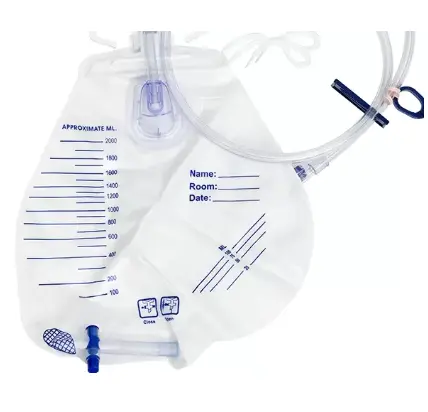
The Sterile Medical Grade PVC Urine Drainage Bag with 2000ml Capacity and Bottom Outlet T Valve is a professional-grade fluid collection system engineered for intensive care, postoperative drainage, and continuous inpatient urinary management.
Constructed from heavy-duty, biocompatible medical-grade polyvinyl chloride (PVC) utilizing precision high-frequency heat-welding techniques, this drainage bag ensures high rupture resistance, tear strength, and leak-proof reliability. The high-capacity 2000 ml reservoir significantly minimizes emptying frequency—enabling uninterrupted nocturnal sleep for patients and streamlining clinician workflows. Engineered with an intuitive Bottom Outlet T-Valve, the device provides rapid, splash-free, single-handed fluid evacuation while preserving strict closed-system hygiene.
2. Product Specifications Table
| Feature / Parameter | Standard Specifications |
| Product Identifier | Sterile Medical Grade PVC Urine Drainage Bag with 2000ml Capacity and Bottom Outlet T Valve |
| Volumetric Capacity | 2000 ml (Graduated scale with distinct increments from 100 ml) |
| Film Material | Medical-grade non-toxic PVC (Double-sheet thickness approx. 0.20–0.22 mm) |
| Drainage Mechanism | Bottom Outlet Push-Pull / Slide T-Valve |
| Reflux Protection | Integrated non-return flutter membrane (Anti-Reflux Valve) |
| Tubing Length & Bore | 90 cm / 120 cm optional; 6.5 mm ID, kink-resistant reinforced design |
| Connector Type | Universal stepped connector with protective cap; needle-free sampling port |
| Bed Attachment | Dual-bracket rigid plastic hanger hooks + reinforced hanging eyelets & cord |
| Sterility | 100% Ethylene Oxide (EO) sterilized; individually peel-pouched |
| Compliance & Standards | Conforms to ISO 8669-2, CE MDR certified, FDA listed |
| Shelf Life | 5 Years under cool, dry, ventilated indoor storage conditions |
3. Material Comparative Analysis: Medical PVC vs. Commodity PVC vs. TPU/EVA
Selecting the right polymer substrate directly dictates structural performance, patient comfort, and cost efficiency:
-
Medical Grade PVC (Selected Material):
-
Formulated from virgin polymer resins compounded with medically compliant, low-toxicity plasticizers. Completely free from offensive odors and cytotoxic leachables.
-
Delivers high dielectric welding strength; seam bonds withstand hydrostatic test pressures exceeding 15 kPa. Offers balanced flexibility, transparency, and crack resistance.
-
-
Commodity / Standard Industrial PVC:
-
Contains unrefined chemical residues and higher levels of volatile phthalates, posing skin irritation and biocompatibility risks.
-
Suffers from inconsistent wall thickness and thermal instability; susceptible to embrittlement, stress cracking, and weld failures during cold transport.
-
-
TPU (Thermoplastic Polyurethane) / EVA (Ethylene Vinyl Acetate):
-
Halogen-free and plasticizer-free materials with outstanding tensile recovery and low environmental impact upon incineration.
-
However, raw resin costs are 300%–500% higher than medical PVC, with narrower thermal welding windows, rendering them less practical for single-use bedside drainage applications.
-
4. Clinical Applications & Target Patient Demographics
Clinical Applications:
-
Operating Rooms & Surgical Recovery: Continuous intraoperative bladder drainage during major abdominal, gynecological, cardiac, or orthopedic procedures.
-
Intensive Care Surveillance (ICU/CCU): Precise hourly fluid output quantification for hemodynamically unstable, septic, or trauma patients.
-
Closed-Circuit Urinary Management: Universal attachment to 2-way and 3-way latex or all-silicone Foley indwelling catheters.
Target Demographics & Clinical Settings:
-
Postoperative and bedridden patients requiring continuous, monitored urinary drainage.
-
Individuals experiencing acute urinary retention, neurogenic bladder, or end-stage urinary incontinence.
-
Secondary/tertiary hospitals, ambulatory surgery centers, sub-acute rehabilitation facilities, and specialized long-term nursing homes.
5. Why Choose This 2000ml T-Valve Drainage Bag?
-
Proven Infection Defense (CAUTI Mitigation): The non-return valve and airtight closed loop create a secure barrier against retrograde bacterial colonisation.
-
Reduced Nursing Burden: The 2000 ml capacity easily absorbs full-night urinary production, cutting down on catheter disconnections and nurse call times.
-
Dependable Kink-Free Drainage: Thick-walled inflow tubing eliminates catheter line occlusion caused by patient repositioning.
-
Enhanced Fluid Containment: The T-valve design provides tactile open/close confirmation, preventing bottom leaks and keeping clinical workspaces clean.

6. (FAQ)
Q1: What makes the Bottom Outlet T-Valve preferable to a simple plug or cross valve?
A1: The T-Valve provides a smooth slide-action mechanism that is easily operated with one hand. Its internal geometry ensures zero residual drop formation, reducing fluid splashing and contamination during emptying.
Q2: Is this drainage bag supplied sterile?
A2: Yes, each unit is sterilized via Ethylene Oxide (EO) gas and sealed within an individual medical-grade peel pouch, ensuring immediate sterility at point of care.
Q3: How does the internal anti-reflux flutter valve work?
A3: The anti-reflux device consists of two thin film flaps sealed within the upper chamber. Fluid passes downward freely under gravity, but reverse pressure forces the flaps flat against each other, physically blocking liquid backflow.
Q4: Will the inflow tube collapse or bend shut if a patient lies on it?
A4: The medical-grade PVC tubing is extruded with optimized wall thickness and internal contouring to resist mechanical kinking, maintaining a continuous drainage lumen even under light compression.
Q5: How should urinary specimens be collected from the sampling port?
A5: Disinfect the needle-free sampling port with an antiseptic wipe, then insert a standard Luer-slip or Luer-lock syringe directly into the port to aspirate fresh urine without needle puncture hazards.
Q6: Can this urine bag be washed, sanitized, and reused?
A6: No. It is designated strictly as a Single-Use Medical Device. Washing and reusing degrades internal valve membranes, increases microbial colonization, and dramatically elevates urinary tract infection risks.
Q7: Does the inlet stepped connector fit all urinary catheters?
A7: Yes. The stepped conical connector is universally molded to fit tightly into standard drainage funnels of 12 Fr through 24 Fr Foley, Nelaton, and external male catheters.
Q8: What is the recommended change frequency for this drainage bag?
A8: Under hospital infection control protocols, closed drainage bags are typically replaced every 7 days, or sooner if sediment build-up, mechanical damage, clouding, or leaks occur.



_1782811410038.webp)