The Key Benefits of Using Disposable Safety Needles in Healthcare
Needlestick injuries are one of the most dangerous risks that healthcare workers have to deal with every day. The disposable safety needle is a revolutionary answer to this problem because it has built-in safety features that greatly lower the risk of accidental punctures and exposure to blood-borne pathogens. With features like retractable cannulas and moving safety shields, these medical-grade devices use cutting-edge tech to keep healthcare workers safe from getting HIV, hepatitis B, and hepatitis C. In addition to keeping hospital staff safe, these needles make patients more comfortable by having very thin walls that are very sharp and cause less tissue damage. They also have to strictly follow global regulatory standards like FDA and ISO 13485.
Understanding Disposable Safety Needles: Definition and Function
What Makes Safety Needles Different from Conventional Needles
Because they have built-in safety features, safety-engineered sharps devices are very different from regular injection needles. These medical tools have either passive systems that work automatically during injections or active designs that need to be activated by the user on purpose to launch protected shields. The engineering behind these devices handles a major safety issue in the workplace: according to data from occupational health, about 385,000 needlestick accidents happen to healthcare workers every year in hospitals alone. When you throw away or handle a traditional needle, the sharp point is left out in the open. This makes it easier for germs to spread.
The ways that different types of devices protect themselves are very different. When the shot is done, retractable features pull the cannula back into the barrel. A shield system with hinges swings a protected cover over the needle tip, and a sheath moves along the length of the needle with sliding sleeve mechanisms. Each system goes through a lot of tests to make sure it always works and locks permanently, stopping further exposure. The Needlestick Safety and Prevention Act forces companies to look at and use safer medical equipment. These engineering advances are directly in response to those rules.
Technical Construction and Material Standards
The cannulas of modern disposable safety needles are made from medical-grade SUS304 stainless steel, which is very resistant to rust and maintains its structural integrity. The ultra-thin wall technology increases the flow rate of medicine while keeping the mechanical power needed for deep tissue penetration. To meet manufacturing standards, needle tips must be precisely ground to make them triple-beveled, which lowers the force needed to penetrate and lessens patient pain. A medical-grade silicone lubrication layer that meets ISO 7864 standards lowers entry resistance and tissue drag even more.
Another important technical factor is the sterilization routines. EO gas cleaning achieves a Sterility Assurance Level of 10⁻⁶, which means that it completely gets rid of bacterial contamination without changing the qualities of the material. Biocompatibility standards set out in ISO 10993 say that the gadgets must not generate heat and contain no DEHP. Hub links meet ISO 80369 standards, which means they work with both Luer Lock and Luer Slip syringe connectors. These technical details have a direct effect on clinical performance, changing everything from the accuracy of the medicine to the comfort of the patient while it is being given.
Core Benefits of Using Disposable Safety Needles in Healthcare Settings
Enhanced Occupational Safety and Injury Prevention
The main benefit of disposable safety needles is that they have been shown to lower the number of needlestick accidents. There is clinical data that shows that when facilities start complete safety needle programs, the number of injuries goes down by more than 60% within the first year. By putting a constant barrier between the dirty needle tip and healthcare workers, the built-in safety shield successfully stops accidental pricks. This safety goes beyond the instant injection moment; it also covers risks during disposal processes, which is when most needle injuries happen.
Being able to activate something with one hand is especially helpful in emergency rooms and critical care units, where nurses have to do a lot of work at once. The improved locking structure lets nurses and doctors lock the safety device without taking their attention off of watching over patients or giving them medicine. This benefit is even more clear in emergency situations involving patients who aren't cooperating or are even fighting, because doctors can protect themselves right away without needing both hands or stable standing. The simple design cuts the time it takes to activate from several seconds to less than one second, which makes exposure areas smaller.
Infection Control and Cross-Contamination Prevention
In addition to keeping healthcare workers safe, safety devices play a big role in preventing infections. When a lot of people are getting care at the same time, the instant shielding of contaminated needle points keeps the surroundings from getting contaminated. This containment feature is especially helpful in labs that work with high-risk specimens because it keeps sharps from getting exposed when people move or bump into things in a busy office. Users can be sure that the permanent locking mechanism won't be activated while they're handling trash because they can hear and see signs that it has been locked.
Sterilization approval under CE and ISO 13485 standards makes sure that medical devices don't have any microbes on them when they get to healthcare facilities. EO gas cleaning can get into complicated device shapes, like the inner channels of needle hubs and safety mechanism parts. This thorough cleaning goes beyond the needle itself and includes all parts that come into touch with medicine or patient tissue. The individually boxed design keeps the product sterile until it is used, which helps hospitals with their infection control programs and meets Joint Commission compliance standards.
Financial Impact and Cost-Benefit Analysis
Disposable safety needles cost more up front than other options, but a full financial study shows that they save a lot of money in the long run. Treatment for a needlestick injury may include instant post-exposure prophylaxis, lab tests, follow-up medical visits, and possibly long-term antiviral therapy. The Centers for Disease Control say that care costs about $3,000 to $7,000 per event on average. High-risk exposures could cost more than $1 million if the disease spreads in the worst way possible and people are sued.
The real cost of needlestick injuries is much higher because of workers' compensation claims, staff replacements during recovery times, and possible lawsuit payouts. When healthcare facilities start safety needle programs, their insurance rates go down because risk management officers see them as proactive steps to avoid injuries. Simplifying the rules for getting rid of sharp objects makes administration more efficient because safety-engineered devices cut down on the need to sort things and reduce the number of cases where sharps containers are overfilled. These operational changes save environmental services staff and nursing staff who are in charge of handling waste streams measured amounts of time.
Types and Selection Criteria of Disposable Safety Needles for Procurement
Device Categories and Clinical Applications
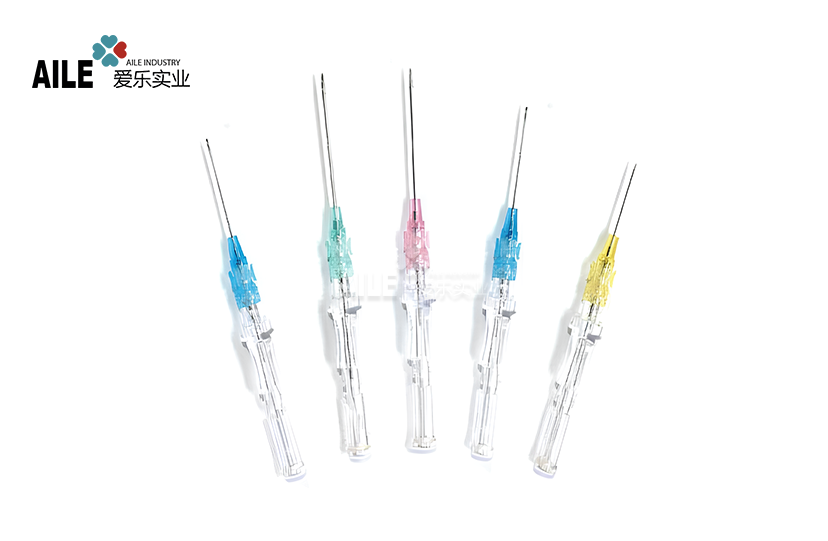
Based on the needs of clinical applications, disposable safety needle shapes are divided into separate groups. When speed and ease of use are most important, retractable systems are perfect for high-volume vaccine programs. This is because the passive activation doesn't require any extra steps from the user beyond the standard injection technique. When exact anatomical targeting is needed, hinged screen designs improve visibility, letting doctors keep visual proof of needle placement before triggering protection. Sliding sheath systems have the smallest appearance, which is useful in places with limited room, like vehicles or homes where healthcare is provided.
The choice of gauge has a big effect on clinical results and patient comfort. Larger gauge sizes (18G–21G) can handle thick medicines and quick fluid giving in emergency situations, while smaller gauges (25G–30G) reduce tissue damage for infant and subcutaneous injections. The AVACARE safety needle line covers the whole range, from 16G to 30G, giving purchasing managers a lot of choices for a wide range of hospital areas. Lengths ranging from 0.5 inches to 1.5 inches allow for release through the skin, the subcutaneous layer, or the muscle in a variety of patient groups.
Supplier Evaluation and Quality Verification
To choose trusted suppliers, you need to look at more than just the product specs. Certifications for manufacturing facilities show how quality management systems and process controls work. Medical device quality management standards, such as design controls, risk management, and post-market tracking, must be followed in order to get ISO 13485 approval. The CE label shows that the product meets the requirements of the European Medical Device Regulation, and the FDA registration shows that it meets the requirements of US legal standards. AVACARE has both CE and ISO 13485 standards, and our 12,000-square-meter production center has rooms that are 100,000 times cleaner.
The production capacity, inventory management systems, and transportation infrastructure should all be looked at in a supplier capability review. The minimum order quantity (MOQ) affects both budget planning and storing needs. AVACARE's MOQ of 20,000 pieces strikes a mix between manufacturing efficiency and easy entry points for mid-sized facilities. The time it takes to get an order and send it affects how inventory is managed. Our normal 30- to 45-day production cycle works with the planning time frames that are common in hospital procurement. Offering both L/C and T/T payment options lets institutions with different buying practices and preferences for foreign transactions work together.
Streamlined Procurement Strategies for Disposable Safety Needles
Building Strategic Supplier Partnerships
Long-term stability in the supply chain relies on building partnerships with makers who know what healthcare operations need. Pricing systems that are clear make it possible to make accurate budget projections and stop sudden changes in costs that mess up financial planning. Volume discount programs reward loyalty while lowering the cost per unit. This makes it easier for facilities on a tight budget to adopt disposable safety needles. AVACARE's OEM/ODM services let you change the languages used on the package, parts of the branding, and even small parts of the design to fit institutional guidelines or local regulatory needs.
Transactional vendors are different from superior providers because they don't offer technical help services. Full product training makes sure that hospital staff know how to properly activate the device, which maximizes safety benefits and reduces user mistakes. Supporting various healthcare workforces, demonstration videos and multilingual instruction guides cut down on training time and make it easier to check that people are competent. Our 24-hour quick response system takes care of important questions or supply situations right away, so procurement managers can be sure that problems with operations will be fixed right away. Evaluation groups can do hands-on tests before committing to large-scale buying when samples are available upon request.
Quality Assurance in Procurement Workflows
Healthcare facilities can avoid using substandard devices that could harm safety programs by putting in place strong quality testing processes. The Certificate of Analysis paperwork shows that each production batch meets the required standards for size, triggering force, and cleanliness. Batch tracking systems let you quickly fix problems with quality by isolating the affected goods and stopping the spread of faulty units to many other locations. AVACARE's quality management system keeps detailed records that show the full supply chain, from the lots of raw materials used in the production process to the end distribution.
Incoming inspection procedures should check the soundness of the package, the accuracy of the labels, and the sufficiency of the expiration dates. Random sampling from shipments that have been received lets safety devices be tested to make sure that triggering forces are within acceptable ranges and locking systems work consistently. Performance standards, such as penetration force tests, make sure that needles are sharp, which keeps tissue damage to a minimum and patient pleasure at its highest level. These quality checkpoints fit right in with how hospitals normally receive goods, adding little to no extra work for staff while greatly lowering the number of nonconforming products that are accepted.
Regulatory Compliance and Safe Disposal Practices for Disposable Safety Needles
Navigating Global Regulatory Requirements
International rules on medical devices make it hard for buying workers to stay in line when they buy goods from other countries. In order to get FDA 510(k) clearance in the US, makers have to show that their products are substantially equivalent to existing devices. This can be done by checking their performance and making sure they are biocompatible. For European products to get the CE mark, the Medical Device Regulation (MDR) says they need to have a lot of technical paperwork, like clinical evaluation reports and plans for after the product goes on sale. AVACARE's dual certification makes it easier for centers that work in more than one state or in foreign healthcare networks to follow the rules of disposable safety needles.
The Bloodborne Pathogens Standard from OSHA says that safer medical devices must be evaluated every year, and healthcare companies must show that they have thought about and put in place technical controls like safety needles. Compliance officers have to keep track of needlestick accidents, review exposure control plans, and show that field healthcare workers' opinions are taken into account when choosing devices. For these legal requirements, the procurement paperwork needs to include seller certifications, product testing results, and proof that clinical staff took part in the evaluation. Our complete technical paperwork package helps with these legal tasks, making the work of the quality and regulatory affairs departments easier.
Environmental Responsibility and Waste Management
Properly throwing away sharps protects not only the people who use them but also people who work with trash, environmental services, and community cleaning. Rigid sharps containers that meet OSHA and EPA standards keep needlestick injuries from happening during shipping and treatment because they can't be punctured. Safety-engineered devices lower the amount of sharps containers that need to be used because protective shields stop needle points from sticking out of containers that are too full. This bulk economy means that less trash needs to be hauled away, which saves money in the long run.
Different areas have different ways of getting rid of trash, but the main ones are burning, autoclaving, and chemical cleaning. Safety needles are treated the same way as regular sharps, so they don't need to be handled in a special way that could make removal more difficult. The individually packaged design helps separate waste correctly, so infected and non-infectious waste streams don't mix, which could make cleaning more expensive. In healthcare facilities that are trying to be more environmentally friendly, fewer needlestick injuries help reach bigger environmental goals by getting rid of dangerous drug waste from post-exposure prevention medicines and lowering the carbon footprint of medical care related to injuries.
Conclusion
Disposable safety needles make the workplace safer, stop infections, and run more smoothly, which are the things that healthcare buying decision-makers care about the most. Because they are new in terms of engineering, follow the rules, and have been shown to reduce injuries, these gadgets are necessary parts of modern healthcare systems. Carefully choosing suppliers, making sure products are of good quality, and planning purchases strategically can help get the best return on investment while also protecting healthcare staff. As rules and safety standards get stricter and more complicated for healthcare centers, it's important for programs to work with certified makers who can provide full technical support and a reliable supply chain.
FAQ
Are safety needles sterile when received?
All AVACARE Disposable Safety Needles are sterilized with EO gas and come in individually sealed packages to keep them that way until they are used. Each box has a sterility sign and an expiration date. Our normal shelf life is five years from the date of creation, as long as the product is stored properly.
How do safety needles differ from safety syringes?
Standard syringes can be used with safety needles, which have safety features built into the needle itself. Safety syringes, on the other hand, have both the needle and the barrel built into a single device. Needle-only designs are better in many professional situations because they give you more options for processes that need to change syringes or mix medications.
What happens if the safety mechanism fails to activate?
Quality control tests make sure that activation frequency is higher than 99.9%, but if an activation device breaks down, it should be put in a sharps container right away and reported through your facility's adverse event system. AVACARE keeps track of each lot, which lets any known problems be looked into quickly.
Partner with AVACARE: Your Trusted Disposable Safety Needle Supplier
When buying healthcare supplies, you need more than just reasonable prices. You also need to work with makers who are dedicated to quality, compliance, and quick service. Every disposable safety needle that AVACARE makes is the result of ten years of experience making medical devices. We use ISO 13485 quality management, CE approval, and seven national patents to protect our innovations. Our Class II medical device portfolio serves hospitals, surgery centers, and clinical care facilities in over 100 countries. It is backed by strong logistics skills, such as emergency supply support and full shipping insurance. Email our technical team at admin@aileindus.com to get samples, talk about OEM customization options, or get volume pricing that fits the needs of your building.
References
1. Centers for Disease Control and Prevention. (2020). Sharps Safety for Healthcare Settings. National Institute for Occupational Safety and Health Publication Series.
2. International Organization for Standardization. (2016). ISO 13485:2016 Medical Devices — Quality Management Systems. Geneva: ISO Standards Publications.
3. Occupational Safety and Health Administration. (2019). Bloodborne Pathogens and Needlestick Prevention Standards. U.S. Department of Labor Regulatory Guidelines.
4. American Nurses Association. (2018). Safe Needle Devices: Protecting Healthcare Workers. Journal of Clinical Nursing Practice, Volume 12.
5. World Health Organization. (2017). WHO Best Practices for Injections and Related Procedures Toolkit. Geneva: WHO Press.
6. European Parliament and Council. (2010). Directive 2010/32/EU on Prevention of Sharps Injuries in Hospital and Healthcare Settings. Official Journal of the European Union.

_1782811410038.webp)