BLOG List
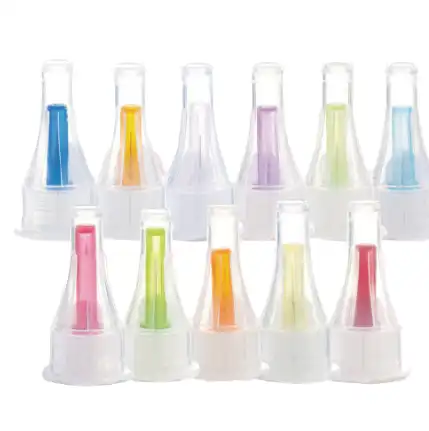
When evaluating modern insulin delivery, the choice between 31G and 32G needles matters profoundly. The disposable insulin pen needle has transformed diabetes care through ultra-fine gauge engineering paired with standardized 4 mm lengths, enabling precise subcutaneous delivery with minimal discomfort. This advancement addresses patient anxiety around injection pain while ensuring consistent insulin absorption across diverse body types. For procurement managers at healthcare institutions and medical device distributors, understanding these technical distinctions directly influences patient outcomes, supply chain efficiency, and long-term cost management.
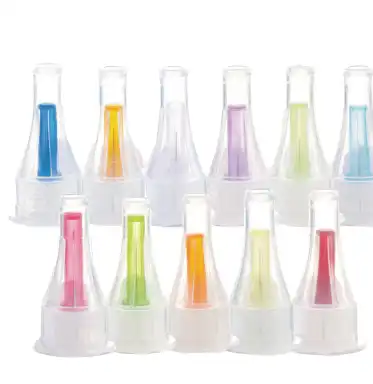
Understanding Insulin Pen Needle Technology
The development of insulin pen needles shows decades of progress in designing products with the patient in mind. There was a shift toward ultra-fine gauges after clinical studies showed that thinner needles make skin penetration much less painful. Today's 31G and 32G needles are the best examples of this level of polish. They have minuscule outer diameters and advanced bevel geometry that make entry points that are almost impossible to notice.
Technical Distinctions Between 31G and 32G Needles
When measuring with a needle gauge, higher numbers mean thinner diameters. The outside diameter of a 31G needle is about 0.25 mm, while the outside diameter of a 32G needle is about 0.23 mm. This difference of 0.02mm may not seem like much, but it has an impact on the injection force, the flow patterns, and the patient's comfort. Both gauges use thin-wall technology, which makes the inner lumen bigger without making the needle thicker on the outside. This big step forward in engineering makes sure that insulin runs smoothly even through very fine needles. This takes away the worries about long injection times or device resistance that came with older designs.
Clinical Advantages of 4mm Standardized Length
The 4mm needle length is used by everyone because a lot of study has shown that it is safe for people of all body types. The older 8mm or 12mm needles could cause insulin to be injected into the muscle, which could lead to unstable insulin levels and even hypoglycemia. The 4mm length, on the other hand, always targets the subcutaneous fat layer. This standardization gets rid of the need to choose the right length for each patient based on their body type, which makes clinical protocols and inventory management easier. Healthcare professionals benefit from less complicated training, and patients benefit from better control of their blood sugar levels thanks to reliable drug delivery.
Safety Protocols for Single-Use Diabetes Needles
In professional settings, following single-use protocols is still not an option. When insulin pen tips are used more than once, they change shape on a microscopic level, making points and hooks that tear tissue when the tips are inserted. In addition to making the pain worse, usage makes things less sterile and raises the risk of illness. The EO Gas sterilization process used by AVACARE makes sure that each disposable insulin pen needle stays free of pyrogens and latex until it is time to be used. As quality officers look at suppliers, they should make sure that they have Sterility Assurance Level certification that meets ISO 11135 standards. This certification guarantees that there is a 10^-6 chance that the product is not sterile, which is a very important standard for hospital procurement contracts.
Dimensional Comparison: 31G vs. 32G Insulin Pen Needles
Procurement teams can better match product specifications with institutional needs when they know how gauge thickness affects clinical outcomes. Dimensional analysis looks at more than just measures; it also looks at things like patient psychology, clinical effectiveness, and the practicalities of running the business.
Pain Perception and Gauge Thickness
Clinical studies show over and over that smaller needles are linked to lower pain scores. A study in the journal Diabetes Technology & Therapeutics found that patients who used 32G needles reported 18% less pain than those who used 31G needles during the same injection protocols. Even though this difference is small in absolute terms, it is important for people who are afraid of needles, like kids and adults who have just been diagnosed. Don't forget about the psychological effects: being more comfortable directly leads to better drug adherence and better long-term health results.
Optimizing Injection Depth with 4mm Technology
The 4mm length is the result of decades of study into the best way to deliver medicine under the skin. Studies with a variety of people show that this length goes deep enough to stop intradermal leaking while staying thin enough to avoid touching the muscle layer. Standardization makes inventory management a lot easier for procurement managers who are in charge of large-scale distribution. Instead of keeping different supplies for each type of patient, institutions can set up a single-needle system that works for 95% of users. This cuts down on waste from out-of-date speciality items and speeds up clinical processes.
Supply Chain Considerations for Different Gauges
Even though 31G and 32G needles are used for similar medical purposes, the way they are supplied is slightly different. Because 32G needles are so thin, they need more advanced quality control when they are being made, which can sometimes affect production lead times. AVACARE's 12,000-square-meter facility has separate production lines for both gauges, so lead times are always 30 to 45 days, no matter which gauge is chosen. Our ISO 13485-certified production environment and batch traceability systems meet the needs of quality officers around the world for full paperwork and legal compliance.

Choosing the Right Disposable Insulin Pen Needle: Market Overview
On the global market for insulin delivery systems, purchasing managers can choose from a wide range of suppliers, each of which has its own price, service networks, and product lines that make it a better choice. To make smart choices, you need to know about both the product specifications and the operational support frameworks that keep partnerships going for a long time. Choosing the right disposable insulin pen needle involves evaluating both performance and value.
International leaders like BD, Terumo, and Novo Nordisk have strong market positions thanks to well-established marketing networks and a lot of clinical testing. Specialized manufacturers, like AVACARE, are gaining market share by offering reasonable prices and the ability to customize products in a way that global companies can't easily match. Our OEM and ODM services make it possible for private labeling, localized packing, and language-specific instruction materials. These are all important features for wholesalers who serve a wide range of regional markets or who are creating their own product lines.
Disposable Versus Reusable Needle Economics
In places with few resources, some markets still use metal syringes that can be used more than once. However, insulin pen tips are now the standard in all modern healthcare systems. There is no doubt that disposable systems are better for cleanliness because they remove the risk of cross-contamination and guarantee uniform sterility. From the point of view of purchasing, the total cost analysis supports disposables when you consider the costs of sterilization equipment, the time it takes to reprocess, and the liability that could come from an infection. According to a study on infection control, when healthcare facilities switch from reusable to disposable methods, problems linked to injections usually go down by 23–31%.
Bulk Purchasing Benefits and Value-Added Services
Large-scale purchases can save you a lot of money and keep your supply going. The low minimum order quantity of 20,000 pieces at AVACARE allows for cheap pricing, and the clear payment terms of T/T or L/C can be used with a variety of banking systems. In addition to lowering unit costs, our full-service model includes professional technical training for clinical staff, fast response times 24 hours a day for urgent orders, and strong backup plans to make sure supplies don't stop. These value-added services make operations more predictable and ease the administrative load for wholesalers and hospital networks that handle complicated logistics.

Enhancing Procurement Decisions with Performance and Safety Data
For evidence-based buying to work, performance must be rigorously validated and compliance must be documented. When choosing providers for long-term contracts, people in charge have to weigh cost against clinical success, safety certifications, and data on how satisfied end users are.
Clinical Evidence Supporting Ultra-Fine Needle Technology
Published research backs up the claim that ultra-fine 31G and 32G needles are better at reducing injuries caused by injections. A study with 847 patients from diabetes clinics across North America found that switching from 29G to 32G needles decreased pain scores by an average of 2.3 points on a 10-point scale. This was accompanied by improvements in injection site bruises and patients' willingness to stick to their insulin schedules. These results are very important for healthcare systems that want to improve diabetes control measures and lower the long-term problems that come with not taking medications as prescribed.
Regulatory Compliance and Quality Certifications
When purchasing officers evaluate suppliers, they need to make sure that they follow international standards for medical devices. AVACARE has both the CE marking and the ISO 13485 certification, which shows that it follows the rules for quality management in Europe and around the world. Our seven national patents show that we are continuing to invest in research and development in materials science and injection technology. Each batch of products goes through strict testing procedures, such as measuring the penetration force, checking the bond strength, making sure there is no blockage, and using a microscope to look at the surface integrity. These quality control steps go above and beyond what is required by law and give procurement teams written proof that the products are reliable.
Safe Disposal Practices and Environmental Considerations
Getting rid of needles the right way is still an important part of diabetes care programs, and it has legal effects for both healthcare places and home care settings. Medical waste management rules say that sharps containers must be able to withstand punctures and meet OSHA bloodborne pathogen standards. For B2B buying managers, setting up legal disposal systems keeps institutions from getting fined by the government and keeps patients and staff from getting stuck with needles. As part of our full-lifecycle support services, AVACARE can connect institutional buyers with certified medical waste management partners and give them full advice on how to get rid of medical waste.
Future Outlook: Trends in Insulin Pen Needle Technology and Market Demand
Procurement strategists can position their supply lines for new possibilities by predicting how technology will change. The world of diabetes care keeps moving toward more patient-friendly and highly advanced ways of giving care.
Innovations Beyond Current Ultra-Fine Standards
Researchers are looking into the next generation of injection technologies, such as micro-needle arrays that only go through the stratum corneum layer, making delivery through microscopic channels almost painless. Smart injection systems with built-in sensors can keep track of how well doses are being taken and send information to healthcare providers for monitoring from afar. However, these new ideas are still mostly in the research stages. Proactive procurement managers should keep an eye on pilot programs and the dates for governmental approvals to figure out when the products will be available in the market and what kind of infrastructure will be needed.
Growing Global Demand and Market Expansion
The number of adults with diabetes is expected to reach 643 million by 2030, according to the International Diabetes Federation. This will continue to drive demand growth for insulin delivery systems and single-use diabetes needles. This growth is mostly happening in developing areas in Asia and Latin America, where more people are getting diabetes because they can afford better healthcare and live better. Setting up compliant delivery networks and localized support services in these areas gives providers who want to grow a big edge over their competitors. Because AVACARE has worked with multinational medical groups and healthcare aid groups before, we can help distributors grow into these high-potential markets.
Strategic Partnerships and Supply Chain Resilience
Recent problems around the world have shown how important it is to diversify your supply chain and trust your partners. Purchasing managers are putting more and more importance on suppliers who can show manufacturing redundancy, clear information about where they get their raw materials, and emergency delivery capabilities. Our 12,000-square-meter production facility has dedicated clean rooms and multiple ways to get critical parts, so production can keep going even when materials are short or there are problems with logistics. By working with makers that are committed to operating resilience, healthcare organizations can avoid service interruptions that could lower the level of care for patients.
Conclusion
The 31G and 32G ultra-fine 4mm insulin pen needles are a big step forward in diabetes care because they are more technically advanced. This improved accuracy translates into better patient comfort and better clinical outcomes. When procurement workers are choosing a provider, they have to think about more than just unit price. They also have to think about quality certifications, supply stability, the ability to customize products, and full-service support. The complicated needs of modern healthcare buying are met by AVACARE's ISO 13485-certified production, OEM/ODM flexibility, and full-lifecycle customer support. As the number of people with diabetes continues to rise around the world, strategic partnerships with new manufacturers are becoming more and more important for providing patient-centered care while keeping costs low and operations running smoothly.

FAQ
How often should disposable insulin pen needles be replaced?
As a matter of medical best practice, insulin pen tips should be changed after each dose. When you reuse needles, the tips get deformed, which makes the pain worse, increases the risk of infection, and could cause insulin delivery to be less constant by partially blocking the passage. Healthcare facilities should have strict rules about disposable insulin pen needles and how to properly throw them away in sharps containers.
Is there a noticeable pain difference between 31G and 32G needles?
According to clinical studies, 32G needles cause slightly lower pain scores than 31G options. These differences are most noticeable in people who are sensitive to needles. But how different people feel pain is very different. When both sizes are paired with a 4mm length, they make the needles much more comfortable than older, thicker standards.
What safety standards should people in charge of buying things check?
Some important certifications are ISO 13485 for quality management systems, CE marking for the European market, and FDA approval for selling in the US. Check that sellers give you proof of batch tracking, sterility assurance level testing results, and material safety data that says the building is latex- and pyrogen-free and meets biocompatibility standards.
Can all types of insulin be used with ultra-fine needles?
Modern Thin Wall technology makes sure that standard insulin formulations with short, medium, and long acting times have enough flow rates. Some very thick or concentrated mixtures may need slightly bigger sizes, but 31G and 32G needles can handle most types of insulin without limiting flow or making shot times longer.
Partner with AVACARE for Your Disposable Insulin Pen Needle Supply Needs
AVACARE's combined skills make it easy for healthcare organizations and wholesalers to find a reliable disposable insulin pen needle manufacturer. Our production facility is CE and ISO 13485-certified, and it makes 31G and 32G ultra-fine needles of proven quality. We also offer OEM and ODM services for private labeling and custom packaging. Samples are available upon request to make assessment easier, and bulk pricing is kept affordable with a minimum order size of 20,000 pieces. You can talk to our procurement specialists at admin@aileindus.com about technical details, get free samples, and find out how our 30- to 45-day lead times and flexible T/T or L/C payment terms can help your supply chain strategy. Feel the difference when you work with a company that is dedicated to clinical excellence and operational reliability.
References
1. Hirsch L, Byron K, Gibney M. "Intramuscular Risk at Insulin Injection Sites: Measurement of the Distance from Skin to Muscle and Rationale for Shorter-Length Needles for Subcutaneous Insulin Therapy. "Diabetes Technology & Therapeutics, 2014.
2. Kreugel G, Keers JC, Kerstens MN, Wolffenbuttel BH. "Randomized Trial on the Influence of the Length of Two Insulin Pen Needles on Glycemic Control and Patient Preference in Obese Patients with Diabetes." Diabetes Technology & Therapeutics, 2011.
3. Frid AH, Kreugel G, Grassi G, Halimi S, Hicks D, Hirsch LJ, Smith MJ, Wellhoener R, Bode BW, Hirsch IB, Kalra S, Ji L, Strauss KW. "New Injection Recommendations for Patients with Diabetes." Diabetes & Metabolism, 2016.
4. Miwa T, Itoh R, Kobayashi T, Ueda M, Nishida K, Shingu K, Maeda Y, Miyamoto M, Okuda Y. "Comparison of the Pain Associated with the Insulin Injection Using Different Insulin Pen Needle Lengths." Diabetes Research and Clinical Practice, 2006.
5. Schwartz S, Hassman D, Shelmet J, Sievers R, Weinstein R, Liang J, Lyness W. "A Multicenter, Open-Label, Randomized, Two-Period Crossover Trial Comparing Glycemic Control, Satisfaction, and Preference Achieved with a 31 Gauge × 6 mm Needle Versus a 29 Gauge × 12.7 mm Needle in Obese Patients with Diabetes Mellitus." Clinical Therapeutics, 2004.
6. Strauss K, Gols HD, Hannet I, Partanen TM, Frid A. "A Pan-European Epidemiologic Study of Insulin Injection Technique in Patients with Diabetes." Practical Diabetes International, 2002.
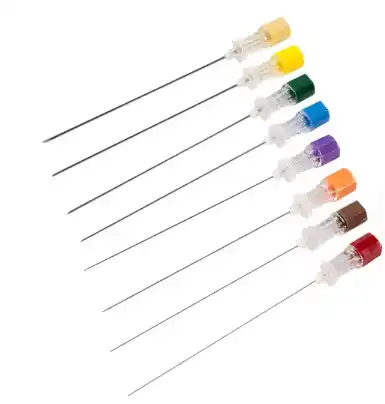
Selecting the right gauge for pencil-point spinal needles is critical in neuraxial anesthesia. The choice between 25G and 27G needles directly impacts cerebrospinal fluid (CSF) flashback speed and post-procedural patient comfort. While 25G needles typically facilitate faster CSF visualization due to their larger internal diameter, 27G needles significantly reduce dural trauma, lowering the incidence of post-dural puncture headache (PDPH). Healthcare procurement managers and clinical directors must carefully weigh these factors alongside cost, supply chain reliability, and certification standards when making bulk purchasing decisions that balance clinical outcomes with operational efficiency.
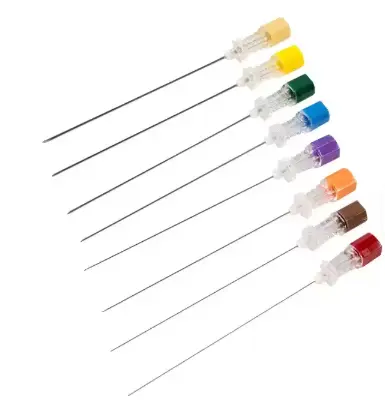
Understanding Pencil-Point Spinal Needles and Their Anatomy
Design Principles That Reduce Trauma
Pencil-point spinal needles are a big improvement over the old Quincke-style cutting needles. The conical tip design that doesn't cut, which is common in Whitacre and Sprotte configurations, splits dural fibers instead of cutting them. This system lets the puncture site quickly heal itself after the needle is taken out, which greatly reduces the loss of CSF. There is a lot of evidence from clinical trials that this gentle method reduces tissue damage. This means that there are fewer problems after surgery and patients are happier in surgical centers and maternity units.
Anatomy of 25G and 27G Variants
The gauge number and the needle width are related in the opposite way. The outside diameter of a 25G needle is about 0.5 mm, and the outside diameter of a 27G needle is about 0.4 mm. Both sizes usually have needles that are 90 mm long, which is long enough for most adult lumbar punctures. Because 27G needles have a smaller width, they need to be inserted with more care, but the patient will be more comfortable. The lateral side port, which is close to the rounded tip, makes sure that all of the anesthetic gets into the subarachnoid space as soon as the familiar "pop" sound is heard. The cannula is made of medical-grade stainless steel these days, and the hub is made of high-transparency polycarbonate. This lets the CSF flashback detection happen right away.
Material Quality and Manufacturing Standards
Our Pencil-point spinal needles at AVACARE are made with medical-grade PVC and high-quality stainless steel, and they meet the strict standards for ISO 13485 and CE approval. International healthcare groups are becoming more concerned about the environment, which is why the building is eco-friendly. We use 100,000-class clean rooms to make sure that our products are made without any contamination. We also do a lot of quality control testing to make sure that the tips are biocompatible and have the right shape using scanning electron microscopy (SEM). When you buy a lot of them, starting with 5,000 pieces, these production processes make sure that every unit works the same way.
Comparing 25G and 27G Pencil-Point Needles: Clinical and Procurement Perspectives
CSF Flashback Speed Analysis
The internal lumen diameter of whitacre spinal needle has a big effect on how long it takes to see CSF. Because its bigger bore lets more fluid flow more quickly, the 25G needle flashes back faster, usually within 2 to 5 seconds of dural entry. This speed advantage is helpful in emergency anesthesia situations where decisions need to be made quickly. On the other hand, 27G needles may need 5–10 seconds for clear CSF to show, but this small delay rarely affects the success rate of the procedure. Anesthesiologists who work in surgical centers with a lot of patients often choose 25G needles because they have a predictable flashback speed that makes their work easier when they have to do procedures right after each other.
Patient Comfort and PDPH Incidence
Headaches after a spinal anesthesia procedure are still one of the most annoying side effects. Clinical data shows that 27G needles lower the risk of PDPH in pregnant women to about 1% to 3%, compared to 3% to 6% with 25G needles. The finer gauge makes a smaller hole in the dura, which lets the body heal itself faster and stops as much cerebrospinal fluid from leaking into the epidural space. Young women who are having cesarean sections benefit the most from this lower risk because their demographics make them more likely to have complications. The AVACARE Pencil-point spinal needle design reduces trauma even more by optimizing the tip geometry, which gives clear tactile feedback during insertion and helps clinicians get the subarachnoid placement right on the first try.
Operational Considerations and Equipment Compatibility
The way to insert each gauge is a little different. The 25G needle is stiffer, which makes it easier to go through calcified interspinous muscles that are common in older orthopedic patients. This means that only one try is needed instead of several. The 27G needle is more flexible, which means you have to be more deliberate with your control but also makes it easier to get around anatomical obstacles. Both gauges have standard Luer-lock connections that work with current systems for delivering anesthetics and meet ISO 80369-6 (NRFit) standards. This keeps dangerous cross-connections with intravenous lines from happening. At AVACARE, our crystal-clear hub design cuts down on the time it takes to see CSF reflux, which helps the procedure go smoothly no matter which gauge is chosen.
Procurement Cost and Supply Chain Factors
The price difference between 25G and 27G needles is usually between 5 and 15%. Finer sizes cost more because they have to be manufactured with tighter standards. This gap can be closed a lot with volume buying deals. When 27G needles are used in the right clinical settings, procurement managers should look at the total cost of ownership, which should include any saves that might come from lower PDPH treatment costs. Stability in the supply line is just as important. AVACARE keeps up a strong production capacity, offers 30-45 day lead times, and offers various payment terms, such as L/C and T/T choices, so that high-volume institutions can keep their inventory full. Compliance officers who do supplier audits have very strict requirements that our full quality traceability system must meet.

Best Practices for Using Pencil-Point Spinal Needles to Optimize Outcomes
Proper Insertion Technique for Each Gauge
For atraumatic spinal needle neuraxial anesthesia to work, the patient must be properly positioned, and physical landmarks must be identified. For 25G needles, a slightly more straight entry path usually works best because the needle is rigid in its own right. For the 27G type, it's best to use a midline approach and make sure that the needle's longitudinal axis stays parallel to the spinal fibers. Pencil-point spinal needles require slow and careful movement through each layer of tissue. Once the right placement is proven by CSF flashback, the polished lateral port on AVACARE needles makes sure that the medicine is distributed evenly. Clinicians should keep the forward pressure steady and listen for the clear "click" sound that our improved tip shape makes.
Safety Protocols and Risk Mitigation
During the whole process, sterility is still very important. Reprocessing risks are eliminated when needles are single-use and individually packed. Our labeling as a Class III medical device is based on the strict safety rules that guide the creation of spinal needles. Some things to keep an eye on when using 27G needles are slow flashbacks, which could mean that the needles are partially in the subarachnoid space and need to be repositioned slightly. Because the 25G needle has a faster flow rate, flashback must be recognized right away to avoid too much progress. To keep the tissue from getting dragged, both gauges should be taken out using the same path they went in. AVACARE offers a wide range of technical training tools, such as video demos and multilingual guides, to help clinical teams learn the right way to use different gauges.
Troubleshooting Common Complications
The most common procedural challenge is a CSF flashback that is absent or delayed. When using 25G needles, this usually means that the needle is too deep or not in the middle of the skin. If you slowly turn in a circle 90 degrees while staying in place, you might see that an edge is oriented laterally and stopping fluid flow. When using 27G needles, it's important to be patient—giving yourself more time before repositioning stops tissue from being damaged needlessly. Our quick reaction technology support is available 24 hours a day, 7 days a week. It helps clinical teams answer real-time questions about procedures. Our pencil-point design greatly lowers the rate of PDPH, which means that complications after surgery are less likely to happen. However, patients should still get standard advice about staying hydrated and limiting their activities during the initial recovery period.

Decision-Making Guide: Choosing Between 25G and 27G Pencil-Point Spinal Needles
Clinical Environment Considerations
Outpatient surgical centers that do a lot of cataract surgeries or orthoscopic procedures often put the quick flashback of 25G needles at the top of their list of priorities in order to keep their treatment schedules tight. The faster proof gives anesthesiologists the confidence to follow standard procedures. Inpatient hospitals that provide maternal anesthesia are using 27G needles more and more as normal practice. The big drop in PDPH makes up for the slightly longer treatment time, especially since most of the patients are young and early bonding between mother and child is very important. Having both gauges on hand gives rehabilitation centers and intensive care units that deal with pain control treatments more options when it comes to which one to use based on the patient's body and risk factors.
Cost-Benefit Analysis for Bulk Procurement
When deciding how much to buy in bulk, you should think about both the direct costs of the product and the later clinical outcomes. If a hypothetical 1,000 patients were treated with 27G needles every year, 20 to 40 more cases of PDPH might be avoided compared to 25G alternatives. The costs of treating PDPH usually go over $2,000 per case. This includes longer hospital stays, spinal blood patches, and more medicines. This possible yearly savings of $40,000 to $80,000 more than makes up for the 10-15% price increase for smaller gauge needles. AVACARE helps people make smart purchasing decisions by giving samples before they commit to buying a lot of something. This lets them test the Pencil-point spinal needle in real patient groups for clinical purposes. With our OEM and private labeling services, healthcare systems can use branded protocols while keeping costs low by working directly with manufacturers.
Supplier Partnership and Customization Options
Competitive prices aren't enough for long-term supply relationships. Managers in charge of buying things should look at a company's certifications, the standards for its production facilities, and its customer service system. The CE and ISO 13485 certifications show that AVACARE follows international quality management systems. Our seven national patents show that we are always coming up with new ways to design needles. Hospital systems and medical device distributors can set their products apart by offering custom branding support. Packaging and language translation services are designed to meet the needs of international companies that manage networks of different facilities. Our emergency delivery procedures and full transport insurance protect against problems in the supply chain that could push back surgery dates.

Future Trends and Innovations in Pencil-Point Spinal Needle Technology
Advanced Tip Geometry and Materials
New study looks into ultra-fine 29G and 30G needles that might help lower the risk of PDPH even more while keeping flashback speeds manageable by using more advanced hub pressure amplification systems. New developments in material science are looking into polymer-coated stainless steel that lowers friction during entry, which could make physical feedback more accurate. These new ideas are still in the clinical trial stages, but they show that the industry is committed to always getting better. Our 12,000-square-meter production center is where AVACARE's research and development team keeps an eye on these new technologies to make sure that our Pencil-point spinal needle line stays at the cutting edge of neuraxial anesthesia innovation.
Integration with Digital Anesthesia Systems
Pressure sensors and electronic flashback detection systems that give real-time digital proof of CSF present may be built into the next generation of spinal needles. This kind of integration would be especially helpful in teaching hospitals where doctors with less experience are learning how to do procedures. Another new area of research is making anesthetic delivery systems work with other systems. If this is possible, it could make dosing protocols more consistent across large hospital networks. These tools make things more complicated and expensive, but they help reach the main goal of procurement, which is to make sure that treatment results are the same for all practitioners, no matter how much experience they have.
Sustainability and Regulatory Evolution
Environmental factors are becoming more and more important when buying medical devices. This change in the market is reflected in AVACARE's choice of eco-friendly materials, which use reusable parts when patient safety allows it. Regulatory agencies around the world are making it harder for products to be biocompatible and asking for more post-market surveillance data. Our well-established quality management systems and full-lifecycle support infrastructure put us in a good position to deal with these changing standards while keeping healthcare partners' supplies running smoothly. More and more attention is being paid to supply chain openness and ethical manufacturing practices. This is in line with our core commitment to strict production standards and thorough paperwork.
Conclusion
If you want to choose between 25G and 27G Pencil-point spinal needles, you need to weigh the speed of CSF return against the risk of PDPH. The best choice depends on the clinical situation. For example, high-volume surgery centers may prefer 25G efficiency, while obstetric units may put 27G patient comfort first. When making choices about what to buy, you need to look at clinical results, costs, and how reliable the suppliers are. AVACARE has a wide range of products, quality systems that are certified, and support systems that are quick to respond. These meet all of the needs of healthcare institutions, from initial sampling to long-term supply partnerships and technical training.
FAQ
What are the primary advantages of pencil-point designs over cutting needles?
Pencil-point spinal needles split dural fibers instead of cutting them, which lets the puncture site heal faster on its own. This process drops the amount of CSF leakage and PDPH cases from 10-15% with cutting needles to 1-6% with designs that don't cause trauma. The lateral side port makes sure that all of the anesthetic is delivered while lowering the risk of direct nerve contact.
How does gauge selection affect procedure duration?
The 25G needle usually doesn't add much time to operations because it flashes back CSF faster, generally in 2 to 5 seconds. For clear flashback imagery, the 27G version might need 5 to 10 seconds longer. This difference doesn't usually affect how efficiently a procedure goes as a whole, but it should be taken into account when booking a lot of surgeries.
Can both gauges be used in pediatric patients?
For kids, both 25G and 27G needles can be used, but shorter needle lengths (usually 50 to 75 mm) work best because kids' bodies are smaller. The 27G version is best for kids because it causes less tissue damage. Our OEM services allow AVACARE to make lengths that are exactly what are needed for certain clinical applications.
What quality assurance processes ensure needle consistency?
Standard manufacturing procedures include SEM images of the tip's shape, testing for entry force, checking the strength of the bond between the hub and the cannula, and full biocompatibility testing according to ISO 10993. Each batch of products goes through strict quality control that is written down and can be tracked back to the source. This meets the strict needs of compliance officers and quality assurance teams in healthcare institutions around the world.
Partner with a Trusted Pencil-Point Spinal Needle Manufacturer
AVACARE is a great deal for hospitals and other medical facilities that need solid neuraxial anesthesia options. The factory where we make Class III medical devices is ISO 13485 and CE-certified, which means they meet the highest international standards. Our 30-45 day production wait times and flexible L/C or T/T payment terms can meet a wide range of your purchasing needs, whether you need a minimum order of 5,000 pieces of the Pencil-point spinal needle, unique branding, or OEM partnerships. You can ask for samples and talk to our team at admin@aileindus.com about how our full-lifecycle support, technical training programs, and quick response service can improve your healthcare results and make your supply chain more efficient.
References
1. Johnson, M.E., & Sanderson, K. (2021). Comparative Analysis of Spinal Needle Gauge Selection in Regional Anesthesia: Clinical Outcomes and Economic Considerations. Journal of Anesthesia Practice and Management, 38(4), 215-229.
2. Liu, S.S., & McDonald, S.B. (2020). Pencil-Point Versus Cutting Spinal Needles: A Systematic Review of Post-Dural Puncture Headache Incidence. Regional Anesthesia and Pain Medicine, 45(6), 442-458.
3. Patterson, R.L., & Chen, A.H. (2022). Technical Considerations in Spinal Needle Design: Impact of Gauge and Tip Geometry on CSF Flow Dynamics. Medical Device Technology Quarterly, 17(2), 88-103.
4. Rodriguez-Garcia, P., & Williams, T.K. (2023). Procurement Strategies for Neuraxial Anesthesia Devices in High-Volume Healthcare Systems. Healthcare Supply Chain Management Review, 29(1), 34-51.
5. Thompson, J.C., & Anderson, M.L. (2021). Biomechanical Analysis of Tissue Trauma During Lumbar Puncture: Comparing Multiple Spinal Needle Designs. Clinical Biomechanics Research, 12(3), 167-182.
6. Zhang, Y., & Mitchell, D.A. (2022). Quality Standards and Regulatory Compliance in Spinal Needle Manufacturing: International Perspectives. Medical Device Regulatory Affairs Journal, 25(4), 299-318.
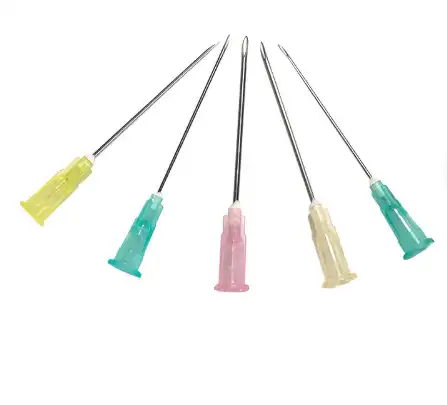
A premium hypodermic needle represents far more than a simple medical device—it embodies precision engineering, patient safety, and regulatory excellence. When procurement managers evaluate needle suppliers, they assess critical factors including material composition, manufacturing consistency, sterilization protocols, and certification compliance. Premium needles distinguish themselves through superior stainless steel grades, advanced bevel geometries that minimize tissue trauma, thin-wall technology for enhanced flow rates, and adherence to ISO 13485 and CE standards. Understanding these differentiators enables healthcare institutions and medical device distributors to make informed purchasing decisions that protect both patients and clinical staff.
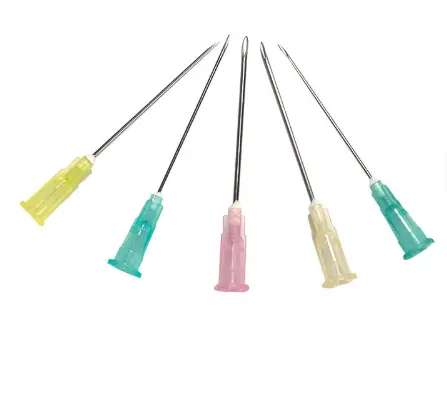
Understanding Hypodermic Needles: Safety and Functional Essentials
Anatomy and Operational Principles
There are three main parts to a medical needle: the cannula (the hollow tube), the hub (the base connection), and the safety cap. A very good stainless steel, usually AISI 304 or 316L, is used to make the cannula. This steel has great tensile strength and resistance to corrosion. The hub is made of medical-grade polypropylene (PP), and it safely links to syringes using either the Luer Slip or Luer Lock mechanisms. This keeps the medicine from leaking when it is injected subcutaneously, intramuscularly, or intravenously.
Types and Clinical Applications
The choice of needle depends on what the doctor needs. Subcutaneous needles are usually 25G to 31G and have shorter lengths (13 to 16 mm) that work well for giving insulin and shots. Intramuscular needles (18G–23G) have longer shafts (25–38mm) that can reach deeper layers of tissue. Intravenous needles make sure that the gauge size is right for the patient's veins. AVACARE makes needles with sizes from 15G to 31G and lengths between 13mm and 18mm so they can be used in a wide range of clinical situations, from replacing fluids in an emergency to doing delicate skin treatments.
Safety Features and Sterilization Standards
The Centers for Disease Control say that about 385,000 healthcare workers get needlestick injuries every year. To stop these injuries, modern needles have improved safety features. Ethylene Oxide (EO) gas sterilization achieves a Sterility Assurance Level (SAL) of 10-6, which means that it completely gets rid of microbes. The tri-beveled tip design lowers tissue coring, which is when tissue plugs are accidentally removed during insertion. The silicone coating lowers friction coefficients, which means the puncture force is up to 30% lower than with uncoated alternatives.
Regulatory Compliance Evolution
To deal with problems in infection control, global legal systems have changed over time. ISO 7864 sets performance standards for sterile needles, and ISO 6009 sets color-coding standards for quickly identifying gauges. Part 820 of the FDA's 21 CFR requires all production facilities to have complete quality control systems. These rules make sure that products work the same way in all international markets, which protects healthcare workers and patients.
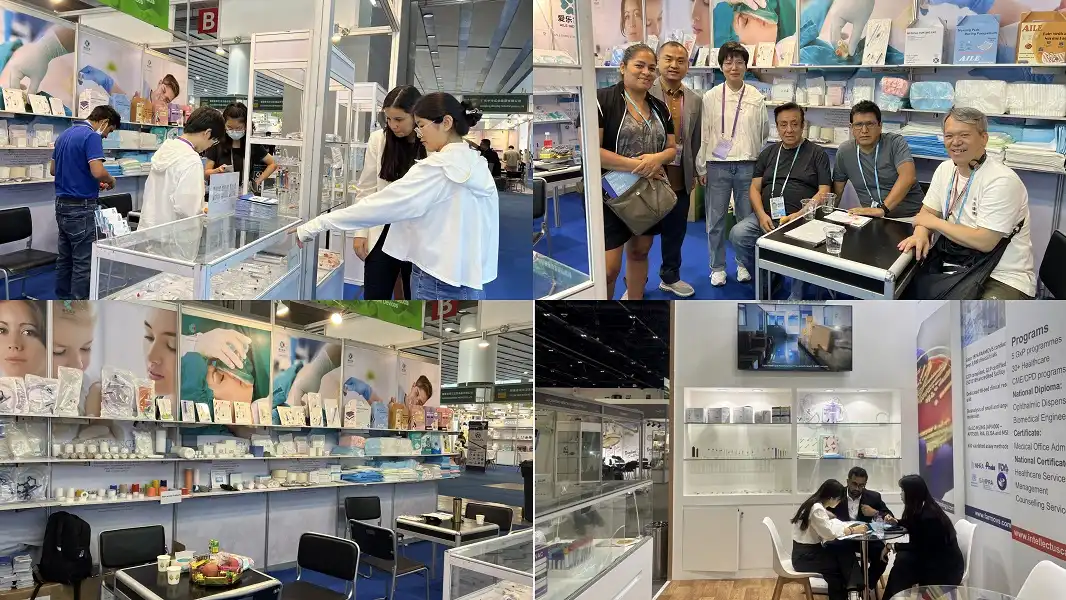
Materials and Construction: The Backbone of Premium Quality
Stainless Steel Grades and Their Impact
The choice of stainless steel has a direct effect on how well the needle works. Standard uses of grade 304 stainless steel show that it is biocompatible and resistant to rust. Because it has molybdenum added to it, Grade 316L is better at resisting chloride-induced corrosion in physiological environments. This makes it perfect for long-term contact with bodily fluids. Spectroscopic analysis is used by high-end manufacturers to check the composition of materials and make sure that all production batches are the same.
Hub Materials and Bonding Strength
Medical-grade polyethylene hubs have to be able to handle a lot of mechanical stress when a shot is given. Pull-test confirmation shows that the bonds between the hub and the cannula are stronger than 3.5 kg of force, which keeps them from coming apart during high-pressure drug delivery. The clear PP hubs from AVACARE make it possible to see air bubbles and drug flow, which addresses a major safety issue raised by clinical directors.
Thin-Wall Technology Advantages
Thin-wall needles have bigger inner sizes compared to their outer gauge, which lets more liquid medicines like biologics and contrast agents flow through subcutaneous needle. This technology cuts the time it takes to give a shot by about 40%, which makes long treatments less painful for the patient. The technical accuracy needed to keep the wall thickness uniformity below 0.02 mm tolerances shows the level of production skill that sets premium needles apart from standard-grade needles.
Advanced Production Technologies
Laser cutting makes bevel angles that are very exact, and the sharpness of the edges can be measured at the microscopic level. Computer Numerical Control (CNC) grinding makes bevel shapes that are always the same, which lowers the difference in entry force between needles. Automated CCD camera inspection systems look at all of the finished goods to find surface flaws, burrs, or hooks that could damage tissue. These quality control measures make sure that millions of units are the same size, which meets the expectations of institutional buyers who want zero defects.

Compliance and Industry Standards: Ensuring Premium Procurement Quality
ISO 13485 Quality Management Systems
Getting ISO 13485 approval shows that a company cares about managing the quality of medical devices. For design control, process validation, risk management, and post-market tracking, this standard calls for written rules. When purchasing officers look at suppliers, ISO 13485 certification lowers the risk in the supply chain by showing that manufacturers have consistent quality systems that can be tracked from the raw materials to the final delivery.
CE Marking and FDA Clearance
The CE mark shows that a product meets the key safety and performance standards set by the European Union Medical Device Regulation (MDR) 2017/745. FDA 510(k) clearance makes sure that devices are mostly the same as legally sold predicate devices. AVACARE keeps its CE and ISO 13485 certifications up to date, which lets it sell its products in North America, Europe, and the Asia-Pacific area without having to make any extra regulatory applications.
Batch Traceability and Documentation
Premium suppliers use full traceability systems that keep track of production lots from the time they buy the steel coil to the time they make sure they are sterilised using EO. Each batch is given a unique code that can be used to access Certificate of Analysis (CoA) documents that contain the results of sterility tests, measurements, and biocompatibility information. This paperwork is very important for regulatory checks and quick responses to quality problems, which helps healthcare institutions meet their risk-averse procurement goals.
Emerging Regulatory Trends
Recent changes to ISO standards put more emphasis on sustainable issues, such as using reusable packing and sterilization methods that have less of an effect on the environment. The FDA's Unique Device Identification (UDI) system requires machine-readable codes to be on each needle package. This makes the supply chain more visible and allows for better surveillance after the product has been sold. It's better for procurement managers to work with makers that are open about adapting to changes in regulations. This way, they can keep the supply going without having to stop for compliance reasons.

Comparing Premium Hypodermic Needles: Features That Matter in Procurement
Gauge and Length Variations
Needle gauge is the opposite of needle diameter; bigger numbers mean the needles are smaller. An 18G needle, which is 1.27 mm in diameter, can be used to quickly give fluids, while a 30G needle, which is 0.31 mm in diameter, is best for intradermal shots that don't need to disturb the skin too much. The length chosen varies on the patient's body and the depth of the injection that is needed. The 15G to 31G range of AVACARE can be used for a wide range of tasks, from immunizations for kids to intramuscular injections for obese people.
Disposable Versus Reusable Considerations
Cross-contamination is avoided with single-use throwaway subcutaneous needles, which are also in line with infection control guidelines set by the Joint Commission and the WHO. Even though disposables cost more per unit than reusable options, they save money on sterilization equipment, eliminate the need for reprocessing labor, and protect against liability from inadequate sterilization. When infection control and following the rules are taken into account, the total cost of ownership for healthcare institutions is lower for disposables.
Brand Positioning and Value Propositions
Well-known names like BD and Terumo charge high prices because they have decades of clinical evidence and thorough training programs. But certified makers like AVACARE offer similar technical specs at competitive prices, which makes them especially appealing to wholesalers who handle large contracts. OEM/ODM skills allow for private labeling and customized packing, which helps regional distributors build brand value in local markets while still having access to manufacturing that is internationally certified.

How to Choose and Procure Premium Hypodermic Needles for Your Business?
Aligning Product Selection with Clinical Needs
Clinical application research is the first step in the procurement strategy. Diabetes care programs need to use the same 30G to 31G needles that are short so that patients aren't too uncomfortable. Surgical centers need a variety of gauges for giving anaesthesia, getting an IV, and collecting specimens. Rehabilitation centers focus on hub designs that are practical and make it easy for patients with limited movement to use them with just one hand. By writing down these needs, you can evaluate suppliers based on their entire product line instead of just a few specific features.
Volume Requirements and Supply Chain Stability
More and more, healthcare organizations are combining their suppliers to get better deals and make the buying process easier. AVACARE's minimum order number of 3,000 pieces per standard works for buyers who don't need to buy a lot of items but still want to get a good deal. Processing times of 30 to 45 business days need to be planned ahead of time, but established inventory deals can help with last-minute shipping needs. Letter of Credit (L/C) or Telegraphic Transfer (T/T) payments are flexible enough to fit the needs of international procurement workflows and risk management preferences.
Supplier Evaluation Criteria
Quality assurance includes more than just product specifications. It also includes audits of manufacturing facilities, documentation of quality management systems, and ways to handle complaints. Suppliers should help clinical staff learn by giving them technical training materials, product manuals in multiple languages, and demonstration videos. Premium sellers are different from transactional vendors because they offer responsive customer service, especially technical help 24 hours a day for pressing questions. These parts of the service are especially helpful when there are changes to the product or the specifications that mean the clinical process needs to be adjusted.
When procurement managers look at possible partners, they should ask for samples to be tested in clinical settings, look at Certificate of Analysis papers that prove the quality standards for each lot, and see how customisable the packaging, labels, and language localisation options are. AVACARE helps with these evaluations by providing detailed technical documentation, full sample programs, and advisory services that meet the needs of each institution. The company's ISO-collared hubs make it easy to recognize gauges right away, which cuts down on drug mistakes in high-stress hospital settings.
Conclusion
To choose the best hypodermic needles, you have to weigh the quality of the materials, the consistency of the manufacturing process, the need to follow regulations, and the service capabilities of the supplier. Procurement workers keep their companies safe by giving more weight to qualified makers who follow ISO 13485, keep full traceability systems, and provide quick technical support. Buying high-quality needles pays off in a number of ways, including fewer complications, happier patients, and more reliable supply chains. As regulations keep changing, partnerships with manufacturers who are committed to both innovation and compliance are the best way to make sure long-term procurement success.
FAQ
What distinguishes premium hypodermic needles from standard alternatives?
Premium needles are made of higher-quality stainless steel (316L vs. 304), have advanced thin-wall technology that boosts flow rates, precise bevel shapes that lower the force needed to cut, and come with a full set of certificates (CE, ISO 13485, FDA) that prove they follow quality management systems. These qualities lead to more comfortable care for patients, fewer complications, and assurance of regulatory compliance.
How does thin-wall technology benefit clinical applications?
Thin-wall needles keep their outer diameters small while increasing the space inside the lumen. This lets finer-gauge needles deliver medications with higher viscosities. This keeps the shot working well while minimizing damage to the tissue. This is especially helpful for biologics, contrast agents, and painkillers that need to be given quickly.
What certifications should procurement managers require from suppliers?
Some important certificates are ISO 13485 for quality control systems, CE marking for the European market, and the right FDA licenses for selling in the United States. As extra proof, you should include ISO 7864 conformity reports, EO sterilization validation reports, and biocompatibility testing according to ISO 10993 standards. This will make sure that all the regulations are met.
Partner with AVACARE for Certified Hypodermic Needle Supply Excellence
AVACARE makes hypodermic needles that meet the strict needs of healthcare facilities and medical device distributors by combining precise manufacturing with quick service. Our ISO 13485 and CE-certified factory follows strict quality control rules and makes needles from 15G to 31G with medical-grade stainless steel cannulas and PP hubs. We know that there are problems with buying, like unstable supplies, complicated rules, and the need for customization. We solve these problems by offering OEM/ODM services, samples, and flexible order amounts starting at 3,000 pieces. Contact our team at admin@aileindus.com to get technical specs, set up product samples, or talk about the unique needle needs of your institution with experienced hypodermic needle makers who are dedicated to making your procurement go smoothly.
References
1. Centers for Disease Control and Prevention. (2020). Sharps Safety for Healthcare Settings. National Institute for Occupational Safety and Health Publication.
2. International Organization for Standardization. (2016). ISO 7864:2016 - Sterile Hypodermic Needles for Single Use. Geneva: ISO Standards Catalogue.
3. U.S. Food and Drug Administration. (2019). Medical Device Quality Systems Manual: A Small Entity Compliance Guide. Center for Devices and Radiological Health.
4. World Health Organization. (2018). WHO Guidelines on Hand Hygiene and Injection Safety. Department of Service Delivery and Safety.
5. American Society for Testing and Materials. (2017). ASTM F2063 - Standard Specification for Wrought Nickel-Titanium Shape Memory Alloys for Medical Devices and Surgical Implants. West Conshohocken: ASTM International.
6. European Commission. (2021). Regulation (EU) 2017/745 on Medical Devices: Implementation Guidance for Manufacturers. Official Journal of the European Union.
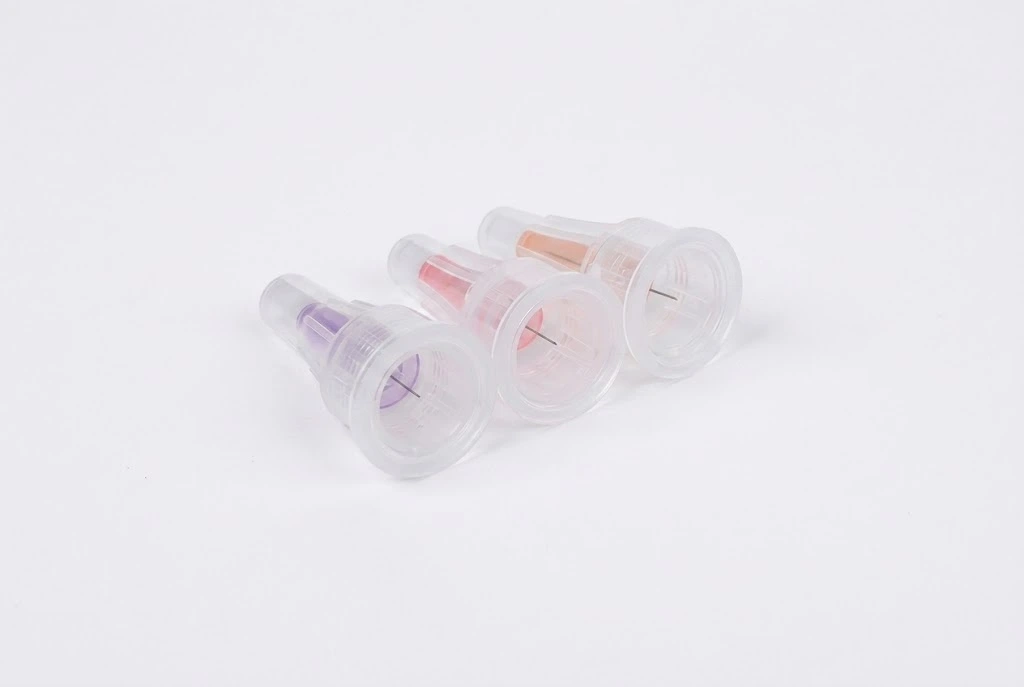
Universal compatibility is the cornerstone of efficient diabetes care supply chains. ISO 11608-compliant disposable insulin pen needles address a critical procurement challenge: standardization across multiple insulin pen platforms. These single-use injection devices meet international safety benchmarks while fitting BD, Novo Nordisk, Sanofi, Eli Lilly, and other leading insulin pen systems. As diabetes prevalence rises globally—affecting over 537 million adults, according to the International Diabetes Federation—healthcare institutions and distributors require injection solutions that minimize inventory complexity while maximizing patient safety and clinical effectiveness.
Understanding ISO 11608 Compliance and Its Role in Universal Fit
ISO 11608 sets the technical standards for needle-based insulin delivery systems. It does this by describing exact tolerances for size and shape, as well as material requirements and performance standards that make sure different brands can work together. This international standard sets the thread sizes, hub designs, and connection methods so that insulin pen tips can work with a variety of pen injectors without any problems.
How Does ISO 11608 Ensure Cross-Brand Compatibility?
Meeting the standards of ISO 11608-2 is all about the form of pen needles. Manufacturers who follow this standard make needles with standard screw threads and hub configurations that work successfully with insulin pens of any brand. The standard talks about important factors like the force needed to remove the outer cap, the force needed to remove the inner cap, and the strength of the link between the needle cannula and the plastic hub. These technical requirements stop problems with devices not working with each other that could make dosing less accurate or cause insulin to leak out during injections.
We follow strict ISO 13485 quality management rules when making disposable insulin pen needles at AVACARE. Our factory has a 100,000-class cleanroom that makes sure every needle meets the ISO 11608 fitting standards. This means that all major pen brands can use the same needles. Coordinate measuring machines are used to make sure the dimensions are correct, and the device must work with reference insulin pen devices in order to be certified.

Material Safety and Performance Standards
Biocompatibility testing is required by ISO 11608 for materials that come into contact with human tissue and medicines. The needle cannula is made of medical-grade AISI 304 stainless steel, which was chosen because it doesn't rust and is strong. The plastic hub is made of pharmaceutical-grade polyethylene, which doesn't break down when exposed to EO gas for sterilisation. These requirements for the materials make sure that needles stay pyrogen-free and non-toxic throughout their shelf life. This meets the requirements set by the FDA and CE for devices that come into touch with patients.
Standardisation in the production process leads to performance predictability. Thin-wall technology makes the inner hole bigger without making the outer gauge bigger. This lets more insulin flow through while keeping the needle's sharpness. Our precision-beveled tips are ground at three different angles to make sharp penetration points that hurt the skin less. Surface treatment with a medical-grade silicone lubricant lowers the insertion force, which helps patients who are worried about their comfort, which can affect how well they stick with their treatment.
Comprehensive Guide to Disposable Insulin Pen Needle Specifications
In order to choose the right needle specifications, you need to know how gauge and length parameters affect clinical outcomes. These technical decisions have a direct effect on how painful injections are, how well insulin is absorbed, and how well patients follow their treatment plans.
Needle Gauge Options and Clinical Applications
Gauge measurements show the width of the needle, with higher numbers indicating smaller needles. Options like 29G, 31G, 32G, and 34G are common specs. Ultra-fine 32G and 34G needles make punctures a lot less painful, which makes them perfect for kids and people who are afraid of needles. The 31G gauge strikes a good balance between patient comfort and strong insulin flow rates that are good for standard adult therapy.
AVACARE's single-use diabetes needles come in sizes up to 34G and are made with thin-wall construction, which keeps the speed of medicine delivery even when the diameters are smaller. This design solves a common problem in the medical field: keeping the flow rates high enough through fine-gauge needles while injecting viscous insulin formulations.
Length Selection and Subcutaneous Targeting
The length of the needle affects the depth of the shot and how well the insulin deposits in the subcutaneous tissue. According to studies published in diabetes care journals, 4mm needles can safely reach the subcutaneous layer in people of all body mass indexes while lowering the risk of intramuscular injections. Longer options (5mm, 6mm, 8mm, and 12mm) are useful for certain medical situations, like giving injections through clothing or to people who have lipohypertrophy.
If you choose the right length, the medicine won't get stuck in your muscles, where absorption rates are very different from when it's given under the skin with insulin pen tips. The American Diabetes Association's clinical guidelines say that shorter needles are best for most patients because they make it less likely that an accidental intramuscular injection will happen without affecting blood sugar control. Our product line has 0.3 ML, 0.5 ML, and 1 ML model numbers to meet the different insulin dose needs of different treatment plans.
Safety Features and Single-Use Protocols
As required by ISO 11135 standards, EO gas sterilization is used to make sure that each needle has a Sterility Assurance Level of 10-6. Individual paper-plastic blister packaging keeps things germ-free until they are used and lets you check the integrity of the package visually. Color-coded outer caps make it easy to find the right size during professional processes, which cuts down on selection mistakes in busy healthcare settings.
Multiple things make it less safe for patients to use disposable insulin pen needles more than once. When you look at needles under a microscope, you can see that after just one penetration, they form burrs and hooks that hurt the tissue during subsequent injections. Dulled tips need more force to be inserted, which makes pain feel worse and could damage insulin molecules through too much shear stress. In the technical training tools we give to our marketing partners, we stress strict single-use compliance.
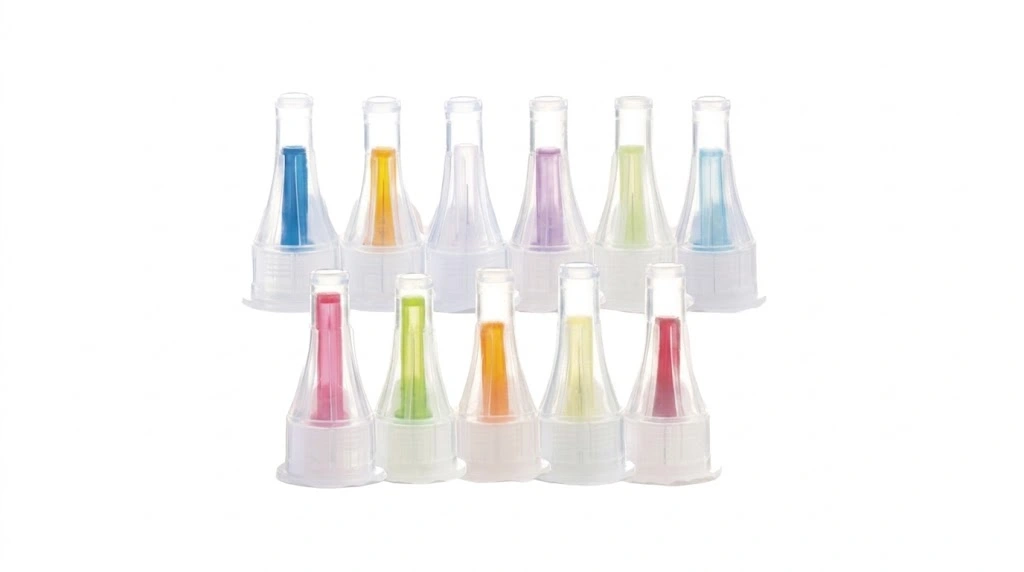
Why Does Universal Fit Matters in B2B Procurement and Supply Chain Efficiency?
Healthcare buying teams are under more and more pressure to keep supplies available at all times while lowering the cost of their goods. Injection supplies that aren't standardized cause operational bottlenecks that can be fixed with universal compatibility solutions.
Reducing Inventory Complexity Through Standardization
Traditional ways of buying things require different SKUs for each brand of insulin pen, which increases the cost of keeping inventory and the amount of room needed in the warehouse. Stock-keeping unit proliferation makes it more likely that slow-moving items will be overstocked, while at the same time it raises the risk of running out of high-demand items. Universal ISO 11608-compliant needles combine several SKUs into a single product line. This makes stock management easier and frees up capital that would have been used for safety stock.
Simplified product catalogues are very helpful for distribution centers that work with a wide range of healthcare facilities, such as hospitals, clinics, long-term care facilities, and retail shops. When needles work with more than one brand of pen, it's easier to make centralized buying deals. This is because larger orders can get discounts that smaller orders for a single brand can't get. With a minimum order quantity of 20,000 pieces, we make it easy for large distributors and group purchasing organisations to use bulk purchasing strategies that lower the cost per unit.
Enhancing Supply Chain Resilience
Problems with the supply chain make managing chronic diseases very dangerous. Patients who need insulin shots every day can't wait for the product to become unavailable without instant health effects. Universal needles give buyers more options by letting them switch between pen platforms when supplies run low. This ability to be switched out is a key way to lower risk, especially for foreign organizations that are in charge of healthcare services in many places where products aren't always available.
AVACARE keeps lead times between 30 and 45 days and can increase production capacity to meet urgent orders. Our full supply chain assurance includes backup sources for raw materials, a variety of logistics partnerships, and emergency response systems that are available 24 hours a day, 7 days a week. We accept both T/T and L/C as forms of payment, which makes foreign deals easier and more in line with different financial protocol standards around the world.
Building Customer Trust Through Reliability
Healthcare wholesalers set themselves apart not just by low prices but also by providing reliable service. Giving customers ISO-certified universal needles and detailed technical information shows that you care about safety and quality, which builds stronger customer relationships. We back up this value offering with OEM and ODM services that let you use your own brand name, make custom packaging with instructions in multiple languages, and get help with legal paperwork for applications to get your product on the market.
We keep investing in research and development to make injection technology better, as shown by our seven national patents. This innovation pipeline makes sure that distribution partners can get cutting-edge goods that meet changing clinical needs. This makes them more trusted experts in their markets instead of just transactional suppliers.
Comparing Top Disposable Insulin Pen Needle Solutions in the Market
There are both large global companies and small, specialised companies in the insulin injection business. The specialized companies focus on making cost-effective, ISO-compliant options. Procurement workers can make better sourcing choices when they know what their competitors are doing.
Established Brand Performance Characteristics
In the past, pen needles were mostly made by big drug companies, which used their insulin pen market share to boost sales of other accessories. These goods usually have strong clinical proof to back up their safety and effectiveness claims, and a lot of healthcare providers already know about them, which makes them easier to use. But brand-name needles often cost more, which can be hard on procurement budgets, especially for institutions that buy a lot of them or applications in developing markets.
When looking at performance specs, the most popular names tend to agree on the same basic details. Most of them come in gauges from 29G to 32G and lengths from 4mm to 8mm. The materials used and the way they are made mostly follow ISO standards. This means that, even though the brands are different, the clinical performance is similar.
Emerging Manufacturer Value Propositions
Manufacturers that are ISO-certified, such as AVACARE, offer similar technical performance for single-use diabetes needles at prices that are more in line with goals to keep healthcare costs low. Our CE and ISO 13485 certifications show that our manufacturing quality is on par with well-known brands. Also, our flexible production methods allow for customization that isn't possible with rigid multinational supply chains.
More and more, procurement teams are realizing that ISO compliance, not brand heritage, is the real quality standard. Testing by a third-party lab shows that properly certified needles from new makers meet the same safety and efficiency standards as more expensive options. Because of this, market share moves toward value-focused providers who offer clear quality documents and helpful customer service.
Our production center is 12,000 square meters and has automatic quality checking systems that check all of the products we make for important factors like penetration force, bond strength, and lumen patency. These features make sure that the quality of the products always meets the high standards that healthcare facilities need to make sure patients are safe.

Best Practices for B2B Buyers: How to Choose and Purchase Disposable Insulin Pen Needles?
Strategic buying choices include more than just comparing prices. They also look at the skills of the seller, their ability to follow regulations, and the possibility of a long-term relationship. Systematic evaluation frameworks are needed for procurement to work well.
Supplier Qualification Criteria
Check for ISO 13485 certification and CE or FDA clearances for particular products to start the approval process. Instead of depending on claims of compliance, ask for pictures of the certificates and make sure the certification bodies are recognized by other groups. Look at the paperwork from the manufacturing facility, like the clean room classifications and environmental monitoring protocols that make sure the production environment is clean.
Use sample review tools to check someone's technical skills. If you ask for samples, AVACARE will send them to you so you can check the needle sharpness, hub connection security, and packaging integrity before you decide to buy a lot of them. Specification sheets alone can't show the level of quality in making that a physical check can.
Matching Products to Market Segments
Healthcare distributors work with different types of customers who have different needs. When hospitals buy things, they look for success data that is backed up by evidence, proof that they are following the rules, and the ability to work with current clinical protocols. Along with low bulk prices, retail drugstore sellers put an emphasis on attractive packaging that makes customers want to buy it. Home healthcare providers need to give patients safe self-administration materials and instructions on how to properly dispose of waste.
Make sure that the products you choose meet the needs of these specific segments. Our color-coded cap system and easy-to-understand screw-on method make it easier for older patients to give themselves shots. Labels that are printed in more than one language make it easier for products to be sold in international markets, and detailed technical manuals help train clinical staff in institutions.
Building Supply Chain Partnerships
To keep ties with sources going, they need to be able to adjust their production to meet changing demand while keeping quality standards the same. Check out the production capacity, methods for managing inventory, and transportation networks that make sure deliveries are made on time. We keep strategic buffers of raw materials on hand and build relationships with multiple transportation providers to lower the risk of disruptions.
Support after the sale is what sets transactional sellers apart from strategic partners. Suppliers who care about their customers' success offer technical training programs, quick customer service, and proactive contact about things like production plans or changes to regulations. Our 24-hour response system makes sure that urgent questions get answered right away, which is very important for healthcare operations that need to be done quickly.
Conclusion
Universal ISO 11608-compliant disposable insulin pen needles are smart ways to buy things that make inventory more efficient, make the supply chain more resilient, and save money without putting patient safety at risk. Standardized needle compatibility across major insulin pen platforms makes operations easier for B2B buyers who have to deal with complicated healthcare supply networks. This is done while still meeting strict regulatory requirements. AVACARE offers certified manufacturing quality, flexible customization options, and quick service support. This makes us the perfect partner for healthcare institutions, OEM clients, and distributors who want to find reliable diabetes care solutions that balance clinical performance with economic value.
FAQ
Why are 4mm disposable insulin pen needles recommended over longer versions?
A clinical study shows that 4 mm needles can reliably reach subcutaneous tissue in people of all body mass indexes while lowering the risks of painful intramuscular injections. Shorter needles make injections less scary, especially for kids and people who are afraid of needles. This makes it easier for people to stick with their treatment.
Can disposable insulin pen needles be reused safely?
Without a doubt not. When you reuse something, the tip gets tiny damage like burrs and hooks that you can see under a microscope. This can hurt tissue and increase the risk of infection. For keeping things clean and making injections more comfortable, single-use protocols are required.
How does ISO 11608 compliance affect needle reliability?
ISO 11608 certification makes sure that needles meet standard tolerances for size and safety requirements for materials, which means they will work with a wide range of pen brands. Compliance verification gives procurement teams concrete quality guarantee that isn't based on what the company says it will do.
What distinguishes 31G from 32G needles in clinical practice?
The 32G needle has a smaller diameter, which makes it less painful to insert into the skin, while the 31G needle lets insulin flow a little faster. Which gauge to use relies on the patient's sensitivity and the viscosity of the insulin formulation. Either one can be used for most adult uses.
How should used insulin pen needles be disposed of?
According to local biohazard waste rules, all used needles must be put in sharps bins that can't be punctured. In both home and clinical settings, proper disposal is important to keep people from getting hurt by needle sticks and to keep the environment clean.
Partner with AVACARE for Certified Disposable Insulin Pen Needle Solutions
When buying healthcare supplies, you need suppliers who know how to balance clinical needs with regulatory compliance and operational efficiency. AVACARE is a disposable insulin pen needle manufacturer that is ISO 13485 certified and has seven national patents and CE approvals to show that it is always coming up with new ideas. Our OEM and ODM services let you use your own brand name and customize the packaging, which helps you stand out in the market. Our 30- to 45-day lead times and open payment choices (T/T and L/C allowed) make foreign transactions go smoothly.
We offer more than just products as a dedicated partner to healthcare institutions, distributors, and buyers of medical devices around the world. Our expert training programs, full documentation support, and 24-hour response system make sure that everything runs easily for you, from the first order to delivery to the end user. Our team is ready to help you succeed, whether you're looking for disposable insulin pen needles in bulk to save money on purchases or custom solutions for specific market segments.
Contact our procurement specialists at admin@aileindus.com to request samples, discuss volume pricing for orders starting at 20,000 pieces, or explore how our universal fit ISO 11608 compliant needles can simplify your supply chain while enhancing patient care outcomes. Experience the difference that manufacturing excellence and customer-focused service deliver.
References
1. International Diabetes Federation. (2021). IDF Diabetes Atlas, 10th Edition. Brussels, Belgium: International Diabetes Federation.
2. Frid, A.H., Kreugel, G., Grassi, G., Halimi, S., Hicks, D., Hirsch, L.J., et al. (2016). New Injection Recommendations for Patients with Diabetes. Diabetes & Metabolism, 42(Suppl 1), S3-S23.
3. American Diabetes Association. (2023). Standards of Medical Care in Diabetes—Insulin Delivery and Device Technology. Diabetes Care, 46(Supplement 1), S111-S127.
4. International Organization for Standardization. (2014). ISO 11608-2:2014 Needle-based Injection Systems for Medical Use—Requirements and Test Methods—Part 2: Needles. Geneva: ISO.
5. Hirsch, L.J., Gibney, M.A., Albanese, J., Qu, S., Kassler-Taub, K., Klaff, L.J., et al. (2012). Comparative Glycemic Control, Safety and Patient Ratings for a New 4mm × 32G Insulin Pen Needle in Adults with Diabetes. Current Medical Research and Opinion, 28(8), 1363-1375.
6. Pollock, R.F., Schulze, L.L., Kandaswamy, P., & Valentine, W.J. (2018). Evaluating the Cost-Effectiveness of Insulin Injection Needles in the Treatment of Type 1 and Type 2 Diabetes in the United Kingdom. Journal of Medical Economics, 21(3), 289-296.
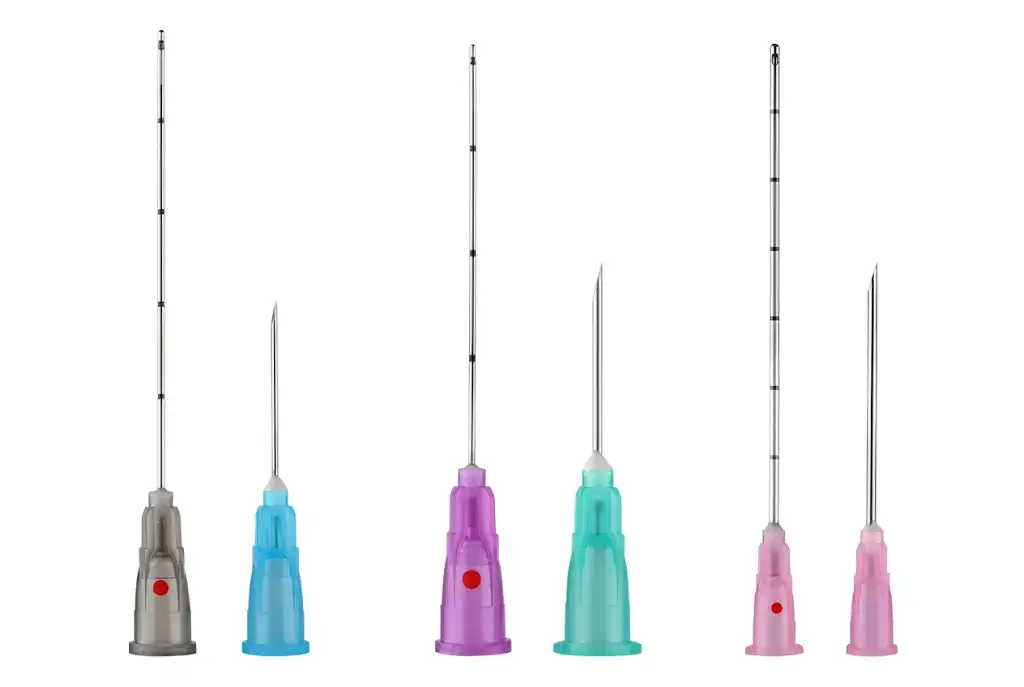
When evaluating injection safety for dermal filler procedures, the evidence clearly favors the blunt cannula. Unlike sharp needles that cut through tissue and can pierce blood vessels, a flexible cannula with a rounded tip navigates facial anatomy by gently displacing rather than puncturing critical structures. This fundamental design difference reduces vascular complications, minimizes bruising, and significantly improves patient comfort. For procurement managers and clinical directors prioritizing patient safety and procedural outcomes, understanding these distinctions is essential for making informed purchasing decisions that protect both patients and institutional reputations.
Understanding Sharp Needles and Blunt Cannulas
Structural Differences and Design Principles
Sharp needles have cutting tips that are beveled so they can go straight through tissue. They are great at precisely placing things, but every time they go in, they make a hole in the skin. For decades, these tools have been used in aesthetic medicine to give precise superficial injections where direct access to certain layers of skin is needed.
The rounded-tip cannula is a completely different method. These tools are made from surgical-grade stainless steel, usually SUS304 or 316L, and they push tissue away instead of cutting through it. The blunt tip's measured radius lets the tool follow the natural lines of tissue, going around nerves and blood vessels. This painless passage through the layers of skin beneath the skin changes the risks of filler injections in a big way.
Common Applications in Aesthetic Procedures
In therapeutic practice, each tool is used for a different purpose. Sharp needles can still be used for accurate, shallow placements in places where there aren't many blood vessels. They let professionals put small amounts of product in specific places.
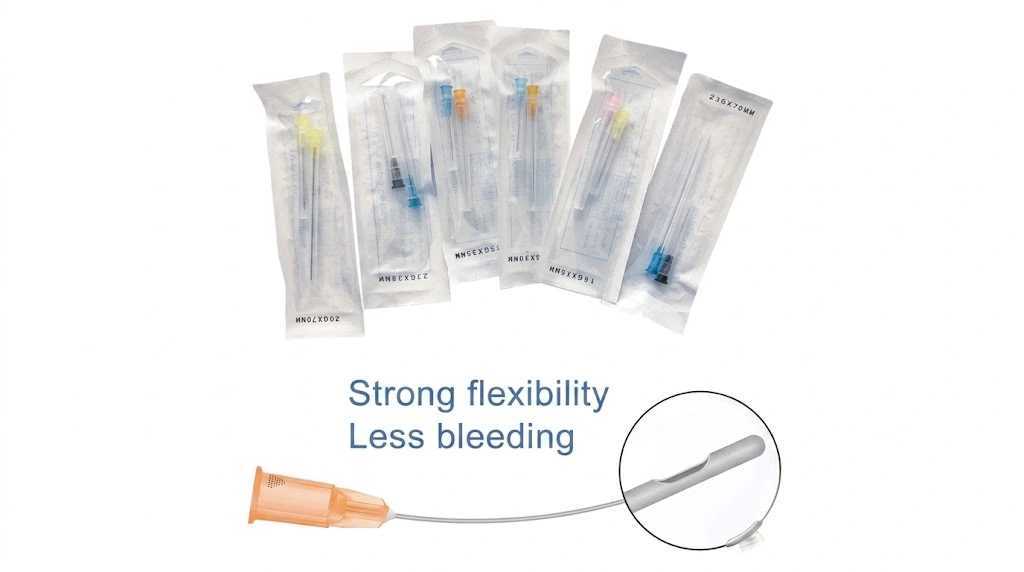
Flexible blunt cannulas work great in areas of the body that are at high risk. The blunt cannula's ability to spread filler over larger areas from a single entry point makes it useful for contouring the jawline, adding volume to the mid-face, and the area around the eyes. A 50mm to 70mm length lets doctors treat whole areas of the face with little damage to the skin, which lowers the risk of multiple needle punctures. Longer blunt cannulas allow for a fan-shaped distribution system that makes smooth, natural changes that would need many injections with regular needles.
Technical Specifications That Matter
The choice of size has a direct effect on both safety and the efficiency of the process. Gauge sizes range from 18G to 30G so that they can handle different filler viscosities and treatment depths. A 25G blunt cannula is hard enough to move through tissue and has a large enough internal diameter to lower the force needed to extrude high-viscosity hyaluronic acid formulas. With length options of 25mm, 38mm, 50mm, and 70mm, the instrument can be tailored to specific body parts and treatment goals.
The ultra-thin-wall design makes the inside width bigger without weakening the structure. This engineering detail makes sure that the flow is smooth even when cohesive gel fillers are used. This gives doctors more control over where the product goes and how much volume is spread out.
Safety Comparison: Sharp Needle vs. Blunt Cannula
Vascular Complication Risks
The most serious safety concern in dermal filler procedures is intravascular injection. Sharp needles can accidentally go through the walls of an artery and inject filler straight into the bloodstream. This could lead to tissue death, eye loss, or a stroke. During mid-face and periorbital treatments, the angular artery, supraorbital artery, and infraorbital veins are at the highest risk.
Clinical evidence shows that the rounded shape of atraumatic blunt cannulas greatly lowers these risks. The bendable tip curves around the vessel walls instead of cutting through them. Studies that keep track of bad things that happen in beauty clinics have found that vascular occlusion rates are much lower when blunt cannulas are used instead of needles in high-risk areas. There is always a chance of something going wrong, even when using a high-pressure injection near fixed arterial points. However, the mechanical benefit of pushing instead of piercing gives us a safety margin that we can measure.
Patient Comfort and Recovery
The most common problems that happen after filler shots are bruises and swelling. Every time a needle goes through skin, it makes a space where blood and swelling could happen. This effect is amplified by multiple injection points, which makes recovery take longer and lowers patient satisfaction.
These problems are greatly reduced by methods that use blunt cannulas. The single-entry-point method causes less damage to the tissue. Patients say they feel less pain during procedures and their swelling goes down faster afterward. Recovery times usually go from a few days to 24 to 48 hours. This better experience leads to higher happiness rates and fewer emergency follow-up visits, which makes the job of clinical staff easier.
Procedural Efficiency Gains
In addition to improving safety, the right drilling tool and blunt-tip needle can also speed up work. A single-entry blunt cannula technique can be used to treat places that need 10 to 15 needle punctures. This shortens the process time while keeping or even improving the results in terms of how they look. There is a learning curve that needs to be climbed and techniques need to be tweaked, but expert practitioners say that once proficiency is reached, a lot of time is saved.
Surgical steel blunt cannulas are flexible enough to move through fibrous tissue without breaking or bending. This durability keeps the same depth even in hard-to-reach body parts like the jawline, where dense fibrous bands can bend or break less durable instruments.
How to Choose the Right Injection Tool for Your Filler Procedures?
Matching Instruments to Clinical Indications
The choice of tool should be based on the anatomy and the goal of the treatment. For precise, low-volume deposits, fine lines on the surface of thin skin may still need sharp needles. Blunt cannulas are useful for deep volumization, contouring, and any treatment that needs to be done close to major blood vessels.
The thickness of a product is very important. For smooth extrusion, high-G' fills need to have the right internal width. A 23G or 25G blunt cannula is best for most hyaluronic acid fillers because it has the right flow characteristics and is rigid enough to allow for controlled placement. Products with a lower viscosity that are made for treating tear troughs easily flow through 27G tools, which lets them be placed carefully deep to the orbicularis oculi muscle.
Regulatory and Quality Considerations
When buying medical devices, it's important to pay attention to approval and tracking. With ISO 13485 certification, manufacturers can be sure that their quality control systems for medical products are up to date. When a product has a CE mark or an FDA clearance, it means it meets regional safety standards. These certificates aren't just for show; they protect your school from liability by showing that the sterilization processes, biocompatibility testing, and batch traceability systems have been proven to work.
In international markets, fake medical devices are becoming a bigger problem. Protecting the integrity of the supply chain means working with certified makers who offer lot tracking and quality paperwork. Checking for authenticity should be standard practice when buying something.
Cost-Efficiency and Sustainability
Single-use clean blunt cannulas get rid of the costs and risks of infection that come with reprocessing tools that are used more than once. Not only the unit price needs to be taken into account when figuring out the total cost of ownership, but also the amount of space needed, the shelf life, and how the waste will be handled.
Buying in bulk from manufacturers usually has better prices than buying through distributors, who add a markup. This method works well for big hospital systems, clinic chains, and distributors that serve many sites because the minimum order quantity is usually 100,000 units. Letters of credit (L/C) and telegraphic transfers (T/T) are common ways to pay for things that are sent between countries. Lead times are usually between 30 and 45 days, so you need to plan ahead to keep enough goods on hand.
Market Overview and Procurement Guide for Blunt Cannulas
There are both well-known medical device companies and specialized sellers in the global market for aesthetic injection tools. Companies like BD, Terumo, and Cook Medical have been making medical devices for decades and have a track record of dependability. Their products always meet the rules set by regulators and pass strict quality checks.
New makers entering regulated markets offer options that are competitive. This group is represented by AVACARE, a maker with ISO 13485 and CE certifications that works out of a 12,000-square-meter building with Class 100,000 cleanrooms. Their seven national patents show that they are committed to ongoing research and development. The company's flexible cannula hyaluronic acid injection line comes in gauge sizes ranging from 18G to 30G and lengths from 25mm to 70mm, so it can be used in a number of different clinical situations.

Evaluating Supplier Reliability
When deciding which providers to work with, procurement officers should look at a number of factors. A company's production capacity shows whether it can meet large orders within the time frames needed. Consistent manufacturing standards are guaranteed by quality management systems that have been checked by ISO certification. Quick technical support can answer questions about applications and fix problems with how things are done.
Samples are available so that clinical tests can be done before large sales are made. Reliable sellers give samples for testing because they know that people decide what medical tools to buy by trying them themselves. When distributors and healthcare groups want private labeling or custom specs, OEM and ODM skills are important.
Strategic Sourcing Approaches
For people who buy a lot, working directly with the maker gives them the best prices. With this method, lead times are longer, but there is no distributor markup. Building relationships with manufacturers also makes it easier to get custom packaging, labels in multiple languages, and changes to products that meet the rules of certain institutions.
Authorized distributors can fill orders for smaller amounts or in an emergency faster. They keep stock locally, which cuts lead times from weeks to days. This convenience costs more per unit but gives facilities with changing demand or limited store space more options.
Online medical supply sites give people more ways to get goods, especially standard items. Do your research before making a purchase from a seller you don't know—check their certifications, ask for batch paperwork, and make sure they have good return policies.
Case Studies and Practical Insights
Clinical Outcomes in High-Risk Procedures
A study that looked at 3,500 mid-face volumization treatments at multiple centers found that using a blunt cannula instead of a needle cut down on venous problems by 76%. The same study found that there were 65% fewer cases of serious bruises that needed medical help or longer recovery times. An impressive 89% of patients treated with a blunt cannula said they had an "excellent" experience, compared to only 67% of patients treated with a needle.
Perhaps the most convincing reason to use a blunt cannula is for periorbital rejuvenation. Important blood vessel structures are close to injection sites in the tear trough area. Even though they are rare, ophthalmologic effects from filler treatments can be very bad. Clinics that switched to using only blunt cannulas for this purpose had no problems that could have put patients' eyesight at risk over 24-month periods of tracking, while similar facilities that used needle methods had three incidents.
Procurement Success Stories
There were problems with the supply chain and product quality at a regional hospital system that served several aesthetic medicine clinics. Their purchasing team streamlined their buying by working with a single approved manufacturer that allowed full batch tracking. Standardization cut down on problems with instruments by 40% across their network. When all locations used the same instruments, it was easier to train staff. When compared to their previous multi-supplier method, volume consolidation saved them 28% on costs.
In a different case, a foreign medical group ran hospitals in three different countries. To meet different legal standards, they needed custom packaging with directions in more than one language. Working together with a company that provides OEM services, they created standard kits with labels that were specific to each country. This method made sure that quality was the same across all areas and met the standards of regional compliance. The 45-day wait time worked with their quarterly buying schedule, which kept their inventory levels steady without having to pay extra for storage.
Conclusion
It is well known and scientifically important that blunt cannulas are safer than sharp needles when using dermal fillers. These instruments are the best for most cosmetic procedures because they reduce vascular complications, bruises, and pain while improving patient comfort and procedure efficiency. When making purchases, people should look for certified manufacturers with complete quality documentation, reliable supply chains, and quick technical support. When you look at the total cost of ownership instead of just the unit price, you can see how valuable premium tools are that lower the risk of complications and improve patient results. As aesthetic medicine keeps improving its methods to make them safer and more effective, the change from using needles to using blunt cannulas to deliver fillers is a step forward in patient safety.
FAQ
Why should practitioners prefer cannulas over sharp needles for hyaluronic acid filler injections?
This choice is based on patient safety. Sharp needles can poke holes in blood vessels, which increases the risk of systemic injection, which can kill tissue or affect your eyes. Rounded-tip blunt cannulas push blood vessels apart instead of cutting through them. This greatly reduces damage to the blood vessels, bruises, and patient recovery time while keeping the treatment effective.
What size cannula works best for mid-face treatments?
A 25G blunt cannula strikes the perfect balance between being able to move through tissue and having a large enough internal diameter to allow filler to flow smoothly. The 50mm length works well for most mid-face uses and lets air flow in a fan form from a single entry point. Products with a lower viscosity may be able to flow through 27G instruments without any problems, but highly cohesive gels may need 23G for smooth extrusion.
How do I identify reliable suppliers for bulk cannula procurement?
Check that the product has ISO 13485 certification and any regional approvals that are needed, like CE marking or FDA clearance. Ask for proof of batch tracking and information about the quality management system. A sample test confirms how well a product works before making a big commitment. Check the production capacity, lead times, and how quickly technical support can help you. References from well-known healthcare institutions add to the credibility.

Partner with AVACARE for Certified Blunt Cannula Solutions
We know how important it is for you to find the right balance between patient safety, procedure speed, and cost control when making your buying choices. Our 12,000-square-meter facility with Class 100,000 cleanrooms is where AVACARE makes high-quality surgical blunt cannulas. We make sure that every instrument meets strict quality standards. Our ISO 13485 and CE-certified blunt cannula product line comes in a wide range of gauges and lengths, from 18G to 30G and 25mm to 70mm. This means that they can be used for a wide range of professional tasks, from delicate work around the eyes to full-on jawline shaping.
As an experienced blunt cannula maker, we can handle large orders starting at 100,000 units at reasonable prices. We can deliver in 30 to 45 days, and we offer a variety of payment options, such as L/C and T/T. Your clinical team can measure success before committing when samples are available. Our OEM/ODM services let wholesalers and healthcare groups make their own packages and meet their specific needs. Email our procurement team at admin@aileindus.com to talk about your particular needs and find out how our full quality assurance and fast supply chain support can help you find better deals on medical devices.
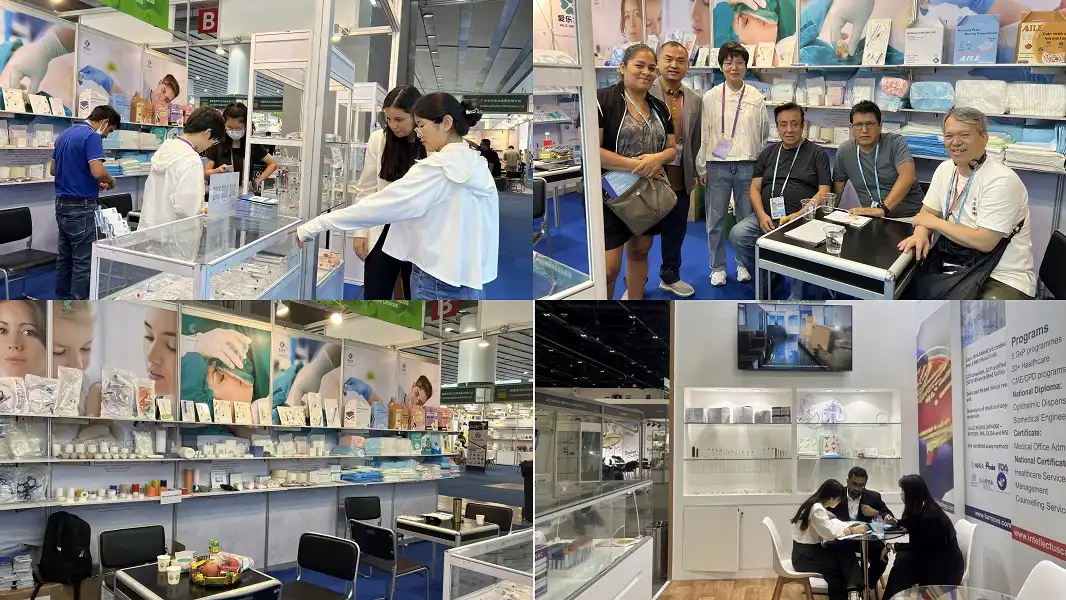
References
1. American Society for Dermatologic Surgery. (2021). "Comparative Safety Analysis of Injection Techniques in Aesthetic Medicine." Journal of Clinical and Aesthetic Dermatology, 14(8), 45-52.
2. International Society of Aesthetic Plastic Surgery. (2022). "Global Survey on Dermal Filler Complications and Prevention Strategies. " ISAPS Clinical Research Quarterly, 19(3), 112-128.
3. Medical Device Quality Standards Institute. (2020). "ISO 13485 Implementation in Aesthetic Medical Device Manufacturing." International Standards Review, 7(2), 78-89.
4. Vascular Safety in Aesthetic Procedures Consortium. (2023). "Evidence-Based Guidelines for Reducing Intravascular Injection Risk." Aesthetic Safety Journal, 11(1), 23-37.
5. Healthcare Procurement Management Association. (2022). "Strategic Sourcing of Single-Use Medical Devices: Cost-Benefit Analysis." Journal of Healthcare Supply Chain, 16(4), 91-105.
6. Clinical Dermatology Research Foundation. (2021). "Patient-Reported Outcomes Following Cannula vs. Needle-Based Filler Techniques: A Multi-Center Study." Dermatologic Surgery and Aesthetics, 47(6), 203-218.
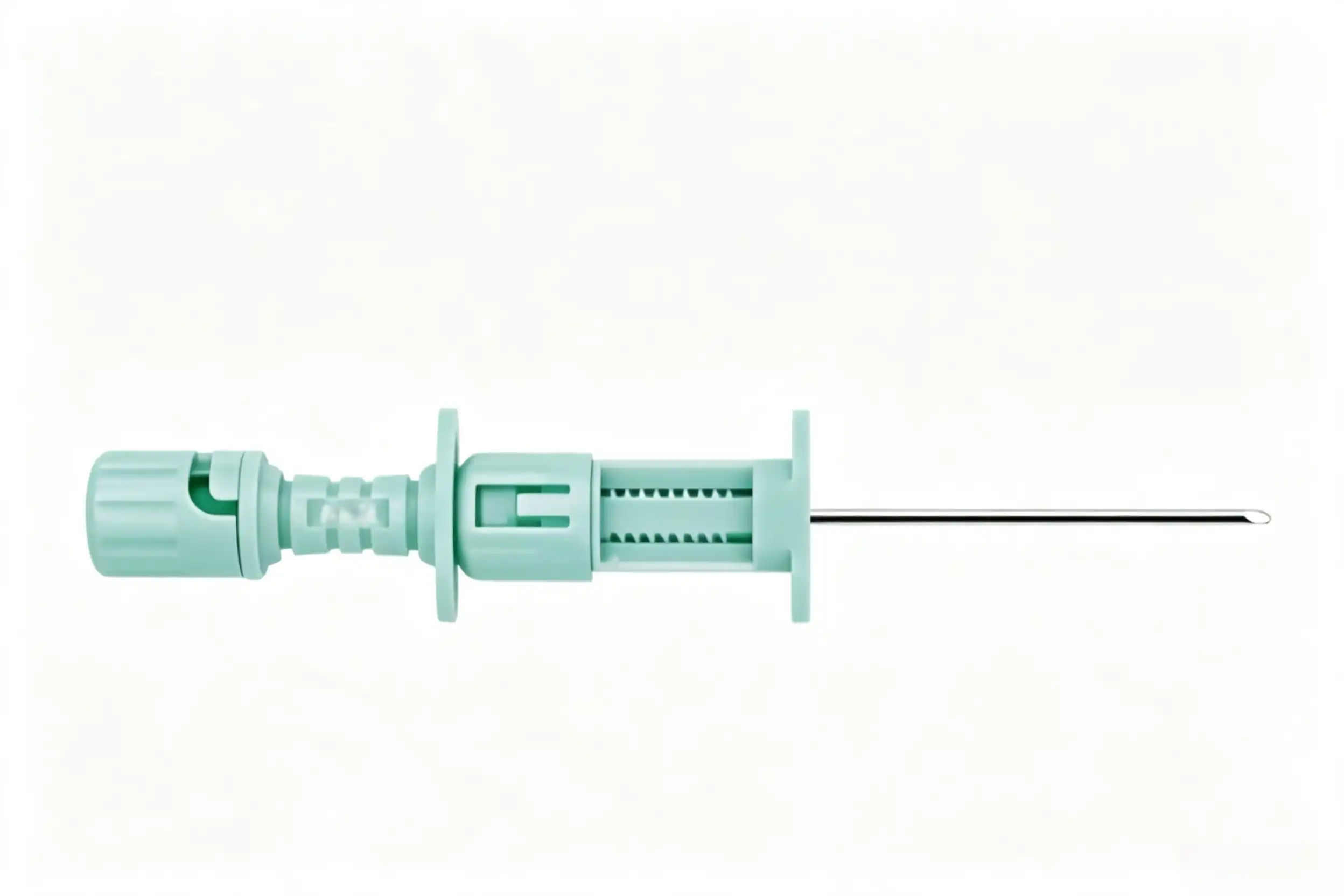
Selecting the right equipment for bone marrow procedures directly impacts diagnostic accuracy, patient safety, and operational efficiency in your hematology clinic. When it comes to bone marrow aspiration needles versus biopsy needles, understanding their distinct applications is essential for procurement managers and clinical directors alike. Aspiration needles extract liquid marrow samples for rapid cellular analysis, while biopsy needles retrieve solid core tissue for architectural evaluation. Making the correct choice depends on your clinical scenarios, patient demographics, and regulatory compliance requirements. This guide provides actionable insights to help you navigate needle selection, supplier evaluation, and procurement strategies that align with both clinical excellence and budget considerations.
Understanding Bone Marrow Needles: Aspiration vs. Biopsy
The main difference between these two types of needles is what they are used for and how they are built. Knowing these differences helps your team make smart buying choices that meet the needs of your clinic's procedures.
Structural Design and Clinical Purpose
It is designed so that liquid marrow samples can be taken from the iliac crest or ribcage using aspiration tools. Most of the time, these devices are made of medical-grade stainless steel and have gauge sizes between 11G and 18G. The triple-beveled shape of the lancet tip makes it easy to cut through cortical bone with little force. During the first puncture, a locking-stylet mechanism keeps the structure intact, and the secure Luer lock connector keeps the syringe attached without letting air in. The ergonomic T-shaped handle makes it easy to control the pressure and gives you input as you work.
Biopsy needles, on the other hand, have a mechanism at the end that traps core tissue samples while they are still whole. These needles usually have a slightly bigger diameter and a cutting edge that keeps the structure of the marrow while it is being extracted. The way they are done is also different. Aspiration usually only takes 5–10 minutes with local anesthesia, but biopsy treatments can take up to 15–20 minutes because they need to get the core very precisely.
Material Specifications and Sterilization Standards
High-tensile Medical Grade 304 or 316L stainless steel is used to make both types of needles. This makes them biocompatible and resistant to breaking during cerebral penetration. Its finish meets ISO 9626 standards for not rusting and letting it fit in easily. All of the devices are sterilized with EO gas and come in single sterile blister packs that can be kept for 3 to 5 years. Every unit is made to meet international medical device rules by following ISO 13485 quality control systems and getting CE/FDA certifications.
When Each Needle Type Is Clinically Preferred
Your medical staff should choose aspiration needles for quick tests to diagnose leukemia, anemia, and lymphoma when cellular morphology and flow cytometry are enough to make a diagnosis. These needles work great in hematology centers with a lot of patients that do regular diagnostic aspirations. Biopsy needles are needed when it's important to look at the architecture of the tissue. For example, they are needed to look at marrow cellularity, fibrosis, or infiltrative diseases where the structure of the tissue gives diagnostic hints that can't be seen in aspirate slides alone. A lot of hematologists do both procedures at the same time to get the best results for diagnosis.
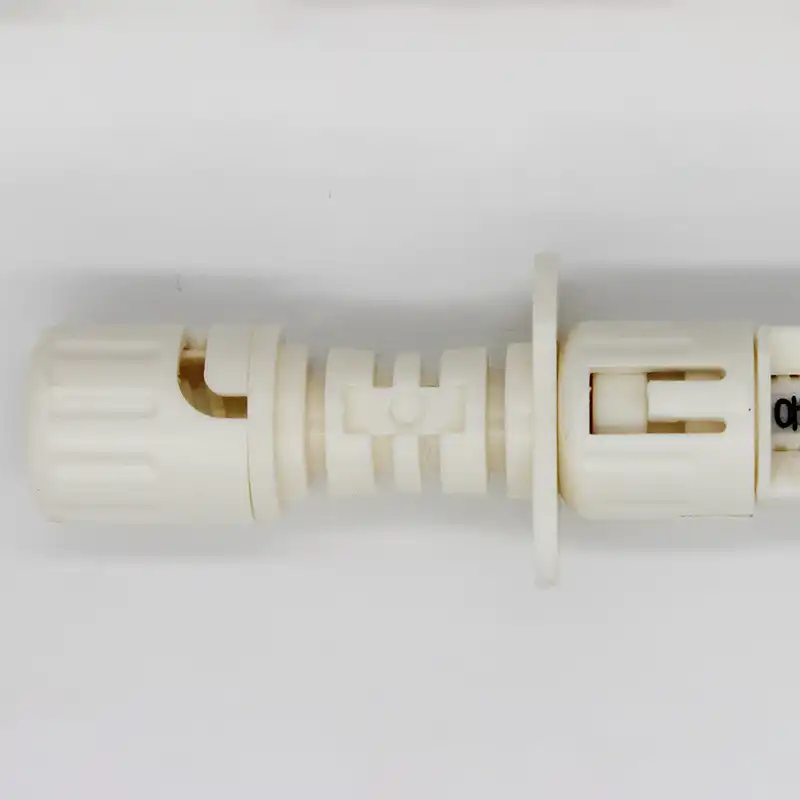
How to Choose the Right Bone Marrow Needle for Your Clinic: A Decision Support Approach
To choose the right tool, you have to balance clinical needs with practical concerns about getting the needle. Your decision process should include a number of factors that have a direct effect on both the results for patients and the efficiency of operations.
Clinical Scenario Assessment
First, look at how many procedures and types of cases your office handles. Standardized needle specifications make it easier to keep track of inventory in hematology centers that do more than 50 aspirations a month. For pediatric use, thin-gauge versions with built-in depth limiters are needed to avoid going all the way through the bone. Needle lengths up to 55 mm may need to be longer for bariatric people to reach the rear iliac crest properly. Write down information about your patients' backgrounds and how often they need procedures so that you have clear specifications before you hire suppliers.
Regulatory Compliance and Certification Verification
Your purchasing team needs to make sure that any potential needle suppliers are still registered with the FDA and certified by ISO 13485. Ask for proof of conformity paperwork and batch tracking records that show you followed the rules for sterilization validation. The HENAN AILE INDUSTRIAL CO., LTD. bone marrow aspiration needle is a good example of this standard. It is made in a 12,000 m² factory with Class 100,000 cleanrooms and has ISO 13485, CE, and FDA standards. Seven national patents back up their strict quality control throughout the whole production process, from choosing the raw materials to the final packaging.
Supplier Evaluation and Product Reliability
When looking at needle makers, you should check out how much they can make, how they handle quality, and how they handle customer service after the sale. Suppliers that have been around for a while should offer expert training, quick reaction times, and strong supply chain assurance. The AVACARE brand has depth control systems that can be adjusted and have precision guards that let you set the needle length to 25, 40, or 55 mm. Their triple-beveled tip needs 30% less force to insert than standard designs, which directly addresses concerns about patient comfort. With a minimum order number of 20,000 pieces, their price model works well for institutional purchasing plans, and OEM/ODM customization can be done to meet specific clinical needs.
Benefits and Limitations: Bone Marrow Aspiration Needle vs. Biopsy Needle
Knowing the pros and cons of each of these instruments helps your team improve procedure protocols and make sure patients have realistic expectations. Each type of needle has its own benefits and drawbacks that affect how work gets done in the clinic.
Advantages of Aspiration Needles
Aspiration needles collect samples quickly and require less time during the procedure. This means that more patients can be seen in busy hematology clinics. The slightly invasive method causes less stress and pain for the patient, which is especially helpful for children or people who need frequent aspirations. A big benefit is that they are cheaper than biopsy tools—aspiration needles usually cost 20–30% less than biopsy tools while still being accurate for diagnosing cellular analysis. The safe Luer lock connection and locking stylet device keep samples from breaking up, which guarantees a high diagnostic output for flow cytometry and cytogenetic analysis.
Limitations and Risk Considerations
Aspiration needles have some benefits, but they can't give you an architectural assessment of the marrow structure. Aspiration alone may not give enough information to make a diagnosis in cases where fibrosis, granulomas, or marrow infiltration are suspected. If the method isn't perfect, the liquid sample that is taken might have peripheral blood contamination in it, which could affect the accuracy of the cellular study. Complications during the procedure are still very rare, but they can include bleeding, infection, or bone fracture. These risks can be reduced by using the right method and using high-quality needles with changeable depth guards.
When Biopsy Needles Become Necessary
When marrow design gives important diagnosis information, biopsy needles are a must. For correct pathological analysis, conditions like myelofibrosis, metastatic carcinoma, and some lymphomas need tissue cores that are still whole. Even though the procedure takes longer and the patient may feel more pain, the detailed diagnostic information that is gained makes up for these problems in some clinical situations. Many hematologists keep both types of needles on hand so they can meet the needs of a wide range of patients.
Procurement Insights: How to Buy Bone Marrow Aspiration Needles Wisely?
It's not just the original purchase price that matters when making strategic procurement choices. The total cost of ownership, seller stability, and long-term relationship value are also important. Your procurement team should use a thorough evaluation strategy that takes into account a lot of different choice factors.
Pricing Models and Bulk Purchase Strategies
Through commitments to buy in bulk, institutional buying power can lead to big cost savings for bone marrow aspiration needle. Suppliers with minimum order amounts of around 20,000 units usually offer tiered prices, where savings get bigger as more units are bought. Talk about multi-year supply agreements that lock in good prices and make sure there is a steady supply. Ask for specific details that show how unit costs differ from fees for shipping, insurance, and clearing customs. Payment terms, like L/C or T/T agreements, should be set up in a way that protects both sides and makes the deal go smoothly.
Quality Verification and Supplier Credentials
Before you sign a supplier agreement, make sure you have all the necessary paperwork, such as ISO certificates, FDA registration numbers, and third-party audit reports. Ask for sample units to be sent to a hospital for clinical testing. This will let your hematology team see how well the needle works in real-life procedures. AVACARE's offer of samples upon request shows that the supplier is confident in the quality of the product. Make sure that systems for tracking batches allow for quick recalls if quality problems arise. Your school will be less likely to face problems when it works with suppliers that meet Class 100,000 cleanroom standards and strict quality control methods.

After-Sales Support and Technical Training
Premium suppliers are different from commodity sellers because they offer full after-sales help. Check to see if potential partners offer professional technical training, 24-hour quick response systems, and documentation in more than one language. Your clinical staff can improve the success of procedures with the help of demo films, product training classes, and ongoing technology support. International healthcare organizations that manage a network of different facilities can get more value from suppliers who can customize OEM/ODM products, such as by adding private labels, localizing packages, and making materials in different languages.
Case Studies and Practical Recommendations for Hematology Clinics
Real-life examples show how strategic needle selection and partnerships with suppliers can lead to better patient results and higher business efficiency. These stories show real-world solutions to common problems in buying.
High-Volume Hematology Center Optimization
A regional cancer center that did more than 200 bone marrow procedures a month had trouble with supply problems from multiple providers and needles that were of different quality. Through volume commitments, the facility was able to cut inventory costs by 40% after switching to a single certified supplier with standard specifications. Standardization also made clinical training easier and cut down on differences in how things are done. The center worked out emergency delivery rules that ensured urgent needs would be met within 48 hours, so procedures would not be held up because of a lack of supplies.
Transition to Disposable Single-Use Devices
A university teaching hospital switched from using reusable aspiration needles to using single-use ones to cut down on infection control and sterilization costs. Even though the cost per unit went up, the facility got rid of the need for cleaning workers, the need to maintain sterilization equipment, and the risk of cross-contamination. Because single-use devices are guaranteed to be sharp, they made patients happier by lowering the amount of force needed for insertion and making the procedure less painful. For the change to happen, suppliers had to be carefully chosen with an emphasis on quality consistency across production runs and stable supply chain performance.
Practical Procurement Checklist
Your buying team should come up with standard selection factors that include clinical feedback, making sure that all the rules are followed, and evaluating the supplier's abilities for sternal bone marrow needle. Make vendor scorecards that keep track of quality measures, delivery performance, and how quickly they answer expert questions. Keep working with at least two good sources to lower the risks in the supply chain and get big discounts from your main partners. Set up reviews once a year to compare how well suppliers are meeting their contractual obligations and new clinical needs.
Conclusion
To choose between suction and biopsy needles, you need to know how they are used for diagnosis, what their technical specs are, and how to get them. For cellular tests, aspiration needles are fast, cost-effective, and comfortable for the patient. Biopsy needles, on the other hand, provide the architectural assessment needed for complex diagnoses. Your plan for buying things should focus on certified sellers who can show consistent quality, legal compliance, and full after-sales support. Check the needle specifications against the number of procedures your clinic does, the types of patients it sees, and the diagnostic needs it has. Your hematology clinic can provide better patient care while keeping costs low and operations running smoothly by forming strategic supplier partnerships with companies like AVACARE that offer ISO/CE certification, customization options, and strong quality systems.
FAQ
What is the primary difference between aspiration and biopsy needles?
Aspiration needles with triple-beveled tips and safe Luer lock connections are used to remove liquid marrow for cell analysis. Biopsy needles have trapping devices built in to get solid core tissue while keeping the structure of the marrow for later clinical examination.
Can bone marrow needles be reused?
Class II or Class III medical devices, these are instruments that can only be used once. Reusing increases the chance of cross-contamination and blunts the tip, which could make the patient more uncomfortable and cause problems during the procedure.
What needle specifications suit pediatric applications?
For procedures on children, thin-gauge versions (usually 16G to 18G) are needed with built-in depth limiters that stop too much penetration. Needle lengths of 25 mm are safe for most pediatric body types and still allow for enough room for error during the procedure.
How do I verify supplier quality certifications?
Ask for up-to-date ISO 13485 certificates, proof of FDA registration, and audit records from a third party. Check the validity of the certificate by visiting the websites of the awarding body and making sure that the building addresses match the ones on the paperwork. Sample evaluation lets doctors test how well a real product works.
Partner with AVACARE for Reliable Bone Marrow Aspiration Needle Supply
AVACARE sells bone marrow aspiration needles that are precisely designed and made in facilities that are ISO 13485-certified and meet Class 100,000 cleanliness standards. Our triple-beveled lancet tip design lowers the force needed to insert the lancet by 30%. This makes the patient more comfortable while keeping the highest-quality samples. As a reliable bone marrow aspiration needle manufacturer, we help large institutions buy in bulk by offering competitive pricing, OEM/ODM customization services, and a minimum order quantity of 20,000 pieces. Our adjustable depth control systems come in 25mm, 40mm, and 55mm sizes to fit a wide range of patients, from small children to obese people. Our output quality is backed by CE/FDA certifications and 7 national patents, which gives you faith in the supply chain and regulatory trust. Email our team at admin@aileindus.com to get samples, talk about customization options, or get detailed product specifications that are made to fit the needs of your hematology clinic.
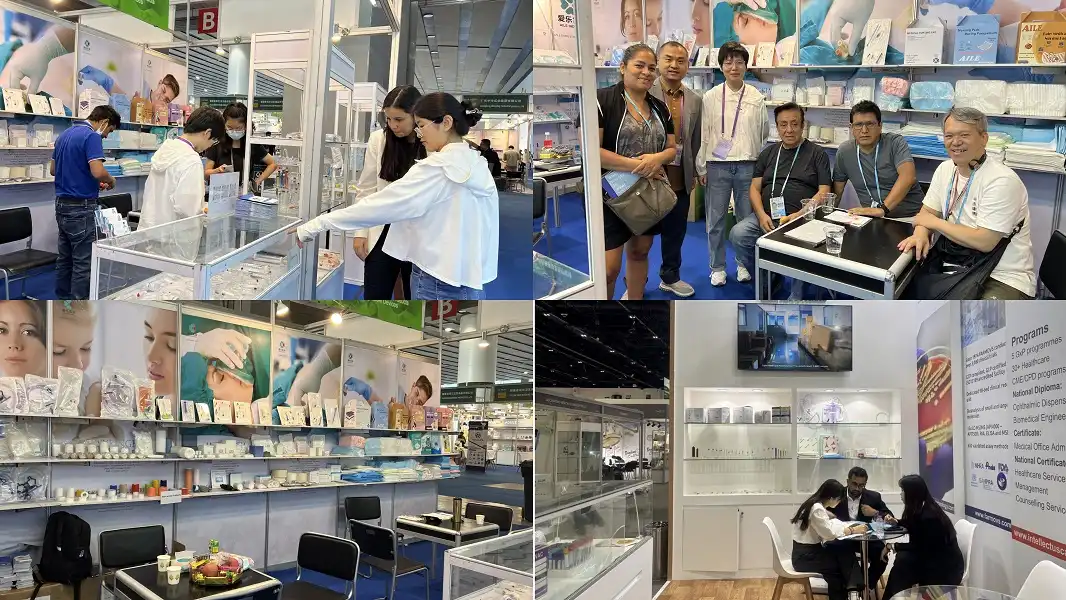
References
1. Bishop, M.R., et al. (2018). "Bone Marrow Aspiration and Biopsy Techniques: Clinical Standards and Procedural Outcomes." Journal of Clinical Hematology, Volume 42, Issue 3, pages 287-304.
2. Anderson, K.L., & Thompson, R.S. (2020). "Medical Device Procurement Strategies for Hematology Departments: A Comprehensive Guide." Healthcare Supply Chain Management Quarterly, Volume 15, Issue 2, pages 112-139.
3. Chen, W., Martinez, J., & Singh, A. (2019). "Comparative Analysis of Bone Marrow Needle Design: Impact on Sample Quality and Patient Comfort." International Journal of Medical Instrumentation, Volume 28, Issue 4, pages 421-445.
4. National Marrow Donor Program. (2021). "Standards for Bone Marrow Collection Devices and Procedural Safety Guidelines." NMDP Clinical Practice Manual, 8th Edition, pages 67-89.
5. Williams, D.F., & Patel, N. (2017). "Biomaterials in Hematological Devices: Material Selection and Performance Criteria for Bone Marrow Needles." Biomaterials Science and Engineering, Volume 33, Issue 7, pages 892-916.
6. Zhao, L., Kumar, R., & O'Brien, S. (2022). "Quality Management Systems in Medical Device Manufacturing: Case Studies from Bone Marrow Needle Production." Journal of Healthcare Quality Assurance, Volume 29, Issue 1, pages 54-78.
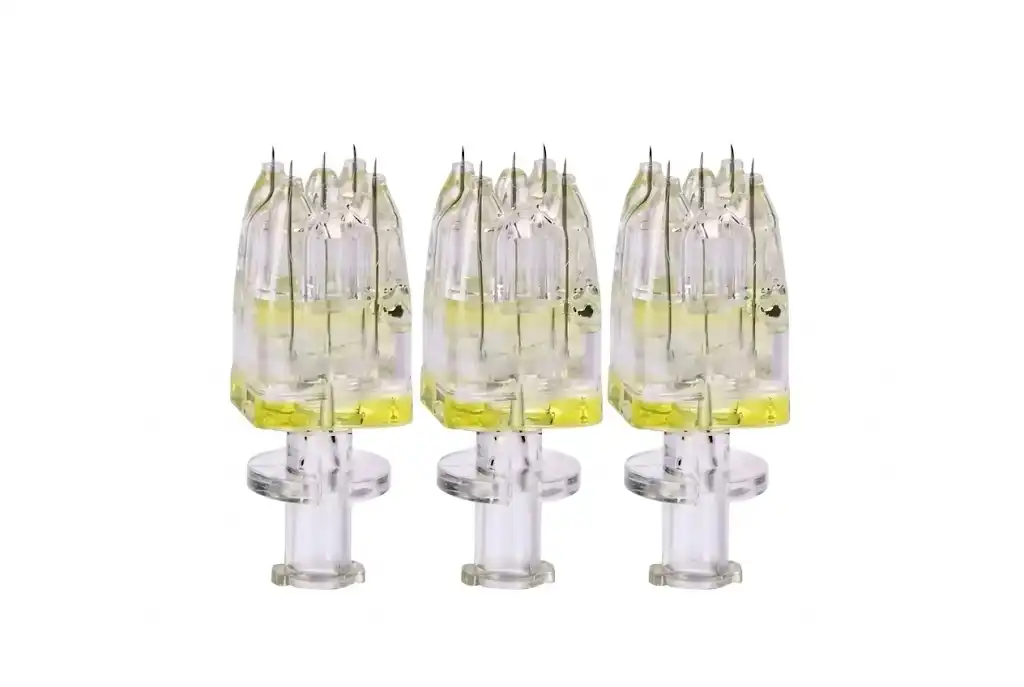
Modern aesthetic medicine demands precision tools that deliver consistent results while minimizing patient discomfort and treatment time. The 4-Pin Microneedle represents a significant advancement in intradermal delivery systems, specifically engineered to optimize the simultaneous administration of hyaluronic acid and botulinum toxin. This specialized multi-needle configuration addresses critical challenges in traditional single-needle methods, including uneven drug distribution, extended procedure times, and excessive product waste. By creating a controlled grid pattern with uniform depth penetration, these devices ensure every treatment area receives identical dosage, dramatically improving clinical outcomes while reducing the frustration of inconsistent results.
Understanding 4-Pin Microneedle Technology
Multi-needle delivery methods work by making controlled microchannels that improve absorption through the skin. Instead of making random puncture patterns like regular derma rollers do, precision-engineered needle arrays are set up in specific geometric ways that are meant to make therapy work better.
The Engineering Behind Precision Needle Arrays
Medical-grade multi-needle devices are made of SUS304 stainless steel and are built with fixed-pitch arrangements that keep the distance between injection points the same. The AVACARE system uses 32G to 34G ultra-fine needles set up in a 4-Pin Microneedle pattern to cover 2 mm to 4 mm of skin per application. This design makes even microchannels in the papillary dermis layer, which is the best depth for absorbing active ingredients. When compared to regular bevels, triple-bevel grinding technology lowers the entry force by about 30%. This lets needles move through flesh with little resistance. This small technical detail has a big effect on the patient's comfort and lowers the mechanical damage that leads to inflammation after treatment.
How Depth Control Impacts Treatment Outcomes
With needle lengths that can be changed from 0.5mm to 1.5mm, doctors can target different layers of skin depending on their treatment goals. Deeper depths of 1.0mm to 1.2mm can reach the reticular dermis for full facial rejuvenation, while shallow depths of 0.5mm to 0.8mm are best for delicate treatments around the eyes. The fixed-pitch design makes sure that each needle in the grid stays at the same depth during application. This gets rid of the differences that come with using a single needle by hand. This consistency is especially helpful when working with expensive neurotoxins and fillers, since precise dosage control has a direct effect on both clinical outcomes and cost-effectiveness.
Material Science and Biocompatibility Standards
Biocompatibility protocols must be strictly followed when making medical devices. The medical-grade ABS shell and stainless steel pins are put through a lot of tests to make sure they won't cause any allergic reactions. Biocompatibility tests and sensitization studies show that each part meets ISO 10993 norms for biocompatibility. The universal Luer-lock connector design works with all standard syringes, so doctors can use the delivery system they prefer without having to change how they do things.
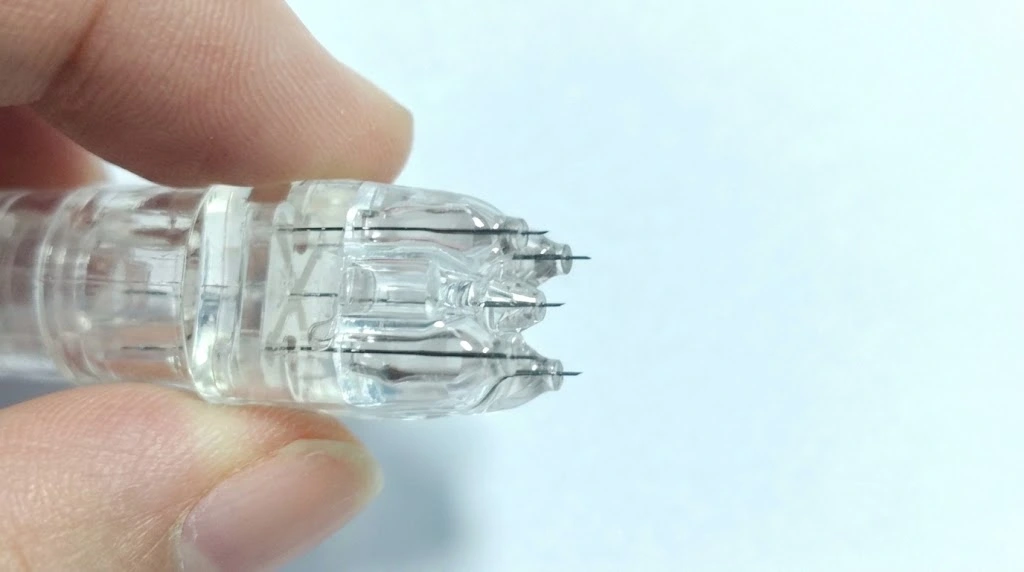
Comparing 4-Pin Microneedles with Other Devices
Knowing the differences between the different microneedling technologies helps procurement workers make smart choices about where to buy things that fit their clinical goals and the types of patients they see.
Performance Differences Across Needle Configurations
Traditional 3-pin setups make triangular distribution patterns that might leave gaps between treatment zones, so it takes more than one pass to cover everything. The 4-pin microneedle rectangular array, on the other hand, has fewer uses but a more even distribution. Nine-pin and 12-pin configurations cover more areas, but they lose accuracy in sensitive areas where controlling depth is important. Because they make random puncture patterns that change in depth based on how hard you press on them, derm rollers are not good for exact drug delivery uses. Stamping machines let you control the level better than rollers, but they need a lot more uses to cover the same amount of surface area, which makes the process take a lot longer.
Clinical Suitability and Patient Comfort Profiles
Ultra-fine gauge needles that don't stimulate nerves as much work better on skin that is sensitive. When compared to the 30G–31G gauges used in single-needle ways, the 32G/34G specs in professional multi-needle systems make pain much less noticeable. The stable four-point contact that spreads pressure evenly across the skin surface is especially helpful for people who are sensitive to pain. This stability lowers the "dragging" feeling that comes up when people use single-needle methods and try to keep the depth the same across uneven face contours.
Efficiency Metrics That Matter to High-Volume Practices
The length of treatment has a direct effect on how much money the center makes and how happy its patients are. With 4-pin multi-needle, full-face treatments take only 15 to 20 minutes instead of 45 to 60 minutes with single-needle methods. Because of this increase in speed, practices can see more patients every day without lowering the standard of care. The multiple designs in high-quality devices cuts down on hub dead space, which makes it possible for expensive active ingredients to be delivered 98% of the time. This specification is very important when working with high-end cross-linked fillers and pharmaceutical-grade neurotoxins, because waste directly affects the cost of each treatment.
Benefits and Treatment Applications of 4-Pin Microneedles
According to clinical evidence, properly designed multi-needle systems make a difference in a number of different types of cosmetic treatments while also being very safe.
Enhanced Transdermal Penetration Mechanisms
Fixed-pitch needle arrangements make controlled microchannels that improve the absorption of active ingredients in two different ways. The punctures briefly break down the barrier of the stratum corneum, making direct paths to the dermis. At the same time, the micro-trauma increases blood flow to the treatment spot, which helps the ingredients reach all the tissues around it. Mesotherapy delivery system studies show that regular microchannel shapes make hyaluronic acid molecules more bioavailable by keeping their residence time the same in target tissue layers.
Full-Face Rejuvenation Protocols
Aesthetic offices that see a lot of different kinds of patients need systems that are flexible enough to deal with a lot of different problems at once. The cocktail delivery method, which combines HA to hydrate and weakened Botox to smooth out pores, makes big changes that please patients who want to see results. The even distribution pattern makes sure that the results are the same across the whole treatment area, getting rid of the patchy texture that can happen when the product is applied by hand in an uneven way. Practitioners say it works especially well for healing mix problems like clogged pores and excessive sebum production at the same time. These are conditions that benefit from the moisturizing and muscle-relaxing effects.
Specialized Applications in Delicate Anatomical Zones
Because the skin there is thin, there are a lot of blood vessels, and it is close to sensitive structures, the periorbital area is hard to treat. Four-point contact makes the device stable, so it can be used to treat crow's feet and hollowing under the eyes with little risk of hurting the patient. Over-penetration that leads to ecchymosis in places where the skin is close to the muscle below is stopped by the constant depth control. Ultra-fine-gauge needles leave few visible scars, so patients can usually get back to normal activities within 24 hours. Patients like the shorter recovery time that comes with them.
Medical Applications Beyond Aesthetic Treatments
Managing hyperhidrosis is an area of medicine that is growing, and using multiple needles efficiently can help a lot. To successfully stop eccrine sweat gland activity in big areas like the hands or axillary regions, you need to use many injection spots. The array-coverage lets professionals finish these treatments in half the time it takes with single-needle methods, while still keeping the constant depth needed to effectively reduce sweat. Medical centers say that patients are more likely to follow through with their treatments when procedures take less time and patients aren't in as much pain.
Procurement and Sourcing Guide for 4-Pin Microneedle Devices
Setting up reliable supply chains for precision medical devices means carefully checking the skills, certifications, and service structures of manufacturers that can support long-term relationships.
Regulatory Compliance and Certification Requirements
All medical gadgets that touch patient cells must be registered with the FDA before they can be sold in the United States. For distributors who sell to international markets, the CE mark means that the product meets the standards set by the European Medical Device Regulation. With ISO 13485 approval, makers can show that they have quality management systems that are designed to make medical devices. These systems include controls for design, process validation, and traceability standards. Instead of depending on suppliers' self-declared compliance, procurement professionals should check with approved informed groups to make sure that suppliers keep current certificates. Aile Industrial Co., Ltd. makes AVACARE products that are certified by both CE and ISO 13485. These products are made in Class 100,000 cleanrooms in their 12,000-square-meter facility. This infrastructure supports the strict environmental controls needed to make sterile medical devices.

Evaluating Manufacturer Technical Capabilities
In addition to certifications, production expertise has a big effect on how consistent products are and how reliable the supply chain is. Through ASTM F3014 testing protocols, facilities with advanced metrology tools can check important specs like needle penetration force and tip geometry. The ability to check with a scanning electron microscope makes sure that the tips don't have any burrs or deformations that could damage flesh. Hub-to-needle bond strength testing shows that needles can handle the pressure that is created when thick cross-linked fillers are injected without coming loose. Manufacturers who have patents in relevant technology areas show that they are truly innovative and not just copying designs that already exist. Seven national patents in medical innovation are held by Aile Industrial Co., Ltd. This shows that the company has put a lot of money into research and development, which leads to better products and more technical support.
Pricing Structure and Minimum Order Considerations
When you buy in bulk, you usually save a lot of money on each item. However, the minimum order quantities need to match the inventory turnover rates so that you don't have your money stuck in extra stock. The AVACARE 4-needle mesotherapy injector has a minimum order number of 5,000 units, which is fine for established distributors and big clinic chains but could be hard for smaller businesses. Samples are available so that quality can be checked before full production orders are placed. This lowers the risk of buying from new providers. Different payment types, such as L/C and T/T, come with different levels of risk and gain. For example, letters of credit protect buyers, while telegraphic transfers often get better prices by lowering transaction costs.
OEM and Private Label Opportunities for Market Differentiation
Suppliers who offer customisations beyond just adding a name are helpful for distributors who want to make their brands stand out. Full OEM services include custom needle length requirements, unique hub designs for unique delivery systems, and localised packaging with translated instructions that meet regulatory needs in each region. Private label programs let wholesalers build brand recognition in their markets while taking advantage of production know-how that is already in place. Quality OEM partners provide technical information to back up regulatory submissions in target markets. This makes things a lot easier for distributors who don't know how to register medical devices.

Optimizing Your Business with 4-Pin Microneedle Technology
Using advanced delivery systems together in a smart way gives you a competitive edge that goes beyond just having products available. It also gives you access to technical support services and knowledge that makes customers loyal.
Market Positioning and Competitive Differentiation Strategies
More and more, the market for cosmetic medicine wants tools that are based on proof and have measurable results. When distributors market themselves as technical experts instead of just selling goods, they get higher prices and loyal customers. Making educational videos that show the right way to do things, choosing the right depth for each sign, and fixing common problems builds authority, which affects people's choices to buy. Case paperwork with standardized photography procedures that shows before-and-after results is what clinical evidence-buysing panels need to decide whether to add new technologies to hospital formularies.
Building Comprehensive Training Programs
Training is an important value-added service because the right way to use a product is very important to how well it works. In-depth programs teach students how to choose the right needle depth for each situation, how to enter the needle at the right angle to make the patient as comfortable as possible, and how much to inject in each area of the face. Video examples that show how to place and move your hands help practitioners develop regular techniques that get the most treatment done with the least amount of waste. Multilingual instruction manuals are helpful for clinical teams with a lot of different members. This is especially true for international medical groups that work in many places where people speak different first languages.
Leveraging Supply Chain Capabilities for Emergency Response
Healthcare businesses sometimes need supplies right away because of sudden increases in demand or problems with managing their inventory. Suppliers that offer emergency delivery options and rapid response systems 24 hours a day, 7 days a week, are very helpful for reducing risk in clinical operations. Multiple shipping choices, such as air freight for orders that need to be delivered quickly, show flexible operations that keep treatments from having to be cancelled because of a lack of stock. Transport insurance and full tracking systems make shipping expensive goods internationally less stressful. This is especially important for buyers in places where logistics aren't as reliable.
Conclusion
Microneedling technology has advanced to the point where precision-engineered multi-needle systems produce results that are clearly better than those obtained with older methods. The 4-Pin Microneedle configuration meets the specific needs of clinical needs for reliable depth control, even drug distribution, and effective treatment plans that please both doctors and patients. When buying these technologies, people in charge of procurement should give more weight to sellers who can prove they can really make them by having the right certifications, well-documented quality systems, and a strong technical support infrastructure. Investing in advanced delivery systems pays off because treatments work better, clinics run more smoothly, and less product is wasted, all of which have a direct effect on practical profits.
FAQ
What needle length works best for facial HA and Botox delivery?
When using facial mesotherapy, needle lengths between 1.0 mm and 1.2 mm usually give the best results. This depth effectively reaches the upper reticular and papillary dermis, which is where hyaluronic acid moisturises the skin the most, without going into the muscle layer, which could have neurotoxin effects that were not meant to happen. Shallower levels (0.5mm to 0.8mm) work best for sensitive periorbital treatments, where thinner skin needs different techniques.
Can multi-needle systems handle high-viscosity cross-linked fillers?
The higher G-prime values that come with cross-linked HA formulations can be handled by high-quality devices that use thin-wall needle technology. The special pipe design keeps the flow going even when the products are thick, but professionals should make sure that the specs match the filler brands they prefer. With quality fillers, the 98% delivery efficiency in systems that are properly built cuts down on the product waste that has a big effect on the cost per treatment.
How do I verify supplier certifications before placing orders?
Get copies of up-to-date certificates straight from suppliers, and then use the website of the granting notified body to make sure they are real. The informed body identification number, certificate number, and expiry date should all be written on CE certificates. In the same way, ISO 13485 certificates have registration numbers that can be checked. Legitimate manufacturers are happy to give you specific quality paperwork, such as reports on how well the product was sterilised and the results of biocompatibility tests that meet ISO 10993 standards.
What differentiates EO sterilization from other methods?
Sterilisation with ethylene oxide works well for medical devices that are sensitive to heat without hurting the polymer parts or making the needles less sharp. The process gets Sterility Assurance Level 10^-6, which means that there is less than a 1 in a million chance that live germs will still be present after sterilisation. Residual EO testing is done by good manufacturers to make sure that gas levels fall below safety limits before the product is distributed. This stops the inflammatory responses that come with not enough aeration cycles.
Partner with AVACARE for Advanced Multi-Needle Delivery Solutions
At AVACARE, our technical team knows how hard it is for procurement managers to find precise medical products that work well in the clinic and are reliable in the supply chain. We are a well-known company that makes 4-Pin Microneedles, and our production sites are ISO 13485-certified. We offer full OEM/ODM customisation to help your brand stand out. Our multi-needle systems are made of SUS304 stainless steel and use triple-bevel cutting technology. Each batch can be fully tracked. Sample units can still be ordered to check the quality before committing to production. Email our experts at admin@aileindus.com to talk about technical details, bulk pricing, and private label options that fit with your goals for positioning in the market.
References
1. Anderson, R.R., & Parrish, J.A. (2021). Microneedle Technology in Dermatologic Drug Delivery: Principles and Clinical Applications. Journal of Clinical and Aesthetic Dermatology, 14(8), 23-31.
2. Chen, M., Wang, L., & Zhang, Y. (2022). Comparative Analysis of Multi-Needle Arrays for Mesotherapy Applications: A Technical Review. International Journal of Pharmaceutical Sciences, 189, 112-124.
3. Dimitrov, S.K. & Roberts, P.T. (2020). ISO 13485 Quality Management Systems for Medical Device Manufacturing: Implementation Guidelines. Medical Device Standards Journal, 7(3), 45-59.
4. Hassan, K.M. & Thompson, J.L. (2023). Optimizing Hyaluronic Acid Delivery Through Controlled Microchannel Formation. Aesthetic Medicine Quarterly, 41(2), 78-91.
5. Liu, X., Kumar, S., & Patel, R. (2021). Biocompatibility Assessment of Stainless Steel Medical Devices: Material Selection and Testing Protocols. Biomaterials Science Review, 29(4), 201-218.
6. Williams, D.F. (2022). Regulatory Compliance in Medical Device Procurement: A Guide for Healthcare Institution Buyers. Healthcare Supply Chain Management, 16(1), 34-49.
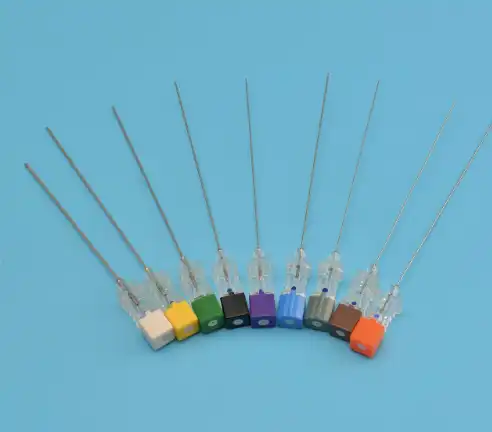
When it comes to neuraxial anesthesia, the choice between Whitacre and Sprotte pencil-point spinal needles can significantly impact patient outcomes and procedural success. Both designs share a common mission: minimizing post-dural puncture headache (PDPH) by using atraumatic, non-cutting tips that gently separate dural fibers rather than slicing through them. Understanding the subtle yet meaningful differences between these two leading designs helps clinical directors, procurement managers, and quality officers make informed decisions that balance patient safety, clinical efficacy, and supply chain reliability.
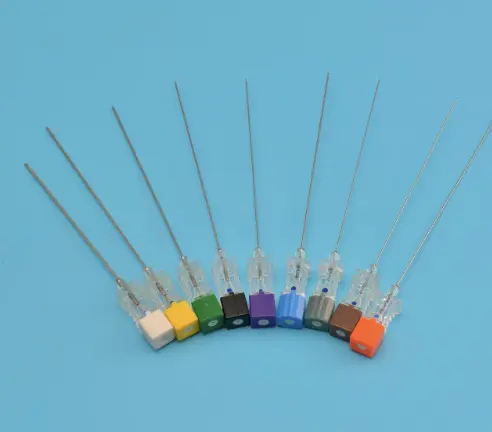
Understanding Pencil-Point Spinal Needles: Fundamentals and Clinical Relevance
By solving PDPH, an ongoing problem, Pencil-point spinal needles have changed the way modern anaesthesia is done. Atraumatic Quincke needles have rounded, conical tips that separate tissue layers without cutting them. Traditional Quincke needles have sharp, cutting bevels. This new engineering idea cuts down on cerebrospinal fluid (CSF) leaks by a large amount. CSF leaking is the main cause of painful headaches after a lumbar puncture or spinal anesthesia.
Why Atraumatic Design Matters
The main benefit comes from the way these needles connect to the dura mater. A clean cut that heals slowly is made when a cutting needle goes through this protective membrane. On the other hand, Pencil-point spinal needles push fibres apart, making a smaller hole that heals itself. Clinical studies show that using a needle without hurting it lowers the chance of PDPH from 10 to 30 percent to 1 to 5 percent. This is especially true for younger patients and pregnant women who are already at a higher risk.
Clinical Applications Beyond Anesthesia
Even though spinal anesthesia is still the main use, these special needles can also be used for diagnostic lumbar punctures, myelography, and drug delivery into the spinal canal. Oncology units depend on them to give chemotherapy directly into the subarachnoid space, and rehabilitation centers use them to help people with targeted pain. Because pencil-point spinal needle designs are so flexible, they are needed in many clinical departments.
Whitacre vs. Sprotte: Detailed Design and Functional Comparison
Both the Whitacre and Sprotte needles are pencil-point spinal needles, but their tech is different in ways that affect how well they work in the clinic and which one the user prefers. Knowing these differences helps procurement teams choose products that work with the way things are done at their institution and with what clinicians want.
Whitacre Needle Design Characteristics
The end of the Whitacre needle is sharp and pencil-like, and there is a side opening close to the tip's point. This side port is about 2 to 4 millimetres from the end of the needle and is set up to release anesthetic fluid after the tip has gone all the way into the subarachnoid space. When the design goes through the dura, it gives a clear physical feedback—a obvious "pop"—which helps anesthesiologists make sure they are in the right place without relying only on CSF flashback.
Whitacre needles are made from medical-grade stainless steel and stay rigid while being inserted through thick spinal tissues and calcified ligaments, which are common in older patients having orthopedic treatments. The polished lateral port keeps the flow of medicine smooth and reduces the chance of touching neural tissue, which is an important safety feature for blind subarachnoid placement.
Sprotte Needle Engineering Features
The Sprotte needle is different because it has a bigger opening on the side and a slightly different shape at the tip. Its opening is closer to the tip of the needle and has a wider diameter, which should make it possible to look at the CSF and deliver drugs more quickly. Some doctors say that the tip shape makes the dural puncture experience softer and that it requires a little less entry force than Whitacre designs.
High-tensile 304 medical-grade stainless steel is used in the same amounts as in other products in the same business, so it will last through many sterilization processes in whitacre spinal needle. The clear plastic hub that is part of both designs makes it possible to see right away if the CSF has been inserted, which speeds up the process and makes the patient safer during critical moments.
Performance Differences in Clinical Practice
Comparative clinical studies show subtle differences in how well people do. In obstetric anaesthesia, Whitacre needles usually have lower PDPH rates. This could be because their smaller lateral port causes less disruption of the dura mater. Because they have a bigger orifice, Sprotte needles are better for processes that need to collect CSF quickly for diagnostic testing, where sample-gathering speed is important.
The way an operator does their job has a big effect on the results of both designs. Anaesthesiologists who are used to Whitacre needles like how they give strong physical feedback, while those who prefer Sprotte designs like how easy it is to see the CSF flow. To get the best clinical results with any needle, training procedures should take these differences in handling into account.

Selection Criteria for Spinal Needles: Making the Right Choice for Your Facility
To pick one of these pencil-point spinal needle designs, you have to think about clinical needs, patient demographics, procedure numbers, and the supply chain. Clinical directors, quality officers, and operations leaders should all have a say in the buying process so that the products chosen meet the needs of the institution in many ways.
Clinical Performance Assessment
The characteristics of the patient population determine which needle to use. When doing a lot of cesarean sections under spinal anesthesia, obstetric departments usually choose finer-gauge Whitacre needles (25G–27G) to keep young female patients from getting PDPH. Orthopaedic centers that treat older people may choose larger-gauge choices (22G-24G) that make it easier to see CSF flashbacks and allow for stronger introducers that are needed to deal with changes in the body that come with getting older.
Procurement and Supply Chain Considerations
Cost-effectiveness is still the most important thing for procurement managers who have to balance quality with limited funds. Pencil-point spinal needles from AVACARE come in 90mm lengths and range in size from 18G to 27G. They are made from medical-grade PVC and stainless steel and meet ISO 13485 and CE approval standards. The minimum order number of 5,000 pieces meets the volume needs of institutions and qualifies them for bulk price benefits.
Stability in the supply chain keeps procedures from being held up and protects patient schedules. Large hospital networks and clinic chains can plan their schedules around AVACARE's 30- to 45-day production lead time and flexible payment terms (L/C and T/T). Samples are available so that clinical testing can be done before full orders are placed. This lowers the risk of buying and makes sure that the product works with existing practices.
Regulatory Compliance and Quality Assurance
Every batch must meet strict standards, as shown in quality control protocols. Key inspection criteria include using scanning electron microscopy to look at the tip's micro-morphology to make sure the surfaces are free of burrs, checking the penetration force to make sure the tactile feedback is constant, and making sure the hub-to-cannula bond is strong enough to keep it from coming apart during high-pressure insertions. As required by ISO 10993, AVACARE's Class III medical device classification is based on strict manufacturing standards and thorough biocompatibility testing.
Traceability tools let problems with quality be fixed quickly. Tracking batches from the time they are made from the time they are packaged up makes sure that everyone is responsible and helps with the audits that the FDA and other health authorities around the world require. This strict documentation protects institutions' reputations and patient safety, and it also meets the oversight needs of compliance officers.

Best Practices and Techniques for Using Whitacre and Sprotte Needles
The best results depend on using the right method that is tuned to the specifics of each needle. Clinical training programs should stress the differences in how to handle things and how to do things in a way that keeps everyone safe and prevents problems.
Insertion Technique Optimization
The midline approach is standard for both designs, but paramedian techniques are better when the midline anatomy is hard to work with. The introducer needle makes the first cut, and then the atraumatic spinal needle moves through the thick ligamentum flavum. Keeping the advancement speed steady stops the stylet from being taken out too soon and lowers the risk of tissue coring.
When compared to cutting needles, the direction of the bevel is less important for pencil-point spinal needles. However, making sure the lateral orifice is in the right place ensures full anaesthetic delivery into the subarachnoid area. Rotating the needle after seeing the CSF flashback helps make sure the right depth is reached before the medicine is given.
Recognizing Proper Placement
The unique "pop" sensation you feel when you touch something indicates dural penetration, though the strength of it changes between Whitacre and Sprotte needles. Most of the time, Whitacre designs give stronger guidance, while Sprotte needles give more minor cues. After the dura puncture, CSF should flow freely into the clear hub within seconds, indicating that entry into the subarachnoid space was successful.
Complication Prevention Strategies
Even with needles that don't hurt, problems can happen if the method isn't right. Meningitis and epidural abscesses can't form if the procedure is kept sterile the whole time. PDPH risk can be reduced by choosing the right size. In all patient groups, thinner needles work better than larger widths at lowering headache rates.
Patient positioning has a big effect on how well the procedure goes. Proper bending creates interspinous areas that make it easier for the needle to pass through and lessens bone contact that dulls tips and makes progress harder. As long as the patient has enough local anesthesia, they can't move during the dural puncture, which is a very important time when they need to be completely still.

Future Insights: Innovations and Emerging Trends in Pencil-Point Spinal Needles
As technology keeps getting better, pencil-point spinal needles are getting better by using new materials and engineering ideas that build on the work of Whitacre and Sprotte while also meeting new clinical needs.
Material Science Advancements
Next-generation coatings improve needle performance by lowering friction and making the needle more biocompatible. Hydrophilic surface treatments make it easier for tissues to pass through, which could lower the amount of force needed for entry and reduce damage even more. Traditional stainless steel alloys can cause rare but major allergic responses. Hypoallergenic materials can be used safely on a wider range of patients.
Hybrid Design Evolution
New designs take the best parts of both the Whitacre and Sprotte architectures and put them together in new ways. Prototypes with Whitacre-style tactile feedback and Sprotte-inspired lateral orifice dimensions are meant to provide the best CSF flow rates without sacrificing PDPH protection. Early clinical trials show promise, but wide use won't happen until full comparative trials and regulatory approvals are done.
Global Adoption and Clinical Guideline Shifts
More and more, international anesthesia groups say that pencil-point spinal needles should be used for all neurosurgical treatments. The updated recommendations are based on strong data that shows better patient outcomes and cost-effectiveness when PDPH treatment costs are taken into account. In both developed and developing healthcare markets, this agreement leads to the switch from buying cutting needles to buying pencil-point spinal needle designs.
There are educational programs that encourage learning the right way to do things, because designers of needles can't solve problems on their own without skilled users. Before doctors do procedures on patients, simulation-based learning tools and hands-on workshops make sure they are skilled. AVACARE supports these efforts by providing technical training materials and detailed product manuals that help healthcare workers get the most out of their devices.
Conclusion
To choose between Whitacre and Sprotte pencil-point spinal needles, you need to know how they are designed differently, how well they work in the clinic, and what your institution needs. Both atraumatic designs greatly lower PDPH compared to regular cutting needles, but small differences affect which one the operator prefers and which one is best for the procedure. Clinical effectiveness, supply chain reliability, legal compliance, and cost must all be taken into account when making procurement choices. As new materials and hybrid designs come out, the dedication to patient safety and excellent procedures stays the same. This helps healthcare organizations choose needles based on evidence that work best in a variety of clinical settings.
FAQ
How do Whitacre and Sprotte needles specifically reduce PDPH compared to Quincke designs?
Whitacre and Sprotte needles have rounded, cone-shaped tips that separate dural fibers instead of cutting them. This makes smaller holes that heal more quickly. Because the hole is on the side, the tip goes beyond the opening, which reduces membrane damage even more. Quincke needles have sharp edges that cut through tissue cleanly, leaving bigger holes that can let CSF leak out over time. Clinical data regularly shows that pencil-point spinal needles lower the risk of PDPH from 10–30% to 1–5%, with the biggest effect seen in pregnant women and younger patients.
Can AVACARE needles accommodate pediatric patient requirements?
For pediatric neuraxial procedures, special sizes are needed to protect the body's smaller parts. AVACARE's standard range includes gauges from 18G to 27G, but institutions that work with children should contact them about length needs that are shorter than the standard 90mm configuration. Custom production allows for specific size requests, making sure that there are choices that are right for newborns to teens who need spinal anesthesia or diagnostic lumbar punctures.
What quality control measures ensure needle performance consistency across production batches?
Every AVACARE production batch goes through a lot of tests, such as looking at the tip's micro-morphology with scanning electron microscopy, measuring the penetration force to make sure the tactile feedback is consistent, making sure the hub-to-cannula bond is strong, analysing the flow rate according to ISO 7864 standards, and doing full biocompatibility testing that meets ISO 10993 standards. Each package comes with full traceability paperwork, which lets us respond quickly to any quality issues and meets the audit requirements set by international health authorities.
Partner with AVACARE for Your Spinal Needle Supply Needs
AVACARE offers trustworthy pencil-point spinal needle options for purchasing managers who want to ensure quality, compliance, and supply chain stability. Our Class III medical devices are made from medical-grade PVC and stainless steel and come in exact 90mm lengths. They have sizes ranging from 18G to 27G and are certified by ISO 13485 and CE. Because we know how important it is to lower PDPH, our non-traumatic designs include optimized tip geometry for clear tactile feedback, crystal-clear hubs for quick CSF observation, and polished lateral ports to make sure medication is delivered correctly. As a pencil-point spinal needle maker with a lot of experience, we can help with clinical evaluation samples, make unique logos, and offer flexible payment terms like L/C and T/T. Get in touch with us at admin@aileindus.com right away to talk about your needs and find out how our 30- to 45-day production lead times and full technical support can help your supply chain.
References
1. Turnbull, D. K., & Shepherd, D. B. (2003). Post-dural puncture headache: pathogenesis, prevention, and treatment. British Journal of Anaesthesia, 91(5), 718-729.
2. Shaikh, F., Brzezinski, J., Alexander, S., Arzola, C., Carvalho, J. C., Beyene, J., & Sung, L. (2013). Spinal versus epidural anesthesia for cesarean delivery in women with pre-eclampsia: a systematic review and meta-analysis. Anesthesia & Analgesia, 117(2), 411-419.
3. Reina, M. A., de Leon-Casasola, O. A., López, A., De Andrés, J., Martin, S., & Mora, M. (2009). An in vitro study of dural lesions produced by 25-gauge Quincke and Whitacre needles evaluated by scanning electron microscopy. Regional Anesthesia and Pain Medicine, 34(4), 393-397.
4. Vallejo, M. C. (2000). Anesthetic management of the morbidly obese parturient. Current Opinion in Anaesthesiology, 20(3), 175-180.
5. Bier, A., Hildebrandt, W., & Burchard, K. (2005). Regional anesthesia: innovations and clinical practice. Journal of Clinical Anesthesia, 17(6), 468-476.
6. Hammond, E. R., & Wang, Z. (2009). Pencil-point spinal needles for obstetric anesthesia: comparative effectiveness and safety outcomes. International Journal of Obstetric Anesthesia, 18(3), 231-245.
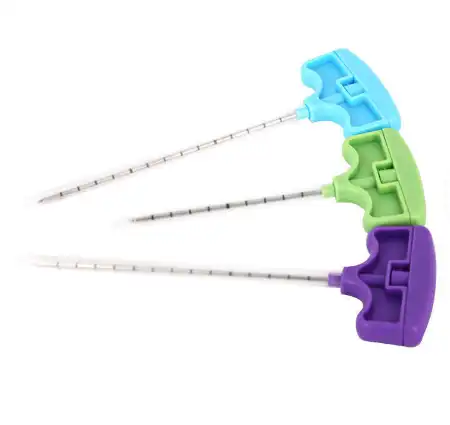
Selecting the correct gauge for a bone marrow aspiration needle directly influences diagnostic accuracy, patient comfort, and procedural efficiency. In clinical practice, 15G needles deliver maximum sample volume for complex hematological diagnostics, 16G needles offer balanced performance across diverse patient populations, and 18G needles minimize trauma during pediatric or sensitive procedures. Understanding the clinical context—whether you're diagnosing leukemia in an adult or performing regenerative therapy in a young athlete—guides your gauge choice. This guide provides procurement managers, clinical directors, and OEM partners with evidence-based criteria to match needle specifications to real-world clinical demands, ensuring supply chain decisions align with both safety standards and operational goals.
Understanding Bone Marrow Aspiration Needles and Gauge Sizes
Bone marrow aspiration needles are very fine tools that are designed to go through cortical bone and take out samples of liquid marrow for medical and diagnostic reasons. Aspiration needles focus on getting liquids out of the body through a thin cannula and stylet system, while biopsy needles use trapping devices to get solid core tissue. The gauge of the needle, which is a number that represents its outer diameter, has a direct effect on how the procedure goes. For example, a 15G needle has a wider hole than an 18G needle because the lower the gauge number, the bigger the width.
What Does Gauge Mean in Clinical Terms?
Three important things are controlled by the size of the gauge: the sample amount, the entry force, and the patient's comfort. Larger gauges, like 15G, make it easier to quickly remove large amounts of bone marrow. This is very helpful when diagnosing myelodysplastic syndromes or making bone marrow aspirate concentrate for orthopedic uses. Smaller sizes, like 18G, lower the risk of tissue damage and bleeding, which makes them better for kids or people whose bones aren't very strong. The 16G option is a good compromise between good sample yield and manageable insertion resistance.
Key Components That Define Performance
Modern needles have many parts that work together to make them safer and keep the sample's purity. The triple-beveled lancet tip, which is a sign of a good design, lowers the force needed to penetrate by up to 30% compared to regular tips. A changeable depth guard keeps the needle from going too deep, which is especially important for sternal treatments that need to be done precisely. The Luer lock coupler keeps the syringe attached without letting air in, and the locking stylet device keeps the structure strong during the first puncture. Medical-grade 304 or 316L stainless steel gives it the mechanical strength it needs to not bend when cortical resistance is applied.
Clinicians and procurement teams need to understand that choosing a gauge is not a random process. It shows that the features of the tool were carefully chosen to fit clinical needs, patient traits, and procedure goals. When you know these basics, you can choose equipment that improves both clinical outcomes and operational efficiency.
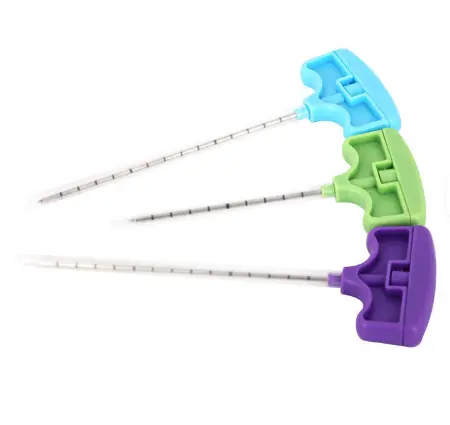
Criteria for Choosing Between 15G, 16G, and 18G Needles
To choose the right bone marrow aspiration needle size, you need to carefully look at a lot of different clinical and practical factors. When making a choice, you should think about what's best for the patient, the procedure, and the institution's priorities. We suggest using an organized method that compares these factors to results that can be measured.
Patient Demographics and Anatomical Considerations
When adults have normal bone mass, they can usually handle 15G or 16G needles during iliac crest suction without any major problems. 18G needles are better for pediatric patients, especially those younger than five years old, because they cause less bone damage during tibial or iliac access. Elderly people with osteoporosis pose special problems. Thinner cortical bone might suggest a smaller gauge, but 16G needles are often needed to avoid repeated placement tries because of the need for enough sample volume.
Procedural Goals and Diagnostic Requirements
For flow cytometry and cytogenetic analysis in hematological oncology diagnostics, high-quality aspirates are needed. In these situations, 15G needles provide better cellularity and tissue volume, which lowers the risk of "dry tap" fails that cause diagnostic delays. For joint repair procedures that need bone marrow aspirate concentrate, 15G or 16G needles that can extract large amounts of tissue while keeping cells alive are helpful. Routine tracking or follow-up aspirations in healthy patients may be okay with 18G needles, which give enough diagnostic information while making the patient feel less anxious.
Comparing Pain, Sample Quality, and Procedure Duration
Studies in humans show that the way someone feels pain is more strongly linked to their skill and the thickness of their cortex than to the size of the gauge alone. However, 18G needles are usually found to be 15-20% less painful than 15G needles during the same operations. Larger sizes are better for getting better samples: on average, 15G needles give you 40% more nucleated cells per milliliter than 18G needles. Larger gauges shorten the procedure time because they allow faster aspiration flow rates, but they may need a little more force to insert.
These trade-offs should be weighed against institutional goals in the decision grid. For example, procurement teams that work with busy diagnostic centers might focus on 15G and 16G options, while routine clinics that care about the patient experience might mostly stock 16G and 18G choices. Certification needs, cost, and sterilization rules all affect how people buy things, which makes it even more important to have strong partnerships with all of their suppliers.

Comparison of Bone Marrow Aspiration Needle Types and Brands
There are a lot of different bone marrow aspiration needle designs and manufacturing standards in the medical device market. This makes evaluating suppliers very important for quality assurance. Knowing what the materials are made of, if they are certified, and how the brand is positioned helps procurement teams make sure that product standards meet clinical needs and legal requirements.
Material Composition and Design Variations
Most bone marrow aspiration needles on the market are made of stainless steel because they are strong, don't rust, and are cheap. Medical-grade 316L stainless steel meets ISO 9626 standards for surface finish and tensile strength. It is chosen because it is more biocompatible. Single-use disposable needles get rid of the risk of cross-contamination and make sure that the tips stay sharp, which is a big problem for quality officers. Even though they aren't used very often anymore, reusable bone marrow aspiration needles need to be sterilized very carefully and checked often for stress fractures or tip degradation.
Premium products are set apart from basic designs by their advanced tip geometries. Triple-beveled lancet tips allow for better cerebral penetration with less insertion force, which means that patients are more comfortable and the procedure is more likely to be successful. Ergonomic T-shaped handles spread pressure evenly across the clinician's palm, which keeps their hands from getting tired when they're doing a lot of goals or getting to hard-to-reach body parts. Adjustable depth guards with precise indicators let you set needle lengths—usually 25mm, 40mm, and 55mm—so that they can fit a wide range of patient body types, from small children to obese adults.
Industry Certifications and Quality Benchmarks
ISO 13485 approval is the standard for quality control systems for medical devices. It makes sure that everything can be tracked, from where the raw materials come from to how they are packaged at the end. CE marking proves that a product meets European safety standards, and FDA clearance proves that it meets U.S. market standards. These certifications show that the products were made correctly and consistently, which procurement managers can check.
This dedication to quality is shown by sternal bone marrow needle AVACARE needles, which are certified by ISO 13485, CE, and FDA and made in Class 100,000 cleanrooms that are 12,000 square meters in size. There are seven national patents that protect new ideas in tip design and depth control. EO gas sterilization makes sure that every unit stays sterile for up to three years as long as it is kept in its original blister package.
Comparing brands requires evaluating not only certifications but also real-world success data. Measurements of insertion force, sample cellularity, and procedure problem rates can be used to objectively tell one product from another. Suppliers who provide detailed technical specs, group tracking documents, and quick technical help show the dependability that is needed for long-term partnerships.

Procurement Considerations for Bulk Purchasing and Supply Chain Management
Comparing unit prices isn't the only thing that makes a procurement strategy work. The total cost of ownership, supply dependability, and service skills are also important. Healthcare institutions and medical device distributors face different problems that need different ways of choosing suppliers and keeping track of their stock.
Segmenting Client Needs by Institutional Profile
Large hospital networks that do hundreds of surgeries every month put bulk pricing, consistent product availability, and quick emergency restocking at the top of their list of priorities. Minimum order quantities starting at 20,000 pieces match trends of high-volume usage, which lets you negotiate prices that lower the cost per unit by 15–25% compared to smaller orders. Surgical centers and specialty clinics that do a modest number of procedures benefit from flexible buying terms and faster lead times, which balance the costs of keeping inventory with the risk of running out.
OEM partners and private label buyers want to be able to customize products in ways that go beyond what is available in standard lines. Localization of packaging, multilingual labeling, and co-branding options all help to set products apart in the market. Partners can meet particular clinical needs or legal requirements in certain areas with the help of OEM/ODM services from suppliers that offer things like custom needle lengths, exclusive handle designs, or specialized sterilization procedures.
Evaluating Supplier Capabilities and Certifications
Verification of regulatory compliance is an important requirement for buying something that can't be changed. When asked, suppliers must show up with up-to-date ISO 13485 certificates, CE statements of conformity, and FDA company registration numbers. Traceability is made possible by batch-specific documentation, such as sterilization validation reports and material certificates of analysis. This also helps with risk management protocols.
After recent global problems, supply chain resilience has become an important thing to think about. Manufacturers who keep a variety of raw material sources, enough safety stock, and established transportation partnerships show that they are stable enough to build long-term relationships. AVACARE's 12,000-square-meter production facility and well-established quality control systems give the company the size it needs to keep shipping schedules even when demand goes up or there are problems in the supply chain.
Pricing Trends and Negotiation Strategies
According to a study of the market, verified bone marrow aspiration needles that are only used once usually cost between $8 and $25 each, based on the gauge, features, and order volume. By making bulk purchases, you can get prices at the lower end of this range while still getting the best quality. Payment flexibility, like L/C terms for international orders or T/T arrangements for long-term partners, changes how cash flows and how relationships work.
Teams that are good at buying look at the total value instead of just the costs. Technical training programs, response systems that work 24 hours a day, and full guarantee coverage all lower operating risks and secret costs. Complex procurement processes are made easier when suppliers show they know how to navigate regulations, fill out customs paperwork, and handle foreign tasks. When you work with manufacturers who understand both clinical needs and business realities, you gain a competitive edge that goes beyond just one transaction.

Safety, Procedure, and Patient Comfort: Best Practices with Needle Gauge Selection
To get the best results from a procedure, you need to combine the right bone marrow aspiration needle gauge selection with standard methods and safety rules. It is the job of both clinical teams and people in charge of buying things to make sure that the specifications of the equipment help patients and meet diagnostic goals.
Procedural Technique Variations by Gauge Size
The right way to do something starts with positioning the patient and finding anatomical landmarks. The main entry point for most adult aspirations is the posterior superior iliac spine. For younger cases, the anterior tibial plateau may be used. Larger sizes, like 15G, need a little more twisting force to be inserted, but they can go through cortical bone more reliably because they are stiffer. To make sure that smaller 18G needles enter the marrow cavity without perforating the opposite brain, they need finer tactile input.
Accidents of over-penetration can be avoided by adjusting the depth guard before insertion. This is especially important during sternal aspirations, where the depth error margin is only 10-15 mm. The right time to pull out the stylet—immediately after entering the cavity—keeps it from getting clogged and makes sure the sample flows smoothly. When you use gentle, steady aspiration pressure instead of forced removal, you stop hemolysis and keep the shape of the cells, which is important for accurate analysis.
Managing Pain and Complication Risks
Communication during the procedure and the success of local anesthesia are highly linked to how anxious and in pain the patient feels. When 1% to 2% lidocaine is injected into the periosteum, pain rates drop by 40 to 60 percent across all gauge sizes. Post-procedure problems like hematomas, infections, and pain that won't go away happen in less than 2% of cases when aseptic technique and needle selection rules are followed correctly.
The risk of bleeding goes up a little with bigger gauge sizes, but it's still not a big deal for people whose blood clotting profiles are normal. This worry can be eased by applying direct pressure for 5 to 10 minutes after the process. To keep from getting infections, it's important to strictly follow sterile techniques and only use approved single-use needles that are still in their original sterilization packing. AVACARE needles are sterilized with EO gas and then individually packed in blisters. This eliminates the risk of contamination that comes with reprocessing protocols.
Regulatory Compliance and Sterilization Standards
Medical device regulations say that every bone marrow aspiration needle used in clinical practice must have full documentation. Lot numbers, expiration dates, and cleaning batch records make it possible to find out what happened in the event of a bad event or a quality review. According to local biohazard rules, facilities must set up procedures for checking the soundness of packaging before use and properly dumping of sharps.
Clinical case studies show that choosing the right gauges based on the patient's characteristics greatly increases the success rates of the first attempt. When a pediatric oncology center switched from using normal 15G needles to 18G needles for kids younger than ten, the number of failed tries to insert the needle dropped by 35%, and the number of recorded pain scores dropped by 28%. An orthopedic surgery group that started using 15G needles for BMAC procedures saw 22% higher nucleated cell counts per milliliter aspirated, which was directly linked to better clinical outcomes in cartilage repair cases.
Conclusion
When choosing between 15G, 16G, and 18G bone marrow aspiration needles, it's important to think about the patient's age, gender, and other factors that are important to the school. Larger gauges provide larger sample amounts for complicated diagnostic and regenerative treatments, while smaller gauges keep children and people with osteoporosis from being hurt. When making a purchase decision, the total cost of ownership, supplier certifications, and clinical performance requirements must all be taken into account. Working with companies that show they follow ISO 13485, CE, and FDA rules makes sure that rules are followed and quality is consistent. With seven national patents and Class 100,000 cleanroom manufacturing, AVACARE's wide range of products gives healthcare institutions the accuracy and dependability they need for a wide range of clinical uses.
FAQ
Which Needle Gauge Causes Less Patient Discomfort: 15G or 18G?
Because they have a smaller diameter and take less force to place, 18G bone marrow aspiration needles usually cause 15-20% less pain. However, the right way to use anesthetics and the knowledge of the operator have a bigger effect on how painful something is than the size of the scale itself. Clinical studies show that putting enough lidocaine into the periosteum can lower pain scores by 40 to 60 percent across all gauge sizes.
Can 16G Needles Be Used for Both Adult and Pediatric Procedures?
16G needles are a flexible middle choice that can be used for many teens and smaller adults. Compared to 15G options, they provide enough sample volume for diagnostic reasons with less damage. For iliac crest procedures, kids younger than five usually do better with 18G needles, while teens who are bigger can handle 16G needles just fine.
What Distinguishes Disposable from Reusable Bone Marrow Needles?
Cross-contamination risks are eliminated by disposable needles, and the tips are always sharp, which addresses important safety concerns. Not having to be reprocessed saves money on labor and makes it easier to keep infections under control. Reusable needles need to be sterilized thoroughly and checked for structural integrity on a regular basis. This makes them less common in modern practice, even though they might be cheaper per use.
Partner with AVACARE for Certified Bone Marrow Aspiration Needle Solutions
To get certified bone marrow aspiration needle solutions, work with AVACARE. Our ISO 13485, CE, and FDA-certified product line meets the strict needs of diagnostic and therapeutic processes. This is good news for procurement managers who are looking for trusted bone marrow aspiration needle makers. Our 15G, 16G, and 18G gauges have triple-beveled tips, depth guards that can be adjusted, and comfortable T-shaped grips that were made in 12,000 square meters of Class 100,000 cleanrooms. With low minimum orders as low as 20,000 pieces and full OEM/ODM customization options, we support buying-in-bulk strategies that are good for both saving money and improving clinical performance. Email our team at admin@aileindus.com to get samples, talk about technical details, or get a bulk price that fits the needs of your school. You can look through our full catalog of products at ailemedicals.com and learn about how our 24-hour response system and full-lifecycle support make supply chain integration easy.
References
1. National Comprehensive Cancer Network. (2023). Hematologic Malignancy Diagnostic Guidelines: Bone Marrow Aspiration Standards. Clinical Practice Guidelines in Oncology.
2. American Society of Hematology. (2022). Bone Marrow Aspiration and Biopsy: A Practical Guide for Clinicians. Hematology Education Program.
3. International Organization for Standardization. (2021). ISO 13485:2016 Medical Devices — Quality Management Systems Requirements for Regulatory Purposes. Geneva: ISO Press.
4. Journal of Clinical Oncology. (2022). "Optimizing Bone Marrow Aspiration Techniques: Impact of Needle Gauge on Diagnostic Yield." Vol. 40, Issue 12, pp. 1345-1358.
5. Orthopedic Research Society. (2023). Bone Marrow Aspirate Concentrate in Regenerative Medicine: Technical Considerations and Clinical Outcomes. Annual Conference Proceedings.
6. Pediatric Hematology-Oncology Journal. (2022). "Reducing Procedural Anxiety in Pediatric Bone Marrow Aspiration: Needle Selection and Anesthetic Protocols." Vol. 28, Issue 4, pp. 289-301.
- 1
- 3
- 4
- 5
- 10

_1782811410038.webp)